Tisseel
Poland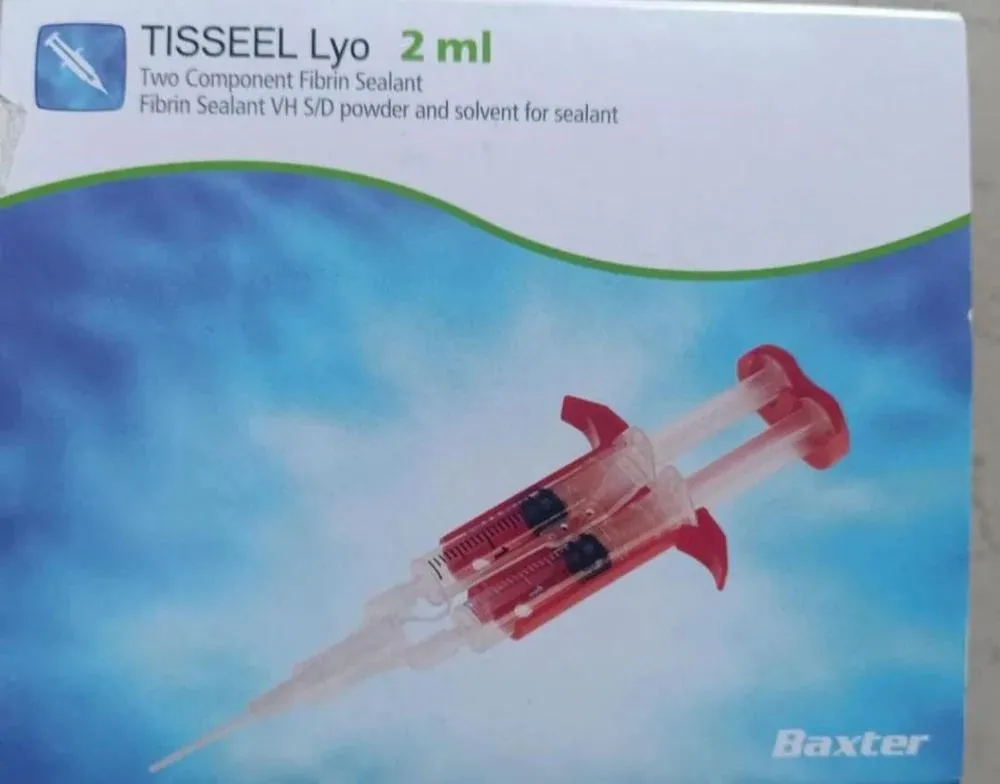
Table of Contents
- Package leaflet: Information for the user
- 1. What TISSEEL is and what it is used for
- 2. Important information before using TISSEEL
- 3. How to use TISSEEL
- 4. Possible adverse reactions
- 5. How to store TISSEEL
- 6. Contents of the package and other information
- Information intended exclusively for medical professionals (packaging:
- Information intended exclusively for medical professionals (packaging:
Package leaflet: Information for the user
TISSEEL – Solutions for preparation of tissue glue
Human fibrinogen, human thrombin, synthetic aprotinin, calcium chloride dihydrate
Please read all of this leaflet carefully before using this medicine, because it contains
important information for the patient.
- Keep this leaflet so that you can read it again if necessary.
- If you have any doubts, please consult your doctor or pharmacist.
- If the patient experiences any adverse reactions, including any not listed in this leaflet, inform the doctor, pharmacist or nurse. See section 4.
Leaflet contents:
- What TISSEEL is and what it is used for
- Important information before using TISSEEL
- How to use TISSEEL
- Possible side effects
- How to store TISSEEL
- Contents of the pack and other information
1. What TISSEEL is and what it is used for
What TISSEEL is
TISSEEL is a two-component tissue glue composed of two solutions: a solution of adhesive proteins and a thrombin solution. The Tisseel solution contains fibrinogen and thrombin. These are two blood proteins essential for blood coagulation. When these proteins mix during administration, they form a clot at the site where the surgeon applies them.
The clot formed by TISSEEL is very similar to a natural blood clot. It dissolves in the same way as an endogenous (naturally occurring) clot and leaves no residue. The addition of a synthetic protein (synthetic aprotinin) is intended to enhance the durability of the clot and prevent its premature dissolution.
What TISSEEL is used for
TISSEEL is used as an adjunctive treatment when standard surgical techniques are not sufficiently effective:
- to improve haemostasis;
- as a tissue adhesive to facilitate wound healing or as a suture sealant in vascular and gastrointestinal surgery;
- for bonding tissues, e.g. securing skin grafts.
TISSEEL is also effective in patients receiving heparin-containing medications that inhibit blood coagulation.
2. Important information before using TISSEEL
When not to use TISSEEL:
- in case of allergy (hypersensitivity) to any of the active substances or any of the other ingredients of this medicine.
- for the treatment of massive arterial or venous bleeding. The use of TISSEEL alone is not indicated in such situations.
- TISSEEL must not be injected into blood vessels (veins or arteries). Since TISSEEL forms clots at the site where it is applied, injecting TISSEEL may cause clot formation within a blood vessel. If such a clot is carried by the bloodstream, it may lead to life-threatening complications.
- TISSEEL is not indicated for replacing skin sutures used to close a surgical wound.
Warnings and precautions
Before starting treatment with TISSEEL, discuss this with your doctor, pharmacist, or nurse.
Exercise particular caution when using TISSEEL due to the possibility of allergic hypersensitivity reactions.
Early signs of an allergic reaction may include:
-
transient skin redness
-
itching
-
rash
-
nausea, vomiting
-
general malaise
-
chills
-
chest tightness
-
swelling of lips and tongue
-
difficulty breathing or breathlessness
-
drop in blood pressure
-
increased or decreased heart rate
If any of these symptoms occur, application must be stopped immediately. In case of severe symptoms, emergency treatment must be initiated immediately. -
because TISSEEL contains a synthetic protein called aprotinin. Even though this protein is administered only in small amounts and only onto the wound surface, there is a risk of severe anaphylactic reaction. This risk appears to be higher in patients previously exposed to TISSEEL or aprotinin, even if prior exposure was well tolerated. Therefore, information regarding prior use of aprotinin or products containing aprotinin must be documented in the patient's medical history. Since synthetic aprotinin is structurally identical to bovine aprotinin, the use of TISSEEL should be carefully considered in patients with allergy to bovine proteins.
-
because inadvertent intravascular administration may lead to life-threatening complications due to embolization of the clot formed into the bloodstream.
-
intravascular administration in particularly sensitive patients may increase the likelihood and severity of acute hypersensitivity reactions.
Especially during cardiothoracic procedures, the physician must exercise special caution to avoid injecting TISSEEL into a blood vessel. It is equally important to avoid injection into the nasal mucosa due to the risk of clot formation in the arteries around the eyes.
- because there is a risk of local tissue damage if TISSEEL is injected into tissue.
- to avoid unwanted adhesion of tissues. Therefore, before application, ensure that surrounding body areas outside the target site are adequately protected.
- because excessive thickness of the formed clot may negatively affect the product's efficacy and wound healing process. Therefore, TISSEEL should be applied only as a thin layer.
Exercise caution when applying fibrin glue using compressed gas.
Very rare cases of life-threatening or fatal air and gas embolism (air entering the bloodstream, leading to serious health or life-threatening conditions) have been reported during the use of pressurized gas devices for spraying tissue fibrin glues.
This appears to be associated with using the spray device at pressures higher than recommended and (or) holding the device too close to the tissue surface. The risk appears to be greater when tissue fibrin glues are sprayed using air rather than CO2. Therefore, the occurrence of such an event during spraying of TISSEEL onto surgically treated open wounds cannot be excluded.
Instructions for use, including the manufacturer's recommendations on pressure settings and distance from the tissue surface during spraying, are provided with the spray device and its additional nozzle.
TISSEEL must be administered strictly according to the instructions and only with devices recommended for use with this product.
During spraying of TISSEEL, monitor changes in blood pressure, pulse, arterial oxygen saturation, and end-tidal CO2 concentration due to the potential risk of gas embolism.
For medicines manufactured from human blood or plasma, specific measures are taken to prevent transmission of infections to patients. These include:
- careful selection of blood and plasma donors to exclude high-risk groups for infection
- testing of individual blood donations and pooled plasma for viruses or other infections
- inclusion of steps in the manufacturing process of blood or plasma that can inactivate or remove viruses.
Despite these measures, when administering medicines derived from human blood or plasma, the possibility of transmitting infection cannot be completely ruled out. This includes unknown or newly emerging viruses and other pathogens.
These measures are considered effective against enveloped viruses such as human immunodeficiency virus (HIV), hepatitis B virus, hepatitis C virus, and non-enveloped hepatitis A virus. However, these measures may have limited effectiveness against certain non-enveloped viruses, such as parvovirus B19.
Parvovirus B19 infection may be dangerous for pregnant women (fetal infection) and for individuals with weakened immune systems or certain types of anemia (e.g., congenital spherocytosis or hemolytic anemia).
The treating physician may recommend vaccination against hepatitis A and B viruses if the patient is receiving fibrin glue repeatedly.
It is strongly recommended that the name and batch number of TISSEEL be documented each time it is administered, using the self-adhesive label provided, which should be affixed to the patient's medical record.
TISSEEL and other medicines
Inform your doctor or pharmacist about all medicines you are currently taking, have recently taken, or plan to take, including those available without a prescription.
No interactions between TISSEEL and other medicinal products are known.
Like other similar preparations or thrombin solutions, the product may be denatured by solutions containing alcohol, iodine, or heavy metals (e.g., disinfectant solutions).
Before application, the surface should be thoroughly cleaned of such substances.
Information regarding preparations containing oxidized cellulose is provided in the section Preparation for use.
TISSEEL with food and drink
Consult your doctor. The doctor will decide whether you may eat or drink before administration of TISSEEL.
Pregnancy, breastfeeding, and fertility
If you are pregnant, breastfeeding, think you may be pregnant, or are planning to have a baby, consult your doctor or pharmacist before using this medicine. The doctor will decide whether TISSEEL can be used during pregnancy or breastfeeding.
Driving and operating machinery
TISSEEL has no influence on the ability to drive or operate machinery.
TISSEEL contains Polysorbate 80
Polysorbate 80 may cause local skin reactions such as contact dermatitis.
3. How to use TISSEEL
The TISSEEL product may be used only by experienced surgeons who have been trained in its use.
Before applying the TISSEEL product, the wound surface should be dried using standard techniques (e.g. changing compresses, gauze, using suction devices).
Compressed air or gas must not be used to dry the surface.
TISSEEL may only be sprayed onto visible surfaces.
When applying the TISSEEL product using a spray device,
the manufacturer's recommendations regarding pressure and distance from the tissue must be followed,
within the ranges specified below:
| Recommended pressure and distance values from tissue and spray devices for application of TISSEEL product | |||||
| Surgical procedure | Spray device to be used | Applicator tips to be used | Pressure regulator to be used | Recommended distance from target tissue | Recommended spraying pressure |
| Open wound | Spray device Tisseel/Artiss | nd. | EasySpray | 10–15 cm | 1.5– 2.0 bar (21.5– 28.5 psi) |
| Spray device Tisseel/Artiss — pack of 10 | nd. | EasySpray | |||
| Laparoscopic/ minimally invasive procedures | nd. | Duplospray MIS 20 cm applicator | Duplospray MIS 1.5 bar regulator | 2–5 cm | 1.2– 1.5 bar (18– 22 psi) |
| Duplospray MIS 30 cm applicator | |||||
| Duplospray MIS 40 cm applicator | |||||
| Spray Set 360 kit with endoscopic applicator and Snap Lock | |||||
| Spray Set 360 kit with endoscopic applicator and safety strap | |||||
| Disposable tip | |||||
During spraying of the TISSEEL product, monitor arterial pressure, heart rate,
arterial oxygen saturation, and end-tidal CO concentration due to the possibility of
air or gas embolism (see section 2).
The dose of applied glue is always determined based on individual needs.
The dose depends on several factors, including the type of surgical procedure, size of the area to be glued, chosen method of glue application, and number of applications. The physician will decide how much is needed and will apply an appropriately thin, even layer to the target surface. If the amount applied does not seem sufficient, application of the glue may be repeated.
When applying the TISSEEL product, clot formation occurs rapidly. Avoid applying a new layer onto an existing layer of TISSEEL, as the new layer will not adhere properly to the existing one. It is essential to avoid separately applying the fibrinogen-containing component and the thrombin-containing component.
In clinical studies, individually adjusted administered doses ranged from 4 to 20 ml. In certain procedures (e.g., traumatic liver injury or management of extensive burn wounds), larger volumes may be required.
As a general guideline for surface gluing, one 2 ml TISSEEL kit (i.e., 1 ml Tisseel solution plus 1 ml thrombin solution) is sufficient to cover an area of at least 10 cm².
When TISSEEL is applied by spraying, the same volume will be sufficient to cover proportionally larger surface areas.
To avoid excessive granulation and to ensure gradual absorption of the formed clot into tissues, apply TISSEEL in as thin layers as possible.
To ensure proper mixing of the fibrinogen solution and thrombin solution, expel the first few drops from the application needle directly before use and discard them prior to applying the product.
Use of TISSEEL in doses higher than recommended
TISSEEL is used exclusively during surgical procedures. The required amount is determined by the physician. There are no known cases of overdose.
If you have any questions regarding the use of this medicinal product, consult your physician or pharmacist.
Use in children
The safety and efficacy of the medicinal product in children have not been established.
4. Possible adverse reactions
Like all medicinal products, this product can cause adverse reactions, although not everyone experiences them.
If any of the adverse reactions worsen or if any adverse reactions not listed in this leaflet occur, inform your doctor or pharmacist immediately.
Hypersensitivity reactions or allergic reactions may occur in patients treated with this tissue glue.
Although these are very rare, they can be serious.
Early signs of an allergic reaction may include:
- transient skin redness
- itching
- rash
- nausea, vomiting
- headache
- drowsiness
- restlessness
- burning and stinging at the site of administration
- ringing in the ears
- chills
- chest tightness
- swelling of lips, tongue and throat (which may cause difficulty in breathing and/or swallowing)
- difficulty in breathing
- low blood pressure
- increased or decreased heart rate
- loss of consciousness due to low blood pressure
In individual cases, these reactions may progress to severe allergic reactions (anaphylaxis).
Such reactions may occur especially when the product is used repeatedly or administered to patients who previously experienced hypersensitivity to aprotinin or to any other component of the product.
Even if previous multiple administrations of TISSEEL were well tolerated, subsequent administration of TISSEEL or injection of aprotinin may lead to severe allergic (anaphylactic) reactions.
The surgical team performing the procedure is aware of the risk of such reactions and, if early signs of hypersensitivity occur, administration of TISSEEL will be immediately discontinued. Severe symptoms may require emergency interventions.
Injection of TISSEEL into soft tissues may cause local tissue damage.
Injection of TISSEEL into blood vessels (veins or arteries) may lead to formation of blood clots (thrombosis).
Since TISSEEL is manufactured from plasma derived from blood donated by human donors, the risk of infection cannot be completely excluded. Nevertheless, the manufacturer takes numerous measures to reduce this risk (see section 2).
In rare cases, antibodies against components of the tissue glue may develop.
The following adverse reactions have been observed during treatment with TISSEEL:
Adverse reactions are categorized according to the following frequency categories:
Very common: may affect more than 1 in 10 people
Common: may affect up to 1 in 10 people
Uncommon: may affect up to 1 in 100 people
Rare: may affect up to 1 in 1,000 people
Very rare: may affect up to 1 in 10,000 people
Not known: frequency cannot be estimated from the available data
| Site | Adverse reaction | Frequency |
| Infections and parasitic infections | Postoperative wound infection | Common |
| Blood and lymphatic system disorders | Increased fibrin degradation products | Uncommon |
| Immune system disorders | Hypersensitivity reactions | Uncommon |
| Allergic reactions (anaphylactic) | Uncommon | |
| Anaphylactic shock | Uncommon | |
| Sensation of ringing in the ears, skin stinging or numbness | Uncommon | |
| Chest tightness | Uncommon | |
| Difficulty breathing | Uncommon | |
| Itching | Uncommon | |
| Redness of the skin | Uncommon | |
| Nervous system disorders | Sensory disturbances | Common |
| Cardiac disorders | Increased or decreased heart rate | Uncommon |
| Vascular disorders | Brachial vein thrombosis | Common |
| Low blood pressure | Rare | |
| Contusions | Uncommon | |
| Gas bubbles in the vascular system* | Not known | |
| Blood clots in veins | Uncommon | |
| Occlusion of cerebral artery | Uncommon | |
| Respiratory, thoracic and mediastinal disorders | Dyspnoea | Uncommon |
| Gastrointestinal disorders | Nausea | Uncommon |
| Intestinal obstruction | Uncommon | |
| Skin and subcutaneous tissue disorders | Skin rash | Common |
| Urticaria | Uncommon | |
| Impaired healing | Uncommon | |
| Musculoskeletal and connective tissue disorders | Limb pain | Common |
| General disorders and administration site conditions | Pain | Common |
| Increased body temperature | Common | |
| Redness | Not known | |
| Swelling due to fluid accumulation in body tissue (oedema) | Uncommon | |
| Injury, poisoning and procedural complications | Procedure-related pain | Uncommon |
| Accumulation of lymph or other clear body fluids at the surgical site (local serous fluid accumulation) | Very common | |
| Rapid swelling of the dermis, subcutaneous tissue, mucosa and submucosal layers (angioedema) | Uncommon |
* The occurrence of air or gas bubbles in the vascular system has been reported when fibrin
adhesives are applied using devices with compressed air or gas; this appears to be
associated with improper use of the spray device (e.g., at higher than recommended pressure and/or at a closer than recommended distance from the tissue surface).
Reporting of adverse reactions
If any adverse reactions occur, including any not listed in this leaflet, inform your doctor or nurse.
Adverse reactions can be reported directly to the
Department of Monitoring Adverse Drug Reactions of the Office for Registration of Medicinal Products, Medical Devices and Biocidal Products
Al. Jerozolimskie 181C
02-222 Warsaw
Phone: +48 22 49 21 301
Fax: +48 22 49 21 309
Website: https://smz.ezdrowie.gov.pl
Adverse reactions can also be reported to the marketing authorization holder.
Reporting adverse reactions enables further information on the safety of the medicinal product to be collected.
5. How to store TISSEEL
Keep the medicine out of the sight and reach of children.
Do not use this medicine after the expiry date stated on the label.
Store and transport continuously frozen (at a temperature ≤-20°C) until the time of use.
Keep the syringe in the outer cardboard packaging to protect it from light.
Storage after thawing:
The product, if unopened and thawed at room temperature, may be stored at room temperature (not exceeding 25°C) for up to 72 hours.
After thawing, the solution must not be refrozen or placed in a refrigerator!
Medicines must not be disposed of via the sewage system or household waste. Ask your pharmacist how to dispose of medicines no longer required. This will help protect the environment.
6. Contents of the package and other information
What TISSEEL contains
TISSEEL consists of two components:
Component 1: Fibrin sealant solution
The active substances in 1 ml of fibrin sealant solution are: human fibrinogen, 91 mg/ml,
synthetic aprotinin, 3000 KIU/ml.
Other ingredients are: human albumin, L-histidine, nicotinamide, disodium citrate dihydrate, polysorbate 80 (Tween 80), water for injections.
Component 2: Thrombin solution
The active substances in 1 ml of thrombin solution are: human thrombin, 500 IU/ml,
calcium chloride dihydrate, 40 μmol/ml.
Other ingredients are: human albumin, sodium chloride, water for injections.
| After mixing | 1 ml | 2 ml | 4 ml | 10 ml |
| Component 1: Fibrin glue solution Human fibrinogen (as clotting protein) Synthetic aprotinin | 45.5 mg 1500 KIU | 91 mg 3000 KIU | 182 mg 6000 KIU | 455 mg 15000 KIU |
| Component 2: Thrombin solution Human thrombin Calcium chloride dihydrate | 250 IU 20 μmol | 500 IU 40 μmol | 1000 IU 80 μmol | 2500 IU 200 μmol |
TISSEEL contains human factor XIII, co-purified with human fibrinogen, in amounts of 0.6 – 5 IU/ml.
What TISSEEL looks like and contents of the pack
Solutions for the preparation of tissue adhesive
The adhesive protein solution and thrombin solution are supplied in a single-use plastic syringe.
The frozen solutions are colourless to pale yellow, opalescent.
After thawing, the solutions are colourless to pale yellow.
TISSEEL is available in the following pack configurations:
Contents of the pack with PRIMA syringe
1 ml, 2 ml or 5 ml of adhesive protein solution and 1 ml, 2 ml or 5 ml of thrombin solution in a dual-chamber (polypropylene) syringe closed with a plunger and packed in two bags together with a device consisting of 2 connectors and 4 application needles.
Contents of the pack with AST syringe
1 ml, 2 ml or 5 ml of adhesive protein solution and 1 ml, 2 ml or 5 ml of thrombin solution in a dual-chamber (polypropylene) syringe closed with a plunger and packed in two bags together with a device consisting of 2 connectors, 4 application needles and 1 double plunger for the syringe.
Pack size
TISSEEL is available in the following pack sizes: 1 x 2 ml (1 ml + 1 ml), 1 x 4 ml (2 ml + 2 ml) and 1 x 10 ml (5 ml + 5 ml).
The solutions are frozen.
Not all pack types may be marketed.
Marketing Authorisation Holder and Manufacturer
Marketing Authorisation Holder:
Baxter Polska Sp. z o.o.
ul. Kruczkowskiego 8
00-380 Warsaw
Manufacturer
Takeda Manufacturing Austria AG
Industriestrasse 67
1221 Vienna, Austria
This medicinal product is authorised for sale in the European Economic Area countries under the following names:
Austria: TISSEEL - Lösungen für einen Gewebekleber
Bulgaria: ТИСИЛ - разтвори за тъканно лепило
Czech Republic: TISSEEL - roztoky pro lepidlo
France: TISSEEL - solutions pour colle
Germany: TISSEEL 2 ml
TISSEEL 4 ml
TISSEEL 10 ml
Greece: TISSEEL - Διαλύματα για στεγανοποιητικό
Malta: TISSEEL - Solutions for sealant
Norway: TISSEEL
Poland: TISSEEL
Slovakia: TISSEEL - fibrínové lepidlo
Spain: TISSEEL - soluciones para adhesivo tisular
Information intended exclusively for medical professionals (packaging:
PRIMA Syringe):
General Information
- Before applying TISSEEL, protect surrounding body areas outside the intended application site to prevent adhesion of tissues at unintended locations.
- To prevent glue from adhering to gloves and surgical instruments, moisten them with physiological saline solution prior to contact.
- As a general guideline for surface bonding, one TISSEEL kit of 2 ml (i.e., 1 ml fibrin sealant protein solution plus 1 ml thrombin solution) is sufficient to cover an area of at least 10 cm².
- The required dose depends on the size of the surface to be bonded.
- DO NOT use the two components of TISSEEL separately. Both components must be used together.
- Do not expose TISSEEL to temperatures above 37°C. DO NOT use microwave radiation for thawing.
- DO NOT thaw the product by holding it in hands.
- DO NOT use TISSEEL until it has completely thawed and has been warmed to a temperature of 33°C–37°C.
- Remove the protective cap from the syringe only after completion of thawing and warming. To facilitate removal of the protective cap, gently move the cap back and forth, then remove it from the syringe.
- Remove all air from the syringe, then attach the connector and application needle.
Preparation for Use
The fibrin sealant protein solution and thrombin solution are contained in a ready-to-use syringe. The product is packaged under aseptic conditions within two sterile bags. The inner bag and its contents are sterile unless the integrity of the outer packaging has been compromised. Using sterile technique, transfer the sterile inner bag and its contents to a sterile field.
The ready-to-use syringe may be thawed AND warmed using one of the following methods:
- Rapid thawing/warming (sterile water bath) – recommended method
- Thawing/warming in a non-sterile water bath
- Thawing/warming in an incubator
- The ready-to-use syringe may also be thawed and stored at room temperature (not exceeding 25°C) for up to 72 hours. Warming is required before use.
1) Rapid thawing/warming (sterile water bath) – recommended method
It is recommended to thaw and warm both components of the glue using a sterile water bath at a temperature of 33°C–37°C.
- The water bath temperature must not exceed 37°C. To maintain the specified temperature range, monitor the water temperature continuously with a thermometer and replace the water as necessary.
- If a sterile water bath is used for thawing and warming, remove the syringe from its bag before placing it into the sterile water bath.
Instructions:
Transfer the inner bag into a sterile environment, remove the ready-to-use syringe from the inner bag, and place it directly into the sterile water bath. Ensure that the contents of the ready-to-use syringe are completely submerged in water.
Table 1 – PRIMA Syringe: Minimum thawing and warming time in a sterile water bath
| Package size | Minimum thawing/heating time 33°C to 37°C, sterile water bath product removed from bags |
| 2 ml | 5 minutes |
| 4 ml | 5 minutes |
| 10 ml | 10 minutes |
2) Thawing/heating in a non-sterile water bath
Instructions:
Place the ready-to-use syringe, enclosed in both protective pouches, into a non-sterile water bath outside the sterile area for the appropriate amount of time (see Table 2). Ensure that the pouches remain submerged in the water throughout the entire thawing process. After thawing, remove the pouches from the water bath, dry the outer pouch, and transfer the inner pouch containing the ready-to-use syringe and plunger into the sterile area.
Table 2 - PRIMA Syringe: Minimum thawing and heating time in a non-sterile water bath
| Package size | Minimum thawing/warming time 33°C to 37°C, non-sterile water bath product in bags |
| 2 ml | 15 minutes |
| 4 ml | 20 minutes |
| 10 ml | 35 minutes |
3) Thawing/heating in an incubator
Instructions:
Place the ready-to-use syringe, with both protective pouches, into the incubator outside the sterile area for the appropriate time (see Table 3). After thawing/heating, remove the pouches from the incubator, discard the outer pouch, and transfer the inner pouch containing the ready-to-use syringe into the sterile area.
Table 3 – PRIMA syringe: Minimum thawing and heating time in an incubator
| Package size | Minimum thawing/heating time 33°C to 37°C, product in bags |
| 2 ml | 40 minutes |
| 4 ml | 50 minutes |
| 10 ml | 90 minutes |
4) Thawing at room temperature (not exceeding 25°C) BEFORE heating
Instructions:
Thaw the ready-to-use syringe, still in both protective pouches, at room temperature outside the sterile area for the appropriate amount of time (see Table 4). After thawing, to warm the product to the temperature of use, heat it in the outer pouch in an incubator.
Table 4 – PRIMA Syringe: Minimum thawing time at room temperature outside the sterile area and additional warming time in an incubator at a temperature between 33°C and 37°C
| Package size | Minimum thawing time at room temperature (not exceeding 25°C) product in bags | Heating time before use to a temperature of 33°C to a maximum of 37°C in an incubator after thawing at room temperature product in bags |
|---|---|---|
| 2 ml | 80 minutes | + 11 minutes |
| 4 ml | 90 minutes | + 13 minutes |
| 10 ml | 160 minutes | + 25 minutes |
After thawing at room temperature, the product must be used within 72 hours of removal from the freezer.
Stability after thawing
After thawing and warming (at a temperature of 33°C to 37°C, methods 1, 2, and 3), chemical and physical stability of the product has been demonstrated for 12 hours at a temperature of 33°C to 37°C.
For product thawed at room temperature in an unopened bag (method 4), chemical and physical stability has been demonstrated for 72 hours at a temperature not exceeding 25°C.
Warm to a temperature of 33°C to 37°C immediately before use.
From a microbiological standpoint, the product should be used immediately after warming to 33°C to 37°C, unless the method of opening/thawing excludes the risk of microbiological contamination.
If the product is not used immediately, the user is responsible for the storage time and conditions.
Re-freezing or placing in a refrigerator after initiation of thawing is not permitted.
Handling of the product after thawing/before administration
To achieve optimal mixing of the two solutions and optimal polymerization of the fibrin glue, the temperature of both glue components should be maintained at 33°C – 37°C until application.
The fibrinogen solution and thrombin solution should be clear or slightly opalescent. Do not use cloudy solutions or those containing precipitate. Thawed products should be visually inspected for the presence of insoluble particles, discoloration, or any other physical change before use. If any of the above conditions are observed, the solution must be discarded.
The thawed fibrinogen solution should be a slightly viscous liquid. If the solution appears as a gelled or clotted substance, it should be assumed that denaturation has occurred (likely due to interruption of the cold chain or overheating during warming). In such cases, TISSEEL must under no circumstances be used.
- Do not remove the dual-chamber syringe from the plastic bag until ready for use.
- TISSEEL should only be used after complete thawing and warming (liquid consistency).
- Remove the protective cap from the syringe only immediately before application. To facilitate removal of the protective cap, move it back and forth slightly before removing it from the syringe.
Administration using the PRIMA syringe: To apply the glue, connect the ready-to-use dual-chamber syringe filled with fibrinogen solution and thrombin solution to the connector and application needle provided in the accompanying device kit. The common plunger of the ready-to-use dual-chamber syringe ensures equal volumes of both components are delivered simultaneously to the connector, where they mix in the application needle and are then applied.
PRIMA syringe instructions for use
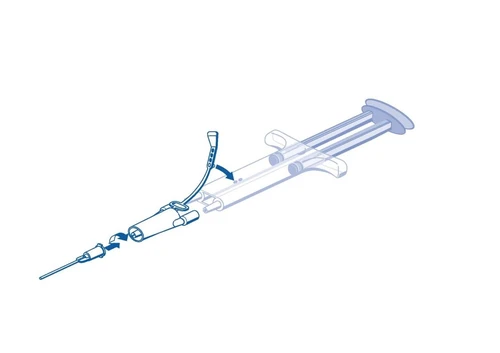
Safety strap
Dual plunger
Dual-chamber syringe
Connector
Application needle
- Remove all air from the syringe, then attach the connector and application needle.
- Position the connector and secure it to the side of the syringe using the safety strap.
- Connect the outlets of the ready-to-use dual-chamber syringe to the connector, ensuring they are properly secured.
- Secure the connector by fastening the safety strap to the ready-to-use dual-chamber syringe.
- If the safety strap breaks, use the spare connector provided in the kit.
- If no spare connector is available, the kit may still be used provided care is taken to ensure a secure and leak-proof connection.
- DO NOT remove the air remaining in the connector.
- Attach the application needle to the connector.
- DO NOT remove air from the connector or the application needle before beginning the actual glue application, as this may cause clogging of the needle.
Administration
Before applying TISSEEL, the wound surface should be dried using standard techniques (e.g., gauze pads, sponges, suction devices).
Compressed air or gas must not be used to dry the surface.
- Apply the mixed fibrinogen-thrombin solution to the target surface or surfaces to be bonded by gently pressing the rear part of the common plunger.
- In surgical procedures requiring minimal volumes of fibrin glue, it is recommended to expel and discard the first few drops of the product.
- After applying TISSEEL, wait at least 2 minutes to achieve sufficient polymerization.
Note: If the application of fibrin glue components is interrupted, the needle may become immediately clogged. In such cases, replace the application needle with a new one only immediately before resuming glue application. If the connector outlets are blocked, use the spare connector provided in the package.
After mixing, the components of the fibrin glue polymerize within a few seconds—due to the high thrombin concentration (500 IU/mL).
Fibrin glue may also be applied using other devices manufactured by BAXTER, specifically designed for use in endoscopy, minimally invasive surgical procedures, or for applying the product to large or difficult-to-access surfaces. When using such devices, strictly follow the manufacturer's instructions for use.
Products containing oxidized cellulose should not be used with TISSEEL, as the low pH affects thrombin activity.
For certain applications, biocompatible materials such as collagen sheets may be used as carriers or for mechanical reinforcement of tissue appositions.
Application of the product using a spray device
When applying TISSEEL using a spray device, follow the manufacturer's recommendations regarding pressure and distance from tissue, according to the ranges specified below:
| Recommended pressure and distance values from tissue and spray devices used for applying TISSEEL product | |||||
| Surgical procedure | Spray device to be used | Applicator tips to be used | Pressure regulator to be used | Recommended distance from target tissue | Recommended spraying pressure |
| Open wound | Spray Device for Tisseel/Artiss | nd. | EasySpray | 10–15 cm | 1.5– 2.0 bar (21.5– 28.5 psi) |
| Spray Device for Tisseel/Artiss — 10-piece package | nd. | EasySpray | |||
| Laparoscopic/ minimally invasive procedures | nd. | Duplospray MIS 20 cm Applicator | Duplospray MIS 1.5 bar Regulator | 2–5 cm | 1.2– 1.5 bar (18– 22 psi) |
| Duplospray MIS 30 cm Applicator | |||||
| Duplospray MIS 40 cm Applicator | |||||
| Spray Set 360 Endoscopic Applicator with Snap Lock | |||||
| Spray Set 360 Endoscopic Applicator with safety strap | |||||
| Disposable tip | |||||
During the spraying of the TISSEEL product, monitor arterial pressure, heart rate,
arterial oxygen saturation, and end-tidal CO concentration due to the risk of air or gas embolism
(see section 2).
When administering the TISSEEL product into a closed space such as the thoracic or abdominal cavity, use of the DuploSpray MIS applicator and a pressure regulating system is recommended. Further information is available in the DuploSpray MIS device instructions for use.
Disposal of leftovers
Any unused remnants of the medicinal product or waste materials must be disposed of in accordance with local regulations.
Information intended exclusively for medical professionals (packaging:
AST Syringe:
General Information
- Before applying TISSEEL, protect body areas outside the target application site to prevent unwanted tissue adhesion.
- To prevent glue from adhering to surgical gloves and instruments, moisten them with physiological saline solution prior to contact.
- As a general guideline for surface bonding, one TISSEEL glue set of 2 ml (i.e., 1 ml of fibrinogen solution plus 1 ml of thrombin solution) is sufficient to cover an area of at least 10 cm².
- The required dose depends on the size of the surface to be bonded.
- DO NOT use the two components of TISSEEL separately. Both components must be used together.
- Do not expose TISSEEL to temperatures above 37°C. DO NOT use microwave radiation for thawing.
- DO NOT thaw the product by holding it in hands.
- DO NOT use TISSEEL until it has completely thawed and warmed to a temperature of 33°C–37°C.
- Remove the protective cap from the syringe only after thawing and warming are complete.
- Remove all air from the syringe, then attach the connector and the application needle.
Preparation for Use
The fibrinogen solution and thrombin solution are contained within a ready-to-use syringe. The product is packaged under aseptic conditions into two sterile bags. The inner bag and its contents are sterile unless the integrity of the outer packaging has been compromised. Using aseptic technique, transfer the sterile inner bag and its contents to a sterile field. The ready-to-use syringe may be thawed AND warmed using one of the following methods:
- Rapid thawing/warming (sterile water bath) – recommended method
- Thawing/warming in a non-sterile water bath
- Thawing/warming in an incubator
- The ready-to-use syringe may also be thawed and stored at room temperature (not exceeding 25°C) for up to 72 hours. Warming is required before use.
1) Rapid thawing/warming (sterile water bath) – recommended method
It is recommended to thaw and warm both glue components using a sterile water bath at a temperature of 33°C–37°C.
- The water bath temperature must not exceed 37°C. To maintain the specified temperature range, monitor water temperature continuously with a thermometer and replace water as needed.
- If using a sterile water bath for thawing and warming, remove the syringe from its bag before placing it into the sterile water bath.
Instructions:
Transfer the inner bag to a sterile environment, remove the ready-to-use syringe from the inner bag, and place it directly into the sterile water bath. Ensure that the contents of the ready-to-use syringe are completely submerged in water.
Table 1 – AST Syringe: Minimum thawing/warming time in sterile water bath
| Package size | 33°C to 37°C, sterile water bath, product removed from bags | Minimum thawing/warming time |
|--------------|-------------------------------------------------------------|-------------------------------|
| 2 ml | | 5 minutes |
| 4 ml | | 5 minutes |
| 10 ml | | 12 minutes |
2) Thawing/warming in non-sterile water bath
Instructions:
Place the ready-to-use syringe, still in both protective bags, into a non-sterile water bath outside the sterile field for the appropriate duration (see Table 2). Ensure that the bags remain fully submerged during the entire thawing process. After thawing, remove the bags from the water bath, dry the outer bag, and transfer the inner bag containing the ready-to-use syringe and plunger to the sterile field.
Table 2 – AST Syringe: Minimum thawing/warming time in non-sterile water bath
| Package size | 33°C to 37°C, non-sterile water bath, product in bags | Minimum thawing/warming time |
|--------------|--------------------------------------------------------|-------------------------------|
| 2 ml | | 30 minutes |
| 4 ml | | 40 minutes |
| 10 ml | | 80 minutes |
3) Thawing/warming in incubator
Instructions:
Place the ready-to-use syringe, still in both protective bags, into an incubator outside the sterile field for the appropriate duration (see Table 3). After thawing/warming, remove the bags from the incubator, remove the outer bag, and transfer the inner bag with the ready-to-use syringe to the sterile field.
Table 3 – AST Syringe: Minimum thawing/warming time in incubator
| Package size | 33°C to 37°C, incubator, product in bags | Minimum thawing/warming time |
|--------------|------------------------------------------|-------------------------------|
| 2 ml | | 40 minutes |
| 4 ml | | 85 minutes |
| 10 ml | | 105 minutes |
4) Thawing at room temperature (not exceeding 25°C) PRIOR to warming
Instructions:
Thaw the ready-to-use syringe, still in both protective bags, at room temperature outside the sterile field for the appropriate duration (see Table 4). After thawing, warm the product to the required temperature (33°C–37°C) by placing the outer bag in an incubator.
Table 4 – AST Syringe: Minimum thawing time at room temperature outside sterile field and additional warming time in incubator to 33°C–37°C
| Package size | Minimum thawing time at room temperature (≤25°C) | Additional warming time in incubator to 33°C–37°C after thawing |
|--------------|---------------------------------------------------|---------------------------------------------------------------|
| 2 ml | 60 minutes | + 15 minutes |
| 4 ml | 110 minutes | + 25 minutes |
| 10 ml | 160 minutes | + 35 minutes |
After thawing at room temperature, the product must be used within 72 hours of removal from the freezer.
Stability after thawing
After thawing and warming (at 33°C–37°C, methods 1, 2, and 3), chemical and physical stability of the product has been demonstrated for 12 hours at 33°C–37°C.
For product thawed at room temperature in its unopened bag (method 4), chemical and physical stability has been demonstrated for 72 hours at temperatures not exceeding 25°C.
Warm to 33°C–37°C immediately before use.
From a microbiological standpoint, the product should be used immediately after warming to 33°C–37°C, unless the method of opening/thawing excludes the risk of microbiological contamination.
If the product is not used immediately, responsibility for storage conditions and duration lies with the user.
Re-freezing or refrigeration after initiation of thawing is not permitted.
Handling after thawing/before administration
To achieve optimal mixing of the two solutions and optimal fibrin glue setting, the temperature of both glue components must be maintained at 33°C–37°C until application.
The fibrinogen solution and thrombin solution should be clear or slightly opalescent. Do not use cloudy solutions or those containing precipitate. Thawed products should be visually inspected before use for the presence of insoluble particles, discoloration, or any physical changes. If any of these conditions are observed, discard the solution.
The thawed fibrinogen solution should be a slightly viscous liquid. If the solution appears as a coagulated gel, denaturation should be suspected (likely due to interruption of the cold chain or overheating during warming). In such cases, TISSEEL MUST NOT be used under any circumstances.
- Do not remove the syringe from the bag until immediately before use.
- TISSEEL should only be used after complete thawing and warming (liquid consistency).
- Remove the protective cap from the syringe only immediately before application.
Administration using the AST syringe: To apply the glue, connect the dual-chamber ready-to-use syringe (containing fibrinogen solution and thrombin solution) to the connector and application needle provided in the accompanying device kit. The common plunger of the dual-chamber ready-to-use syringe, supplied with the application devices, ensures equal volumes of both components are delivered to the connector, where they are mixed in the application needle and then applied.
Instructions for use of the AST syringe
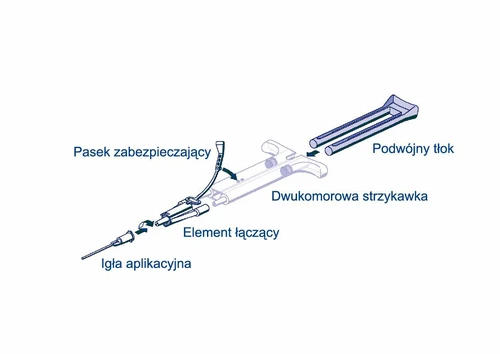
- Remove all air from the syringe, then attach the connector and application needle.
- Position the connector and secure it to the side of the syringe with the safety strap.
- Connect the outlets of the dual-chamber ready-to-use syringe to the connector, ensuring they are properly attached.
- Secure the connector by fastening the safety strap to the ready-to-use dual-chamber syringe.
- If the safety strap breaks, use the spare connector provided in the kit.
- If no spare connector is available, the set may still be used provided care is taken to ensure a secure and leak-proof connection.
- DO NOT remove air remaining in the connector.
- Attach the application needle to the connector.
- DO NOT remove air from the connector or application needle before starting actual glue application, as this may cause needle blockage.
Administration
Before applying TISSEEL, the wound surface should be dried using standard techniques (e.g., gauze, sponges, suction devices).
Do not use compressed air or gas for drying the surface.
- Apply the mixed fibrinogen-thrombin solution to the target surface or surfaces to be bonded by gently depressing the common plunger.
- In surgical procedures requiring minimal volumes of fibrin glue, it is recommended to expel and discard the first few drops of the product.
- After applying TISSEEL, wait at least 2 minutes to allow sufficient polymerization.
Note: If application of the fibrin glue components is interrupted, the needle may become immediately blocked. In such cases, replace the application needle with a new one immediately before resuming application. If the connector outlets are blocked, use the spare connector provided in the package.
After mixing, the fibrin glue sets within seconds—due to the high thrombin concentration (500 IU/ml).
Fibrin glue may also be applied using other devices manufactured by BAXTER, specifically designed for use in endoscopy, minimally invasive surgical procedures, or for application on large or hard-to-reach surfaces. When using such devices, strictly follow the manufacturer's instructions.
Products containing oxidized cellulose should not be used with TISSEEL, as the low pH affects thrombin activity.
For certain applications, biocompatible materials such as collagen sheets may be used as carriers or for mechanical reinforcement of anastomoses.
Application of the product using a spray device
| When applying TISSEEL using a spray device, it is necessary to | ||
| follow the manufacturer's recommendations regarding pressure and distance from the tissue, according to the | ||
| ranges provided below: | ||
Recommended pressure and distance from tissue, and spray devices recommended for
application of TISSEEL product
Spray Set Regulator Recommended
Recommended
Surgical Spray device to be Applicator to be Pressure to be Distance from
Pressure
procedure used used used target tissue
Spray Set nd. EasySpray
1.5–
Tisseel/Artiss
2.0 bar
Open wound Spray Set 10–15 cm
(21.5–
Tisseel/Artiss
28.5 psi)
—
10-piece pack
Regulator
Duplospray
MIS 1.5 bar
Duplospray
MIS 20 cm
Duplospray
MIS 30 cm
Duplospray
1.2–
Laparoscopic MIS 40 cm
1.5 bar
(minimally invasive) nd. Spray Set 2–5 cm
(18–
Endoscopic applicator
360
with Snap Lock
Spray Set
360 Endoscopic applicator
with safety strap
Disposable tip
| During the application of TISSEEL, monitor arterial blood pressure, heart rate, arterial oxygen saturation, and end-tidal CO concentration due to the risk of air or gas embolism (see section 2). | |
| When administering TISSEEL into a closed thoracic or abdominal cavity, the use of the DuploSpray MIS applicator and a pressure-regulating system is recommended. Further information is available in the DuploSpray MIS device instructions for use. | |
| Removal of residues | |
| Any unused remnants of the medicinal product or waste materials must be disposed of in accordance with local regulations. | |