Thyrozol
Poland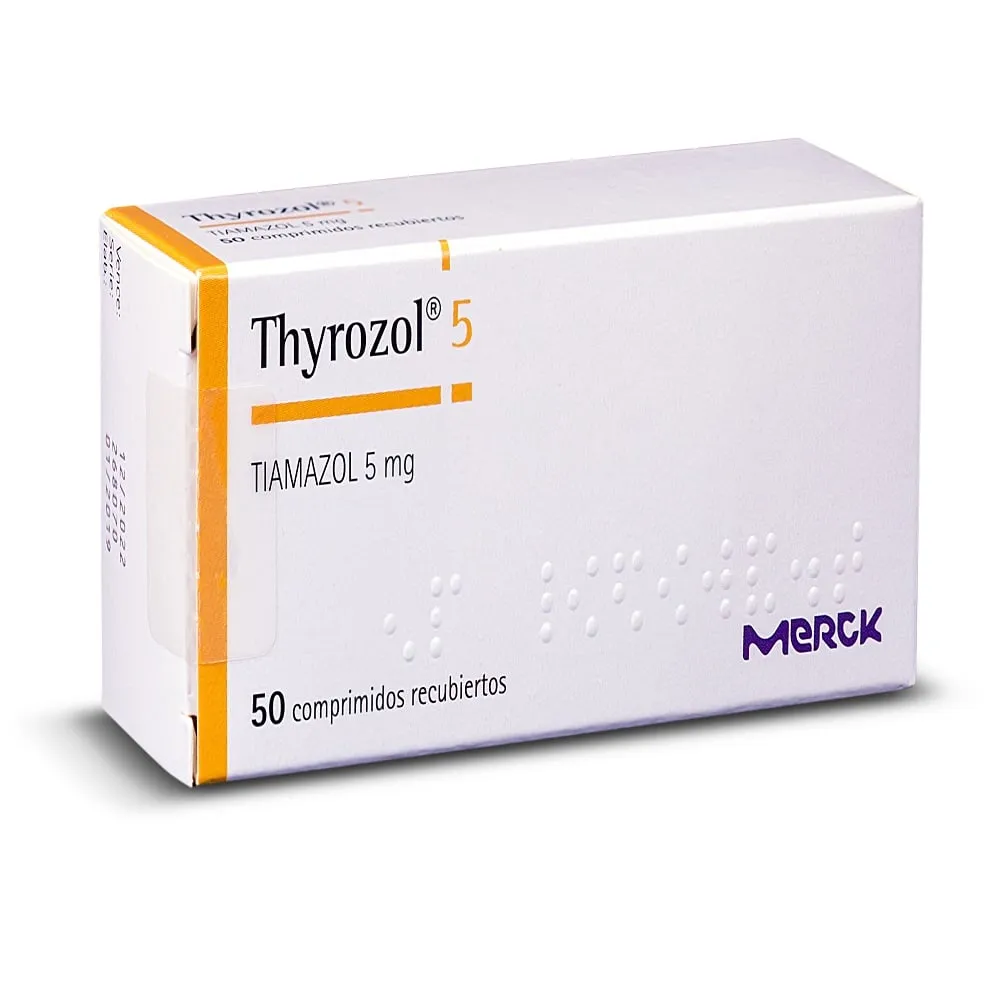
Table of Contents
Package leaflet: Information for the user
Warning! Keep this leaflet! Information on the immediate packaging is in a foreign language.
Thyrozol, 10 mg, coated tablets
Thiamazolum
Please read this leaflet carefully before taking this medicine, as it contains
important information for the patient.
- Keep this leaflet, so that you can read it again if necessary.
- If you have any doubts, consult your doctor or pharmacist.
- This medicine has been prescribed for a specific individual. Do not pass it on to others. The medicine may harm another person, even if their symptoms are identical.
- If any adverse effects occur in the patient, including any adverse effects not listed in this leaflet, inform the doctor or pharmacist. See section 4.
Table of contents of the leaflet
- What is Thyrozol and what is it used for
- Important information before taking Thyrozol
- How to take Thyrozol
- Possible side effects
- How to store Thyrozol
- Contents of the pack and other information
1. What is Thyrozol and what is it used for
The medicine contains thiamazole. It inhibits the excessive production of thyroid hormones in the thyroid gland,
regardless of the cause.
Thyrozol is used in the treatment of excessive production of thyroid hormones:
- when it is necessary to take the medicine to treat an overactive thyroid gland producing hormones in excess, particularly in cases of a small goitre (swelling at the front of the neck) or absence of goitre,
- when thyroid surgery is planned,
- when radioactive iodine therapy is planned, especially in cases of very strong increase in thyroid hormone production,
- after radioactive iodine therapy until the full effects of treatment become apparent.
Thyrozol is used to prevent excessive production of thyroid hormones prior to
planned exposure to iodine, for example before diagnostic procedures using iodine-containing contrast agents:
- when a slight increase in thyroid hormone production is detected without associated symptoms,
- when certain areas in the thyroid gland produce hormones (autonomous adenomas),
- when excessive thyroid hormone production has occurred in the past.
2. Important information before using Thyrozol
When not to use Thyrozol
- if the patient is allergic (hypersensitive) to thiamazole, substances related to thiamazole (thionamide derivatives), or any of the other ingredients of this medicine (listed in section 6),
- if laboratory tests show a reduced number of certain blood cells (granulocytopenia),
- if cholestasis (impaired bile flow) is present before starting treatment with Thyrozol,
- if bone marrow damage occurred in the past during treatment with thiamazole or carbimazole,
- if the patient previously experienced pancreatitis (acute pancreatitis) after administration of thiamazole or carbimazole.
Warnings and precautions
Before starting treatment with Thyrozol, discuss this with your doctor or pharmacist.
If the patient previously experienced mild allergic reactions to thiamazole, such as allergic skin rashes or itching, consult your doctor, who will decide whether Thyrozol can be used.
If the patient has a large goitre (swelling at the front of the neck) causing breathing difficulties, consult your doctor, as the goitre may enlarge during treatment with Thyrozol.
The doctor may decide to use the medicine for a short period only, with regular monitoring during treatment.
Immediately consult your doctor if symptoms such as fever, fatigue, weight loss, or muscle and joint pain occur. These may be symptoms of blood vessel inflammation (vasculitis). In such cases, the doctor may discontinue treatment if necessary. Usually, these symptoms resolve after stopping the medicine.
Stop taking Thyrozol immediately and contact your doctor immediately if symptoms such as inflammation of the oral mucosa, sore throat, or fever occur. These may be signs of a serious reduction in certain blood cells (agranulocytosis). This may occur particularly during the first weeks of treatment and may lead to serious consequences.
Immediately contact your doctor if the patient develops fever or abdominal pain, as these may be symptoms of pancreatitis (acute pancreatitis). It may be necessary to discontinue treatment with Thyrozol.
Thyrozol may harm the unborn child. If the patient can become pregnant, she should use a reliable method of contraception from the start of treatment and throughout therapy.
In cases of very high production of thyroid hormones, very high doses of Thyrozol (above 120 mg per day) may be required. In such cases, the doctor will periodically perform blood tests, as bone marrow damage is possible. If this occurs, the doctor may decide to discontinue treatment and, if necessary, prescribe another medicine.
If the goitre enlarges during treatment with Thyrozol or if thyroid function becomes excessively reduced, the doctor may adjust the dose of Thyrozol. However, such situations may also occur naturally during the course of the disease. Similarly, the development or worsening of a certain type of eye disease (endocrine ophthalmopathy) may occur, which is unrelated to treatment with Thyrozol.
During treatment with Thyrozol, weight gain may occur. This is a normal bodily response. Thyrozol affects thyroid hormones, which regulate energy expenditure in the body.
Thyrozol and other medicines
Iodine intake affects the action of Thyrozol. The doctor will determine the dose of Thyrozol taking into account iodine intake and thyroid function in the individual patient.
If the patient is taking anticoagulant medicines (preventing blood clotting), inform the doctor, as normalization of thyroid function due to Thyrozol may affect the action of these medicines. The same may apply to other medicines.
Tell your doctor or pharmacist about all medicines the patient is currently taking or has recently taken, as well as any medicines the patient plans to take.
Pregnancy and breastfeeding
Thyrozol may harm the unborn child.
If the patient can become pregnant, she should use a reliable method of contraception from the start of treatment and throughout therapy.
If the patient is pregnant, suspects she may be pregnant, or plans to become pregnant, she should consult her doctor immediately. Continuing treatment with Thyrozol during pregnancy may be necessary if the potential benefits outweigh the risks to the mother and fetus.
Thyrozol passes into human milk. The doctor will decide whether taking Thyrozol during breastfeeding is necessary. If so, only a low dose of up to 10 mg of thiamazole should be used.
The doctor will regularly monitor the newborn's thyroid function.
Driving and operating machinery
Thyrozol has no influence on the ability to drive or operate machinery.
Important information about certain ingredients of Thyrozol
If the patient has an intolerance to certain sugars, inform the doctor, as Thyrozol contains lactose.
The medicine contains less than 1 mmol (23 mg) of sodium per tablet, meaning the medicine is considered "sodium-free".
3. How to use Thyrozol
This medicine should always be used exactly as directed by your doctor. If in doubt, consult your doctor.
Thyrozol is available in the following strengths: 5 mg, 10 mg, 20 mg.
Recommended dose
Your doctor will determine the dose individually depending on the severity of the disease. The following doses are usually recommended.
- Adults The initial dose is 10 mg to 40 mg of Thyrozol per day (or more in some patients) and is administered until the thyroid gland begins to function normally. The maintenance dose is either 5 mg to 20 mg of Thyrozol per day in combination with thyroid hormones, or 2.5 mg to 10 mg of Thyrozol per day without thyroid hormones.*
- Use in children and adolescents (from 3 to 17 years of age) The initial dose is 0.5 mg of Thyrozol per kg of body weight per day. Then your doctor will decide whether a lower maintenance dose is sufficient and whether additional thyroid hormones are necessary.*
Use in children (under 2 years of age)
Thyrozol is not recommended for use in children under 2 years of age.
If there is a risk of excessive production of thyroid hormones following a diagnostic procedure using an iodine-containing contrast agent, your doctor may recommend taking 10 mg to 20 mg of Thyrozol per day in combination with perchlorate for approximately 10 days (until the iodine-containing contrast agent has been eliminated from the body).*
*If small doses are required, tablets containing 5 mg of the medicine are available.
Patients with liver disease
If you have impaired liver function or liver disease, inform your doctor. In such cases, the dose of Thyrozol may need to be reduced.
Patients with kidney disease
If you have impaired kidney function or kidney disease, inform your doctor. In such cases, the dose of Thyrozol may need to be reduced.
Duration of treatment
The duration of treatment may vary depending on the reason for using Thyrozol.
Your doctor will explain how long you should take the medicine. Usually, the duration of treatment is as follows:
- treatment of excessive thyroid hormone production (without surgery): 6 months to 2 years,
- treatment prior to surgical procedure: 3-4 weeks before surgery,
- treatment before administration of radioactive iodine: until thyroid function normalizes,
- treatment after administration of radioactive iodine: 4-6 months, until the effects of radioactive iodine therapy become apparent.
Administration
The tablets should be taken in the morning, after breakfast, with a small amount of liquid, e.g. half a glass of water. The tablet may be divided into equal doses.
If a larger number of tablets are taken per day, they may also be divided into several portions and taken at regular intervals throughout the day.
Taking more Thyrozol than recommended
If you accidentally take more medicine than recommended, it should not cause a problem. However, if higher doses have been taken repeatedly, you should contact your doctor as soon as possible.
You may experience cold intolerance, fatigue, dry skin, constipation, weight gain, slow heartbeat, and goitre. Your doctor may recommend adjusting the dose of Thyrozol or may prescribe additional thyroid hormones to prevent goitre.
Missing a dose of Thyrozol
Do not take a double dose to make up for a missed dose. On the following day, take the same dose as usual.
If you have any further questions about the use of this medicine, consult your doctor or pharmacist.
4. Possible adverse reactions
Like all medicines, this medicine can cause adverse reactions, although not everyone will experience them.
The following adverse effects may occur during treatment with Thyrozol, sometimes even after several months of treatment.
Very common (may affect more than 1 in 10 people)
- Skin reactions of varying severity (rash, itching, itchy hives). In most cases, these are mild and resolve during continued treatment with Thyrozol.
Common (may affect up to 1 in 10 people)
- Joint pain.
Uncommon (may affect up to 1 in 100 people)
- If symptoms such as inflammation of the mucous membranes of the mouth, sore throat, or fever occur, contact your doctor immediately. These may be signs of a serious reduction in the number of certain blood cells (agranulocytosis).
Rare (may affect up to 1 in 1,000 people)
- Disturbances of taste or loss of taste.
- Fever.
Very rare (may affect up to 1 in 10,000 people)
- Decreased number of platelets (thrombocytopenia), decreased number of all blood cells (pancytopenia), lymph node disorder (generalized lymphadenopathy).
- Hormonal disorder affecting blood glucose regulation, leading to reduced blood sugar levels (autoimmune insulin syndrome).
- Inflammation or irritation of nerves (neuritis, polyneuropathy).
- Swelling of the salivary glands.
- Liver function disorders or hepatitis (cholestatic jaundice, toxic hepatitis). Symptoms usually resolve after discontinuation of treatment.
- Acute allergic skin reactions affecting the entire body, including blistering skin reactions (Stevens-Johnson syndrome), hair loss, inflammatory autoimmune disease of the skin and connective tissue (lupus erythematosus).
Frequency not known (frequency cannot be estimated from the available data)
- Inflammation of the pancreas (acute pancreatitis).
- Inflammation of blood vessels (vasculitis).
Children and adolescents
Adverse reactions in children and adolescents are similar to those observed in adults.
Reporting of adverse reactions
If any adverse reactions occur, including any adverse reactions not listed in this leaflet, inform your doctor or pharmacist. Adverse reactions can be reported directly to the Department for Monitoring of Adverse Drug Reactions of the Office for Registration of Medicinal Products, Medical Devices and Biocidal Products, Al. Jerozolimskie 181C, 02-222 Warsaw, tel.: +48 22 49 21 301, fax: +48 22 49 21 309, website: https://smz.ezdrowie.gov.pl.
Reporting adverse reactions helps to provide more information on the safety of the medicine.
5. How to store Thyrozol
Keep the medicine out of the sight and reach of children.
Do not use this medicine after the expiry date stated on the packaging. The expiry date refers to the last day of the stated month.
Do not store above 25°C.
Translation of some information on the immediate packaging:
Verwendbar bis und Ch.-B. siehe Randprägung – expiry date and batch number see edge embossing.
Medicines must not be disposed of via wastewater or household waste. Ask your pharmacist how to dispose of medicines no longer required. These measures help protect the environment.
6. Contents of the pack and other information
What Thyrozol contains
The active substance is thiamazole. Each coated tablet contains 10 mg of thiamazole.
The other ingredients are:
tablet core: colloidal anhydrous silica, magnesium stearate, hypromellose, talc, cellulose,
powdered cellulose, corn starch, monohydrate lactose, sodium carboxymethyl starch;
coating: dimethicone 100, polyethylene glycol 400, hypromellose, titanium dioxide (E 171) and iron oxide (E 172).
What Thyrozol looks like and contents of the pack
Thyrozol 10 mg coated tablets are grey-orange, biconvex, round tablets with a score line on both sides.
Thyrozol 10 mg coated tablets are available in packs containing 25, 50, 75 or 100 tablets.
For more detailed information, please contact the marketing authorisation holder or the parallel importer.
Marketing authorisation holder in Germany, the country of export:
Merck Healthcare Germany GmbH
Waldstraße 3
64331 Weiterstadt
Germany
Manufacturer:
Merck Healthcare KGaA
Frankfurter Straße 250
64293 Darmstadt
Germany
P&G Health Austria GmbH & Co. OG
Hösslgasse 20
9800 Spittal/Drau
Austria
Parallel importer:
InPharm Sp. z o.o.
ul. Strumykowa 28/11
03-138 Warsaw
Poland
Repackaged in:
InPharm Sp. z o.o. Services sp. k.
ul. Chełmżyńska 249
04-458 Warsaw
Poland
Marketing authorisation number in Germany, the country of export: 13478.01.00
Parallel import authorisation number: 434/24
This medicinal product is authorised in the European Economic Area countries under the following names:
Bulgaria: Thyrozol
Czech Republic: Thyrozol
Estonia: Thyrozol
France: Thyrozol
Germany: Thyrozol
Latvia: Thyrozol
Lithuania: Thyrozol
Poland: Thyrozol
Romania: Thyrozol
Slovakia: Thyrozol