Thymoglobuline 5 mg/ml
Poland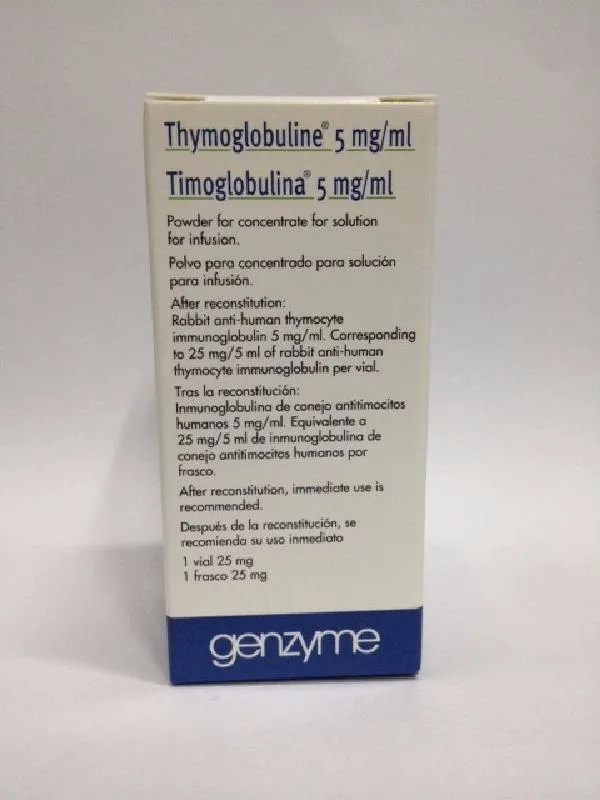
Table of Contents
Patient Information Leaflet
Thymoglobuline 5 mg/ml, 25 mg
Powder for solution for infusion
Please read all of this leaflet carefully before taking this medicine, because it contains
important information for you.
- Keep this leaflet, as you may need to read it again.
- If you have any further questions, please ask your doctor or pharmacist.
- This medicine has been prescribed for a specific individual. Do not pass it on to others. It may harm other people, even if their symptoms are the same.
- If you experience any side effects, including any not listed in this leaflet, please inform your doctor or pharmacist. See section 4.
Leaflet Contents
- What Thymoglobuline 5 mg/ml is and what it is used for
- Important information before using Thymoglobuline 5 mg/ml
- How to use Thymoglobuline 5 mg/ml
- Possible side effects
- How to store Thymoglobuline 5 mg/ml
- Contents of the pack and other information
1. What Thymoglobuline 5 mg/ml is and what it is used for
Thymoglobuline 5 mg/ml is a powder containing 25 mg of rabbit immunoglobulin
against human T-lymphocytes. Before administration, the powder must be reconstituted with
water for injections and then diluted to prepare an infusion solution (intravenous drip).
Thymoglobuline 5 mg/ml is an immunosuppressive agent (ATC: L04AA04, antithymocyte immunoglobulin).
Indications:
- Immunosuppression in transplantation: prevention and treatment of transplant rejection;
- Prevention of acute and chronic graft-versus-host disease (GvHD) following allogeneic hematopoietic stem cell transplantation in adults;
- Treatment of acute, steroid-resistant graft-versus-host disease (GvHD);
- Treatment of aplastic anemia.
2. Important information before using Thymoglobuline 5 mg/ml
When not to use Thymoglobuline 5 mg/ml:
- if the patient is allergic to rabbit protein or to any of the other ingredients of this medicine (listed in section 6).
- if the patient has acute or chronic infections which contraindicate any additional immunosuppressive treatment.
Warnings and precautions
Before starting treatment with Thymoglobuline 5 mg/ml, discuss this with your doctor.
Thymoglobuline 5 mg/ml must be administered only in a hospital setting under strict medical supervision.
During treatment with thymoglobulin, your doctor will regularly perform blood tests and other examinations to monitor your health. Due to the mechanism of action of this medicine, it may affect the blood and other organs of the patient.
Some severe adverse reactions may be related to the infusion rate. The recommended infusion rate described in section 3 "How to use Thymoglobuline 5 mg/ml" must be strictly followed. Patients should be closely monitored during the infusion.
Due to the risk of serum sickness (fever, itching, rash, urticaria (itching, redness), muscle and joint pain), special precautions should be taken in patients who have previously received rabbit immunoglobulin.
If an adverse reaction occurs, the infusion rate should be reduced or the infusion should be stopped until symptoms resolve.
In the event of a generalized anaphylactic reaction, the infusion must be stopped immediately. In case of shock (a condition characterized by a sudden drop in blood pressure), immediate symptomatic anti-shock treatment should be initiated. The decision to re-administer Thymoglobuline 5 mg/ml in patients who previously experienced an anaphylactic reaction to this medicine should be carefully considered.
In organ transplantation:
- consider reducing the dose if the platelet count is between 50,000 and 75,000 cells/mm³ or if the leukocyte (white blood cell) count is between 2,000 and 3,000 cells/mm³;
- consider discontinuing treatment in cases of persistent severe thrombocytopenia (below 50,000 cells/mm³) or leukopenia (below 2,000 cells/mm³). During treatment with Thymoglobuline 5 mg/ml and after its completion, white blood cell and platelet counts should be monitored.
After administration of Thymoglobuline 5 mg/ml in combination with multiple immunosuppressive drugs, infections, reactivation of infections (particularly cytomegalovirus), febrile neutropenia (fever associated with reduced numbers of certain white blood cells), and sepsis have been observed. Therefore, careful monitoring of the patient and appropriate infection prophylaxis are recommended.
Increased risk of neoplastic changes, lymphomas, or lymphoproliferative disorders (excessive increase in white blood cell count) should be considered.
During the manufacturing process of this medicine, human blood components (formaldehyde-treated red blood cells) and thymocytes are used. Standard measures to prevent infections caused by medicines produced from human blood components include donor selection, screening tests for infection markers in individual donors, and implementation of effective procedures during manufacturing that allow for virus inactivation and/or removal. Nevertheless, the possibility of transmitting infectious agents when administering medicines prepared from human blood components cannot be completely excluded. This risk also applies to unknown or newly emerging viruses and other pathogens.
Thymoglobuline 5 mg/ml and other medicines
Inform your doctor about all medicines currently or recently used, or which you plan to use.
Due to the risk of excessive immunosuppression and lymphoproliferative disease (excessive increase in white blood cell count), concomitant administration of Thymoglobuline 5 mg/ml with other immunosuppressive medicines such as cyclosporine, tacrolimus, mycophenolate mofetil should be carefully considered.
It has been reported that mixing Thymoglobuline 5 mg/ml with heparin and hydrocortisone in a glucose infusion solution in the same infusion bag leads to precipitation. Therefore, these medicines should not be mixed.
Vaccinations
During treatment with this medicine, administration of vaccines containing live, attenuated microorganisms is associated with a risk of generalized infection which may be life-threatening. This risk is increased in patients with impaired immunity due to underlying disease (e.g. aplastic anemia).
Diagnostic tests
This medicine may induce the formation of antibodies reacting with other rabbit immunoglobulins.
For two months after administration of rabbit immunoglobulin against human T-lymphocytes, serum test results obtained using ELISA tests that include rabbit antibodies may be inaccurate.
Pregnancy and breastfeeding
If the patient is pregnant or breastfeeding, suspects she may be pregnant, or plans to have a child, she should consult her doctor before using this medicine. This is because this medicine should not be used during pregnancy unless absolutely necessary.
Breastfeeding should be avoided during treatment with Thymoglobuline 5 mg/ml, as this medicine may pass into human milk and may affect the infant.
Driving and operating machinery
Do not drive or operate machinery during treatment with Thymoglobuline 5 mg/ml.
Thymoglobuline 5 mg/ml contains sodium.
This medicine contains 4 mg of sodium (the main component of table salt) per vial. This corresponds to 0.2% of the maximum recommended daily dietary sodium intake for adults.
3. How to use Thymoglobuline 5 mg/ml
The dosing of Thymoglobuline 5 mg/ml differs from that of other antithymocyte immunoglobulin products due to differences in protein type and concentration. The physician must exercise caution and ensure that the prescribed dose is appropriate. The dosage depends on the indication, administration schedule, and concomitant use of other immunosuppressive drugs. The dosages provided may be considered as recommended. Treatment may be discontinued without the need for tapering.
-
Immunosuppression in transplantation:
- Prevention of transplant rejection: 1.0 to 1.5 mg/kg body weight/day for 2 to 9 days after kidney, pancreas, or liver transplantation, or for 2 to 5 days after heart transplantation, corresponding to a total dose of 2.0 to 7.5 mg/kg body weight after heart transplantation and 2.0 to 13.5 mg/kg body weight after other organ transplants. Treatment may be discontinued without the need for tapering.
- Treatment of acute rejection: 1.5 mg/kg body weight/day for 3 to 14 days, corresponding to a total dose of 4.5 to 21 mg/kg body weight.
-
Prevention of acute and chronic graft-versus-host disease (GvHD): In adult patients undergoing transplantation of cells (bone marrow or peripheral blood stem cells) from an HLA-mismatched related or matched unrelated donor, prophylactic administration of Thymoglobuline 5 mg/ml is recommended at a dose of 2.5 mg/kg body weight/day from day –4 to day –2 or day –1, corresponding to a total dose of 7.5–10 mg/kg body weight.
-
Aplastic anaemia: 2.5 to 3.5 mg/kg body weight/day for 5 consecutive days, corresponding to a total dose of 12.5 to 17.5 mg/kg body weight. The use of Thymoglobuline 5 mg/ml in aplastic anaemia has not been established in controlled clinical trials.
-
Treatment of acute, steroid-resistant graft-versus-host disease: Dosing should be individually determined for each patient. Typically, 2 to 5 mg/kg body weight/day for 5 days.
The doctor or nurse will closely monitor the patient during the first dose due to an increased risk of adverse reactions. They will check for rash and monitor pulse, blood pressure, and respiration. Periodically, the doctor may also order blood tests to check blood cell counts. If white blood cell count is low, the doctor may prescribe medications to prevent or treat infections; if platelet count is low, the doctor may recommend platelet transfusion.
The doctor may adjust the dose of Thymoglobuline 5 mg/ml if the patient experiences adverse reactions.
Other medications recommended by the doctor
The doctor may administer other medications before or during the infusion of Thymoglobuline 5 mg/ml. These medications, listed below, are used to prevent or treat possible adverse reactions:
- Antipyretics, to reduce fever;
- Intravenous corticosteroids, to prevent transplant rejection and adverse reactions;
- Antihistamines, to prevent allergic reactions;
- Heparin, to reduce the risk of blood clots.
Use in children and adolescents
Dosing recommendations are not specifically established. Available data indicate that the dosing regimen used in adult patients does not require modification in children and adolescents.
As in adults, dosing in children and adolescents depends on the indication, administration schedule, and concomitant use of other immunosuppressive drugs. All these factors should be considered by the treating physician when determining the dose.
Administration of a higher than recommended dose of Thymoglobuline 5 mg/ml
It is unlikely that a patient would receive a higher than recommended dose of Thymoglobuline 5 mg/ml, as the patient's condition will be closely monitored by the doctor or nurse throughout treatment. However, if a higher than recommended dose is administered, thrombocytopenia (low platelet count) or leukopenia (low white blood cell count) may occur. This may lead to fever, chills, sore throat, oral ulceration, bleeding, or easy bruising. Prolonged use of this medication beyond 3 weeks may predispose to serious infections and increase the risk of lymphomas (white blood cell proliferative disorders).
Missed dose of Thymoglobuline 5 mg/ml
Do not administer a double dose to make up for a missed dose.
Discontinuation of Thymoglobuline 5 mg/ml
If you have any further questions about the use of this medicine, consult your doctor or nurse.
4. Possible side effects
Like all medicines, this product can cause side effects, although not everyone will experience them. Some side effects such as fever, rash, and headache, as well as other effects affecting pulse, blood pressure, and breathing, and some allergic reactions, may occur more frequently after the first or second dose of Thymoglobuline 5 mg/ml than with subsequent doses.
Immediately inform the doctor if the patient experiences:
- Itchy rash
- Difficulty breathing
- Stomach pain
- Swelling of the face, tongue, or throat
The following adverse reactions have been reported during or after administration of this medicine:
- Very common adverse reactions (may affect more than 1 in 10 patients): low red blood cell count (anaemia);
- Infusion-related reactions occurring after the first or second dose within a single treatment cycle. These include fever, chills, dyspnoea, nausea or vomiting, diarrhoea, hypotension or hypertension, malaise, rash, urticaria, and/or headache. These reactions are usually mild and transient and can be prevented by reducing the infusion rate and/or administering appropriate medications;
- During or after treatment with Thymoglobuline 5 mg/ml, increased liver enzyme activity in blood has been frequently observed (in more than 1 in 100 patients). This is generally asymptomatic, and liver function test results return to normal without treatment. However, liver damage (liver failure) has been reported less frequently (may affect more than 1 in 1000 patients);
- Frequency unknown (cannot be estimated from available data): increased bilirubin levels in blood (elevated laboratory test values);
- Infusion-related reactions due to cytokine release syndrome (release of immune-related molecules). Severe and potentially life-threatening cases have been rarely reported. Cases of severe cytokine release syndrome involving cardiorespiratory disturbances (hypotension, acute respiratory distress syndrome, pulmonary oedema, myocardial infarction, tachycardia, and/or death) have been reported;
- Very rare cases of severe anaphylactic reactions have been reported, particularly in patients who did not receive epinephrine during the event;
- Adverse reactions such as fever, rash, urticaria, joint and/or muscle pain, suggestive of serum sickness. Serum sickness may occur between 5 and 15 days after starting treatment. These symptoms are transient and resolve with corticosteroid therapy;
- Local site reactions such as pain, swelling, and redness at the intravenous injection site. Co-infusion of Thymoglobuline 5 mg/ml with heparin and hydrocortisone in 0.9% sodium chloride solution may reduce the risk of thrombophlebitis (inflammatory condition caused by a clot blocking the vein lumen) and deep vein thrombosis;
- Adverse reactions such as neutropenia (decreased neutrophil count – a blood count change) and thrombocytopenia (decreased platelet count), related to the presence of cross-reacting antibodies. These reactions may occur within the first two days of treatment or after its completion. The mechanism involves cross-reacting antibodies against neutrophils and platelets. Monitoring white blood cell and platelet counts helps reduce the severity and frequency of these reactions;
- Following administration of Thymoglobuline 5 mg/ml in combination with various immunosuppressive drugs, cases of infections (bacterial, fungal, viral, and protozoal), reactivation of infections (particularly cytomegalovirus), febrile neutropenia, and sepsis have been reported. Rarely, malignancies including lymphoproliferative disorders and other lymphomas, as well as solid tumours, have been observed. These adverse reactions may occasionally lead to death. The above adverse reactions were always associated with concomitant use of multiple immunosuppressive drugs.
If any adverse symptoms occur, including any possible adverse effects not listed in this leaflet, consult your doctor or nurse.
Additional adverse reactions in children and adolescents
Available data indicate that adverse reactions observed with Thymoglobuline 5 mg/ml in children and adolescents do not differ substantially from those observed in adult patients.
Reporting of adverse reactions
If any adverse effects occur, including those not listed in this leaflet, inform your doctor, pharmacist, or nurse. Adverse reactions can be reported directly to the Department of Monitoring of Adverse Drug Reactions, Office for Registration of Medicinal Products, Medical Devices and Biocidal Products
Al. Jerozolimskie 181C
02-222 Warsaw
Tel.: +48 22 49 21 301
Fax: +48 22 49 21 309
Website: https://smz.ezdrowie.gov.pl
Adverse reactions may also be reported to the marketing authorization holder or its representative in Poland.
Reporting adverse reactions helps provide more information on the safety of this medicine.
5. How to store Thymoglobuline 5 mg/ml
Keep this medicine out of the sight and reach of children.
Unopened vials of Thymoglobuline 5 mg/ml should be stored at 2°C – 8°C (in a refrigerator).
Do not freeze.
After reconstitution, the solution should be used immediately; however, it has been shown that the prepared solution remains stable for 24 hours at 20°C.
Do not use this medicine after the expiry date stated on the carton after: "Expiry date (EXP)". The expiry date refers to the last day of the stated month.
6. Contents of the pack and other information
What Thymoglobuline 5 mg/ml contains
- The active substance is: Rabbit immunoglobulin anti-human T-lymphocytes – 25 mg.
- Other components are: glycine, sodium chloride, mannitol.
What Thymoglobuline looks like and contents of the pack:
Thymoglobuline 5 mg/ml is supplied in vials made of Type I glass with a chlorobutyl rubber stopper, coated with a layer of fluorobutyl rubber, containing 25 mg of powder, packed in a cardboard box.
Marketing Authorisation Holder and Manufacturer
Marketing Authorisation Holder:
Sanofi B.V.
Paasheuvelweg 25
1105 BP Amsterdam
The Netherlands
Manufacturer:
Sanofi Winthrop Industrie
23 boulevard Chambaud de la Bruyere
69007 Lyon
France
Genzyme Ireland Ltd
IDA Industrial Park
Old Kilmeaden Road
Waterford
Ireland
For further information, please contact the local representative of the Marketing Authorisation Holder in Poland:
Sanofi Sp. z o.o.
ul. Marcina Kasprzaka 6
01-211 Warszawa
Tel.: 022 280 00 00
Information intended exclusively for healthcare professionals:
Each vial of Thymoglobuline 5 mg/ml is intended for single use only.
It is recommended that each time Thymoglobuline 5 mg/ml is administered to a patient, the patient’s name and the product’s batch number are recorded to allow traceability between the patient and the specific batch of product.
Rabbit anti-human T-lymphocyte immunoglobulin is generally used as one of the medicinal products included in a complete immunosuppressive treatment regimen.
Prior to administration of Thymoglobuline 5 mg/ml, it is recommended to administer daily doses of antipyretics, intravenous corticosteroids, and (or) antihistamines.
This medicinal product is administered as an intravenous infusion after dilution in isotonic (0.9%) sodium chloride solution or 5% glucose solution. The solution should be clear or slightly opalescent. The reconstituted solution should be inspected visually for particulate matter and discoloration. Do not use if particulate matter is present or if discoloration is observed in the vial.
Immediate use of the reconstituted solution is recommended. The solution should be administered by slow intravenous infusion into a large vein, although administration via a peripheral vein is also possible.
The infusion rate should be adjusted so that the total duration of infusion is not less than 4 hours. During administration, an in-line filter with a pore size of 0.2 µm and low protein binding capacity should be used. It has been demonstrated that the use of a 0.2 µm filter removes visible particulate matter without significant loss of protein or reduction in activity.
To reduce the risk of superficial thrombophlebitis and deep vein thrombosis, this medicinal product may be administered via a peripheral vein together with heparin and hydrocortisone in 0.9% sodium chloride solution. Thymoglobuline 5 mg/ml must not be mixed with heparin and hydrocortisone in a glucose infusion solution, as this may cause precipitation.
Preparation of the infusion solution of Thymoglobuline 5 mg/ml (using aseptic technique)
Preparation of the solution:
- Reconstitute the powder with 5 ml of water for injections;
- Dilute the daily dose in isotonic solution (0.9% sodium chloride or 5% glucose solution) to obtain an infusion solution with a total volume between 50 and 500 ml (usually 50 ml per vial).
The medicinal product should be administered on the same day of reconstitution.