Thalidomide accord
Poland
Table of Contents
Package leaflet: Information for the user
Thalidomide Accord, 50 mg, hard capsules
Thalidomidum
WARNING
Thalidomide causes birth defects and fetal death. Do not take this medicine if you are
pregnant or could become pregnant. You must follow your doctor's advice on
contraception.
Please read this leaflet carefully before taking this medicine, as it contains important
information for you.
- Keep this leaflet. You may need to read it again.
- If you have any further questions, ask your doctor, pharmacist, or nurse.
- This medicine has been prescribed for you personally. Do not pass it on to others. It may harm them even if their symptoms are the same as yours.
- If you experience any adverse effects, including any not listed in this leaflet, tell your doctor, pharmacist, or nurse. See section 4.
Contents of the leaflet
- What Thalidomide Accord is and what it is used for
- What you need to know before taking Thalidomide Accord
- How to take Thalidomide Accord
- Possible side effects
- How to store Thalidomide Accord
- Contents of the pack and other information
1. What Thalidomide Accord is and what it is used for
What Thalidomide Accord is
Thalidomide Accord contains the active substance called thalidomide. It belongs to a group of medicines
that affect how the patient's immune system works.
What Thalidomide Accord is used for
Thalidomide Accord is used in combination with two other medicines called "melphalan" and "prednisone"
for the treatment of adults with a type of cancer called multiple myeloma. Thalidomide
Accord is used in newly diagnosed patients aged 65 years and older who have not previously received
other treatments for multiple myeloma, or in patients under 65 years of age who cannot receive high-dose
chemotherapy, which may be very taxing on the body.
What multiple myeloma is
Multiple myeloma is a type of cancer that affects a specific kind of white blood cells called
plasma cells. These cells accumulate in the bone marrow and divide uncontrollably. This may
lead to damage of bones and kidneys. Multiple myeloma cannot usually be cured. However, signs and
symptoms can be significantly reduced or brought into remission for a period of time. This condition
is called "remission".
How Thalidomide Accord works
Thalidomide Accord works by supporting the body's immune system and directly fighting cancer. The medicine
acts in several different ways:
- by inhibiting the growth of cancer cells,
- by inhibiting the growth of blood vessels in the tumour,
- by stimulating part of the immune system to attack cancer cells.
2. Important information before taking Thalidomide Accord
Your doctor will provide you with specific instructions on how to use this medicine, particularly regarding the effects of thalidomide on unborn children (outlined in the "Thalidomide Accord Pregnancy Prevention Programme").
Your doctor will also give you a patient education brochure. Please read it carefully and follow the instructions provided.
If you do not fully understand these instructions, you should ask your doctor for clarification before starting thalidomide. Further information is provided in this section under “Special precautions for use of Thalidomide Accord” and “Pregnancy and breastfeeding”.
When not to take Thalidomide Accord
- if you are pregnant, suspect you may be pregnant, or plan to become pregnant, because Thalidomide Accord causes congenital malformations and fetal death,
- if you are capable of becoming pregnant but are unable or unwilling to comply with the required pregnancy prevention measures (see section 2 “Warnings and precautions” and “Pregnacy and breastfeeding”),
- if you are capable of becoming pregnant, your prescribing doctor will record at each prescription issue that the necessary actions have been taken and will provide you with appropriate confirmation,
- if you are allergic to thalidomide or any of the other ingredients of this medicine (listed in section 6, “Contents of the pack and other information”). If any of the above situations apply to you, you must not take Thalidomide Accord. If in doubt, speak to your doctor or pharmacist before taking Thalidomide Accord.
Warnings and precautions
If any of the circumstances listed below apply, discuss them with your doctor, pharmacist, or nurse before starting this medicine.
For women taking Thalidomide Accord
Before starting therapy, you should consult your doctor about the possibility of becoming pregnant, even if you believe it is unlikely. You may still become pregnant even if you are not having menstrual periods due to anti-cancer therapy. If you are capable of becoming pregnant:
- Your doctor will ensure that pregnancy tests are performed:
o before starting therapy
o every 4 weeks during therapy
o 4 weeks after stopping therapy - You must use one effective method of contraception:
o for at least 4 weeks before starting therapy
o during therapy
o for at least 4 weeks after stopping therapy
Your doctor will advise you which contraceptive method to use.
If you are capable of becoming pregnant, your doctor will record at each prescription refill visit that the appropriate precautions listed above have been taken.
For men taking Thalidomide Accord
Thalidomide is present in semen. Therefore, unprotected sexual intercourse must not occur, even if you have had a vasectomy.
- You must avoid exposing a pregnant woman or a woman who could become pregnant. You must always use a condom:
o during treatment
o for at least 7 days after stopping treatment - You must not donate semen:
o during therapy
o for at least 7 days after stopping therapy
For all patients
Before starting treatment with Thalidomide Accord, tell your doctor if:
- you do not understand the contraceptive advice given by your doctor or do not feel able to comply with the instructions provided,
- you have had a heart attack in the past, have ever had blood clots, or if you smoke, have high blood pressure, or high cholesterol levels. Treatment with Thalidomide Accord increases the risk of developing blood clots in veins and arteries (see also section 4, “Possible side effects”),
- you have had or currently have neuropathy (nerve damage causing tingling, coordination problems, or pain in hands and feet) (see also section 4, “Possible side effects”),
- you have had or currently have a slow heartbeat (this may be a sign of bradycardia),
- you have pulmonary hypertension (high blood pressure in the lung arteries) (see also section 4, “Possible side effects”),
- you have had a decrease in white blood cells (neutropenia) associated with fever and infection,
- you have had a decrease in platelets – you may be more prone to bleeding and bruising,
- you have had or currently have liver damage (liver disorders), including abnormal liver enzyme test results,
- you have had or currently have severe skin reactions such as Stevens-Johnson syndrome, toxic epidermal necrolysis, or drug reaction with eosinophilia and systemic symptoms (also known as DRESS or drug hypersensitivity syndrome). (Symptoms described in section 4 “Possible side effects”),
- you have previously experienced allergic reactions while taking Thalidomide Accord, such as rash, itching, swelling, dizziness, or difficulty breathing,
- you have experienced drowsiness,
- you have had fever, chills, and severe shivering, which may be complicated by low blood pressure and disorientation (these may be signs of severe infections),
- you currently have or have had a viral infection, particularly herpes zoster, hepatitis B, or HIV. If in doubt, consult your doctor. Treatment with Thalidomide Accord may reactivate a virus you carry, leading to a recurrence of infection. Your doctor should check whether you have previously been infected with hepatitis B virus,
- you have kidney or liver problems (see also section 4, “Possible side effects”).
During treatment or after its completion, inform your doctor or nurse immediately if you experience: vision disturbances, loss of vision or double vision, difficulty speaking, weakness in arms or legs, change in walking pattern or balance problems, persistent numbness, reduced sensation or loss of sensation, memory loss or disorientation. All these symptoms may indicate a serious and potentially fatal brain disease called progressive multifocal leukoencephalopathy (PML). If these symptoms occurred before taking Thalidomide Accord, inform your doctor of any changes in these symptoms.
Your treating doctor may check whether you have extensive tumour involvement in the body, including in the bone marrow, which may lead to tumour lysis syndrome – a condition where tumours break down rapidly, causing abnormal levels of chemicals in the blood, potentially leading to kidney failure (this condition is known as tumour lysis syndrome) (see also section 4, “Possible side effects”).
Your treating doctor should assess whether additional types of haematological malignancies (called acute myeloid leukaemia and myelodysplastic syndrome) have developed during treatment with Thalidomide Accord (see also section 4, “Possible side effects”).
You must not donate blood during treatment with Thalidomide Accord or for at least 7 days after stopping treatment.
Your doctor may recommend monitoring thyroid function before starting thalidomide and during treatment.
If any of the above information is unclear to you, tell your doctor before taking Thalidomide Accord.
Children and adolescents
Thalidomide Accord is not recommended for use in children and adolescents under 18 years of age.
Thalidomide Accord and other medicines
Tell your doctor or pharmacist about all medicines you are currently taking or have recently taken. This includes medicines obtained without a prescription, including herbal products.
Tell your doctor if you are taking medicines that:
- cause drowsiness, as thalidomide may enhance their effect; this includes sedatives (such as anxiolytics, hypnotics, antipsychotics, H1-receptor blocking antihistamines, opiate derivatives, and barbiturates),
- slow the heartbeat (cause bradycardia), such as cholinesterase inhibitors and beta-blockers,
- are used to treat heart conditions and complications (such as digoxin) or to thin the blood (such as warfarin),
- are associated with neuropathy, such as other cancer medicines,
- are used for contraception.
Taking Thalidomide Accord with food, drink and alcohol
Do not drink alcohol while taking Thalidomide Accord, as alcohol has a sedative effect and Thalidomide Accord may intensify this effect.
Pregnancy and breastfeeding
If you are pregnant or breastfeeding, think you may be pregnant, or are planning to have a baby, you should consult your doctor or pharmacist before taking this medicine.
Pregnancy
Thalidomide causes severe congenital malformations and even death of unborn children.
- Even a single capsule taken by a pregnant woman may cause serious birth defects in the child.
- These defects may include: shortened arms or legs, hand or foot deformities, eye or ear damage, and problems with internal organ function.
Do not take Thalidomide Accord if you are pregnant. In addition, you must not become pregnant during treatment with Thalidomide Accord. If you are capable of becoming pregnant, you must use one effective method of contraception (see section 2: “What you need to know before taking Thalidomide Accord”).
Treatment must be stopped immediately and your doctor informed if:
- You miss a menstrual period or think you may have missed a period, experience abnormal menstrual bleeding, or suspect you may be pregnant.
- You (male or female) have had heterosexual intercourse without using an effective contraceptive method.
If pregnancy occurs during treatment with thalidomide, treatment must be stopped immediately and your doctor informed.
Men taking Thalidomide Accord whose partner is capable of becoming pregnant should read section 2 “What you need to know before taking Thalidomide Accord”. If your partner becomes pregnant during your treatment with thalidomide, you must inform your doctor immediately.
Breastfeeding
Women must not breastfeed while taking Thalidomide Accord. It is not known whether thalidomide passes into human milk.
Driving and using machines
Do not drive or operate machinery if you experience side effects such as dizziness, fatigue, drowsiness, or vision disturbances.
Thalidomide Accord contains isomalt. If you have been previously diagnosed with intolerance to certain sugars, you should consult your doctor before taking this medicine.
The medicine contains less than 1 mmol (23 mg) of sodium per capsule; this means the medicine is considered “sodium-free”.
3. How to take Thalidomide Accord
This medicine should always be taken exactly as prescribed by your doctor or pharmacist.
If in doubt, consult your doctor or pharmacist.
What dose should be taken
The recommended dose for adult patients up to 75 years of age is 200 mg (4 x 50 mg capsules)
per day, while for adult patients over 75 years of age it is 100 mg (2 x 50 mg capsules) per day.
However, your doctor will determine the appropriate dose for you, monitor your treatment
progress, and may adjust the dose if necessary.
Your doctor will inform you about the method and duration of treatment with Thalidomide Accord (see section 2
"What you should know before taking Thalidomide Accord").
Thalidomide Accord is taken daily in treatment cycles, each lasting 6 weeks, in combination
with melphalan and prednisone, which are administered on days 1 to 4 of each 6-week cycle.
Administration of Thalidomide Accord
- Do not break, open, or chew the capsules. If the powder from a damaged Thalidomide Accord capsule comes into contact with the skin, wash the skin immediately and thoroughly with soap and water.
- Healthcare professionals, caregivers, and family members should wear disposable gloves when handling the blister pack or capsules. Gloves should then be carefully removed to avoid skin exposure, placed in a sealed polyethylene plastic bag, and disposed of according to local regulations. Afterwards, hands should be thoroughly washed with soap and water. Pregnant women or women who suspect they may be pregnant must not handle the blister pack or capsules.
- This medicine should be taken orally.
- Swallow the capsules whole with a glass of water.
- Do not crush or chew the capsules.
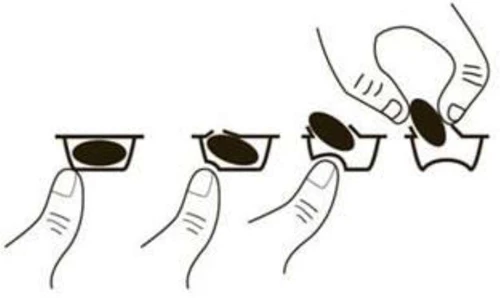
- The capsules should be taken as a single dose before bedtime. This reduces the likelihood of feeling drowsy at other times of the day. To remove a capsule from the blister, press only on one side of the blister and push the capsule through the foil. Do not press on the center of the capsule, as this may damage it.
Overdose of Thalidomide Accord
If more Thalidomide Accord has been taken than prescribed, contact your doctor or go to a hospital immediately.
If possible, bring the medicine package and this leaflet with you.
Missed dose of Thalidomide Accord
If a dose of Thalidomide Accord is missed:
- If less than 12 hours have passed since the usual time: take the missed dose immediately.
- If more than 12 hours have passed since the usual time: do not take the missed dose. Take the next dose at the usual time the following day. If you have any further doubts about the use of this medicine, consult your doctor, pharmacist, or nurse.
4. Possible adverse effects
Like all medicines, this medicine can cause adverse effects, although not everyone will experience them.
The following adverse effects may occur during treatment with this medicine:
You must stop taking Thalidomide Accord and contact your doctor immediately if you notice any of the following serious adverse effects – urgent medical treatment may be required:
- Severe and life-threatening skin reactions. Skin-related adverse reactions may present as rashes with or without blisters. These may include:
- skin irritation, lesions or swelling in the mouth, throat, eyes, nose or genital area, swelling accompanied by fever and flu-like symptoms. These symptoms may indicate rare but serious skin reactions such as Stevens-Johnson syndrome, toxic epidermal necrolysis or DRESS syndrome.
- Allergic reactions, such as localized or generalized itchy rash, angioedema and anaphylactic reaction (severe allergic reactions which may present as hives, rash, swelling of the eyes, lips or face, difficulty breathing or itching). You must inform your doctor immediately if any of the following serious adverse effects occur:
- Numbness, tingling, lack of coordination or pain in the hands and feet. This symptom may be due to nerve damage (so-called "peripheral neuropathy"), which is a very common adverse effect. It may be severe, causing pain and leading to disability. If such symptoms occur, you must contact your doctor immediately, who may reduce the dose or discontinue treatment. This adverse effect usually occurs after prolonged use (several months), but may also occur earlier. It may also develop some time after stopping treatment. Symptoms may persist or resolve slowly.
- Sudden chest pain or difficulty breathing. This may be due to a blood clot in the arteries leading to the lungs (pulmonary embolism), which is a common adverse effect. This may occur during or after treatment.
- Pain or swelling in the legs, particularly in the lower legs or calves. This may be due to blood clots in the leg veins (deep vein thrombosis), which is a common adverse effect. This may occur during or after treatment.
- Chest pain spreading to the arms, neck, jaw, back or stomach, sweating, shortness of breath, general malaise or vomiting. These may be symptoms of a heart attack/myocardial infarction (which may result from blood clots forming in the blood vessels of the heart).
- Brief episodes of difficulty seeing or speaking. These may be symptoms of a stroke (which may result from blood clots in the blood vessels of the brain).
- Fever, chills, sore throat, cough, mouth ulcers or other signs of infection.
- Bleeding or bruising without injury.
Other adverse effects include:
It should be noted that in a small number of patients with multiple myeloma, there may be an increased risk of developing other cancers, particularly hematological malignancies, and this risk may possibly be increased by treatment with Thalidomide Accord.
Therefore, your doctor should carefully weigh the benefits and risks before prescribing Thalidomide Accord.
Very common (may affect more than 1 in 10 people)
- Constipation
- Dizziness
- Drowsiness, feeling tired
- Tremor
- Reduced or abnormal sensation
- Swelling of hands and feet
- Decreased blood cell counts. This may mean increased susceptibility to infections. During treatment with Thalidomide Accord, your doctor may monitor your blood test results.
Common (may affect up to 1 in 10 people)
- Indigestion, nausea, vomiting, dry mouth
- Rash, dry skin
- Decreased white blood cell count (neutropenia) with fever and infection
- Simultaneous decrease in red blood cells, white blood cells and platelets (pancytopenia)
- Weakness, feeling of fatigue and unsteadiness, lack of energy or strength, low blood pressure
- Fever, general malaise
- Seizures
- Dizziness affecting ability to stand or move normally
- Vision disorders
- Lung inflammation, lung diseases
- Slowed heart rate, heart failure
- Depression, disorientation, mood changes, anxiety
- Hearing impairment or deafness
- Kidney disease (kidney failure)
Uncommon (may affect up to 1 in 100 people)
- Inflammation and swelling of the bronchi in the lungs (bronchitis)
- Inflammation of the cells lining the stomach
- Perforation (a hole) in the large intestine (colon), which may lead to infection
- Bowel obstruction
- Low blood pressure upon standing, which may lead to fainting
- Irregular heartbeat (heart block or atrial fibrillation), feeling weak or fainting
Unknown frequency (frequency cannot be estimated from available data)
- Underactive thyroid gland (hypothyroidism)
- Sexual dysfunction, for example impotence
- Severe blood infection (sepsis) with fever, chills and severe shivering, possibly leading to complications such as low blood pressure and confusion (septic shock)
- Tumor lysis syndrome – metabolic complications occurring during cancer treatment, and sometimes even without treatment. These complications are caused by the breakdown products of dying cancer cells and may include: changes in blood chemistry; high levels of potassium, phosphate and uric acid, and low calcium levels, leading to kidney dysfunction, heart rhythm disturbances, seizures, and in some cases, death
- Liver damage (liver dysfunction), including abnormal liver function test results
- Bleeding from the stomach or intestines (gastrointestinal bleeding)
- Worsening of symptoms of Parkinson’s disease (such as tremor, depression or disorientation)
- Pain in the upper abdomen and/or back, which may be severe and last for several days, possibly accompanied by nausea, vomiting, fever and rapid heartbeat – these symptoms may indicate pancreatitis
- Increased blood pressure in the blood vessels supplying the lungs, which may lead to symptoms such as shortness of breath, fatigue, dizziness, chest pain, rapid heartbeat, swelling of the legs or ankles (pulmonary hypertension)
- Viral infections, including herpes zoster (a viral disease causing a painful skin rash with blisters) and reactivation of hepatitis B virus infection (which may cause yellowing of the skin and eyes, dark-colored urine, right-sided abdominal pain, fever, nausea and vomiting)
- Brain disease with symptoms such as, among others, vision disturbances, headache, seizures and disorientation, with or without high blood pressure (posterior reversible encephalopathy syndrome or PRES)
- Skin disease caused by inflammation of small blood vessels, accompanied by joint pain and fever (leukocytoclastic vasculitis)
Reporting of adverse effects
If you experience any adverse effects, including any not listed in this leaflet, tell your doctor or pharmacist. Adverse effects can be reported directly to the Department for Monitoring Adverse Drug Reactions, Office for Registration of Medicinal Products, Medical Devices and Biocidal Products, Al. Jerozolimskie 181C, 02-222 Warsaw, Tel: +48 22 49 21 301, Fax: +48 22 49 21 309, Website: https://smz.ezdrowie.gov.pl
Adverse effects can also be reported to the marketing authorization holder. Reporting adverse effects helps to provide more information on the safety of the medicine.
5. How to store Thalidomide Accord
This medicine should be kept out of the sight and reach of children.
Do not use this medicine after the expiry date stated on the outer packaging and on the blister
after "Expiry date (EXP)" / "EXP". The expiry date refers to the last day of the stated month.
Do not use this medicine if you notice any damage or signs of tampering with the packaging.
Do not store above 30°C.
After completion of therapy, the patient must return all unused capsules to the pharmacist or
physician. This helps prevent inappropriate use of the medicine.
6. Contents of the pack and other information
What Thalidomide Accord contains
- The active substance is thalidomide. Each capsule contains 50 mg of thalidomide.
- The other ingredients are: The capsule contains isomalt (E 953), sodium croscarmellose, and sodium stearyl fumarate. The capsule shell contains gelatin and titanium dioxide (E 171).
What Thalidomide Accord looks like and contents of the pack
Thalidomide Accord is in the form of white, opaque, hard capsules of size number 4.
The capsule filling is a white powder.
Blister pack made of PVC/PCTFE/Aluminium containing 14 capsules.
Pack sizes: 28 capsules (2 blisters) in a wallet card-type cardboard package.
Single-dose blister made of PVC/PCTFE/Aluminium containing 7 capsules.
Pack sizes: 28 capsules (4 blisters) in a cardboard box.
Marketing Authorisation Holder
Accord Healthcare Polska Sp. z o.o.
ul. Taśmowa 7
02-677 Warsaw
Manufacturer
Ardena Pamplona, S.L.
Polígono Mocholí, Noáin N 1
31110 Navarra, Spain
Medichem S.A.
Narcís Monturiol, 41 A
Sant Joan Despí
08970 Barcelona, Spain
This medicinal product is authorised in the Member States of the European Economic Area under the following names:
| Country name | Brand name |
| Cyprus | Thalidomide Accord 50mg hard capsules |
| Denmark | Thalidomide Accord |
| France | Thalidomide Accord 50mg gélule |
| Spain | Talidomida Accord 50mg cápsulas duras |
| Malta | Thalidomide Accord 50 mg hard capsules |
| Poland | Thalidomide Accord |
| Portugal | Thalidomide Accord 50mg cápsulas |
| Romania | Thalidomide Accord 50mg capsule |
| Slovenia | Talidomid Accord 50mg trde kapsule |
| Hungary | Thalidomide Accord 50mg kemény kapszula |
| Italy | Talidomide Accord |