Tezeo hct
Poland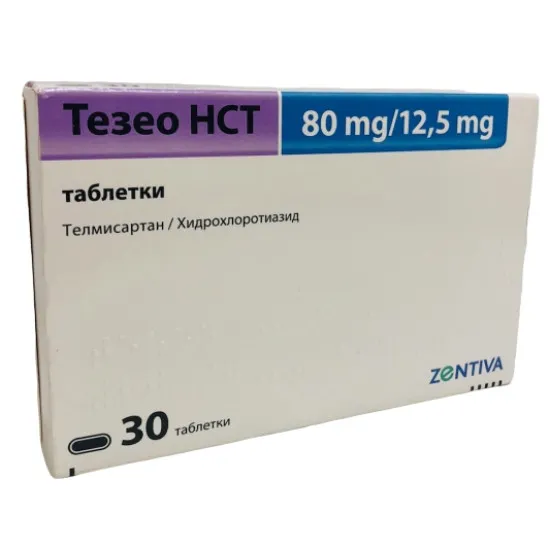
Table of Contents
Package leaflet: Information for the patient
Tezeo HCT, 80 mg + 25 mg, tablets
Telmisartanum + Hydrochlorothiazidum
Please read the entire leaflet carefully before using this medicine, as it contains
important information for the patient.
- Keep this leaflet for future reference.
- If you have any questions, please consult your doctor or pharmacist.
- This medicine has been prescribed for a specific individual. Do not give it to others. The medicine may harm someone else, even if their symptoms are the same.
- If you experience any adverse reactions, including any not listed in this leaflet, inform your doctor or pharmacist. See section 4.
Table of contents of the leaflet
- What is Tezeo HCT and what is it used for
- Important information before taking Tezeo HCT
- How to take Tezeo HCT
- Possible side effects
- How to store Tezeo HCT
- Contents of the pack and other information
1. What is Tezeo HCT and what is it used for
Tezeo HCT is a combination medicine containing two active substances, telmisartan
and hydrochlorothiazide, in a single tablet. Both substances help control high blood pressure.
- Telmisartan belongs to a group of medicines called angiotensin II receptor blockers. Angiotensin II is a substance produced by the body that causes blood vessels to narrow, leading to increased blood pressure. Telmisartan blocks the action of angiotensin II, allowing blood vessels to relax and blood pressure to decrease.
- Hydrochlorothiazide belongs to a group of medicines called thiazide diuretics, which increase urine production, resulting in lowering of blood pressure.
Untreated high blood pressure may damage blood vessels in various organs and may eventually lead to heart attack, heart or kidney failure, stroke, or loss of vision. Usually, there are no symptoms indicating high blood pressure before these complications occur. Therefore, it is important to measure blood pressure regularly to ensure it is within the normal range.
Tezeo HCT is used for the treatment of high blood pressure (essential hypertension) in adults whose blood pressure is not adequately controlled with Tezeo HCT 80 mg + 12.5 mg, or in patients who have previously been effectively treated with telmisartan and hydrochlorothiazide given separately.
2. Important information before using Tezeo HCT
When not to use Tezeo HCT
- if the patient is allergic to telmisartan or any of the other ingredients of this medicine (listed in section 6),
- if the patient is allergic to hydrochlorothiazide or other sulfonamide derivatives,
- during the third trimester of pregnancy (use of Tezeo HCT should also be avoided in early pregnancy; see section on pregnancy),
- if the patient has severe liver disorders such as biliary obstruction or cholestasis (impaired bile flow from the liver and gallbladder) or any other severe liver disease,
- if the patient has severe kidney disease or anuria (less than 100 ml urine per day),
- if the doctor has diagnosed abnormally low levels of potassium or high levels of calcium in the patient's blood that do not improve with treatment,
- if the patient has diabetes or kidney impairment and is being treated with a blood pressure-lowering medicine containing aliskiren.
If any of the above situations apply, inform the doctor or
pharmacist before taking Tezeo HCT.
Warnings and precautions
Before starting treatment with Tezeo HCT, discuss with the doctor if the patient
has or has ever had any of the following conditions or diseases:
- low blood pressure (hypotension), which is more likely if the patient is dehydrated (excessive loss of water from the body) or has salt deficiency due to diuretic (water tablet) treatment, a low-salt diet, diarrhoea, vomiting, or haemofiltration,
- kidney disease or status post kidney transplant,
- renal artery stenosis (narrowing of the blood vessels to one or both kidneys),
- liver disease,
- heart disease,
- diabetes,
- gout,
- elevated aldosterone levels (retention of water and salt in the body associated with electrolyte imbalance),
- systemic lupus erythematosus (also known as "lupus" or "SLE"), a disease in which the immune system attacks the body itself,
- the active substance hydrochlorothiazide may cause rare reactions leading to vision loss and eye pain. These may be symptoms of fluid accumulation in the uvea (excessive fluid buildup between choroid and sclera) or increased intraocular pressure, which may occur within hours to weeks after taking Tezeo HCT. If left untreated, this may lead to permanent vision impairment,
- if the patient previously had skin cancer or develops unexpected skin changes during treatment. Treatment with hydrochlorothiazide, especially at high doses over a long period, may increase the risk of certain types of non-melanoma skin cancer and lip cancer. While using Tezeo HCT, protect the skin from sunlight and UV radiation.
Before starting treatment with Tezeo HCT, inform the doctor:
- if the patient is taking any of the following medicines used to treat high blood pressure:
- angiotensin-converting enzyme (ACE) inhibitors (e.g. enalapril, lisinopril, ramipril), particularly if the patient has kidney problems related to diabetes,
- aliskiren. The treating doctor may monitor kidney function, blood pressure, and blood electrolyte levels (e.g. potassium) at regular intervals. See also information under the heading "When not to use Tezeo HCT".
- when taking digoxin,
- if the patient previously experienced breathing or lung problems (including pneumonia or fluid accumulation in the lungs) after taking hydrochlorothiazide. If severe shortness of breath or breathing difficulties occur after taking Tezeo HCT, seek immediate medical help.
It is essential to inform the doctor if the patient suspects she is pregnant (or may have become
pregnant). Use of Tezeo HCT is not recommended during early pregnancy. Do not use it after
the 3rd month of pregnancy, as it may seriously harm the unborn child (see section on pregnancy).
Treatment with hydrochlorothiazide may lead to electrolyte imbalance
in the body. Typical symptoms of fluid or electrolyte imbalance include dryness of the oral mucosa,
weakness, lethargy, drowsiness, restlessness, muscle pain or cramps,
nausea, vomiting, muscle fatigue, and abnormally rapid heartbeat (faster
than 100 beats per minute). If any of these symptoms occur, inform the doctor.
Also inform the doctor if skin becomes unusually sensitive to sunlight,
manifesting as sunburn (such as redness, itching, swelling, or blistering) occurring more quickly than usual.
If undergoing surgery or anaesthesia, inform the doctor
about taking Tezeo HCT.
Tezeo HCT may be less effective in lowering blood pressure in black patients.
If abdominal pain, nausea, vomiting, or diarrhoea occur after taking Tezeo HCT, discuss this with the doctor. The doctor will decide on further treatment. Do not stop taking Tezeo HCT without medical advice.
Children and adolescents
Tezeo HCT is not recommended for use in children and adolescents under 18 years of age.
Tezeo HCT and other medicines
Tell the doctor or pharmacist about all medicines currently taken or recently used, as well as any medicines the patient plans to take.
The doctor may decide to adjust the dose of these medicines or take other precautions. In some cases, it may be necessary to discontinue one of these medicines. This particularly applies when taking the following medicines together with Tezeo HCT:
- lithium preparations, used to treat certain types of depression,
- medicines that reduce potassium levels in the blood (hypokalaemia), such as other diuretics, laxatives (e.g. castor oil), corticosteroids (e.g. prednisone), ACTH (adrenocorticotropic hormone), amphotericin (an antifungal medicine), carbenoxolone (used to treat oral ulcers), sodium salt of penicillin G (an antibiotic), salicylic acid and its derivatives,
- iodinated contrast agents used in imaging procedures,
- medicines that may increase potassium levels in the blood, such as potassium-sparing diuretics, potassium supplements, potassium-containing salt substitutes, ACE inhibitors, cyclosporine (an immunosuppressant), and other medicines such as sodium heparin (an anticoagulant),
- medicines affected by changes in blood potassium levels, such as cardiac medicines (e.g. digoxin) or medicines used to control heart rhythm (e.g. quinidine, disopyramide, amiodarone, sotalol), medicines used to treat psychiatric disorders (e.g. thioridazine, chlorpromazine, levomepromazine), and other medicines such as certain antibiotics (e.g. sparfloxacin, pentamidine) or certain medicines used to treat allergic reactions (e.g. terfenadine),
- medicines used in diabetes (insulin or oral medicines such as metformin),
- cholestyramine and colestipol, medicines that lower blood lipid levels,
- medicines that raise blood pressure such as noradrenaline,
- muscle relaxants such as tubocurarine,
- calcium supplements and (or) vitamin D,
- anticholinergic medicines (used to treat various disorders such as gastrointestinal spasms, bladder spasms, asthma, motion sickness, muscle spasms, Parkinson's disease, and as adjuncts in anaesthesia), such as atropine and biperiden,
- amantadine (a medicine used in Parkinson's disease and also for treatment and prevention of certain viral diseases),
- other medicines used to treat high blood pressure, corticosteroids, painkillers (e.g. non-steroidal anti-inflammatory drugs, NSAIDs), medicines used to treat cancer, gout, or arthritis,
- if the patient is taking an ACE inhibitor or aliskiren (see also information under the headings "When not to use Tezeo HCT" and "Warnings and precautions"),
- digoxin.
Tezeo HCT may enhance the blood pressure-lowering effect of other medicines used to treat high blood pressure or medicines that may cause low blood pressure (e.g. baclofen, amifostine). Additionally, alcohol,
barbiturates, narcotics, or antidepressants may further lower blood pressure. Symptoms of low blood pressure may include dizziness upon standing. Consult the doctor if dose adjustments of other medicines taken during Tezeo HCT treatment are needed.
The effect of Tezeo HCT may be reduced when taking NSAIDs
(non-steroidal anti-inflammatory drugs, e.g. acetylsalicylic acid or ibuprofen).
Taking Tezeo HCT with food and alcohol
Tezeo HCT can be taken with food or independently of meals. Avoid consuming alcohol until discussing with the doctor. Alcohol may additionally lower blood pressure and (or) increase the risk of dizziness or fainting.
Pregnancy and breastfeeding
Pregnancy
If the patient is pregnant or breastfeeding, suspects she may be pregnant, or is planning to become pregnant, she should consult the doctor or pharmacist before using this medicine.
The doctor will usually recommend discontinuing Tezeo HCT before planned pregnancy or immediately after pregnancy is confirmed and will prescribe an alternative medicine instead of Tezeo HCT.
Use of Tezeo HCT is not recommended during pregnancy. Do not use it after the 3rd month of pregnancy, as it may seriously harm the unborn child if used after the third month of pregnancy.
Breastfeeding
Inform the treating doctor about breastfeeding or intention to breastfeed.
Use of Tezeo HCT is not recommended during breastfeeding. The doctor may prescribe alternative treatment for patients who wish to breastfeed.
Driving and operating machinery
Some patients taking Tezeo HCT may experience dizziness, fainting, or vertigo. If such adverse effects occur, do not drive or operate machinery.
Tezeo HCT contains sorbitol (E420) and sodium
- The medicine contains 348.3 mg of sorbitol in each tablet.
Sorbitol is a source of fructose. If the patient has been diagnosed with intolerance to certain sugars or hereditary fructose intolerance, a rare genetic disorder in which the patient's body cannot break down fructose, the patient should consult the doctor before taking this medicine.
The medicine contains less than 1 mmol (23 mg) of sodium per tablet, meaning that the medicine is considered "sodium-free".
3. How to take Tezeo HCT
This medicine should always be taken exactly as directed by your doctor or pharmacist. If in doubt,
consult your doctor or pharmacist.
The recommended dose of Tezeo HCT is one tablet per day. Try to take the tablet at the same time
every day. Tezeo HCT may be taken independently of meals. Tablets should be swallowed whole
with water or another non-alcoholic drink. It is important to take Tezeo HCT every day, unless your
doctor advises otherwise.
In case of impaired liver function, the usual dose should not exceed 40 mg of telmisartan once daily.
Taking more Tezeo HCT than recommended
If too many tablets are accidentally taken, symptoms such as low blood pressure and rapid heartbeat
may occur. Cases of slowed heartbeat, dizziness, vomiting, worsening kidney function, including
kidney failure, have also been reported. Due to the presence of hydrochlorothiazide, markedly low
blood pressure and low blood potassium levels may also occur, which could lead to nausea, drowsiness,
muscle cramps, and/or irregular heartbeat, particularly when used concomitantly with medicines such
as digitalis glycosides and certain antiarrhythmic drugs. Seek immediate medical advice from your
doctor, pharmacist, or the nearest hospital emergency department.
If you forget to take Tezeo HCT
If you miss a dose, take the missed dose as soon as you remember, then continue taking the medicine
according to your regular schedule. If a tablet is not taken on a given day, take the next dose the
following day. Do not take a double dose to make up for a missed dose.
If you have any further doubts about how to use this medicine, consult your doctor or pharmacist.
4. Possible adverse reactions
Like all medicines, this medicine can cause adverse reactions, although not everyone will experience them.
Some adverse reactions may be serious and require immediate medical attention:
If any of the following symptoms occur, contact your doctor immediately:
- Sepsis* (often called "blood poisoning", a severe infection causing a systemic inflammatory response),
- Sudden swelling of the skin and mucous membranes (angioedema),
- Formation of blisters and shedding of the outer layer of the epidermis (toxic epidermal necrolysis).
The above adverse reactions are rare (may occur in up to 1 in 1,000 people) or very rare (in the case of toxic epidermal necrolysis; may occur in up to 1 in 10,000 patients), but are very serious. In such cases, treatment with this medicine must be discontinued immediately and medical advice sought. If the above symptoms are not treated, they may result in death. An increased incidence of sepsis has been observed in patients receiving telmisartan as monotherapy; however, sepsis cannot be excluded in patients treated with Tezeo HCT.
Possible adverse reactions of Tezeo HCT:
Common (may occur in up to 1 in 10 people):
- dizziness.
Uncommon (may occur in up to 1 in 100 people):
- decreased blood potassium levels,
- anxiety,
- fainting (syncope),
- tingling and burning sensations (paresthesia),
- sensation of spinning (dizziness),
- rapid heartbeat (tachycardia),
- heart rhythm disturbances,
- low blood pressure,
- sudden drop in blood pressure upon standing (orthostatic hypotension),
- shortness of breath (dyspnea),
- diarrhea,
- dryness of the oral mucous membranes,
- bloating,
- back pain,
- muscle cramps,
- muscle pain,
- erectile dysfunction (inability to achieve and maintain an erection),
- chest pain,
- increased blood uric acid levels.
Rare (may occur in up to 1 in 1,000 people):
- lung inflammation (bronchitis),
- sore throat,
- sinusitis,
- increased uric acid levels,
- low sodium levels,
- feeling of sadness (depression),
- difficulty falling asleep (insomnia),
- sleep disturbances,
- visual disturbances,
- blurred vision,
- breathing difficulties,
- abdominal pain,
- constipation,
- bloating (dyspepsia),
- nausea (vomiting),
- inflammation of the gastric mucosa,
- liver function disturbances (more frequent in patients of Japanese origin),
- skin redness (erythema),
- allergic reactions such as itching or rash,
- increased sweating,
- urticaria,
- joint pain and limb pain (leg pain),
- muscle cramps,
- activation or exacerbation of systemic lupus erythematosus (an autoimmune disease in which the immune system attacks the body, causing joint pain, skin rashes, and fever),
- flu-like symptoms,
- pain,
- increased creatinine levels, increased liver enzyme activity or creatine phosphokinase levels in blood.
Adverse reactions reported for one of the components may also occur during treatment with the fixed-dose combination product containing telmisartan and hydrochlorothiazide, even if they were not observed in clinical trials of this combination.
Telmisartan
In patients receiving telmisartan alone, the following additional adverse reactions have been observed:
Uncommon (may occur in up to 1 in 100 people):
- upper respiratory tract infections (e.g. sore throat, sinusitis, common cold),
- urinary tract infections,
- cystitis,
- red blood cell deficiency – anemia,
- high potassium levels,
- abnormally slow heart rate (bradycardia),
- cough,
- kidney function disturbances, including acute renal failure,
- fatigue.
Rare (may occur in up to 1 in 1,000 people):
- low platelet count (thrombocytopenia),
- increased number of certain white blood cells (eosinophilia),
- severe allergic reactions (e.g. hypersensitivity, anaphylactic reaction),
- low blood sugar levels (in patients with diabetes),
- drowsiness,
- stomach discomfort,
- rash (skin disorder),
- drug eruption,
- toxic skin eruption,
- tendon pain (symptoms mimicking tendonitis),
- decreased hemoglobin levels (a blood protein).
Very rare (may occur in up to 1 in 10,000 people):
- progressive fibrosis of lung tissue (interstitial lung disease)**.
Frequency unknown (frequency cannot be estimated from available data):
- intestinal angioedema – following administration of similar products, intestinal swelling has occurred with symptoms such as abdominal pain, nausea, vomiting, and diarrhea.
* This event may be coincidental or related to a currently unknown mechanism.
** Cases of progressive fibrosis of lung tissue have been reported during telmisartan treatment. However, a causal relationship with telmisartan use has not been established.
Hydrochlorothiazide
In patients receiving hydrochlorothiazide alone, the following additional adverse reactions have been observed:
Very common (may occur in more than 1 in 10 patients):
- increased blood lipid levels.
Common (may occur in up to 1 in 10 patients):
- nausea,
- low blood magnesium levels,
- decreased appetite.
Uncommon (may occur in up to 1 in 100 people):
- acute renal failure.
Rare (may occur in up to 1 in 1,000 patients):
- low platelet count (thrombocytopenia), increasing the risk of bleeding or bruising (small purple-red spots on the skin or other tissues caused by bleeding),
- high blood calcium levels,
- high blood sugar levels,
- headache,
- abdominal discomfort,
- yellowing of the skin or eyes (jaundice),
- increased bile substances in blood (cholestasis),
- photosensitivity reactions,
- uncontrolled blood glucose levels in patients with diagnosed diabetes,
- presence of sugars in urine (glucosuria).
Very rare (may occur in up to 1 in 10,000 patients):
- abnormal breakdown of red blood cells (hemolytic anemia),
- bone marrow failure to function properly,
- decreased number of white blood cells (leukopenia, agranulocytosis),
- severe allergic reactions (e.g. hypersensitivity),
- increased pH due to low chloride levels in blood (acid-base imbalance, hypochloremic alkalosis),
- acute respiratory failure (symptoms include severe shortness of breath, fever, fatigue, and confusion),
- pancreatitis,
- lupus-like syndrome (a disease mimicking systemic lupus erythematosus, in which the body is attacked by its own immune system),
- vasculitis (necrotizing vasculitis).
Frequency unknown (frequency cannot be estimated from available data):
- sialadenitis (inflammation of the salivary glands),
- malignant skin and lip tumors (non-melanoma skin cancers),
- decreased blood cell count (aplastic anemia),
- visual impairment and eye pain (possible symptoms of fluid accumulation in the avascular membrane surrounding the eye – excessive fluid accumulation between choroid and sclera – or angle-closure glaucoma),
- skin disorders such as cutaneous vasculitis, photosensitivity, rash, skin redness, blistering of lips, eyes and mouth, excessive skin peeling, fever (possible symptoms of erythema multiforme),
- fatigue,
- kidney function disturbances,
- in isolated cases, low sodium levels accompanied by neurological or cerebral symptoms (nausea, progressive disorientation, lack of interest or energy).
Reporting of adverse reactions
If any adverse reactions occur, including any not listed in this leaflet, inform your doctor or pharmacist. Adverse reactions can be reported directly to the Department of Monitoring Adverse Drug Reactions, Office for Registration of Medicinal Products, Medical Devices and Biocidal Products, Al. Jerozolimskie 181C, 02-222 Warsaw, tel.: 22 49-21-301, fax: 22 49-21-309, website: https://smz.ezdrowie.gov.pl
Reporting adverse reactions helps to provide more information on the safety of the medicine.
5. How to store the medicine Tezeo HCT
Keep the medicine out of the sight and reach of children.
Do not use this medicine after the expiry date stated on the carton and on the blister after:
Expiry date. The expiry date refers to the last day of the stated month.
Store below 25°C.
Store in the original packaging to protect from moisture.
Medicines must not be disposed of via wastewater or household waste. Ask your pharmacist how to dispose of medicines no longer required. These measures will help protect the environment.
6. Contents of the pack and other information
What Tezeo HCT contains
The active substances in this medicine are: telmisartan and hydrochlorothiazide.
Each tablet contains 80 mg of telmisartan and 25 mg of hydrochlorothiazide.
The other components are: sorbitol, sodium hydroxide, povidone 25 and magnesium stearate.
What Tezeo HCT looks like and contents of the pack
Tezeo HCT 80 mg + 25 mg tablets: white to yellowish, oval, biconvex tablets,
with an imprint "82" on one side, measuring 16 mm in length and 8 mm in width.
Pack contents
Blister packs made of OPA/Aluminium/PVC-Aluminium in a cardboard box.
Pack sizes: 28, 56 or 84 tablets.
Not all pack sizes may be marketed.
Marketing Authorisation Holder
Zentiva k.s., U kabelovny 130, Dolní Měcholupy, 102 37 Prague 10, Czech Republic
Manufacturer
Zentiva k.s., U kabelovny 130, Dolní Měcholupy, 102 37 Prague 10, Czech Republic
S.C. Zentiva S.A., 50 Theodor Pallady Blvd., District 3, 032266 Bucharest, Romania
For further information about the medicinal product and its names in the countries of the European Economic Area, please contact the representative of the Marketing Authorisation Holder in Poland:
Zentiva Polska Sp. z o.o.
ul. Bonifraterska 17
00-203 Warszawa
tel.: +48 22 375 92 00