Tenaxum
Poland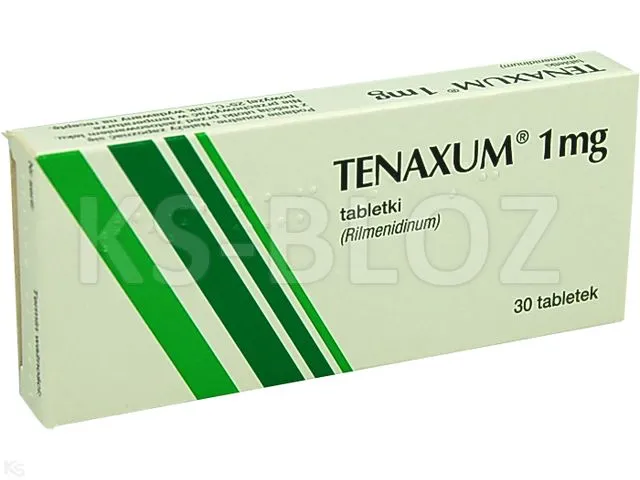
Table of Contents
PACKAGE LEAFLET: INFORMATION FOR THE USER
Warning! Keep the leaflet. The information on the immediate packaging is in a foreign language!
Tenaxum
1 mg, tablets
Rilmenidinum
Please read this leaflet carefully before taking the medicine, as it contains
important information for the patient.
- Keep this leaflet, so that you can read it again if necessary.
- If you have any questions, consult your doctor, pharmacist or nurse.
- This medicine has been prescribed for a specific individual. Do not pass it on to others. This medicine may harm someone else, even if their symptoms are the same.
- If you experience any adverse effects, including any not listed in this leaflet, inform your doctor, pharmacist or nurse. See section 4.
Leaflet contents:
- What Tenaxum is and what it is used for
- Important information before taking Tenaxum
- How to take Tenaxum
- Possible side effects
- How to store Tenaxum
- Contents of the pack and other information
1. What Tenaxum is and what it is used for
Tenaxum contains rilmenidine as the active substance, which lowers arterial blood pressure. The effect of the medicine lasts for 24 hours.
Tenaxum is indicated for the treatment of primary (essential) hypertension.
2. Important information before using Tenaxum
When not to use Tenaxum:
- if the patient is allergic to the active substance or to any of the other ingredients of this medicine (listed in section 6);
- if the patient has severe depression;
- if the patient has been diagnosed with severe renal impairment (creatinine clearance < 15 ml/min);
- if the patient is concurrently taking sultopride (see section "Tenaxum with other medicines").
Warnings and precautions
Before starting treatment with Tenaxum, discuss this with your doctor or pharmacist.
- Never stop treatment suddenly; your doctor will gradually reduce the dose for you.
- Inform your doctor if the patient has severe renal impairment or has recently suffered from heart disease.
- If the patient is elderly, caution is advised due to an increased risk of falls caused by low blood pressure, which may occur, for example, upon standing up.
Children and adolescents
Tenaxum is not recommended for use in children and adolescents.
Tenaxum with other medicines
Inform your doctor or pharmacist about all medicines the patient is currently taking or has recently taken, as well as any medicines the patient plans to take.
Do not take Tenaxum with the following medicinal product (see also section:
"When not to use Tenaxum"):
- sultopride.
Ensure that your doctor has been informed if the patient is taking any of the following medicines, as concomitant use with Tenaxum is not recommended:
- beta-blockers (bisoprolol, carvedilol, metoprolol) used in the treatment of heart failure;
- MAO inhibitors (used in the treatment of depression).
Ensure that your doctor has been informed if the patient is taking any of the following medicines, as special caution may be required:
- baclofen (a medicine used to treat muscle stiffness occurring in diseases such as multiple sclerosis);
- beta-blockers (used in the treatment of hypertension, angina pectoris - a condition causing chest pain);
- medicines used to treat cardiac arrhythmias: quinidine, hydroquinidine, disopyramide, amiodarone, dofetilide, ibutilide, sotalol;
- certain neuroleptics (calming medicines used to treat psychiatric disorders): chlorpromazine, levomepromazine, thioridazine, amisulpride, sulpiride, tiapride, droperidol, haloperidol, pimozide;
- halofantrine (an antiparasitic medicine used to treat malaria);
- mizolastine (used to treat allergic reactions such as hay fever);
- moxifloxacin, intravenous erythromycin, intravenous spiramycin (antibiotics used to treat infections);
- pentamidine (used to treat certain types of pneumonia);
- intravenous vinpocetine (used to treat symptoms of cognitive disorders in elderly patients, including memory problems);
- bepridil (used to treat angina pectoris - a condition causing chest pain);
- cisapride, difemanil (used to treat gastrointestinal disorders);
- tricyclic antidepressants (used to treat depression);
- antihypertensive medicines other than Tenaxum (used to treat hypertension).
Ensure that your doctor has been informed if the patient is taking any of the following medicines, as concomitant use with Tenaxum should be considered:
- alpha-blockers (used to treat hypertension);
- amifostine (used in chemotherapy or radiotherapy);
- corticosteroids (used to treat various medical conditions, including severe asthma and rheumatoid arthritis), tetracosactide (used to treat Crohn's disease) (oral treatment) (except hydrocortisone used in Addison's disease);
- other neuroleptics (calming medicines used to treat psychiatric disorders), imipramine-type antidepressants (used to treat psychiatric disorders such as depression);
- other medicines acting centrally on the nervous system, which may impair concentration when used concomitantly with Tenaxum: morphine derivatives (analgesics, antitussives, and medicines used in opioid substitution therapy such as buprenorphine, methadone), medicines used to treat anxiety, sleep disorders (benzodiazepine derivatives, non-benzodiazepine anxiolytics, hypnotics, neuroleptics), sedative H₁-histamine receptor antagonists (used to treat allergies or allergic reactions), antidepressants (amitriptyline, doxepin, mianserin, mirtazapine, trimipramine), other centrally-acting antihypertensive medicines, baclofen (a medicine used to treat muscle stiffness occurring in diseases such as multiple sclerosis), thalidomide (used to treat certain neoplastic diseases), pizotifen and indoramine (used to treat migraine attacks).
Tenaxum with food, drink and alcohol
Do not drink alcohol while taking Tenaxum.
Pregnancy and breastfeeding
This medicine is not recommended during pregnancy.
Do not take Tenaxum if you are breastfeeding. Inform your doctor immediately if you are breastfeeding or plan to breastfeed.
If you are pregnant or breastfeeding, suspect you may be pregnant, or are planning to have a child, consult your doctor or pharmacist before using this medicine.
Driving and using machines
Tenaxum may impair the ability to drive or operate machinery due to the risk of drowsiness associated with this medicine.
Tenaxum contains lactose monohydrate and sodium
If the patient has previously been diagnosed with intolerance to certain sugars, the patient should consult a doctor before taking this medicine.
This medicine contains less than 1 mmol of sodium (23 mg) per tablet, meaning the medicine is considered "sodium-free".
3. How to take Tenaxum
This medicine should always be taken exactly as prescribed by your doctor. If in doubt, consult your doctor or pharmacist.
Tenaxum is taken orally.
The recommended dose is 1 tablet (1 mg) once daily, taken in the morning at the beginning of a meal.
If blood pressure values have not normalized after one month of treatment, your doctor may increase the dose to 2 tablets (2 mg) daily (one tablet in the morning and one in the evening).
Use in children and adolescents
Tenaxum is not recommended for use in children and adolescents.
Taking more Tenaxum than recommended
If too many tablets are taken, the patient may experience very low blood pressure and disturbances in attention.
Contact your doctor or pharmacist immediately.
Missing a dose of Tenaxum
Do not take a double dose to make up for a missed dose. Take the next dose as usual.
Stopping Tenaxum
Do not stop treatment with Tenaxum suddenly. If discontinuation of the medicine is necessary, the dose should be gradually reduced under medical supervision.
If you have any further questions about the use of this medicine, consult your doctor, pharmacist, or nurse.
4. Possible adverse reactions
Like all medicines, this medicine can cause adverse reactions, although not everyone will experience them.
If the patient experiences symptoms of slowed heart rate (bradycardia), including feeling faint, dizziness, fainting or fatigue, medical advice should be sought.
The following adverse reactions have been reported:
- Common (may occur in up to 1 in 10 patients): palpitations (awareness of heartbeat), insomnia, drowsiness, anxiety, depression, headache, dizziness, sexual dysfunction, stomach pain, dry mouth, diarrhoea, constipation, rash, itching, muscle cramps, sensation of coldness in the extremities (in hands and/or feet), swelling, weakness, fatigue.
- Uncommon (may occur in up to 1 in 100 patients): nausea; hot flushes, drop in blood pressure upon standing.
- Not known frequency (cannot be estimated from available data): slowed heart rate (bradycardia).
Reporting of adverse reactions
If any adverse reactions occur, including any not listed in this leaflet, inform a doctor, pharmacist or nurse. Adverse reactions can be reported directly to the Department for Monitoring Adverse Drug Reactions of the Office for Registration of Medicinal Products, Medical Devices and Biocidal Products
Al. Jerozolimskie 181C, 02-222 Warsaw
Tel.: + 48 22 49 21 301
Fax: + 48 22 49 21 309
Website: https://smz.ezdrowie.gov.pl
Reporting adverse reactions helps to provide more information on the safety of the medicine.
5. How to store the medicine Tenaxum
Keep this medicine out of the sight and reach of children.
Do not store above 25°C.
Do not use this medicine after the expiry date stated on the packaging. The expiry date refers to the last day of the stated month.
Medicines must not be disposed of via wastewater or household waste. Ask your pharmacist how to dispose of medicines no longer required. This will help protect the environment.
6. Contents of the pack and other information
What Tenaxum contains
- The active substance is rilmenidine. One tablet contains 1 mg of rilmenidine (as rilmenidine dihydrogen phosphate).
- The other ingredients are: sodium carboxymethyl starch, microcrystalline cellulose, lactose monohydrate, paraffin 54/56, colloidal anhydrous silica, magnesium stearate, talc, white wax.
What Tenaxum looks like and contents of the pack
Tenaxum is available in a cardboard box containing 2 blisters made of polyamide/Al/PVC, each with 15 tablets.
For more detailed information, please contact the responsible party or the parallel importer.
Marketing Authorisation Holder in Lithuania, country of export:
Les Laboratoires Servier
50, rue Carnot
92284 Suresnes cedex
France
Manufacturer:
Les Laboratoires Servier Industrie
905, route de Saran
45520 Gidy
France
Parallel Importer:
Medezin Sp. z o.o.
ul. Zbąszyńska 3
91-342 Łódź
Repackaged in:
Medezin Sp. z o.o.
ul. Zbąszyńska 3
91-342 Łódź
CEFEA Sp. z o.o. Sp. komandytowa
ul. Działkowa 56
02-234 Warsaw
SHIRAZ PRODUCTIONS Sp. z o.o.
ul. Tymiankowa 24/28
95-054 Ksawerów
Marketing Authorisation numbers in Lithuania, country of export:
LT/1/99/0094/001
LT/1/99/0094/002
LT/1/99/0094/003
Parallel Import Licence number: 29/24