Tardyferon
Poland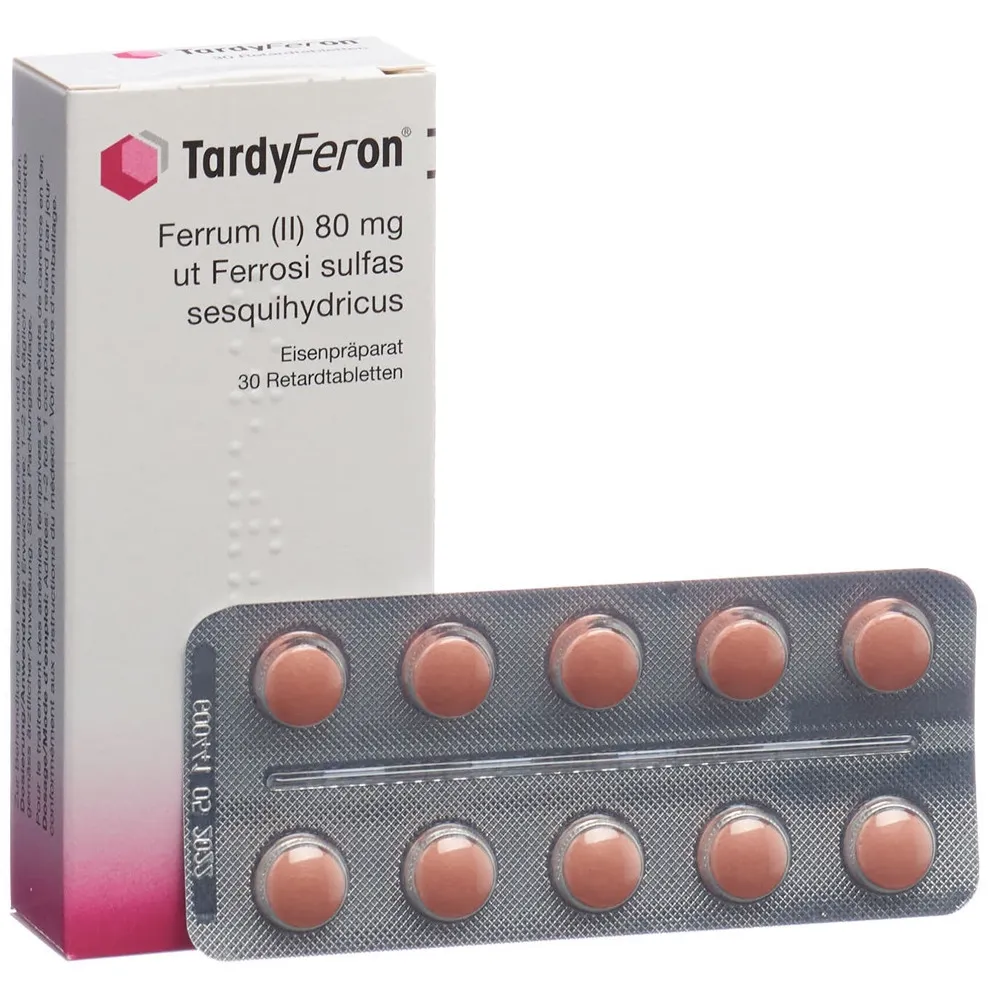
Table of Contents
Package leaflet: Information for the patient
Warning! Keep this leaflet! The information on the immediate packaging is in a foreign language.
Tardyferon (Tardyferon 80 mg), 80 mg iron(II) ions, prolonged-release tablets
Ferrosi sulfas
Tardyferon and Tardyferon 80 mg are different brand names for the same medicinal product.
Please read this leaflet carefully before taking the medicine, as it contains important information for the patient.
- Keep this leaflet, so that you can read it again if necessary.
- If you have any doubts, please consult your doctor or pharmacist.
- This medicine has been prescribed for a specific individual. Do not pass it on to others. The medicine may harm another person, even if their symptoms are the same.
- If you experience any adverse effects, including any not listed in this leaflet, inform your doctor or pharmacist. See section 4.
Table of contents of the leaflet
- What Tardyferon is and what it is used for
- Important information before taking Tardyferon
- How to take Tardyferon
- Possible side effects
- How to store Tardyferon
- Contents of the pack and other information
1. What Tardyferon is and what it is used for
Iron requirements are increased in women during pregnancy, the postpartum period, in breastfeeding mothers, and in adolescents during growth phases. Iron deficiency or iron deficiency anemia can be prevented or treated using a medicine called Tardyferon.
In this formulation combining iron with excipients, Fe ions are released slowly, thus avoiding sudden absorption of the entire iron dose into blood serum.
This reduces the frequency of observed adverse effects and improves patient compliance with treatment recommendations. The prolonged release allows iron ions to reach the distal segments of the intestine, which, in addition to the duodenum, are capable of absorbing iron. Limiting iron absorption to the upper intestinal segments is caused by iron saturation. Like all iron-containing medicines, Tardyferon has no effect on erythropoiesis (red blood cell production) or on anemia caused by factors other than iron deficiency.
Tardyferon is used in the treatment of iron deficiency anemia and in the prevention of iron deficiency in pregnant women with inadequate dietary intake.
Tardyferon is indicated for use in children over 10 years of age and in adults.
2. Important information before using Tardyferon
When not to use Tardyferon:
- if the patient is allergic to iron sulfate or any of the other ingredients of this medicine (listed in section 6);
- if there is excess iron in the body, e.g. hemochromatosis, thalassemia, refractory anemia, or bone marrow failure.
Warnings and precautions
Before starting to take Tardyferon, discuss this with your doctor or pharmacist.
The toxic dose of iron is lower in children than in adults. Tardyferon is not recommended for children under 10 years of age.
Iron deficiency should, whenever possible, be corrected together with treatment of its underlying cause.
If a tablet enters the airways, patients—especially elderly individuals and those with swallowing difficulties—may be at risk of developing ulcers in the throat, esophagus (the tube connecting the mouth to the stomach), or bronchi (the main airways leading to the lungs). Necrosis (tissue death) or granuloma (inflammatory condition) in the bronchi may lead to bronchial stenosis (narrowing of the airways). In case of improper swallowing of the tablet, contact your doctor or the nearest emergency department immediately for appropriate treatment.
In medical literature, gastrointestinal melanosis (pigmentation in the gastrointestinal tract) has been reported in elderly patients with chronic kidney disease, diabetes (high blood sugar levels), and/or hypertension (high blood pressure), who were treated with multiple medications for these conditions and who were also receiving iron supplementation due to concomitant anemia.
Due to the risk of oral ulceration and tooth discoloration, tablets must not be sucked, chewed, or held in the mouth. They should be swallowed whole with water. If following this instruction is not possible or if swallowing difficulties occur, contact your doctor.
Children and adolescents
Tardyferon may be used in children over 10 years of age.
Tardyferon with other medicines
Do not take Tardyferon unless advised by your doctor.
Some medicines should not be used together, while others may require special adjustments (e.g. timing of administration).
Avoid using Tardyferon if the patient is receiving parenteral (injectable) iron preparations.
The following medicines may require dose adjustment. Do not take Tardyferon within 2 hours after taking any of the following medicines:
- certain antibiotics (tetracyclines or fluoroquinolones);
- medicines used to treat weakened bones (bisphosphonates);
- a medicine used to treat joint diseases (penicillamine);
- medicines used to treat excess stomach acid: mineral preparations acting on the gastrointestinal tract, charcoal, or antacids (salts of aluminum, calcium, and magnesium);
- a medicine used to treat thyroid disorders (thyroxine);
- medicines used to treat Parkinson's disease (methyldopa, levodopa, carbidopa);
- supplements and/or medicines containing zinc or calcium;
- cholestyramine – Tardyferon should be administered 1–2 hours before or 4 to 6 hours after cholestyramine;
- NSAIDs (non-steroidal anti-inflammatory drugs) – these should be taken with food to reduce irritation of the gastric and intestinal mucosa and to lower the risk of bleeding associated with their use.
If the patient is currently taking or has recently taken any other medicine, including those available without prescription, this should be reported to the doctor or pharmacist.
Tardyferon with food, drink, and alcohol
Consuming large amounts of coffee, tea, or red wine may reduce iron absorption.
It is not recommended to take this medicine simultaneously with whole-grain products (bran, legumes, oilseeds), certain proteins (e.g. eggs), or foods and drinks containing calcium (cheese, milk, etc.). An interval of at least 2 hours should be maintained between the intake of iron salts and these foods.
Pregnancy, breastfeeding, and fertility
If the patient is pregnant, breastfeeding, suspects she may be pregnant, or is planning to have a child, she should consult her doctor or pharmacist before using this medicine.
Tardyferon may be used during pregnancy and breastfeeding.
Driving and operating machinery
It is unlikely that Tardyferon will affect the ability to drive or operate machinery.
3. How to use Tardyferon
This medicine should always be taken according to the instructions given by your doctor or pharmacist. If you have any doubts,
you should consult your doctor or pharmacist.
Tardyferon is indicated for children over 10 years of age and adults. The medicine is administered
orally.
Treatment of iron deficiency anemia
Children over 10 years of age and adults: 1 to 2 tablets per day.
The duration of treatment should be sufficiently long to correct the anemia and replenish
iron stores.
Treatment may last at least 3 to 6 months and, if necessary, may be extended in consultation
with your doctor.
Prophylactic treatment
- Latent iron deficiency: 1 tablet (corresponding to 80 mg Fe) per day or every other day.
- Pregnant women: 1 tablet every other day during the last two trimesters of pregnancy (or from the 4th month of pregnancy). Tardyferon tablets are taken orally. The tablet should be swallowed whole with water. Do not suck, chew, or hold the tablet in the mouth. Tablets should be taken with a large glass of water, preferably before or during a meal, depending on gastrointestinal tolerance (except for specific foods mentioned in the section "Tardyferon with food, drink and alcohol").
Use of a higher than recommended dose of Tardyferon
Cases of iron salt overdose have been reported, especially in children, due to ingestion of a large
amount of the medicine.
Symptoms of overdose include signs of gastrointestinal irritation with
abdominal pain, nausea, vomiting, diarrhea, cardiovascular shock symptoms or metabolic acidosis (rapid or shallow breathing, increased heart rate, headache, confusion, drowsiness, fatigue, loss of appetite), as well as liver and kidney failure.
If an excessive amount of the medicine has been taken, contact the emergency department immediately for appropriate treatment.
Missed dose of Tardyferon
If a dose is missed at the usual time, take it as soon as possible. However, if it is almost time for the next dose, do not take the missed dose and take the next tablet at the usual time.
Do not take a double dose to make up for a missed dose.
If you have any further doubts regarding the use of this medicine, consult your doctor or pharmacist.
Stopping Tardyferon treatment
Tardyferon should be taken for as long as your doctor recommends. Premature
discontinuation of therapy may lead to recurrence of the condition.
If you have any further doubts regarding the use of this medicine, consult your doctor or pharmacist.
4. Possible adverse reactions
Like all medicines, this medicine can cause adverse reactions, although they do not occur in everyone.
The following reactions may occur, listed in decreasing order of frequency:
Common (affects 1 in 10 patients)
Constipation, diarrhoea, feeling of stomach fullness, abdominal pain, darkening of stool, nausea.
Uncommon (affects 1 in 100 patients)
Throat swelling (laryngeal oedema), abnormal stools, discomfort and pain in the upper abdomen (dyspepsia),
vomiting, acute gastritis, itching, red rash (erythematous rash).
Frequency not known (cannot be estimated from available data)
Allergic reaction (hypersensitivity reaction), rash with accompanying itching (urticaria),
lung necrosis (tissue death)*, lung granuloma (inflammatory condition)*, bronchial stenosis (narrowing of the
airways)*, tooth discoloration**, oral mucosal ulceration**, oesophageal lesions*, gastrointestinal
pigmentation (gastrointestinal melanosis)*.
*Patients, especially elderly patients and those with swallowing difficulties, may also be at risk of
ulceration of the throat, oesophagus or bronchi if the tablet enters the respiratory tract. Bronchial necrosis
(tissue death) or granuloma (inflammatory condition) may lead to bronchial stenosis (airway narrowing).
In case of improper administration, contact a doctor or the nearest emergency department immediately
for appropriate treatment.
** In case of improper administration, when tablets are chewed, sucked or held in the mouth.
In medical literature, gastrointestinal melanosis (pigmentation in the gastrointestinal tract) has been
reported in elderly patients with chronic kidney disease, diabetes (high blood sugar), and/or hypertension
(high blood pressure), who are treated with multiple medications for these conditions and receive iron
supplementation due to concomitant anaemia.
Reporting of adverse reactions
If any adverse reactions occur, including any adverse reactions not listed in this leaflet, inform your doctor
or pharmacist. Adverse reactions can be reported directly to the Department of Monitoring Adverse Drug Reactions,
Office for Registration of Medicinal Products, Medical Devices and Biocidal Products,
Al. Jerozolimskie 181C, 02-222 Warsaw, tel.: 22 49-21-301, fax: 22 49-21-309,
website: https://smz.ezdrowie.gov.pl.
Reporting adverse reactions helps to provide more information on the safety of the medicine.
5. How to store Tardyferon
Keep this medicine out of sight and reach of children.
Do not use this medicine after the expiry date stated on the packaging. The expiry date refers to the last day of the stated month.
There are no special requirements for storage of this medicinal product.
Medicines must not be disposed of via wastewater or household waste. Ask your pharmacist how to dispose of medicines no longer required. This will help protect the environment.
6. Contents of the pack and other information
What Tardyferon contains
- The active substance is iron(II) in the form of 247.25 mg dried ferrous sulfate, corresponding to a dose of 80 mg iron.
- The other ingredients are: maltodextrin, microcrystalline cellulose, ammonio methacrylate copolymer (type A) dispersion (Eudragit RL 30D), ammonio methacrylate copolymer (type B) dispersion (Eudragit RS 30D), triethyl citrate, talc, glycerol dibehenate.
Film-coating composition: Sepifilm LP010 (hypromellose, microcrystalline cellulose, stearic acid), triethyl citrate, iron oxide red (E 172), iron oxide yellow (E 172), titanium dioxide (E 171).
What Tardyferon looks like and contents of the pack
30 prolonged-release tablets in a cardboard box.
For further information, please contact the marketing authorisation holder or the parallel importer.
Marketing authorisation holder in Lithuania, country of export:
Pierre Fabre Medicament
Les Cauquillous
81500 - Lavaur
France
Manufacturer:
Pierre Fabre Medicament Production
Site Progipharm, Gien, 45500, France
Parallel importer:
InPharm Sp. z o.o.
ul. Strumykowa 28/11
03-138 Warsaw
Repackaged in:
InPharm Sp. z o.o. Services sp. k.
ul. Chełmżyńska 249
04-458 Warsaw
Marketing authorisation number in Lithuania, country of export: LT/1/97/2578/001
Parallel import authorisation number: 284/22