Tardyferon-fol
Poland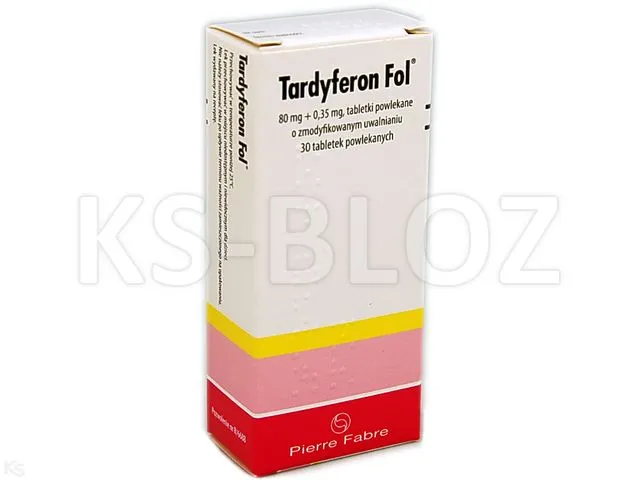
Table of Contents
Patient Information Leaflet
Warning! Keep this leaflet. Information on the immediate packaging in a foreign language.
Tardyferon-Fol (Ferro-Tardyferon Fol)
80 mg iron(II) ions + 0.35 mg, prolonged-release tablets
Ferrosi sulfas + Acidum folicum
Tardyferon-Fol and Ferro-Tardyferon Fol are different trade names for the same medicinal product.
Please read this leaflet carefully before using the medicine, as it contains important information for you.
- Keep this leaflet so that you can read it again if necessary.
- If you have any questions, please consult your doctor or pharmacist.
- This medicine has been prescribed for a specific individual. Do not pass it on to others. The medicine may harm someone else, even if their symptoms are the same.
- If you experience any adverse reactions, including any not listed in this leaflet, inform your doctor, pharmacist or nurse. See section 4.
Table of Contents
- What Tardyferon-Fol is and what it is used for
- What you need to know before taking Tardyferon-Fol
- How to take Tardyferon-Fol
- Possible side effects
- How to store Tardyferon-Fol
- Contents of the pack and other information
1. What Tardyferon-Fol is and what it is used for
Tardyferon-Fol is a combination medicine containing ferrous sulfate and folic acid. Iron is released slowly and uniformly, thereby reducing the likelihood of local accumulation in the stomach and intestine, thus improving the drug's tolerability. The delayed release has a beneficial effect on iron absorption in the intestine. Folic acid is absorbed rapidly.
During pregnancy, the body's requirement for iron increases significantly, making iron deficiency more likely. Initially, iron deficiency may cause general symptoms such as reduced appetite or easy fatigue, without signs of anemia. Only when iron deficiency becomes substantial—that is, when there is insufficient iron for the necessary production of hemoglobin—does overt iron deficiency with anemia develop.
General symptoms worsen, and additional manifestations such as cracking of the corners of the mouth, brittle nails and hair may occur. A significant deficiency of folic acid may lead to disturbances in the production of red blood cells, white blood cells, and platelets; however, this condition is rare.
Tardyferon-Fol is used for the prevention and treatment of iron and folic acid deficiencies in pregnant women.
Tardyferon-Fol is indicated for use in pregnant women.
2. Important information before using Tardyferon-Fol
When not to use Tardyferon-Fol:
- if the patient is allergic to the active substances or to any of the other ingredients of this medicine (listed in section 6);
- in all cases of anemia due to causes other than iron deficiency;
- in cases of iron accumulation (hemochromatosis, chronic hemolysis, frequent transfusions);
- in cases of impaired iron utilization (sideroachrestic anemia, lead poisoning-induced anemia, thalassemia, porphyria cutanea tarda);
- in cases of confirmed iron intolerance (e.g. severe inflammatory changes in the gastrointestinal tract);
- if there are severe impairments of liver or kidney function;
- in children.
Warnings and precautions
Before starting treatment with Tardyferon-Fol, consult your doctor or pharmacist.
Iron-containing preparations should be used after consultation with a doctor, especially in cases of
gastric or intestinal inflammation, delayed gastric emptying, or other confirmed gastrointestinal disorders.
Hypochromic anemia associated with inflammatory conditions does not respond to iron therapy. Iron treatment should, whenever possible, be combined with causal therapy.
Tardyferon-Fol must be stored out of reach of children, as even the smallest package (30 tablets) contains a total dose of iron which, if taken at once, may (especially in young children) lead to life-threatening poisoning.
Administration of folic acid during treatment with antiepileptic drugs may reduce blood concentrations of these drugs due to restoration of their metabolism rate, previously reduced by folic acid deficiency. Monitoring of antiepileptic drug levels is necessary and dosage adjustments may be required.
Tell your doctor before taking Tardyferon-Fol:
- if the patient has difficulty swallowing.
If the patient accidentally inhales a tablet, contact a doctor immediately, as there is a risk of ulceration or narrowing of the airways if the tablet enters the respiratory tract. This may cause persistent cough, coughing up blood, and/or a feeling of breathlessness, even if the inhalation occurred several days or even months before these symptoms appear. Therefore, prompt evaluation is needed to determine whether tablets are damaging the patient's airways.
Melanosis of the gastrointestinal tract (pigmentation in the gastrointestinal system) has been reported in medical literature in elderly patients with chronic kidney disease, diabetes (high blood sugar), and/or hypertension (high blood pressure), who were treated with multiple drugs for these conditions and received iron supplementation due to concomitant anemia.
Due to the risk of oral ulceration and tooth discoloration, tablets should not be sucked, chewed, or held in the mouth. They should be swallowed whole with water. If following this instruction is not possible or if swallowing difficulties occur, contact your doctor.
Tardyferon-Fol and other medicines
Inform your doctor or pharmacist about all medicines currently or recently used, as well as any medicines you plan to use.
Iron
Combinations not recommended:
Iron (salts) (administered by injection):
Fainting, and even shock associated with rapid release of iron from its complex form and saturation of transferrin with iron.
Concurrent use of certain antibiotics (tetracyclines) with Tardyferon-Fol reduces their effectiveness.
Iron absorption from Tardyferon-Fol is reduced when administered simultaneously with:
- magnesium, phosphate, calcium, or gold salts;
- if the patient is taking cholestyramine, Tardyferon-Fol should be administered 1 to 2 hours before or 4 to 6 hours after cholestyramine;
- with drugs that neutralize gastric acid (containing aluminum, magnesium trisilicate, calcium – these should be taken at least 2 hours after administration of the iron-containing medicine);
- with calcium and zinc (these should be taken at least 2 hours after administration of the iron-containing medicine).
Concurrent administration of chloramphenicol may delay the therapeutic effect of iron and its compounds.
During treatment with iron preparations, absorption of bisphosphonates, fluoroquinolones, methyldopa, levodopa and carbidopa, thyroxine, D-penicillamine, and zinc compounds is reduced (these should be taken at least 2 hours after administration of the iron-containing medicine).
The gastric and intestinal mucosa-irritating effect of iron-containing medicines may be intensified by concomitant use of certain non-steroidal anti-inflammatory drugs (NSAIDs) (salicylates, phenylbutazone, oxyphenbutazone). These medicines should be taken at least 3–4 hours after taking the iron-containing medicine.
Due to the presence of folic acid in Tardyferon-Fol, concomitant administration with other medicines also requires special precautions.
Sulfonamides, sulfasalazine, methotrexate, antiepileptic drugs (such as phenobarbital, phenytoin, primidone, fosphenytoin), and sedatives negatively affect folic acid absorption.
Inform your doctor about all medicines recently taken, including those available without a prescription.
Food, drink, and alcohol
Avoid drinking large amounts of tea, coffee, and red wine, as they may reduce iron absorption. Concurrent administration of this medicine with whole-grain products (bran, legumes, oilseeds), certain proteins (eggs), or foods and drinks containing calcium (cheese, milk, etc.) is not recommended. An interval should be maintained between taking iron salts and consuming these products (at least 2 hours).
Pregnancy, breastfeeding, and fertility
If the patient is pregnant or breastfeeding, suspects she may be pregnant, or plans to become pregnant, she should consult her doctor or pharmacist before using this medicine.
This medicine should be administered only if the expected therapeutic benefits outweigh any potential risks to the fetus.
The amount of iron and folic acid from Tardyferon-Fol that passes into breast milk has not been established, and it is unknown whether adverse effects may occur in infants breastfed by mothers receiving this treatment.
During pregnancy and breastfeeding, Tardyferon-Fol should be used only on a doctor's prescription (see section 1, "What Tardyferon-Fol is and what it is used for").
Driving and operating machinery
It is unlikely that Tardyferon-Fol affects the ability to drive or operate machinery.
3. How to use Tardyferon-Fol
This medicine should always be used as directed by a doctor or pharmacist. If in doubt,
consult a doctor or pharmacist.
The recommended dose is one tablet, i.e. 80 mg of iron ions and 0.35 mg of folic acid, daily or on alternate days, during the last two trimesters of pregnancy (or from the 4th month of pregnancy).
Tardyferon-Fol tablets are intended for oral administration.
The tablets should be taken with a large glass of water, before or during meals, depending on gastrointestinal tolerance (however, food products listed in the section "Tardyferon-Fol with food, drink and alcohol" should be avoided).
The tablet should be swallowed whole with water. Do not suck, chew or hold the tablet in the mouth.
Taking more Tardyferon-Fol than recommended
Cases of iron salt overdose have been reported, particularly in children, following ingestion of a large amount of the medicine.
Symptoms of overdose include signs of gastrointestinal irritation with accompanying abdominal pain, nausea, vomiting, diarrhoea, cardiovascular shock symptoms, or metabolic acidosis (rapid or shallow breathing, increased heart rate, headache, confusion, drowsiness, fatigue, loss of appetite), as well as liver and kidney failure.
If too much medicine has been taken, contact the emergency department immediately for appropriate treatment.
Missing a dose of Tardyferon-Fol
If a dose is missed at the usual time, take it as soon as possible. However, if it is almost time for the next dose, do not take the missed dose and take the next tablet at the regular time.
Do not take a double dose to make up for a missed dose.
Stopping Tardyferon-Fol
Tardyferon-Fol should be taken for as long as your doctor recommends. Premature discontinuation of treatment may lead to recurrence of the condition.
If you have any further questions about the use of this medicine, consult your doctor or pharmacist.
4. Possible adverse reactions
Like all medicines, this medicine can cause adverse reactions, although not everybody will experience them.
The adverse reactions are listed below by decreasing frequency of occurrence.
Common (may affect more than 1 in 10 people)
Constipation
Diarrhoea
Feeling of stomach fullness
Stomach pain
Discoloured stools
Nausea
Uncommon (may affect up to 1 in 100 people)
Throat swelling (laryngeal oedema)
Unusual stools
Discomfort and pain in the upper abdomen (dyspepsia)
Vomiting
Acute inflammation of the stomach (gastritis)
Itching (pruritus)
Red skin rash (erythematous rash)
Frequency not known (cannot be estimated from the available data)
Hypersensitivity reactions including anaphylactic reactions (severe, potentially life-threatening allergic reactions)
Angioedema (sudden swelling of lips, cheeks, eyelids, soft palate, tongue, throat or larynx)
Urticaria and allergic dermatitis (skin allergic reactions)
Pulmonary necrosis (tissue death in the lungs)*
Pulmonary granulomatosis (inflammatory condition)*
Bronchial stenosis (narrowing of the airways)*
Oesophageal ulceration*
Tooth discoloration**
Oral ulceration**
Changes in the oesophagus*
Gastrointestinal melanosiderosis (pigmentation in the gastrointestinal tract)***
*Patients, especially elderly patients and those with swallowing difficulties, may also be at risk of pharyngeal or oesophageal ulceration (the tube connecting the mouth to the stomach). If a tablet enters the airways, there is a risk of bronchial ulceration, which may lead to bronchial stenosis.
**In cases of incorrect administration, when tablets are chewed, sucked or held in the mouth.
*** Gastrointestinal melanosiderosis (pigmentation in the gastrointestinal tract) has been described in medical literature in elderly patients with chronic kidney disease, diabetes (high blood sugar levels) and/or hypertension (high blood pressure), who were treated with multiple medications for these conditions and received iron supplementation due to concomitant anaemia.
Reporting of adverse reactions
If any adverse reactions occur, including any not listed in this leaflet, inform your doctor, pharmacist or nurse. Adverse reactions can also be reported directly to the Department of Monitoring of Adverse Drug Reactions, Office for Registration of Medicinal Products, Medical Devices and Biocidal Products,
Al. Jerozolimskie 181C, 02-222 Warsaw,
tel.: +48 (22) 49 21 301, fax: +48 (22) 49 21 309
website: https://smz.ezdrowie.gov.pl
Reporting adverse reactions helps provide more information on the safety of the medicine.
5. How to store Tardyferon-Fol
Keep this medicine out of sight and reach of children.
Do not use this medicine after the expiry date stated on the packaging. The expiry date refers to the last day of the stated month.
Do not store above 30°C. Store in the outer packaging in order to protect from light.
Medicines should not be disposed of via wastewater or household waste. Ask your pharmacist how to dispose of medicines no longer required. Such measures help protect the environment.
6. Contents of the package and other information
What Tardyferon-Fol contains
- The active substances are: iron(II) in the form of 80 mg of dried ferrous sulfate and folic acid in the form of 0.35 mg.
- Other components are: core: ammonium methacrylate copolymer dispersion, type B (Eudragit RS 30D), ammonium methacrylate copolymer dispersion, type A (Eudragit RL 30D), maltodextrin, triethyl citrate, talc, glycerol dibehenate, microcrystalline cellulose; coating: titanium dioxide (E 171), yellow iron oxide (E 172), red iron oxide (E 172), Sepifilm LP010 (hypromellose, microcrystalline cellulose, stearic acid), triethyl citrate.
What Tardyferon-Fol looks like and contents of the pack
30 or 100 tablets in a cardboard box.
For more detailed information, please contact the Marketing Authorisation Holder or the Parallel Importer.
Marketing Authorisation Holder in Portugal, the country of export:
Pierre Fabre Médicament Portugal, Lda.
Rua Rodrigo da Fonseca, n.º 178 - 2º Esq., 1099-067 Lisbon, Portugal
Manufacturer:
Pierre Fabre Médicament Production
Etablissement Progipharm - Rue du Lycée, 45500 Gien, France
Parallel Importer:
Delfarma Sp. z o.o.
ul. Św. Teresy od Dzieciątka Jezus 111, 91-222 Łódź
Repackaged in:
Delfarma Sp. z o.o.
ul. Św. Teresy od Dzieciątka Jezus 111, 91-222 Łódź
Portugal Marketing Authorisation Number, country of export: 4979589
Parallel Import Authorisation Number: 388/22