Tarcefoksym
Poland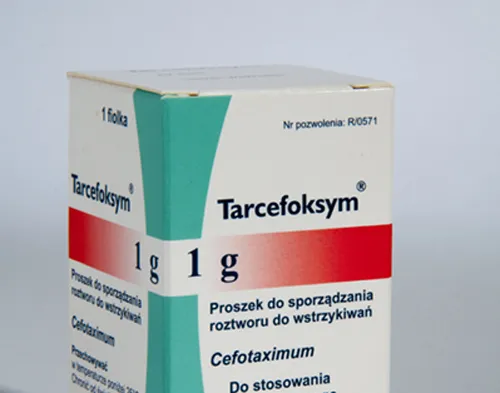
Table of Contents
- 1. NAME OF THE MEDICINAL PRODUCT
- 2. QUALITATIVE AND QUANTITATIVE COMPOSITION
- 3. PHARMACEUTICAL FORM
- 4.2 Dosage and Administration
- 4.3 Contraindications
- 4.4 Special warnings and precautions for use
- 4.5 Interactions with other medicinal products and other forms of interaction
- 4.6 Fertility, pregnancy and lactation
- 4.7 Effects on the ability to drive and use machines
- 4.8 Undesirable effects
- 4.9 Overdose
- 5.2 Pharmacokinetic properties
- 5.3 Preclinical safety data
- 6.2 Pharmaceutical incompatibilities
- 6.3 Shelf life
- 6.4 Special precautions during storage
- 6.5 Type and content of container
- 7. MARKETING AUTHORISATION HOLDER
- 8. MARKETING AUTHORISATION NUMBER
- 9. DATE OF FIRST AUTHORISATION OR RENEWAL OF THE AUTHORISATION
- 10. DATE OF ISSUE OR PARTIAL CHANGE OF THE
SUMMARY OF PRODUCT CHARACTERISTICS
1. NAME OF THE MEDICINAL PRODUCT
Tarcefoksym, 1 g, powder for solution for injection
2. QUALITATIVE AND QUANTITATIVE COMPOSITION
One vial contains 1 g of cefotaxime (Cefotaximum) in the form of cefotaxime sodium.
The medicinal product contains sodium. 1 g of powder contains 48 mg of sodium (2.1 mmol).
3. PHARMACEUTICAL FORM
Powder for solution for injection.
White or pale yellow powder.
4. CLINICAL PARTICULARS
4.1 Therapeutic indications
Cefotaxime is indicated in the treatment of severe infections caused by bacteria susceptible to this antibiotic.
Lower respiratory tract infections: especially acute and chronic bronchitis, bacterial pneumonia, lung abscess.
Urinary tract infections: e.g. acute and chronic pyelonephritis, cystitis, asymptomatic bacteriuria.
Uncomplicated gonorrhoea in cases of penicillin allergy or resistance (penicillinase-producing strains of Neisseria gonorrhoeae).
Infections in obstetrics and gynaecology.
Intra-abdominal infections: e.g. peritonitis.
Skin and soft tissue infections: e.g. cellulitis, wound infections.
Bone and joint infections: e.g. osteomyelitis, septic arthritis.
Meningitis.
Prophylactically before surgical procedures, particularly in the abdominal cavity, gastrointestinal tract, urogenital tract, and during caesarean section, when there is a risk of bacterial infection.
When prescribing cefotaxime, official guidelines on the appropriate use of antibacterial agents should be taken into account.
4.2 Dosage and Administration
The dose depends on the severity of the infection, susceptibility of the causative microorganism,
patient's condition, age and body weight.
Tarcefoksym is also available as a powder for solution for injection in a strength of 2 g.
Dosage
Adults
- Uncomplicated infections: 1 g every 12 hours;
- Moderate to severe infections: 2 g every 12 hours;
- Severe infections (e.g. sepsis): 2 g every 6 to 8 hours;
- Life-threatening infections: doses may be increased up to 2 g every 4 hours (maximum 12 g per day);
- Uncomplicated gonorrhea: single dose of 1 g.
Prophylactic use:
- Before surgical procedures: 1 g iv. or im. 90 to 30 minutes before surgery;
- Caesarean section: the first dose of 1 g should be administered as soon as possible after clamping of the umbilical cord, followed by the same dose iv. or im. at 6 and 12 hours postoperatively.
Children
The following are the commonly used doses.
Newborns: 50 mg/kg body weight per day im. or iv. in 2 to 4 divided doses. In severe
infections, the dose may be increased to 150 to 200 mg/kg body weight per day in divided doses.
Infants and children: 100 to 150 mg/kg body weight per day im. or iv. in 2 to 4 divided doses. In
severe infections, the daily dose may be increased up to 200 mg/kg body weight.
Children over 12 years of age (with body weight above 50 kg): dosage as for adults.
Elderly Patients
Treatment should be administered according to strictly defined dosage guidelines. In elderly patients
with impaired renal function, dose adjustment is required (see: Dosage in patients with renal
impairment).
Patients with Renal Impairment
Due to slowed elimination and the risk of increased serum concentrations, cefotaxime dosage should be adjusted according to creatinine clearance. Dose modification is not necessary if creatinine clearance is greater than 20 ml/min/1.73 m². If creatinine clearance is lower, the dose should be halved. There is no need to prolong the intervals between doses.
Duration of Treatment
The duration of treatment depends on the severity and type of infection.
After clinical symptoms have resolved, the drug should still be administered for an additional 2 to 3 days. In infections caused by β-haemolytic streptococci group A, treatment should not be shorter than 10 days (to prevent streptococcal glomerulonephritis and rheumatic fever).
Administration
Intramuscular administration
Doses exceeding 1 g should be administered at two different injection sites. To reduce pain, the drug should be injected into large muscle groups.
Intravenous administration
Recommended for severe infections (e.g. sepsis, meningitis) and in patients with life-threatening conditions.
The intravenous dose should be administered slowly over 3 to 5 minutes or given as an infusion over 20 to 60 minutes.
Instructions for preparation of the solution for administration, see section 6.6.
4.3 Contraindications
Hypersensitivity to cefotaxime, penicillins, or cephalosporins.
4.4 Special warnings and precautions for use
Anaphylactic reactions
Before initiating treatment with cefotaxime, it is essential to obtain a detailed patient history regarding previous hypersensitivity reactions to penicillins, cephalosporins, or other beta-lactam antibiotics (see sections 4.3 and 4.8).
Severe hypersensitivity reactions in the form of anaphylactic reactions may rarely occur during cefotaxime therapy. The likelihood of such reactions is higher when the antibiotic is administered parenterally. Patients with a history of multiple allergies have an increased risk of hypersensitivity reactions. In the event of anaphylactic shock or angioedema, epinephrine should be administered first, followed by an antihistamine, and finally a corticosteroid. Basic vital functions (respiration, pulse, blood pressure) must also be monitored.
Severe skin reactions
Since the product has been placed on the market, serious adverse skin reactions (SCAR) have been reported in association with the use of cefotaxime, including acute generalized exanthematous pustulosis (AGEP), Stevens-Johnson syndrome, toxic epidermal necrolysis, and drug reaction with eosinophilia and systemic symptoms (DRESS syndrome), which may be life-threatening or lead to death.
At the time of prescribing the drug, patients should be informed about subjective and objective symptoms related to skin reactions.
If subjective or objective symptoms indicating these reactions occur, cefotaxime should be discontinued immediately. If AGEP, Stevens-Johnson syndrome, toxic epidermal necrolysis, or DRESS syndrome occurs during cefotaxime treatment, re-administration of cefotaxime must not be initiated and treatment must be permanently discontinued.
In children, the appearance of a rash may be confused with the underlying infection or an alternative infectious process, and physicians should consider the possibility of a reaction to cefotaxime in children who develop rash and fever during treatment.
Rate of administration
Too rapid intravenous administration of the drug (in less than 60 seconds), particularly into central veins, may cause life-threatening cardiac arrhythmias.
Gastrointestinal warnings
Cefotaxime should be administered with caution to patients with a history of gastrointestinal disorders, particularly colitis.
Special caution is required if a patient develops severe, persistent diarrhoea during treatment. This may be a sign of pseudomembranous colitis (in most cases caused by toxins produced by Clostridioides difficile bacteria overgrowing in the intestine). In such cases, cefotaxime should be discontinued and appropriate treatment initiated. In mild cases, discontinuation of the drug is usually sufficient; in severe cases, oral metronidazole or vancomycin should be administered. The use of drugs inhibiting peristalsis is contraindicated.
Patients with renal impairment
Cephalosporins administered in high doses, especially to patients with renal impairment, may cause central nervous system disturbances (seizures). These symptoms are rare and occur most frequently after administration of first-generation cephalosporins, although they may occasionally occur after second- or third-generation cephalosporins.
Cefotaxime should be carefully dosed in patients with renal impairment. If the physician has only serum creatinine concentration available, creatinine clearance can be calculated using the following formula:
Creatinine clearance [ml/min] = body weight [kg] × (140 – age [years])
72 × serum creatinine concentration [mg/100 ml]
For women, the value obtained should be multiplied by 0.85.
Haematological reactions
Cefotaxime, like other cephalosporin antibiotics, when used long-term, may cause neutropenia, and less frequently agranulocytosis, eosinophilia, thrombocytopenia, and haemolytic anaemia. In therapy lasting longer than 10 days, monitoring of peripheral blood morphology is recommended.
Solutions containing lidocaine
Cefotaxime dissolved in lidocaine solution must not be administered:
- intravenously,
- to children under 30 months of age,
- to patients hypersensitive to lidocaine,
- to patients with atrioventricular conduction disorders (except patients with implanted pacemakers),
- to patients with severe circulatory insufficiency.
Important information on excipients
The medicinal product contains 48 mg of sodium per vial, equivalent to 2.4% of the WHO-recommended maximum daily intake of 2 g of sodium for adults. Considering the dosing regimen described in section 4.2, the maximum amount of sodium that may be administered to a patient at the maximum daily dose is 576 mg, corresponding to 28.8% of the WHO-recommended maximum daily intake of 2 g of sodium for adults. This should be taken into account in patients with impaired renal function and in patients on a sodium-controlled diet.
4.5 Interactions with other medicinal products and other forms of interaction
Patients allergic to penicillins may be allergic to cephalosporins (so-called cross-allergy).
Antibiotics with bacteriostatic action, such as tetracyclines, erythromycin, chloramphenicol, or
sulfonamides, may inhibit the bactericidal activity of cephalosporins, which is particularly important
during treatment of severe infections.
Concomitant administration of cefotaxime with aminoglycosides, colistin, polymyxins, vancomycin,
furosemide, or ethacrynic acid, given in high doses, increases the risk of nephrotoxicity.
In patients treated with cefotaxime, false-positive results in urinary glucose reduction tests may occur.
If such testing is necessary, enzymatic tests are recommended.
Probenecid administered simultaneously with cefotaxime increases the concentration of cefotaxime and
deacetylcefotaxime and prolongs their serum persistence.
In some patients receiving cefotaxime, a false-positive Coombs test reaction may be observed.
4.6 Fertility, pregnancy and lactation
Pregnancy
Animal studies have not shown any harmful effects of cefotaxime on the foetus.
Due to the lack of studies on the use of cefotaxime in pregnant women, the drug should be used during pregnancy, especially in the first trimester, only after careful consideration by the attending physician of the benefits and risks associated with its use.
Breast-feeding
Small amounts of cefotaxime pass into the milk of breast-feeding women. If the patient is breast-feeding, great caution should be exercised. The breast-fed infant should be monitored.
4.7 Effects on the ability to drive and use machines
There are no data regarding the influence of cefotaxime on psychomotor performance. However, if adverse reactions that reduce concentration ability occur (e.g. pain, dizziness; see section 4.8), driving vehicles or operating machinery is not recommended.
4.8 Undesirable effects
Undesirable effects after administration of cefotaxime are rare and usually mild and transient.
The possible undesirable effects are listed below.
Infections and parasitic infestations: fungal infections (e.g. vaginal candidiasis) caused by Candida species occur very rarely.
Blood and lymphatic system disorders: anaemia, leukopenia, neutropenia, transient eosinophilia, thrombocytopenia, granulocytopenia and agranulocytosis.
Hypersensitivity reactions:
Immune system disorders: fever, angioedema, bronchospasm, anaphylactic reactions are very rarely reported.
Skin and subcutaneous tissue disorders: rash, urticaria, purpura, drug reaction with eosinophilia and systemic symptoms (DRESS syndrome, frequency unknown) (see section 4.4). Additionally, in isolated cases and most frequently in patients with a history of asthma, hay fever or urticaria, Stevens-Johnson syndrome, erythema multiforme and toxic epidermal necrolysis have been observed.
If any of the above allergic reactions occur, the drug should be discontinued immediately.
Nervous system disorders: headache; cefotaxime administered in high doses, particularly in patients with renal impairment, may cause central nervous system disturbances (e.g. confusion, seizures).
Cardiac disorders: rare cases of ventricular arrhythmia have been observed as a result of too rapid intravenous infusion.
Gastrointestinal disorders: epigastric pain, nausea, vomiting, diarrhoea, very rarely pseudomembranous colitis.
Hepatic and biliary disorders: transient increases in bilirubin concentration and alkaline phosphatase and aminotransferase activities, transient hepatitis and cholestatic jaundice.
Renal and urinary disorders: transient increases in urea and creatinine concentrations, rarely interstitial nephritis.
General disorders and administration site conditions: pain, irritation, phlebitis at the injection site – very rarely are reasons for discontinuation of cefotaxime administration.
Reporting of suspected adverse reactions
After marketing authorisation of the medicinal product, it is important to report suspected adverse reactions. This enables continuous monitoring of the benefit-risk balance of the medicinal product. Healthcare professionals should report any suspected adverse reactions via the Department of Monitoring Adverse Drug Reactions at the Office for Registration of Medicinal Products, Medical Devices and Biocidal Products
Al. Jerozolimskie 181C; 02-222 Warsaw
Tel.: + 48 22 49 21 301
Fax: + 48 22 49 21 309
Website: https://smz.ezdrowie.gov.pl
Adverse reactions may also be reported to the responsible entity.
4.9 Overdose
In case of overdose, intensified adverse effects may occur. In patients with renal insufficiency, the risk of transient encephalopathy increases. In the event of overdose, administration of the drug should be discontinued, vital functions should be monitored, and symptomatic treatment initiated if necessary.
The drug may be removed from the body by hemodialysis or peritoneal dialysis.
5. PHARMACOLOGICAL PROPERTIES
5.1 Pharmacodynamic properties
Pharmacotherapeutic group: antibacterial agents for systemic use; beta-lactam antibiotics; cephalosporins.
ATC code: J01DD01
Cefotaxime exerts a bactericidal effect by inhibiting bacterial cell wall synthesis. By blocking transpeptidase activity, cefotaxime inhibits the formation of cross-links between the muropeptide chains of the bacterial cell wall. Subsequently, due to activation of cellular hydrolases, bacterial cell lysis occurs.
Below is presented the in vitro antibacterial spectrum of cefotaxime.
Gram-positive bacteria
Staphylococcus aureus (strains producing and non-producing ß-lactamases), Staphylococcus epidermidis, Enterococcus spp., Streptococcus pyogenes (group A, ß-hemolytic), Streptococcus agalactiae (group B), Streptococcus pneumoniae.
Gram-negative bacteria
Citrobacter spp., Enterobacter spp., Escherichia coli, Haemophilus influenzae (including ampicillin-resistant strains), Haemophilus parainfluenzae, Klebsiella spp. (including Klebsiella pneumoniae), Neisseria gonorrhoeae (strains producing and non-producing penicillinase), Neisseria meningitidis, Proteus mirabilis, Proteus vulgaris, Proteus inconstans, Morganella morganii*, Providencia rettgeri*, Serratia spp.*, Acinetobacter spp.*
* Many multidrug-resistant strains remain sensitive to cefotaxime.
Anaerobic bacteria
Bacteroides spp. (including some strains of B. fragilis), Clostridium spp. (most strains of C. difficile are resistant), Peptococcus spp., Peptostreptococcus spp., Fusobacterium spp. (including F. nucleatum)
5.2 Pharmacokinetic properties
Absorption and distribution
Cefotaxime is not absorbed following oral administration. After intramuscular and intravenous administration, it very rapidly achieves therapeutic concentrations in blood serum. Following intramuscular administration of a 500 mg or 1 g dose of the drug, maximum cefotaxime serum concentrations were observed after approximately 30 minutes and amounted to 11.7 µg/ml and 20.5 µg/ml, respectively. After intravenous administration of cefotaxime at doses of 500 mg, 1 g, or 2 g, antibiotic concentrations increased proportionally with the dose, reaching maximum levels of 38.9 µg/ml, 101.7 µg/ml, and 214.4 µg/ml, respectively. There was no evidence of drug accumulation in the body. In patients with normal renal function, the half-life of cefotaxime is 1.2 hours, and that of deacetylcefotaxime is 1.6 hours. In patients with renal impairment, premature infants, and low birth weight neonates, the half-life of both cefotaxime and its metabolite, deacetylcefotaxime, is prolonged. In patients with severe renal impairment (creatinine clearance 3–10 ml/min), the half-life of cefotaxime increases to 2.6 hours and that of deacetylcefotaxime to 10 hours. Approximately 40% of administered cefotaxime binds to plasma proteins.
Metabolism
Cefotaxime is metabolized in the liver. One-third of the administered antibiotic dose is converted into the biologically active deacetylcefotaxime and into inactive lactone. Deacetylcefotaxime is the only metabolite among third-generation cephalosporins that acts synergistically with the parent compound. Deacetylcefotaxime has lower biological activity but is more resistant to hydrolytic action of ß-lactamases produced by resistant strains, including anaerobes. Cefotaxime, administered at usual doses, achieves concentrations inhibiting the growth of most susceptible microorganisms in many tissues, organs, and body fluids. Cefotaxime penetrates well into bone marrow, bronchial secretions, pleural fluid, gallbladder wall, peritoneal fluid, pericardial fluid, bone, as well as genital organs and the middle ear. Cefotaxime and its metabolite, deacetylcefotaxime, achieve high concentrations in bile. In inflammatory conditions, it also penetrates well into cerebrospinal fluid, reaching concentrations exceeding the MIC values for infectious microorganisms. Cefotaxime crosses the placenta and is excreted into breast milk. Deacetylcefotaxime also achieves concentrations in tissues and body fluids sufficient to inhibit bacterial growth.
Excretion
Approximately 80% of the administered cefotaxime dose is excreted by the kidneys (50–60% in unchanged form), with the remainder eliminated in feces. Cefotaxime and deacetylcefotaxime can be removed from the body by hemodialysis or peritoneal dialysis.
5.3 Preclinical safety data
Studies conducted in animals receiving multiple times higher doses of
cefotaxime than the average doses used in humans did not reveal any teratogenic effect of the drug.
Cefotaxime also showed no mutagenic properties in the Ames test and in the micronucleus test.
6. PHARMACEUTICAL DATA
6.1 List of excipients
None.
6.2 Pharmaceutical incompatibilities
Cefotaxime must not be mixed in the same syringe with aminoglycosides. Cefotaxime is most effective against bacteria in solutions with a pH of 5 to 7. Cefotaxime solution must not be diluted with solvents having a pH above 7.5 or with sodium bicarbonate solution.
6.3 Shelf life
Before opening the vial
2 years
After opening the vial and reconstitution
The solution should be administered immediately after preparation, in accordance with good practice principles.
Cefotaxime solutions for intravenous administration, prepared in 0.9% sodium chloride solution, remain stable for 24 hours at a temperature of 2°C to 8°C (refrigerator). Solutions prepared in 5% glucose solution remain stable for 12 hours at a temperature of 2°C to 8°C (refrigerator).
Discoloration of the solutions from light yellow to dark yellow does not affect the activity or characteristics of the medicinal product.
6.4 Special precautions during storage
Store below 25°C. Protect from light.
For storage conditions of the medicinal product after reconstitution, see section 6.3.
6.5 Type and content of container
A 20 ml colourless glass vial containing 1 g of powder, closed with a rubber stopper and sealed with an aluminium cap, packed with a patient information leaflet in a cardboard box.
6.6 Special precautions for disposal and for handling the medicinal product
Preparation of solutions
Intramuscular injection
Dissolve the contents of the 1 g vial in 4 ml of water for injections or in 1% lidocaine solution (see section 4.4).
The cefotaxime solution in 1% lidocaine must be administered immediately after preparation.
The lidocaine solution must only be used for intramuscular injections.
Intravenous injection
Dissolve the contents of the 1 g vial in 10 ml of water for injections, 0.9% sodium chloride solution, or 5% glucose solution.
Cefotaxime must not be mixed in the same syringe with an aminoglycoside.
The solution of 1 g cefotaxime in 14 ml of water for injections is isotonic.
Intravenous infusion
Cefotaxime may be administered as intravenous infusions. To prepare the infusion solution, dissolve the contents of the 1 g vial in 50 ml to 100 ml of 0.9% sodium chloride solution or 5% glucose solution. The infusion should be administered over 20 to 60 minutes.
Any unused medicinal product or waste material should be disposed of in accordance with local regulations.
7. MARKETING AUTHORISATION HOLDER
Tarchomin Pharmaceutical Works „Polfa” Joint Stock Company
A. Fleminga Street 2
03-176 Warsaw
8. MARKETING AUTHORISATION NUMBER
Authorisation number R/0571
9. DATE OF FIRST AUTHORISATION OR RENEWAL OF THE AUTHORISATION
AND DATE OF REVISION
Date of first authorisation: 19.09.1989
Date of latest renewal of authorisation: 12.12.2012
10. DATE OF ISSUE OR PARTIAL CHANGE OF THE
SUMMARY OF PRODUCT CHARACTERISTICS