Symbicort turbuhaler
Poland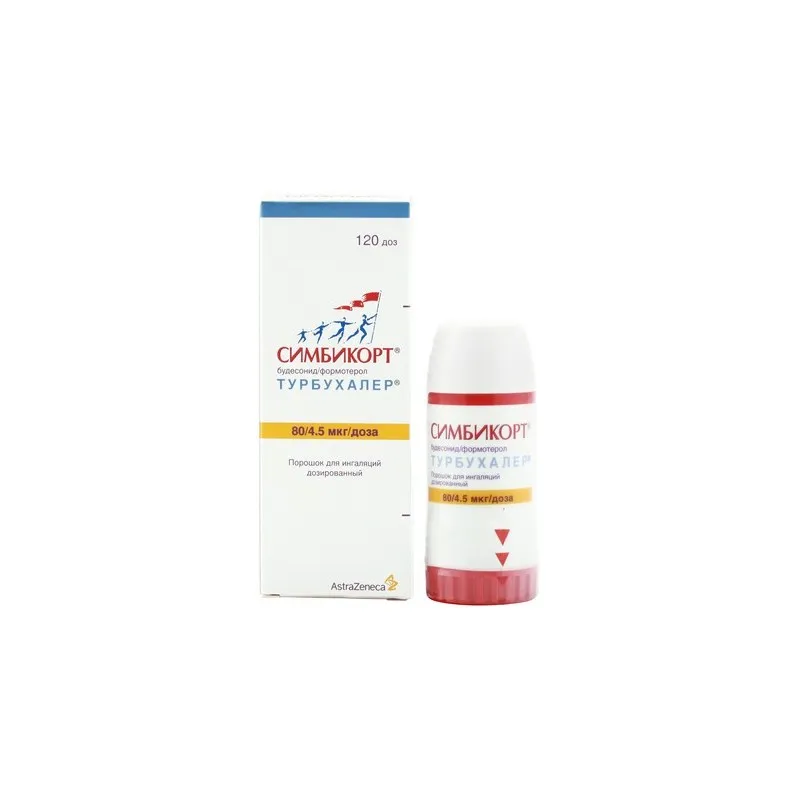
Instructions for Use
Symbicort Turbuhaler, (80 µg + 4.5 µg)/dose, powder for inhalation
Budesonide + Formoterol fumarate dihydrate
Please read this leaflet carefully before using the medicine, as it contains important information for the patient.
- Keep this leaflet, so that you can read it again if necessary.
- If you have any questions, please consult your doctor or pharmacist.
- This medicine has been prescribed for a specific individual. Do not pass it on to others. This medicine may harm other people, even if their symptoms are similar.
- If you experience any adverse reactions, including any possible side effects not listed in this leaflet, inform your doctor or pharmacist. See section 4.
Leaflet contents:
- What Symbicort Turbuhaler is and what it is used for
- Important information before using Symbicort Turbuhaler
- How to use Symbicort Turbuhaler
- Possible side effects
- How to store Symbicort Turbuhaler
- Contents of the pack and other information
1. What Symbicort Turbuhaler is and what it is used for
Symbicort Turbuhaler is an inhalation medicine used in the treatment of asthma in adults, adolescents, and children aged 6 years and older. It contains two different active substances: budesonide and formoterol fumarate dihydrate.
- Budesonide belongs to a group of medicines called corticosteroids. It works by reducing and preventing inflammation and swelling in the lungs.
- Formoterol fumarate dihydrate belongs to a group of medicines called long-acting beta2-adrenergic agonists or bronchodilators. It works by relaxing the muscles in the airways, making breathing easier.
This medicine is not suitable for treating severe asthma attacks. Treatment may be administered in two ways:
a) Some patients are prescribed two asthma inhalers: Symbicort Turbuhaler and a separate rescue inhaler.
- Symbicort Turbuhaler is used daily. Its regular use helps prevent asthma symptoms.
- A rescue inhaler is used when asthma symptoms occur, to help ease breathing.
b) For some patients, Symbicort Turbuhaler is prescribed as the only inhaler for asthma treatment.
- Symbicort Turbuhaler is used daily. Its regular use helps prevent asthma symptoms.
- Symbicort Turbuhaler is also used as needed for additional doses to relieve asthma symptoms and ease breathing. These patients do not require a separate rescue inhaler.
2. Important information before using Symbicort Turbuhaler
When not to use Symbicort Turbuhaler:
- if the patient is allergic to budesonide, formoterol, or to any of the other ingredients of this medicine (listed in section 6) – lactose (which contains small amounts of milk protein).
Warnings and precautions
Before starting treatment with Symbicort Turbuhaler, talk to your doctor or
pharmacist if the patient has:
- diabetes.
- a lung infection.
- high blood pressure or a history of heart disease (including heart rhythm disorders, very fast heartbeat, narrowed arteries, or heart failure).
- thyroid or adrenal gland disorders.
- low potassium levels in the blood.
- severe liver function impairment. If the patient experiences blurred vision or other visual disturbances, medical advice should be sought immediately.
Symbicort Turbuhaler and other medicines
Tell your doctor or pharmacist about all medicines the patient is currently taking, has recently taken, or plans to take.
In particular, inform your doctor or pharmacist if the patient is taking any of the following medicines:
- beta-blockers (such as atenolol or propranolol, used to treat high blood pressure), including eye drops (such as timolol used in glaucoma treatment).
- medicines used for rapid or irregular heartbeat (such as quinidine).
- medicines such as digoxin, commonly used in the treatment of heart failure.
- diuretics (such as furosemide), used in the treatment of high blood pressure.
- oral steroids (such as prednisolone).
- xanthine derivatives (e.g. theophylline or aminophylline). These are medicines commonly used in the treatment of asthma.
- other bronchodilators (such as salbutamol).
- tricyclic antidepressants (such as amitriptyline) and the antidepressant nefazodone.
- phenothiazine medicines (such as chlorpromazine and prochlorperazine).
- medicines known as HIV protease inhibitors (e.g. ritonavir) used in the treatment of HIV infection.
- medicines used to treat infections (such as ketoconazole, itraconazole, voriconazole, posaconazole, clarithromycin, and telithromycin).
- medicines used in Parkinson's disease (e.g. levodopa).
- medicines used in thyroid disorders (e.g. levothyroxine).
If the patient is taking any of the medicines listed above or has any doubts about using other medicines, they should consult their doctor or pharmacist before using Symbicort Turbuhaler.
The patient should also inform their doctor or pharmacist if they are scheduled to undergo general anaesthesia for a surgical or dental procedure.
Pregnancy, breastfeeding, and fertility
- If the patient is pregnant or planning to become pregnant, she should inform her doctor before using Symbicort Turbuhaler; Symbicort Turbuhaler should not be used without medical advice.
- If a patient being treated with Symbicort Turbuhaler becomes pregnant, she should not stop taking Symbicort Turbuhaler but should contact her doctor immediately.
- A breastfeeding patient should talk to her doctor before starting treatment with Symbicort Turbuhaler.
Driving and operating machinery
Symbicort Turbuhaler has no effect or negligible effect on the ability to drive vehicles, use tools, or operate machinery.
Symbicort Turbuhaler contains lactose
Symbicort Turbuhaler contains lactose (a type of sugar). If the patient has been diagnosed with an intolerance to certain sugars, they should consult their doctor before using this medicine. The amount of lactose contained in one dose of this medicine usually does not cause symptoms in patients with lactose intolerance.
Lactose, which is an excipient, contains small amounts of milk proteins, which may cause allergic reactions.
3. How to use Symbicort Turbuhaler
- This medicine should always be used exactly as prescribed by your doctor. If in doubt, consult your doctor or pharmacist.
- It is important to use Symbicort Turbuhaler every day, even if you currently have no asthma symptoms.
- Your doctor will regularly monitor the severity of your asthma symptoms.
If you are taking oral steroid tablets for asthma or COPD, when starting Symbicort Turbuhaler, your doctor may reduce the number of oral steroid tablets you take. If you have been taking oral steroids in tablet form for a prolonged period, your doctor may occasionally recommend blood tests. After reducing the dose of oral steroids, you may feel worse, and respiratory symptoms may worsen. Symptoms such as a stuffy nose, runny nose, weakness, or muscle or joint pain and rash (skin eruption) may occur. If any of these symptoms concern you or if you experience symptoms such as headache, fatigue, nausea, or vomiting, contact your doctor immediately. Other medicines may be required if you develop symptoms of allergy or joint inflammation. If you have any doubts about continuing to use Symbicort Turbuhaler, consult your doctor.
Your doctor may consider adding oral steroid tablets to your usual treatment during periods of stress (e.g., chest infection or before surgery).
Important information about asthma symptoms
If you experience shortness of breath or wheezing while using Symbicort Turbuhaler, continue using the medicine but contact your doctor as soon as possible, as additional treatment may be necessary.
Contact your doctor immediately if:
- you have difficulty breathing or frequently wake up at night due to asthma attacks.
- you experience chest tightness in the morning upon waking or chest tightness that lasts longer than usual. These symptoms may indicate inadequate asthma control and may require immediate initiation of different or additional treatment.
Asthma
Symbicort Turbuhaler can be used to treat asthma in two different ways. The dose and frequency of Symbicort Turbuhaler depend on the prescribed method of use.
a) If your doctor has prescribed Symbicort Turbuhaler and a separate additional inhaler for immediate use, read the instructions in the section below marked with the symbol “a) Using Symbicort Turbuhaler and an additional reliever inhaler”.
b) If your doctor has prescribed Symbicort Turbuhaler as the only inhaled medicine, read the instructions marked with the symbol “b) Using Symbicort Turbuhaler as the only inhaler in asthma”.
a) Using Symbicort Turbuhaler and an additional reliever inhaler
Use Symbicort Turbuhaler every day. Using Symbicort Turbuhaler helps prevent asthma symptoms.
Adults (aged 18 years and older)
- The usual dose is 1 or 2 inhalations twice daily.
- Your doctor may increase the dose to 4 inhalations twice daily.
- If symptoms are well controlled, your doctor may recommend taking the medicine once daily.
Adolescents (aged 12 to 17 years)
- The usual dose is 1 or 2 inhalations twice daily.
- If symptoms are well controlled, your doctor may recommend taking the medicine once daily.
Children (aged 6 to 11 years)
- The usual dose is 2 inhalations twice daily.
Symbicort Turbuhaler is not recommended for children under 6 years of age.
During treatment, your doctor will help you manage your asthma properly. Your doctor will determine the dose at the lowest level that controls asthma symptoms. Do not change the dose of Symbicort Turbuhaler without consulting your doctor.
If asthma symptoms occur, use the additional reliever inhaler. You should always carry your additional reliever inhaler with you. Do not use Symbicort Turbuhaler to treat asthma symptoms—this is what the additional reliever inhaler is for.
b) Using Symbicort Turbuhaler as the only inhaler in asthma
Symbicort Turbuhaler should only be used this way if specifically prescribed by your doctor and only in individuals aged 12 years or older.
Use Symbicort Turbuhaler every day. This helps prevent asthma symptoms. The medicine can be taken as follows:
- 1 inhalation in the morning and 1 inhalation in the evening or
- 2 inhalations in the morning or
- 2 inhalations in the evening.
You should also use Symbicort Turbuhaler as a “reliever inhaler” to treat asthma symptoms.
- If asthma symptoms occur, take 1 inhalation and wait a few minutes.
- If you do not feel better, take another inhalation.
- Do not take more than 6 inhalations at once.
Always carry your Symbicort Turbuhaler with you and use it as needed. A total daily dose exceeding 8 inhalations is usually not necessary. However, your doctor may recommend using up to 12 inhalations per day for a certain period.
If you regularly require 8 or more inhalations per day, contact your doctor. A change in treatment may be necessary.
Do not exceed 12 inhalations per day.
If asthma symptoms occur during physical exertion, use Symbicort Turbuhaler as described above. However, do not use Symbicort Turbuhaler before physical exertion to prevent asthma symptoms.
Preparing the Symbicort Turbuhaler inhaler for first use
Before the first use of a new Symbicort Turbuhaler inhaler, prepare it as follows:
- Unscrew and remove the cap of the inhaler. You may hear a characteristic rattling sound while doing so.
- Hold the Symbicort Turbuhaler inhaler vertically with the red grip pointing downwards.
- Turn the red grip fully in one direction, then turn it fully in the opposite direction (the starting direction does not matter). You will hear a characteristic click sound. It does not matter whether the click occurs after the first or second turn.
- Repeat the above step, turning the red grip in both directions.
- The Symbicort Turbuhaler inhaler is now loaded and ready for use.
Using the inhaler
To perform an inhalation, always follow the instructions below:
- Unscrew and remove the cap of the inhaler. You may hear a characteristic rattling sound while doing so.
- Hold the Symbicort Turbuhaler inhaler in an upright position, with the red grip pointing downwards.
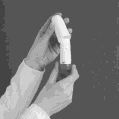
- Do not hold the Symbicort Turbuhaler inhaler by the mouthpiece when loading the dose. To load a dose of medicine, turn the red grip fully in one direction.
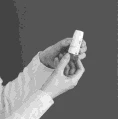
Then turn the grip fully in the opposite direction (the starting direction does not matter). You will hear a characteristic click sound. It does not matter whether the click occurs after the first or second turn. The Symbicort Turbuhaler inhaler is now loaded and ready for use. Load the dose only immediately before use.
- Hold the Symbicort Turbuhaler inhaler away from your mouth. Breathe out gently (without effort). Do not breathe out through the mouthpiece of the Symbicort Turbuhaler inhaler.
- Place the mouthpiece gently between your teeth. Close your lips around it (seal your lips around the mouthpiece) and inhale as deeply and forcefully as possible through your mouth. Do not chew or bite the mouthpiece.
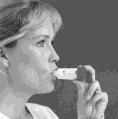
- Remove the Symbicort Turbuhaler from your mouth. Breathe out slowly. The amount of medicine in a single inhalation dose is very small, so you may not taste the medicine after inhalation. However, if you follow the instructions correctly, you can be sure that the dose has been delivered and the medicine has reached your lungs.
- If a second inhalation is prescribed, repeat steps 2 to 6.
- After using the inhaler, replace the cap and close it tightly.
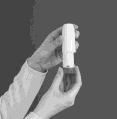
- Rinse your mouth with water after taking the morning and/or evening dose. Do not swallow the water.
Do not remove or twist the mouthpiece. It is attached to the Symbicort Turbuhaler inhaler and cannot be removed. Do not use the Symbicort Turbuhaler inhaler if it is damaged or if the mouthpiece is not properly attached.
As with all inhalers, caregivers should ensure that children prescribed Symbicort Turbuhaler use the correct inhalation technique as described above.
Cleaning the Symbicort Turbuhaler inhaler
Wipe the outer surface of the mouthpiece weekly with a dry cloth. Do not use water or other liquids.
When to start using a new inhaler
- The dose counter window shows how many doses (inhalations) remain in the Symbicort Turbuhaler; a full inhaler contains 60 or 120 doses of medicine.
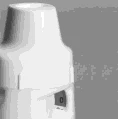
- The dose counter is marked in increments of 10 inhalations, so the counter does not change after each single dose.
- The appearance of a red mark at the edge of the dose counter window indicates that approximately 20 doses of medicine remain. The background of the dose counter window turns red during the last 10 doses. When the number 0 on a red background is in the center of the counter window, it is time to start using a new Symbicort Turbuhaler inhaler.
Note:
- After the inhaler is empty, the grip will still turn and produce a characteristic click sound.
- The sound heard when shaking the Symbicort Turbuhaler is produced by the moisture-absorbing agent, not the medicine. Therefore, the contents of the Symbicort Turbuhaler inhaler cannot be assessed by the sound produced when shaking it.
- If more than one dose is accidentally loaded, you will still receive only one dose of medicine. However, all loaded doses will be counted in the dose counter.
Using more than the recommended dose of Symbicort Turbuhaler
It is important to take only the doses described in this leaflet or prescribed by your doctor.
Do not increase the recommended dose without consulting your doctor.
The most common symptoms that may occur after taking more than the recommended dose of Symbicort Turbuhaler are tremors, headache, and rapid heartbeat.
Missing a dose of Symbicort Turbuhaler
- If you miss a dose, take it as soon as you remember. However, if it is almost time for your next dose, skip the missed dose.
- Do not take a double dose to make up for a missed dose.
If you have any further questions about the use of this medicine, consult your doctor or pharmacist.
4. Possible adverse reactions
Like all medicines, this medicine can cause adverse reactions, although not everyone will experience them.
You must stop using Symbicort Turbuhaler and contact your doctor immediately if the patient experiences any of the following symptoms:
- swelling of the face, especially around the mouth (tongue and/or throat and/or difficulty swallowing) or hives occurring together with breathing difficulties (angioedema) and/or sudden feeling of weakness (fainting). These may indicate an allergic reaction. This reaction is rare, occurring in less than 1 in 1,000 patients.
- Sudden worsening of wheezing and breathlessness occurring immediately after inhaling the medicine. If any of these symptoms occur, you must stop using Symbicort Turbuhaler immediately and use a rescue inhaler. You must contact your doctor immediately, as a change in treatment may be necessary. These symptoms occur very rarely, in less than 1 in 10,000 patients.
Other possible adverse reactions:
Common (may occur in up to 1 in 10 patients)
- Palpitations (awareness of heartbeat), tremors. If such symptoms occur, they are usually mild and typically diminish during continued use of Symbicort Turbuhaler.
- Oral candidiasis (fungal infection of the mouth). The risk of oral candidiasis is reduced if the patient rinses the mouth with water after using Symbicort Turbuhaler.
- Mild throat irritation, cough, and hoarseness.
- Headache.
Uncommon (may occur in up to 1 in 100 patients)
- Anxiety, nervousness, or restlessness.
- Sleep disturbances.
- Dizziness.
- Nausea.
- Rapid heartbeat.
- Bruising of the skin.
- Muscle cramps.
- Blurred vision.
Rare (may occur in up to 1 in 1,000 patients)
- Rash, itching.
- Bronchospasm (constriction of the airway muscles causing wheezing). If wheezing occurs immediately after using the medicine, stop using Symbicort Turbuhaler and contact your doctor immediately.
- Low blood potassium levels.
- Irregular heartbeat.
Very rare (may occur in up to 1 in 10,000 patients)
- Depression.
- Behavioral changes, particularly in children.
- Pain and tightness in the chest (symptoms of angina).
- Increased blood glucose (sugar) levels.
- Taste disturbances, such as unpleasant taste in the mouth.
- Changes in blood pressure.
Inhaled corticosteroids may affect the production of steroid hormones
in the body, especially if used long-term at high doses. Symptoms include:
- changes in bone mineral density (osteoporosis)
- cataract (clouding of the lens in the eye)
- glaucoma (increased pressure in the eye)
- slowed growth in children and adolescents
- effects on the adrenal glands (small glands located near the kidneys). The likelihood of these effects is significantly lower with inhaled corticosteroids than with oral corticosteroid tablets.
Reporting of adverse reactions
If any adverse reactions occur, including any not listed in this leaflet, inform your doctor or pharmacist. Adverse reactions can be reported directly to the Department of Monitoring of Adverse Drug Reactions of the Office for Registration of Medicinal Products, Medical Devices and Biocidal Products
Al. Jerozolimskie 181C
02-222 Warsaw
Phone: +48 22 49 21 301
Fax: +48 22 49 21 309
Website: https://smz.ezdrowie.gov.pl
By reporting adverse reactions, additional information on the safety of the medicine can be collected.
5. How to store Symbicort Turbuhaler
- Keep this medicine out of the sight and reach of children.
- Do not use this medicine after the expiry date stated on the cardboard box or on the inhaler label following EXP. The expiry date refers to the last day of the stated month.
- There are no special storage conditions for this medicine.
- Medicines must not be disposed of via the sewage system or household waste. Ask your pharmacist how to dispose of medicines no longer required. These measures help protect the environment.
6. Contents of the pack and other information
What Symbicort Turbuhaler contains
The active substances are budesonide and formoterol. Each dose of Symbicort Turbuhaler contains 80 micrograms of budesonide and 4.5 micrograms of formoterol fumarate dihydrate.
The other ingredient is lactose monohydrate (which contains milk proteins).
What Symbicort Turbuhaler looks like and contents of the pack
Symbicort Turbuhaler is a medicine in an inhaler. The inhaled powder is white. Each inhaler contains 60 or 120 doses of medicine. The inhaler has a white body and a red grip. On the grip there is a Braille code with the number 6, enabling identification and allowing differentiation from other AstraZeneca inhalation medicines.
Symbicort Turbuhaler is available in packs containing 1, 2, 3, 10 or 18 inhalers, each containing 60 (or 120) doses.
Not all pack sizes may be marketed.
Marketing Authorisation Holder
AstraZeneca AB
151 85 Södertälje
Sweden
Manufacturer
AstraZeneca AB
Forskargatan 18
151 36 Södertälje
Sweden
This medicinal product is authorised in the Member States of the European Economic Area under the following names:
| Country | Brand name and strength of the product |
| Austria | Symbicort mite Turbohaler 80 μg/4.5 μg/inhalation |
| Belgium | Symbicort mite Turbohaler 80 μg/4.5 μg/inhalation |
| Bulgaria | Symbicort Turbuhaler 80 μg/4.5 μg/inhalation |
| Croatia | Symbicort Turbuhaler 80 μg/4.5 μg/inhalation |
| Cyprus | Symbicort Turbuhaler 80 μg/4.5 μg/inhalation |
| Czech Republic | Symbicort Turbuhaler 80 μg/4.5 μg/inhalation |
| Denmark | Symbicort mite Turbuhaler 80 μg/4.5 μg/inhalation |
| Estonia | Symbicort Turbuhaler, 80 μg/4.5 μg |
| Finland | Symbicort Turbuhaler mite 80 μg/4.5 μg/inhalation |
| France | Symbicort Turbuhaler 100 μg/6 μg/inhalation |
| Germany | Symbicort mite Turbohaler 80 μg/4.5 μg/inhalation |
| Greece | Symbicort Turbuhaler 80 μg/4.5 μg/inhalation |
| Hungary | Symbicort mite Turbuhaler 80 μg/4.5 μg/inhalation |
| Iceland | Symbicort mite Turbuhaler 80 μg/4.5 μg/inhalation |
| Ireland | Symbicort Turbohaler 100 μg/6 μg/inhalation |
| Italy | Symbicort mite 80 μg/4.5 μg/inhalation |
| Latvia | Symbicort Turbuhaler 80 μg/4.5 μg/inhalation |
| Lithuania | Symbicort Turbuhaler 80 μg/4.5 μg/dose |
| Luxembourg | Symbicort mite Turbohaler 80 μg/4.5 μg/inhalation |
| Malta | Symbicort Turbohaler 100 μg/6 μg/inhalation |
| Netherlands | Symbicort Turbuhaler 100 μg/6 μg/inhalation |
| Norway | Symbicort mite Turbuhaler 80 μg/4.5 μg/inhalation |
| Poland | Symbicort Turbuhaler 80 μg/4.5 μg/inhalation dose |
| Portugal | Symbicort Turbohaler 80 μg/4.5 μg/inhalation |
| Romania | Symbicort Turbuhaler 80 μg/4.5 μg/inhalation |
| Slovakia | Symbicort Turbuhaler 100 μg/6 μg/inhalation |
| Slovenia | Symbicort Turbuhaler 80 μg/4.5 μg/inhalation |
| Spain | Symbicort Turbuhaler 80 μg/4.5 μg/inhalation |
| Sweden | Symbicort mite Turbuhaler 80 μg/4.5 μg/inhalation |
| United Kingdom | Symbicort Turbohaler 100 μg/6 μg/inhalation |
For more detailed information, please contact the representative of the Marketing Authorisation Holder:
AstraZeneca Pharma Poland Sp. z o.o.
Postępu Street 14
02-676 Warsaw
Phone: +48 22 245 73 00
Fax: +48 22 485 30 07
Detailed and up-to-date information on this
product is available by scanning with a smartphone
the QR code indicated in the Patient Information QR code area
Leaflet and on the outer packaging of the medicinal
product. The same information is also available at
the website: www.turbuhaler.pl
Similar Medications
-
Airbufo forspiro
Form: powder for inhalation
Active substance Dosage Budesonide 346.3 mcg Formoterol fumarate dihydrate 10.8 mcg Manufacturer: Aeropharm GmbH Lek Pharmaceuticals d.d. (Lek Pharmaceuticals d.d.) Salutas Pharma GmbH
-
Bufomix easyhaler
Form: powder for inhalation
Active substance Dosage budesonide 320 mcg formoterol fumarate dihydrate 9 mcg Manufacturer: Orion Corporation
-
Bufomix easyhaler
Form: powder for inhalation
Active substance Dosage budesonide 80 mcg formoterol fumarate dihydrate 4.5 mcg Manufacturer: Orion Corporation
-
Symbicort turbuhaler
Form: powder for inhalation
Active substance Dosage Budesonide 160 mcg Formoterol fumarate 4.5 mcg Manufacturer: AstraZeneca AB
-
Symbicort turbuhaler
Form: powder for inhalation
Active substance Dosage budesonide 320 mcg formoterol fumarate 9 mcg Manufacturer: AstraZeneca AB
This page has been machine-translated and may contain inaccuracies. The original data is available in the manufacturing country's language.
Last data check: June 04, 2026 · Data source: Rejestr Produktów Leczniczych (URPL)