Stymen
Poland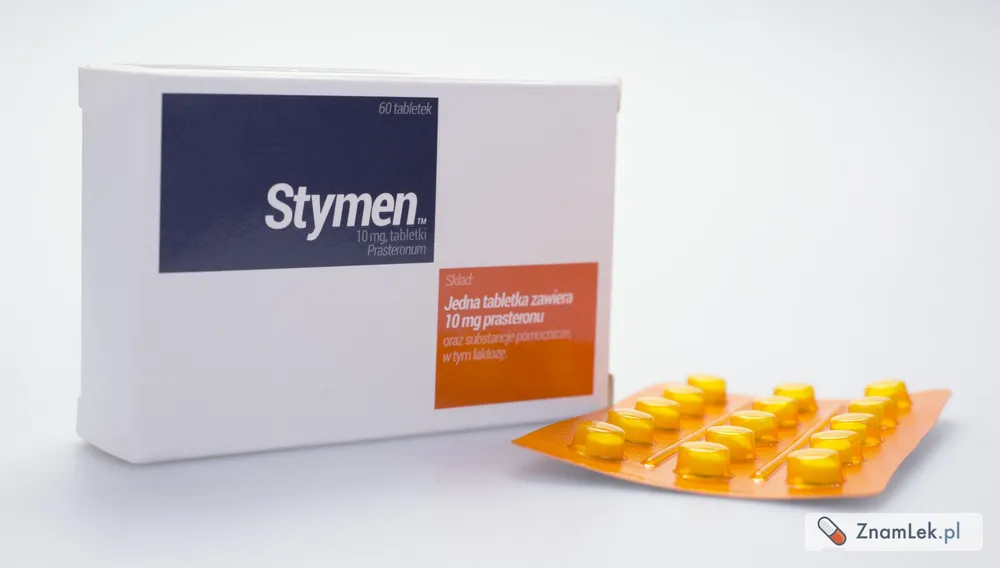
Table of Contents
Package leaflet: Information for the patient
Stymen, 10 mg, tablets
Prasteronum
Please read the entire leaflet carefully before using the medicine, as it contains
important information for the patient.
This medicine should always be taken exactly as described in the patient leaflet or as directed by
the physician or pharmacist.
- Keep this leaflet, as you may need to read it again.
- If you need advice or further information, please consult your pharmacist.
- If you experience any adverse reactions, including any possible adverse reactions not listed in this leaflet, inform your doctor or pharmacist. See section 4.
- If your symptoms do not improve or if you feel worse, contact your doctor.
Table of contents:
- What Stymen is and what it is used for
- Important information before taking Stymen
- How to take Stymen
- Possible side effects
- How to store Stymen
- Contents of the pack and other information
1. What Stymen is and what it is used for
Stymen contains the active substance prasterone (dehydroepiandrosterone, DHEA), which belongs to the group of steroid hormones. Its levels in the body decrease with aging. The highest DHEA concentrations occur in men between the ages of 20 and 30, after which levels gradually decline after age 30. DHEA supplementation may have beneficial effects on, among others, erectile function, libido, well-being, immune function, and the musculoskeletal system.
The supportive effects of DHEA have been demonstrated in the following conditions:
- andropause in men;
- decreased physical and mental performance, especially in elderly individuals;
- low mood, depressive states, sleep disturbances, reduced libido;
- erectile dysfunction and decreased sexual activity;
- obesity;
- reduced tissue sensitivity to insulin;
- circulatory system disorders;
- decreased immunological resistance;
- primary and secondary adrenal cortical insufficiency.
Indications
Stymen is indicated for the treatment of dehydroepiandrosterone (DHEA) deficiency in men with laboratory-confirmed DHEA deficiency.
2. Information before taking Stymen
When not to take Stymen
- if the patient is allergic to DHEA or any of the other ingredients of this medicine (listed in section 6);
- if the patient has severe liver and/or kidney impairment;
- if the patient has benign prostatic hyperplasia and/or prostate cancer; if the patient has breast cancer or other tumours;
- in children.
Warnings and precautions
Starting treatment with Stymen should be discussed with a doctor, who will arrange for the necessary tests and decide whether use of this medicine is required.
Patients under 40 years of age should not use this medicine.
Without consulting a doctor, the patient should not change, and especially not increase, the dose of the medicine.
Treatment of andropause-related symptoms in elderly patients should be initiated only after a thorough evaluation with a doctor of the benefits and potential risks associated with the use of this medicine.
In case of long-term use of doses exceeding 5 tablets (50 mg) per day, blood levels of DHEA hormone should be monitored and regular medical examinations should be performed at appropriate intervals.
Stymen is intended for long-term use; therapeutic effects become apparent after several weeks of treatment.
Stymen should not be used by athletes, as it belongs to the group of prohibited anabolic-androgenic substances.
Children
This medicine should not be used in children.
Stymen with other medicines
You should inform your doctor or pharmacist about all medicines currently used or recently used, as well as any medicines you plan to take.
The patient should inform the doctor if taking any of the following medicines:
- anticoagulants (used to reduce blood clotting, e.g. heparin, warfarin);
- medicines containing androgens (male sex hormones) such as testosterone and testosterone derivatives, as this may lead to increased androgenic effects;
- anticonvulsants (used in the treatment of epilepsy, e.g. carbamazepine, valproic acid);
- psycholeptics (used in the treatment of psychiatric disorders, e.g. phenothiazine derivatives, diazepines and oxazepines), as Stymen may reduce their effectiveness.
If the patient is unsure whether they are taking any of the above medicines, they should consult their physician.
Stymen with food and drink
The medicine should be taken during a meal to facilitate absorption.
Pregnancy and breastfeeding
This medicine is intended for men only.
It must not be used in pregnant women or during breastfeeding.
Driving and operating machinery
There is no data available regarding the effect on the ability to drive vehicles or operate machinery.
The medicine contains lactose
If the patient has previously been diagnosed with intolerance to certain sugars, the patient should consult a doctor before taking this medicine.
3. How to take Stymen
This medicine should always be taken exactly as described in the patient information leaflet or as directed by a doctor or pharmacist. If in doubt, consult a doctor or pharmacist.
Recommended dose
The initial dose is 1 tablet once daily.
The medicine should be taken in the morning, in accordance with the natural rhythm of DHEA hormone secretion.
The initial dose should be gradually increased (by 1 tablet every 2 weeks) until the desired therapeutic effects are achieved.
A maximum of 5 tablets (50 mg) per day may be taken.
Method of administration
The medicine should be taken orally.
The medicine should be taken during a meal to facilitate absorption.
Stymen is intended for long-term use; the therapeutic effects become apparent after several weeks of treatment.
Dosage should be adjusted according to serum DHEA concentration and treatment efficacy.
Taking more Stymen than recommended
If more Stymen has been taken than recommended, contact a doctor.
Missed dose of Stymen
Continue taking the medicine as before, without increasing the next dose.
Do not take a double dose to make up for a missed dose.
Stopping Stymen
If you have any further questions about the use of this medicine, consult your doctor or pharmacist.
4. Possible adverse effects
Like all medicines, this medicine can cause adverse effects, although not everyone will experience them.
The following adverse effects may occur:
Rare (occur in 1 to 10 people per 10,000):
- acne;
- excessive hair growth;
- seborrhoeic skin changes;
- male-pattern baldness;
- prostate enlargement;
- deepening of the voice;
- nausea, vomiting, increased appetite;
- oedema due to water and salt retention;
- hypercalcaemia (increased calcium levels in the blood).
Very rare (occur in less than 1 person per 10,000):
- hepatitis;
- liver enlargement (hepatomegaly);
- mania (mental disorder characterised by elevated or irritable mood).
The medicine is generally well tolerated when used at recommended doses.
The likelihood of adverse effects may increase when the medicine is used at higher than recommended doses and for prolonged periods.
If any of the above symptoms occur, the medicine should be discontinued and medical advice should be sought.
Reporting of adverse effects
If any adverse effects occur, including any possible adverse effects not listed in this leaflet, consult a doctor or pharmacist.
Adverse effects can be reported directly to the Department of Monitoring Adverse Drug Reactions of the Office for Registration of Medicinal Products, Medical Devices and Biocidal Products
{current address, telephone and fax number of the above Department}
e-mail: [email protected] .
Reporting adverse effects helps to provide more information on the safety of this medicine.
5. How to store Stymen
Keep this medicine out of sight and reach of children.
Store below 25 °C.
Do not use this medicine after the expiry date stated on the blister and outer carton. The expiry date refers to the last day of the specified month.
Markings on the blister
Lot: batch number
EXP: expiry date
Medicines must not be disposed of via wastewater or household waste. Ask your pharmacist how to dispose of medicines no longer in use. Proper disposal helps protect the environment.
6. Contents of the pack and other information
What Stymen contains
- The active substance is prasterone. One coated tablet contains 10 mg of prasterone.
- The other ingredients are: Ludipress (monohydrate lactose, povidone, crospovidone), magnesium stearate.
What Stymen looks like and contents of the pack
Stymen is in the form of tablets.
The tablets are packed in blisters and cardboard boxes. Each box contains 30 or 60 tablets.
Marketing Authorisation Holder
Aflofarm Farmacja Polska Sp. z o.o.
ul. Partyzancka 133/151
95-200 Pabianice
Tel.: (42) 22-53-100
Manufacturer
Aflofarm Farmacja Polska Sp. z o.o.
ul. Szkolna 31
95-054 Ksawerów
For further information, please contact the Marketing Authorisation Holder.