Stediril 30
Poland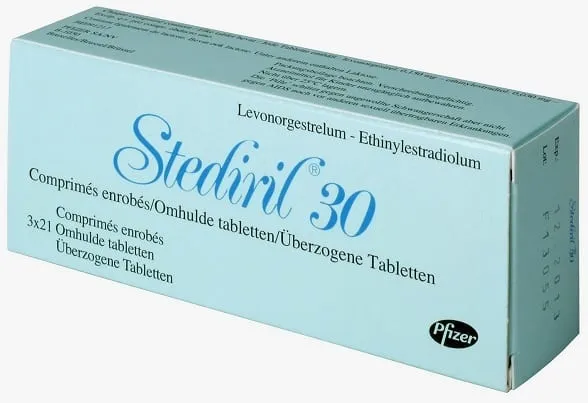
Table of Contents
Package leaflet: Information for the patient
Stediril 30, 150 micrograms + 30 micrograms, coated tablets
Levonorgestrel + ethinylestradiol
Please read all of this leaflet carefully before taking this medicine, because it contains important information for you.
- Keep this leaflet. You may need to read it again.
- Please contact your doctor or pharmacist if you have any further questions.
- This medicine has been prescribed for a specific individual. Do not pass it on to others.
- It may harm someone else, even if their symptoms are the same.
- If any of the side effects worsen, or if you experience any side effects not listed in this leaflet, inform your doctor or pharmacist.
Contents of the leaflet:
- What Stediril 30 is and what it is used for
- What you need to know before taking Stediril 30
- How to take Stediril 30
- Possible side effects
- How to store Stediril 30
- Contents of the pack and other information
1. What Stediril 30 is and what it is used for
Stediril 30 is a combined oral contraceptive tablet (the "Pill") used to prevent pregnancy.
The medicine contains two types of female sex hormones: an oestrogen and a progestogen. These hormones prevent pregnancy in three ways: by preventing the release of an egg from the ovaries; by thickening the cervical mucus, making it more difficult for sperm to penetrate into the uterus; and by preventing the lining of the uterus from becoming thick enough for a fertilised egg to implant and grow.
Stediril 30 should be taken daily for 21 days (1 tablet per day), followed by a 7-day tablet-free period.
Benefits of taking the Pill:
- It is one of the most reliable reversible methods of contraception, when used correctly.
- Sexual intercourse does not need to be interrupted for contraception.
- Periods usually become more regular, lighter, and less painful.
- It may reduce premenstrual symptoms.
Stediril 30 does not protect against sexually transmitted infections (STIs), such as chlamydia or HIV. Only condoms provide protection against STIs.
Stediril 30 must be taken as directed to prevent pregnancy.
2. Important information before using Stediril 30
It is important to understand the benefits and risks associated with using the Tablet before
starting or continuing its use. Although the Tablet is suitable for most healthy women, it is not
appropriate for all of them.
You should inform your doctor if any of the diseases or risk factors mentioned in this leaflet
apply to you.
Before using the Tablet
Your doctor will ask you several questions about your health and that of your close relatives and
will measure your blood pressure.
They should also perform other examinations, such as a breast examination.
While using the Tablet
- You should attend regular medical check-ups, usually when a new prescription is needed.
- You should regularly visit your doctor for cervical smear tests.
- You should examine your breasts and nipples once a month – inform your doctor if you notice or feel any changes, such as lumps or skin indentations.
- If you need a blood test, inform your doctor that you are taking the Tablet, as it may affect the results of certain tests.
- If surgery is planned, inform your doctor. You may need to stop taking the Tablet 4–6 weeks before the operation. This reduces the risk of blood clots (see section “Tablet and thrombosis”). Your doctor will advise you when you can resume taking the Tablet.
When not to use Stediril 30
Taking Stediril 30 may pose a health risk:
- If you are allergic to levonorgestrel, ethinylestradiol, or any of the other ingredients of this medicine (listed in section 6)
- If you are pregnant or suspect you might be pregnant
- If you have hormone-dependent cancer – such as certain breast, endometrial, or ovarian cancers
- If you have unexplained vaginal bleeding not diagnosed by a doctor
- If you or your close relatives have ever had blood circulation problems, including blood clots (thrombosis) in the legs (deep vein thrombosis), lungs (pulmonary embolism), heart (heart attack), brain (stroke), or other parts of the body
- If you have uncontrolled high blood pressure (hypertension)
- If you have irregular heart rhythm (arrhythmia) or heart valve problems caused by blood clotting issues
- If you have headaches with neurological warning signs (aura)
- If you have diabetes with blood vessel complications
- If you have a condition that increases the risk of blood clots (thrombosis – see section “Tablet and thrombosis”)
- If you have ever had pancreatitis associated with high levels of fats in the blood (high cholesterol or triglycerides)
- If you have ever had severe liver disease
- Do not use Stediril 30 if you have hepatitis C and are taking antiviral medicines containing ombitasvir with paritaprevir and ritonavir, dasabuvir, glecaprevir with pibrentasvir, or sofosbuvir with velpatasvir and voxilaprevir (see also section “Stediril 30 and other medicines”).
If any of the above conditions apply to you or develop for the first time while taking Stediril 30,
contact your doctor immediately. Do not use Stediril 30.
Tell your doctor if you have any of the following conditions.
If these symptoms appear or worsen during treatment with Stediril 30, inform your doctor.
- If you experience symptoms of angioedema, such as swelling of the face, tongue, and/or throat, and/or difficulty swallowing or hives, which may cause breathing difficulties, contact your doctor immediately. Products containing estrogens may cause or worsen symptoms of both hereditary and acquired angioedema.
A contraindication may also be the presence of a serious risk factor or multiple risk factors for
venous or arterial thrombosis (see section: Warnings and precautions, Tablet and thrombosis).
Warnings and precautions
Tablet and smoking
Women using the Tablet are strongly advised to stop smoking.
Smoking increases the risk of serious adverse effects on the heart and circulatory system. This
risk increases with age and the number of cigarettes smoked and is particularly significant in
women over 35 years of age.
Tablet and thrombosis
The Tablet may slightly increase the risk of blood clots (called thrombosis), especially during
the first year of use.
A blood clot in the leg vein – deep vein thrombosis – is not always serious. However, if it
migrates from the veins to the lungs, it may cause chest pain, shortness of breath, collapse, or
even death. This condition is called pulmonary embolism and occurs very rarely.
The risk of developing blood clots is only slightly increased by using the Tablet.
- Among 100,000 women who do not use the Tablet and are not pregnant, about 5 will develop a blood clot within one year.
- Among 100,000 women who use a Tablet like Stediril 30, about 20 will develop a blood clot within one year.
- Among 100,000 pregnant women, about 60 will develop a blood clot within one year.
The risk of venous blood clots increases further:
- with age,
- if you are significantly overweight,
- if you or your close relatives have ever had blood clots,
- if you are immobile for a prolonged period due to surgery, injury, or illness,
- if you have had one or more miscarriages,
- after recent childbirth or abortion after the first three months of pregnancy. Inform your doctor if any of these risk factors apply to you. Taking the Tablet may further increase this risk, so Stediril 30 may not be suitable.
Symptoms of a blood clot include:
- painful swelling of the leg,
- sudden chest pain,
- difficulty breathing. Contact your doctor immediately. Do not take Stediril 30 until your doctor permits it. In the meantime, use other contraceptive methods, such as condoms.
Very rarely, blood clots may also form in the blood vessels of the heart (causing heart attack)
or brain (causing stroke). In young, healthy women, the risk of heart attack or stroke is extremely
low.
The risk of heart attack or stroke increases further:
- if you smoke,
- if you have high blood pressure,
- if you have high levels of fats in the blood (cholesterol or triglycerides),
- if you are significantly overweight,
- with age,
- if you have irregular heart rhythm (atrial fibrillation),
- if you or your close relatives had a heart attack or stroke at a young age,
- if you have migraines,
- if you have diabetes. Inform your doctor if any of these risk factors apply to you. Taking the Tablet may further increase this risk, so Stediril 30 may not be suitable.
Symptoms of heart attack or stroke include:
- sudden, severe chest pain, possibly radiating to the left arm,
- sudden weakness or numbness on one side or part of the body,
- first occurrence of migraine or worsening of existing migraines,
- any sudden changes in vision (such as loss of vision or visual disturbances),
- dizziness, fainting, collapse, or seizures. Contact your doctor immediately. Do not take Stediril 30 until your doctor permits it. In the meantime, use other contraceptive methods, such as condoms.
Surgery and immobility
You should stop taking the Tablet 4 weeks before planned surgery and 2 weeks after any
surgery that increases the risk of thrombosis, or during prolonged immobility. Discuss with
your doctor how to manage the use of the Tablet in such situations.
Childbirth, abortion, or miscarriage
There is an increased risk of blood clots after childbirth. Do not start taking the Tablet earlier
than 28 days after childbirth if you are breastfeeding.
The same applies to abortion or miscarriage after the first three months of pregnancy.
Tablet and cancer
Long-term use of the Tablet reduces the risk of ovarian and endometrial cancer. However, it
appears to slightly increase the risk of cervical cancer – although this may be more related to
sexual behavior than to taking the Tablet. The most important risk factor for cervical cancer is
chronic infection with human papillomavirus.
All women should have regular cervical smear tests.
If you have or have had breast cancer, do not use the Tablet.
The Tablet slightly increases the risk of breast cancer. This risk increases with the duration of
Tablet use but decreases within 10 years after stopping.
Breast cancer is rare in women under 40 years of age; therefore, the risk of additional cases of
breast cancer in women currently or recently using the Tablet is small.
The risk of breast cancer is higher:
- the older the woman,
- if a close female relative (mother, sister, or grandmother) has had breast cancer,
- if you are significantly overweight,
- if you had your first child at an older age or have never given birth. Contact your doctor immediately if you notice any changes in your breasts, such as skin dimpling, nipple changes, or lumps that can be seen or felt.
Very rarely, the use of the Tablet has also been associated with certain types of liver cancer
in women who have used the medicine for a long time.
Tablet and liver disease
Rarely, the use of the Tablet has been associated with liver diseases such as jaundice and
benign liver tumors.
Early diagnosis of liver cell damage allows for prompt discontinuation of the medicine, reducing
its harmful effects on the liver. If liver cell damage is diagnosed, stop taking the Tablet, use
alternative contraception, and consult your doctor.
You may not be able to use the Tablet again until liver function abnormalities resolve.
If you experience severe abdominal pain or yellowing of the skin or eyes (jaundice), contact your
doctor immediately. You may need to stop taking Stediril 30.
Tablet and vision
You may experience discomfort or even intolerance to contact lenses while taking the Tablet.
If you experience more serious eye problems, stop taking the Tablet and contact your doctor
immediately for an examination.
High blood pressure
Your blood pressure may increase while taking the Tablet. If you have ever had problems with
high blood pressure, you may need to use another method of contraception. If your doctor
prescribes the Tablet, monitor your blood pressure regularly and stop taking the Tablet and use
another contraceptive method if your blood pressure increases significantly (see also section
“Do not use Stediril 30 if any of the following conditions apply”).
Migraine and headache
If you develop migraine or headache unlike any you have had before, the Tablet may not be
suitable. In such cases, stop taking the Tablet and contact your doctor.
Immunological reactions
The Tablet may cause or worsen symptoms of angioedema (sudden swelling of tissues, in some
cases causing breathing or swallowing difficulties and hives).
The risk is increased if you or your relatives have ever had angioedema. Consult your doctor.
Tablet and effects on carbohydrates and lipids
Inform your doctor if you have ever had problems with glucose tolerance or diabetes, as close
monitoring may be required (see also section “Do not use Stediril 30 if any of the following
conditions apply”).
A small proportion of women may experience changes in blood lipid (fat) levels while taking the
Tablet. Inform your doctor, who may consider non-hormonal contraception.
If you are being treated for high lipid levels, regular check-ups will be required while taking
the Tablet.
Vaginal bleeding
Breakthrough bleeding (unexpected bleeding outside the week off when you are not taking the
Tablet) or spotting may occur, especially during the first three months of taking the Tablet. A
reliable assessment of irregular bleeding can only be made after the adaptation period of about
three cycles. If these types of bleeding persist or recur, contact your doctor to rule out non-hormonal
causes such as pregnancy or certain diseases. If necessary, your doctor may prescribe a different
Tablet (see also section “Bleeding between periods should not last long”).
If you previously had no periods or irregular periods, these conditions may recur during Tablet
use.
If you miss a period while taking the Tablet, see also section “Missed dose of Stediril 30”.
Psychiatric disorders
Some women using hormonal contraceptives, including Stediril 30, have reported depression or
low mood. Depression can be severe and sometimes lead to suicidal thoughts. If you experience
mood changes or symptoms of depression, contact your doctor immediately for further medical
advice.
Women with a history of depression should be closely monitored, and if severe symptoms of
recurrent depression occur, the product should be discontinued. The Tablet may not be suitable,
and another type of contraception may be needed.
Medical examinations
Before prescribing the Tablet for the first time, your doctor will perform a complete medical
and family history and a physical examination. You should regularly visit your doctor for cervical
smear tests.
Your next visit should be three months after starting the Tablet. You should visit your doctor
annually for a check-up similar to the initial examination.
Women who have previously had chloasma (melasma) may develop pigmented patches on the
face (chloasma) while taking the Tablet. Women predisposed to chloasma should avoid exposure
to sunlight and ultraviolet radiation.
Children and postmenopausal women
Stediril 30 is intended for use only in women of reproductive age. It should not be used by
children or postmenopausal women.
Stediril 30 and other medicines
Inform your doctor or pharmacist about all medicines you are currently or recently taking, as
well as any medicines you plan to take. Also check the leaflets of all medicines to see if they can
be used with hormonal contraception.
Some medicines may make Stediril 30 less effective in preventing pregnancy, for example:
- laxatives used for constipation,
- certain medicines used to treat epilepsy,
- certain medicines used to treat tuberculosis,
- certain medicines used to treat HIV (AIDS),
- certain antifungal medicines,
- certain sedatives (called “barbiturates”),
- certain anti-inflammatory medicines,
- St. John’s wort (an herbal remedy),
- atorvastatin (a medicine that lowers blood lipid levels),
- vitamin C or paracetamol,
- theophylline (a medicine used to treat asthma),
- cyclosporine.
If you need to take any of these medicines, Stediril 30 may not be suitable, and you may need to
use additional contraception for a certain period. Your doctor or pharmacist will inform you if
this is necessary and, if so, for how long.
Stediril 30 may also affect the action of other medicines. Therefore, it is very important to inform
your doctor if you are taking the Tablet with other medicines.
Taking a medicine called troleandomycin while using the Tablet increases the risk of liver
function disorders (reduced bile secretion by the liver).
Taking a medicine called flunarizine while using the Tablet may sometimes cause milk
production in the breasts of women who have not recently given birth.
Do not use Stediril 30 if you have hepatitis C and are taking antiviral medicines containing
ombitasvir with paritaprevir and ritonavir, dasabuvir, glecaprevir with pibrentasvir, or sofosbuvir
with velpatasvir and voxilaprevir, as these medicines may cause elevated liver function test
results (increased activity of the liver enzyme AlAT).
Your doctor will recommend another type of contraception before starting these medicines.
You may resume taking Stediril 30 about 2 weeks after stopping the treatment. See section
“When not to use Stediril 30”.
Stediril 30 with food and drink
There are no special instructions regarding taking Stediril 30 with food or drink.
Pregnancy, breastfeeding, and effects on fertility
During pregnancy, while breastfeeding, if you suspect you are pregnant, or if you plan to become
pregnant, consult your doctor before using this medicine.
Do not use Stediril 30 during pregnancy. If pregnancy is suspected, perform a pregnancy test
before stopping Stediril 30.
There is no evidence that Stediril 30 harms the fetus if conception occurs accidentally while
taking the medicine, but if pregnancy is confirmed, stop taking Stediril 30.
Breastfeeding women should not use Stediril 30. Discuss other contraceptive methods with your
doctor. Breastfeeding does not protect against pregnancy.
Stediril 30 contains lactose and sucrose
Stediril 30 contains lactose and sucrose. Inform your doctor before starting the medicine if you
have intolerance to certain sugars.
3. How to use Stediril 30
3.1 How to use Stediril 30
Always take this medicine exactly as your doctor has instructed. If in doubt, consult your doctor.
Take Stediril 30 every day for 21 days.
Stediril 30 is available in blisters containing 21 tablets. Each tablet is marked with a day of the
week.
- Take the tablets every day at approximately the same time.
- Start by taking the tablet marked with the correct day of the week.
- Take the tablets in the direction of the arrows shown on the packaging. Take one tablet daily until all 21 tablets are finished.
- Swallow the tablets whole, with water if needed. Do not chew them.
Then, there is a 7-day break without taking tablets
After taking all 21 tablets from the blister, there is a 7-day break without taking tablets. If the
last tablet from the first pack was taken on Friday, the first tablet from the next pack should be
taken on Saturday of the following week.
Within a few days of taking the last tablet from the blister, withdrawal bleeding resembling a
period will occur. This bleeding may not stop before starting the next pack of tablets.
There is no need to use additional contraception during these 7 tablet-free days, as long as
tablets have been taken correctly and the next pack is started on time.
Then start the next pack
After the 7 tablet-free days, start the next blister of Stediril 30 – even if bleeding has not stopped.
Always start a new blister on time.
As long as tablets are taken correctly, each new pack will always start on the same day of the
week.
3.2 How to start taking Stediril 30
First use or restarting the Tablet after a break
Start taking Stediril 30 on the first day of your next menstrual bleeding. Starting this way
provides immediate contraceptive protection.
It is acceptable to start taking Stediril 30 between days 2 and 7 of menstrual bleeding (e.g.,
starting on Sunday). In this case, use additional contraceptive methods, such as condoms, until
you have taken the first seven tablets correctly.
Switching from another contraceptive to Stediril 30
- If you were using a 21-tablet contraceptive: Start taking Stediril 30 the day after finishing the current pack. Contraceptive protection is immediate. Withdrawal bleeding will occur only after completing the first blister of Stediril 30.
- If you were using a 28-tablet contraceptive: Start taking Stediril 30 the day after finishing the active tablets. Contraceptive protection is immediate. Withdrawal bleeding will occur only after completing the first blister of Stediril 30.
- If you were using a progestogen-only contraceptive (progestogen-only pills, subdermal implant, intrauterine device, injection):
- progestogen-only pill: You may stop taking progestogen-only pills on any day and start Stediril 30 the next day.
- implant or intrauterine device: Start taking Stediril 30 on the same day the implant or intrauterine device is removed.
- injection: Start taking tablets on the day the next injection would have been due. Use additional contraceptive methods, such as condoms, until you have taken the first seven tablets correctly.
Starting Stediril 30 after miscarriage or abortion
If a miscarriage or abortion occurred within the first three months of pregnancy, your doctor
may advise that you can start taking Stediril 30 immediately. This provides immediate
contraceptive protection.
If a miscarriage or abortion occurred after the third month of pregnancy, you may start taking
Stediril 30 after 28 days. Use additional contraceptive methods, such as condoms, during the
first 7 days of taking Stediril 30. If you have had sexual intercourse, rule out pregnancy or wait
for the next menstrual period.
Contraception after childbirth
You may start taking Stediril 30 28 days after a normal delivery without complications, if you
are not breastfeeding and are fully mobile. Use additional contraceptive methods during the first
7 days of taking Stediril 30.
If you have had sexual intercourse, rule out pregnancy or wait for the first menstrual period
after childbirth or abortion.
Your doctor will provide further information on contraception.
3.3 Taking more than the recommended dose of Stediril 30
It is unlikely that taking more than one tablet will cause adverse effects, but you should contact
your doctor as soon as possible.
3.4 Missed dose of Stediril 30
If you miss a tablet, follow the instructions below.
If less than 12 hours have passed since you missed the tablet, take the missed tablet as soon
as possible. Take the next tablets at the usual time. Contraceptive protection is not reduced.
If more than 12 hours have passed since you missed the tablet or if you missed two or more
active tablets, contraceptive protection may be reduced. Therefore, take only the last missed
tablet as soon as possible, which may mean taking two tablets on the same day. Leave the
earlier missed tablets in the blister and continue taking the remaining tablets as usual. In
addition, use non-hormonal contraceptive methods, such as condoms, for the next 7 days.
Then follow these rules:
- If you missed one or more tablets in the first week of the blister (days 1–7) and had sexual intercourse, there is a risk of pregnancy. Contact your doctor or pharmacist immediately.
- If you took the last tablet after the 7 days of additional contraception, take a 7-day break before starting the next blister.
- If you took the last tablet before these 7 days of additional contraception ended, start the next pack the next day. Withdrawal bleeding usually does not occur until the end of the second blister.
If you forgot to take any tablet from the blister and did not have withdrawal bleeding during the
tablet-free period, this may indicate pregnancy. Before starting the next blister, contact your
doctor or pharmacist or perform a pregnancy test.
If you started the next blister late, you may not be protected against pregnancy. If you had
sexual intercourse within the last 7 days, consult your doctor or pharmacist. Also use condoms
for 7 days.
3.5 What to do if you vomit or have diarrhea
If you vomit or have severe diarrhea, the hormones from the tablet may not have been fully
absorbed. Continue taking tablets at the usual time. Use additional contraception, such as
condoms, during the illness and for 7 days after recovery. If more than 12 hours have passed,
follow the instructions in the section “Missed dose of Stediril 30”.
Contact your doctor if gastrointestinal symptoms do not improve or worsen. Your doctor may
recommend another contraceptive method.
3.6 Delayed withdrawal bleeding – could I be pregnant?
Occasionally, withdrawal bleeding may not occur. This may indicate pregnancy, but it is
unlikely if tablets were taken correctly. If there is a risk of pregnancy (e.g., due to missed tablets
or taking other medicines), perform a pregnancy test before starting the next pack. If you are
pregnant, stop taking Stediril 30 and contact your doctor.
3.7 How to delay withdrawal bleeding
If you wish to delay withdrawal bleeding, skip the 7-day break and immediately start taking
tablets from a new pack of Stediril 30. Withdrawal bleeding can be delayed for any length of
time, up to the point when all tablets from the new pack are taken. During this time, you may
experience breakthrough bleeding or spotting.
Resume regular use of Stediril 30 after the usual 7-day break.
If you have further questions about using this medicine, talk to your doctor or pharmacist.
4. Possible side effects
Like all medicines, this medicine can cause side effects, although not everybody gets them.
Serious side effects
Contact a doctor immediately if the patient experiences any of the following symptoms of angioedema: swelling of the face, tongue and (or) throat, and (or) difficulty swallowing, or urticaria, which may cause difficulty breathing (see also section "Warnings and precautions").
Like all medicines, Stediril 30 may cause allergic reactions (hypersensitivity). These reactions may, in very rare cases, include urticaria, sudden swelling of tissues, and severe reactions affecting the respiratory and circulatory systems, such as: low blood pressure, dizziness, nausea, and breathing difficulties. If any symptoms of an allergic reaction occur, Stediril 30 should be discontinued immediately and a doctor should be informed without delay or the patient should go to the nearest hospital.
Serious adverse effects associated with taking the oral contraceptive tablet have been described in section 2, "The tablet and thrombosis" and "The tablet and cancer". If further information is needed, please read these sections.
Other possible side effects:
Very common (occurring in more than 1 in 10 women):
- headache, including migraine (if it is sudden or different from usual, or prolonged, contact a doctor as soon as possible)
- breakthrough bleeding and spotting between periods during the first few months (although this usually resolves as the body adjusts to Stediril 30) – see section "Breakthrough bleeding should not last long".
Common (occurring in 1 to 10 in 100 women):
- change in body weight (increase or decrease)
- mood changes, including depression, changes in libido (sex drive)
- nervousness or dizziness
- breast pain, breast tenderness, breast enlargement, nipple discharge, change in bleeding pattern, change in vaginal discharge, absence of periods, painful periods
- vaginal inflammation, including yeast infection (candidiasis)
- stomach problems such as nausea, vomiting, abdominal pain
- acne
- fluid retention, oedema (e.g. of ankles or legs) caused by fluid accumulating in the tissues.
Uncommon (occurring in 1 to 10 in 1,000 women):
- change in blood fat levels (plasma lipids), including hypertriglyceridaemia, change in appetite (increase or decrease)
- increased blood pressure
- stomach cramps, bloating, diarrhoea
- rash, brownish irregular skin patches (melasma/chloasma), which may persist, excessive hair growth (hirsutism), excessive hair loss (alopecia).
Rare (occurring in 1 to 10 in 10,000 women):
- severe allergic reactions, including very rare cases of urticaria, sudden swelling of tissues (angioedema), and severe reactions affecting the respiratory and circulatory systems, such as: low blood pressure, dizziness, nausea, and breathing difficulties
- decreased blood folate levels, glucose intolerance
- intolerance to contact lenses
- yellowing of the skin (cholestatic jaundice)
- inflammation of subcutaneous fat cells (erythema nodosum)
- vaginal discharge.
Very rare (occurring in less than 1 in 10,000 women):
- exacerbation of systemic lupus erythematosus (a chronic autoimmune disorder)
- exacerbation of porphyria (a disorder caused by deficiency of certain enzymes)
- exacerbation of chorea (a movement disorder)
- optic neuritis, thrombosis in retinal blood vessels
- exacerbation of varicose veins
- pancreatitis, colitis due to reduced blood flow to the intestine (ischaemic colitis)
- gallbladder disease, including gallstones
- erythema multiforme (a skin disorder)
- haemolytic-uraemic syndrome (a kidney disorder)
- liver cell tumour (hepatocellular carcinoma)
Stediril 30 may also cause inflammatory bowel disease (e.g. Crohn’s disease, ulcerative colitis) and liver cell damage, with unknown frequency, which cannot be estimated from the available data.
Inform a doctor or pharmacist if the patient is concerned that any adverse effect may be due to taking Stediril 30. If any pre-existing condition worsens during treatment with Stediril 30, the doctor or pharmacist should also be informed.
Breakthrough bleeding should not last long
Some women may experience slight unexpected bleeding or spotting while taking Stediril 30, especially during the first few months. Usually, this bleeding is not a cause for concern and will stop after one or two days. Continue taking Stediril 30 as usual. The problem should resolve after taking the first few packs of tablets.
Unexpected bleeding may also occur if tablets are not taken regularly, so try to take the tablets at the same time every day. Unexpected bleeding may also be caused by taking other medicines.
Consult a doctor if bleeding or spotting:
- continues beyond the first few months
- starts after several months of taking Stediril 30
- continues even after stopping Stediril 30.
Reporting of side effects
If any adverse effects occur, including any adverse effects not listed in this leaflet, inform a doctor or pharmacist. Adverse effects can be reported directly to the Department of Monitoring of Adverse Drug Reactions, Office for Registration of Medicinal Products, Medical Devices and Biocidal Products
Al. Jerozolimskie 181C
02-222 Warsaw
Tel.: +48 22 49 21 301
Fax: +48 22 49 21 309
Website: https://smz.ezdrowie.gov.pl
Adverse effects can also be reported to the marketing authorisation holder or representative of the marketing authorisation holder.
Reporting adverse effects helps provide more information on the safety of this medicine.
5. How to store Stediril 30
Keep this medicine out of sight and reach of children.
Do not use this medicine after the expiry date stated on the blister or carton (EXP). The expiry date refers to the last day of the specified month.
Do not store above 25°C. Store in the original packaging.
Medicines must not be disposed of via wastewater or household waste. Ask your pharmacist how to dispose of medicines no longer required. These measures help protect the environment.
6. Contents of the package and other information
What Stediril 30 contains
- The active substances are levonorgestrel and ethinylestradiol. Each coated tablet contains 150 micrograms of levonorgestrel and 30 micrograms of ethinylestradiol.
- Other components are:
Tablet core: monohydrate lactose, maize starch, povidone K 25, magnesium stearate, talc, purified water.
Tablet coating: sucrose, macrogol 6000, calcium carbonate, talc, povidone K 90, purified water.
Polishing agents: white wax, carnauba wax, talc.
What Stediril 30 looks like and contents of the pack
Coated tablets
The tablets are white, shiny, coated, with a smooth surface.
Each blister pack of Stediril 30 contains 21 white tablets.
Blister made of PVC/Aluminium, in an aluminum sachet with silica gel as drying agent, packed in a cardboard box.
Alternatively: PVC/Aluminium blister in a cardboard box.
Each Stediril 30 carton contains 1x21 or 3x21 tablets.
Not all pack sizes may be marketed.
Marketing Authorisation Holder
Pfizer Europe MA EEIG
Boulevard de la Plaine 17
1050 Bruxelles
Belgium
Manufacturer
Haupt Pharma Muenster GmbH
Schleebrueggenkamp 15
48159 Muenster
Germany
Pfizer Ireland Pharmaceuticals Unlimited Company
Little Connell, Newbridge
Co. Kildare
W12 HX57
Ireland
For further information, please contact the local representative of the Marketing Authorisation Holder:
Pfizer Polska Sp. z o.o.
tel. 22 335 61 00