Solitombo
Poland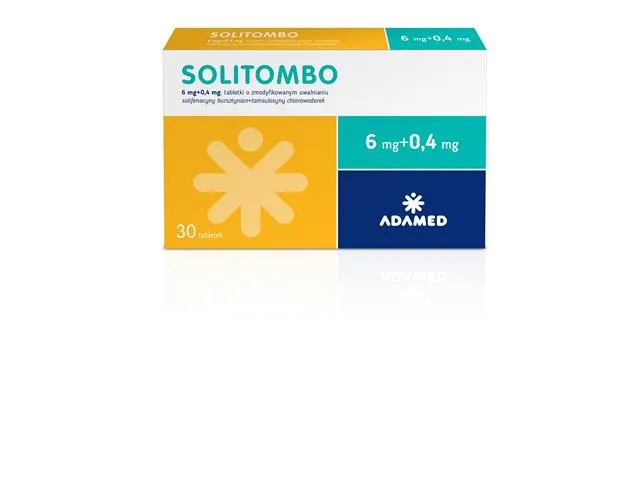
Table of Contents
PACKAGE LEAFLET
Package leaflet: information for the patient
Solitombo, 6 mg/0.4 mg, modified-release tablets
succinate salt of solifenacin + hydrochloride salt of tamsulosin
Please read this leaflet carefully before taking this medicine, as it contains
important information for you.
- Keep this leaflet. You may need to read it again.
- If you have any further questions, please ask your doctor or pharmacist.
- This medicine has been prescribed for a specific individual. Do not pass it on to others. It may harm someone else, even if their symptoms are similar.
- If you experience any side effects, including any not listed in this leaflet, tell your doctor or pharmacist. See section 4.
Leaflet contents
- What Solitombo is and what it is used for
- What you need to know before you take Solitombo
- How to take Solitombo
- Possible side effects
- How to store Solitombo
- Contents of the pack and other information
1. What Solitombo is and what it is used for
Solitombo is a combination of two different medicines – solifenacin and tamsulosin – contained in a single tablet.
Solifenacin belongs to a group of medicines called anticholinergics, while tamsulosin belongs to a group of medicines known as alpha-adrenergic receptor blockers.
Solitombo is used in men to treat both moderate and severe lower urinary tract symptoms related to urine storage and voiding, caused by problems with the urinary bladder and an enlarged prostate gland (benign prostatic hyperplasia). Solitombo is used when prior treatment with monotherapy for this condition has not sufficiently relieved symptoms.
An enlarged prostate gland may lead to problems with urination (voiding symptoms), such as difficulty starting urination, trouble passing urine (reduced urine stream), post-micturition dribbling, and a sensation of incomplete bladder emptying. At the same time, it adversely affects the urinary bladder, causing involuntary bladder contractions even when the patient does not feel the need to urinate. This leads to storage-related symptoms such as bladder hypersensitivity, urgency (a sudden, strong need to pass urine with little or no warning), and increased frequency of urination.
Solifenacin reduces unwanted contractions of the urinary bladder and increases the amount of urine the bladder can hold. This allows you to delay going to the toilet for longer. Tamsulosin helps urine flow freely through the urethra, making urination easier.
2. Important information before using Solitombo
When not to use Solitombo:
- if the patient is allergic to solifenacin or tamsulosin, or to any of the other ingredients of this medicine (listed in section 6),
- if the patient is undergoing kidney dialysis,
- if the patient has severe liver disease,
- if the patient has severe kidney disease AND is simultaneously taking medicines that may delay elimination of Solitombo from the body (e.g. ketoconazole, ritonavir, nelfinavir, itraconazole). The doctor or pharmacist will advise whether this warning applies to the patient.
- if the patient has moderate liver impairment AND is simultaneously taking medicines that may delay elimination of Solitombo from the body (e.g. ketoconazole, ritonavir, nelfinavir, itraconazole). The doctor or pharmacist will advise whether this warning applies to the patient.
- if the patient has severe stomach or intestinal disorders (including toxic megacolon, a complication associated with ulcerative colitis),
- if the patient has a muscle disease called myasthenia gravis, which may cause significant weakness of certain muscles,
- if the patient has increased intraocular pressure (glaucoma) with progressive loss of vision,
- if the patient experiences fainting due to a drop in blood pressure upon changing body position (when standing up to a sitting or upright position), known as orthostatic hypotension.
The patient should inform the doctor if any of the above conditions apply.
Warnings and precautions
Before starting Solitombo, discuss the following with the doctor or pharmacist:
- if the patient is unable to pass urine (urinary retention),
- if the patient has gastrointestinal obstruction,
- if the patient is at risk of slowed gastrointestinal motility (stomach and intestinal movements). The doctor will inform the patient whether this warning applies.
- if the patient has severe stomach pain (hiatal hernia) or heartburn and/or is concurrently taking medicines that may cause or worsen oesophagitis,
- if the patient has nervous system disorders (autonomic neuropathy),
- if the patient has severe kidney disease,
- if the patient has moderate liver impairment.
Regular medical check-ups are necessary to monitor the condition for which the patient is being treated.
Solitombo may affect blood pressure, which could cause dizziness, a feeling of emptiness in the head, or, rarely, fainting (orthostatic hypotension). If any of these symptoms occur, the patient should sit or lie down until symptoms resolve.
If the patient is undergoing or scheduled for eye surgery due to cataract or elevated intraocular pressure (glaucoma), the ophthalmologist must be informed about current or past use of Solitombo, or if the patient plans to take this medicine in the future. The specialist may take appropriate precautions regarding medications and surgical techniques. The patient should ask the doctor whether they should postpone or temporarily discontinue Solitombo before undergoing eye surgery for cataract or elevated intraocular pressure (glaucoma).
Children and adolescents
Solitombo must not be used in children and adolescents.
Solitombo with other medicines
Inform the doctor or pharmacist about all medicines currently taken or recently taken, as well as any medicines the patient plans to use.
Specifically, inform the doctor if the patient is taking:
- medicines such as ketoconazole, erythromycin, ritonavir, nelfinavir, itraconazole, verapamil, diltiazem, and paroxetine, which reduce the rate of elimination of Solitombo from the body,
- other anticholinergic medicines, as taking two medicines of this type may increase the effect and side effects of both,
- cholinergic medicines, as they may reduce the effectiveness of Solitombo,
- medicines such as metoclopramide and cisapride, which accelerate gastrointestinal motility. Solitombo may reduce their effectiveness,
- other alpha-adrenergic receptor blockers, due to the risk of undesirable drop in blood pressure,
- medicines such as bisphosphonates, which may cause or worsen oesophagitis.
Taking Solitombo with food and drink
Solitombo may be taken with or without food, according to patient preference.
Pregnancy, breastfeeding and fertility
Solitombo is not indicated for use in women.
Cases of abnormal ejaculation (ejaculation disorders) have been reported in men. This means that semen does not exit externally through the urethra but instead flows backward into the bladder (retrograde ejaculation), semen volume is reduced, or ejaculation does not occur (absence of ejaculation). This phenomenon is harmless.
Driving and operating machinery
Solitombo may cause dizziness, blurred vision, fatigue, and less frequently, somnolence. Patients experiencing these symptoms should not drive or operate machinery.
3. How to use Solitombo
This medicine should always be taken exactly as directed by your doctor or pharmacist. If in doubt,
consult your doctor or pharmacist.
The maximum recommended daily dose is one tablet taken orally containing 6 mg solifenacin and
0.4 mg tamsulosin. The medicine may be taken with food or between meals.
Do not crush or chew the tablets.
Taking more Solitombo than prescribed
If you take more tablets than prescribed, or if someone else accidentally takes the tablets, contact your
doctor or pharmacist immediately or go to a hospital for advice.
In case of overdose, your doctor may administer activated charcoal. In an emergency, gastric lavage
may also be helpful if performed within 1 hour after overdose. Do not induce vomiting.
Symptoms of overdose may include: dry mouth, dizziness and blurred vision, perception of things
that are not real (hallucinations), excessive excitation, seizures, difficulty breathing, rapid heartbeat
(tachycardia), inability to completely or partially empty the bladder or inability to pass urine
(urinary retention), and (or) unwanted lowering of blood pressure.
Missing a dose of Solitombo
Take the next dose of Solitombo at your usual time. Do not take a double dose to make up for a
missed dose.
Stopping Solitombo treatment
Stopping treatment with Solitombo may cause recurrence or worsening of symptoms related to the
underlying condition. Always consult your doctor before stopping treatment.
If you have any further questions about the use of this medicine, consult your doctor or pharmacist.
4. Possible adverse reactions
Like all medicines, Solitombo can cause adverse reactions, although not everyone experiences them.
The most serious adverse reaction observed not very frequently (may occur in no more than 1 in 100 men) during clinical trials with solifenacin succinate and tamsulosin hydrochloride is acute urinary retention, meaning sudden inability to pass urine. If a patient suspects this condition, they should immediately consult a doctor. Discontinuation of Solitombo may be necessary.
Allergic reactions may occur after taking Solitombo:
- A severe allergic reaction (anaphylactic reaction) of unknown frequency may occur.
- Not very common symptoms of allergic reactions may include skin rash (which may be itchy) or urticaria.
- Rarely observed symptoms include swelling of the face, lips, oral cavity, tongue or throat, which may cause difficulty in swallowing or breathing (angioedema). Angioedema has been reported rarely with tamsulosin and very rarely with solifenacin. If angioedema occurs, Solitombo should be discontinued immediately and must not be restarted.
If sudden allergic symptoms or a severe skin reaction (e.g. blistering and peeling of the skin) occur, the doctor should be informed immediately and treatment with Solitombo should be stopped. Appropriate treatment and/or other necessary measures should be initiated.
Very common adverse reactions (may affect more than 1 in 10 men)
- dry mouth
Common adverse reactions (may affect no more than 1 in 10 men)
- constipation
- indigestion
- dizziness
- blurred vision
- fatigue (tiredness)
- abnormal ejaculation (ejaculation disorders). This means that semen does not exit through the urethra but instead flows backward into the bladder (retrograde ejaculation), the volume of semen is reduced, or ejaculation does not occur (absence of ejaculation). This phenomenon is harmless.
- nausea
- abdominal pain
Other, not very common adverse reactions (may affect no more than 1 in 100 men)
- somnolence (drowsiness)
- itching (pruritus)
- urinary tract infection, bladder infection (cystitis)
- taste disturbances
- dry eyes
- dry nose
- gastroesophageal reflux disease (gastroesophageal reflux)
- dry throat
- dry skin
- difficulty passing urine
- fluid accumulation in the lower legs (oedema)
- headache
- rapid or irregular heartbeat (palpitations)
- dizziness or weakness, especially when standing up (orthostatic hypotension)
- runny or stuffy nose (nasal mucositis)
- diarrhoea
- nausea (vomiting)
- fatigue (asthenia)
Rare adverse reactions (may affect no more than 1 in 1,000 men)
- accumulation of hard stool in the colon (faecal impaction), colonic obstruction
- feeling of fainting (loss of consciousness)
- skin allergy leading to swelling of the tissue just beneath the skin surface (angioedema)
Very rare adverse reactions (may affect no more than 1 in 10,000 men)
- hallucinations, disorientation
- allergic skin reactions (erythema multiforme)
- prolonged and painful penile erection (usually not during sexual activity) (priapism)
- rash, inflammation and blistering of the skin and/or mucous membranes of the lips, eyes, mouth, nostrils or genital organs (Stevens-Johnson syndrome)
Frequency not known (cannot be estimated from available data)
- decreased appetite
- high potassium levels in the blood (hyperkalaemia), which may cause heart rhythm disturbances
- increased intraocular pressure (glaucoma)
- irregular or unusual heartbeat (QT interval prolongation, torsade de pointes ventricular tachycardia, atrial fibrillation, arrhythmia)
- rapid heartbeat (tachycardia)
- shortness of breath
- during eye surgery due to cataract or elevated intraocular pressure (glaucoma), the pupil (black area in the centre of the eye) may not dilate properly. In addition, the iris (coloured part of the eye) may become floppy during surgery.
- voice disorders
- liver function disorders
- muscle weakness
- kidney function disorders
- vision disturbances
- nosebleeds
- delirium
- intestinal disorders (intestinal obstruction)
- abdominal discomfort
- severe skin allergy causing skin peeling (toxic epidermal necrolysis)
Reporting of adverse reactions
If any adverse reactions occur, including those not listed in this leaflet, the patient should inform their doctor, pharmacist or nurse.
Adverse reactions can be reported directly to the Department of Monitoring Adverse Drug Reactions, Office for Registration of Medicinal Products, Medical Devices and Biocidal Products
Al. Jerozolimskie 181C
02-222 Warsaw
Tel.: +48 22 49 21 301
Fax: +48 22 49 21 309
Website: https://smz.ezdrowie.gov.pl
Adverse reactions can also be reported to the marketing authorization holder.
Reporting adverse reactions helps provide more information on the safety of this medicine.
5. How to store Solitombo
Keep this medicine out of sight and reach of children.
Do not use this medicine after the expiry date stated on the carton or blister after EXP. The expiry date refers to the last day of the indicated month.
No special storage instructions apply for this medicine.
Medicines should not be disposed of via wastewater or household waste. Ask your pharmacist how to dispose of medicines no longer in use. This will help protect the environment.
6. Contents of the pack and other information
What Solitombo contains
- The active substances in this medicine are solifenacin succinate and tamsulosin hydrochloride. Each tablet contains 6 mg of solifenacin succinate, corresponding to 4.5 mg of solifenacin, and 0.4 mg of tamsulosin hydrochloride, corresponding to 0.37 mg of tamsulosin. The other ingredients are microcrystalline cellulose, polyethylene glycol with high molecular weight, polyethylene glycol, colloidal anhydrous silica, magnesium stearate, calcium hydrogen phosphate, silicified microcrystalline cellulose, low-substituted hydroxypropylcellulose, hypromellose, iron oxide red (E172).
What Solitombo looks like and contents of the pack
Solitombo 6 mg/0.4 mg tablets are round, biconvex, red, film-coated tablets with a diameter of 9 mm, marked with the engraved code "6 04" on one side.
Packaged in PA/Aluminum/PVC/Aluminum blisters in a cardboard box containing 30, 90, or 100 tablets.
PA/Aluminum/PVC/Aluminum blister divided into single doses in a cardboard box containing 30 x 1, 90 x 1, or 100 x 1 tablets.
Not all pack sizes may be marketed.
Marketing Authorisation Holder
Adamed Pharma S.A.
Pieńków, ul. M. Adamkiewicza 6A
05-152 Czosnów
Tel: +48 22 732 77 00
Manufacturer
Adamed Pharma S.A.
ul. Marszałka J. Piłsudskiego 5
95-200 Pabianice
This medicinal product is authorised in the Member States of the European Economic Area under the following names:
Poland: Solitombo
Germany: Solifenacin/Tamsulosin Adamed
Czech Republic: STILIAD
Slovakia: STILIAD