Skudexa
Poland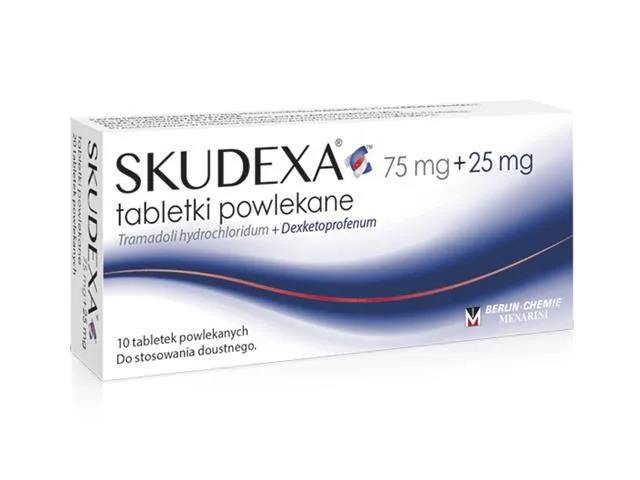
Table of Contents
Patient Information Leaflet
Warning! Keep this leaflet. The information on the immediate packaging is in a foreign language!
Skudexa (Enanplus)
75 mg + 25 mg, coated tablets
Tramadoli hydrochloridum + Dexketoprofenum
Skudexa and Enanplus are different brand names for the same medicine.
Please read this leaflet carefully before taking the medicine, as it contains
important information for the patient.
- Keep this leaflet so that you can read it again if necessary.
- If you have any doubts, consult your doctor.
- This medicine has been prescribed for a specific individual. Do not pass it on to others. This medicine may harm another person, even if their symptoms are the same.
- If the patient experiences any adverse reactions, including any not listed in this leaflet, inform the doctor. See section 4.
Contents of the leaflet:
- What Skudexa is and what it is used for
- Important information before taking Skudexa
- How to take Skudexa
- Possible side effects
- How to store Skudexa
- Contents of the pack and other information
1. What Skudexa is and what it is used for
Skudexa contains tramadol hydrochloride and dexketoprofen as active substances.
Tramadol hydrochloride is an analgesic belonging to a group of medicines called opioids, which act on the central nervous system.
It relieves pain by acting on specific nerve cells in the brain and spinal cord.
Dexketoprofen is an analgesic belonging to a group of medicines called non-steroidal anti-inflammatory drugs (NSAIDs).
Skudexa is used for short-term symptomatic treatment of moderate to severe acute pain in adults.
Tell your doctor if the patient does not feel better or feels worse after taking the medicine.
2. Important information before using Skudexa
When not to use Skudexa:
- if the patient is allergic to dexketoprofen, tramadol hydrochloride, or any of the other ingredients of this medicine (listed in section 6)
- if the patient has hypersensitivity to acetylsalicylic acid or other non-steroidal anti-inflammatory drugs (NSAIDs)
- if the patient has previously experienced asthma attacks, acute allergic rhinitis (a short period of inflammation of the nasal mucosa), nasal polyps (growths inside the nose caused by allergy), urticaria (skin rash), angioedema (swelling of the face, eyes, lips, tongue or a combination of respiratory symptoms), or wheezing after taking acetylsalicylic acid or another NSAID
- if the patient has previously experienced photosensitivity reactions: photoallergic or phototoxic reactions (particularly as redness and/or blisters on skin exposed to sunlight) while taking ketoprofen (an NSAID) or fibrates (medicines used to lower blood lipid levels)
- if the patient has active peptic ulceration of the stomach and/or duodenum or gastrointestinal bleeding, or if there has been previous gastrointestinal bleeding, ulceration, or perforation, including cases due to prior use of NSAIDs
- if the patient has chronic digestive problems (e.g. indigestion, heartburn)
- if the patient has inflammatory bowel diseases (Crohn's disease or ulcerative colitis)
- if the patient has severe heart failure, moderate or severe renal impairment, or severe hepatic impairment
- if the patient has a tendency to excessive bleeding or coagulation disorders
- if the patient is severely dehydrated (excessive loss of body fluids) due to vomiting, diarrhoea, or inadequate fluid intake
- in cases of acute alcohol intoxication, sedatives, analgesics, or medicines affecting mood and emotions
- if the patient is currently taking monoamine oxidase inhibitors (MAOIs) (certain medicines used to treat depression) or has taken them within the last 14 days before starting treatment with this medicine (see "Skudexa and other medicines")
- if the patient has epilepsy or seizures, as the risk of seizures may increase
- if the patient has difficulty breathing
- if the patient is pregnant or breastfeeding.
Warnings and precautions
Before starting treatment with Skudexa, consult your doctor:
- if the patient has allergies or a history of allergic reactions
- if the patient has impaired kidney, liver, or heart function (hypertension and/or heart failure), fluid retention, or if any of these conditions have occurred previously
- in patients taking diuretics
- if the patient has heart problems, history of stroke, or is suspected of being at risk for these conditions (e.g. high blood pressure, diabetes, elevated cholesterol, or smoking). In such cases, consult your doctor before using Skudexa. Medicines such as Skudexa may be associated with a small increased risk of heart attack ("myocardial infarction") or stroke. This risk increases with long-term use of high doses. Do not exceed the recommended dose or duration of treatment
- if the patient is elderly: there is an increased risk of adverse effects (see section 4). In such cases, contact your doctor immediately
- in women with fertility problems: this medicine may impair female fertility and is not recommended for women planning pregnancy or undergoing infertility treatment
- if the patient has blood or blood cell formation disorders
- if the patient has systemic lupus erythematosus or mixed connective tissue disease (immune system disorders affecting connective tissue)
- if the patient has a history of chronic inflammatory bowel diseases (ulcerative colitis, Crohn's disease)
- if the patient has or has had other stomach or intestinal disorders
- if the patient has an infection – see below, section titled "Infections"
- if the patient is taking other medicines that increase the risk of gastric or duodenal ulceration or bleeding, e.g. oral corticosteroids, certain antidepressants (SSRIs, i.e. selective serotonin reuptake inhibitors), antithrombotic agents such as acetylsalicylic acid, or anticoagulants such as warfarin. In such cases, consult your doctor before taking Skudexa, who may decide to prescribe an additional protective medicine
- if the patient has depression and is taking antidepressants, as some of these may interact with tramadol (see "Skudexa and other medicines")
- if the patient is taking other medicines containing the same active substances, do not exceed the maximum daily dose of dexketoprofen or tramadol
- if the patient believes they are dependent on other analgesics (opioids)
- if the patient has impaired consciousness (feeling faint)
- if the patient is in shock (cold sweat may be a sign of this)
- if the patient has increased intracranial pressure (e.g. due to head injury or brain disease)
- if the patient has breathing difficulties
- if the patient has porphyria.
Tramadol may lead to physical and psychological dependence. If used for a long time, its effect may weaken, requiring higher doses (development of tolerance). In patients with a tendency to drug abuse or dependence, treatment with Skudexa should be short-term and under strict medical supervision. Inform your doctor if any of these problems occur during treatment with Skudexa or have occurred in the past.
If any of the following symptoms occur during treatment with Skudexa, inform your doctor: excessive fatigue, loss of appetite, severe abdominal pain, nausea, vomiting, or low blood pressure. These may indicate adrenal insufficiency (low cortisol levels). If such symptoms occur, contact your doctor, who will decide whether hormone replacement is necessary.
Tramadol is metabolized in the liver by an enzyme. Some individuals have a genetic variation of this enzyme, which may lead to different effects. In some people, pain relief may be insufficient, while in others, severe adverse effects may be more likely. Discontinue the medicine and contact your doctor immediately if any of the following adverse effects occur: slowed or shallow breathing, confusion, drowsiness, pinpoint pupils, nausea or vomiting, constipation, or loss of appetite.
When tramadol is taken together with certain antidepressants or alone, there is a small risk of serotonin syndrome. If the patient experiences any symptoms of this serious condition, they should seek immediate medical advice (see section 4 "Possible side effects").
Breathing problems during sleep
Skudexa may cause breathing problems during sleep, such as sleep apnoea (pauses in breathing during sleep) and sleep-related hypoxemia (low blood oxygen levels). Symptoms may include breathing pauses during sleep, nocturnal awakenings due to breathlessness, difficulty maintaining sleep, or excessive daytime sleepiness. If the patient or another person observes these symptoms, contact a doctor. The doctor may recommend reducing the dose.
Infections
Skudexa may mask signs of infection such as fever and pain. Therefore, Skudexa may delay appropriate treatment of infection and consequently increase the risk of complications. This has been observed in bacterial pneumonia and bacterial skin infections associated with chickenpox. If the patient takes this medicine during an infection and symptoms persist or worsen, seek immediate medical advice. Avoid using this medicine during chickenpox.
Children and adolescents
The use of this medicine has not been studied in children and adolescents. Safety and efficacy have not been established, and therefore Skudexa should not be used in children and adolescents.
Use in children with breathing disorders
Tramadol is not recommended in children with breathing disorders, as symptoms of tramadol toxicity may be intensified.
Skudexa and other medicines
Tell your doctor about all medicines the patient is currently taking or has recently taken, including over-the-counter medicines, and any medicines the patient plans to take.
Some medicines should not be used together with Skudexa, while others may require dose adjustments when used concomitantly. Always inform your doctor if any of the following medicines are being taken together with Skudexa:
Not recommended for concomitant use:
- Acetylsalicylic acid, corticosteroids, or other anti-inflammatory medicines
- Warfarin, heparin, or other anticoagulant medicines
- Lithium used to treat certain mood disorders
- Methotrexate used to treat rheumatoid arthritis and cancer
- Hydantoin derivatives and phenytoin used to treat epilepsy
- Sulfamethoxazole used to treat bacterial infections
- Monoamine oxidase inhibitors (MAOIs) (medicines used to treat depression)
Concomitant use requiring caution:
- ACE inhibitors, diuretics, beta-blockers, and angiotensin II antagonists used to treat high blood pressure and heart diseases
- Pentoxifylline used to treat ulcers in chronic venous insufficiency
- Zidovudine used to treat viral infections
- Chlorpropamide and glibenclamide used to treat diabetes
- Aminoglycoside antibiotics used to treat bacterial infections
- Concomitant use of Skudexa with sedatives such as benzodiazepines or other medicines acting similarly to benzodiazepines may increase the risk of drowsiness, breathing difficulties (respiratory depression), coma, and may be life-threatening. Therefore, concomitant use should only be considered when no other treatment options are possible. If your doctor prescribes Skudexa to be used together with sedatives, the dose and duration of treatment should be limited by the doctor. Inform your doctor about all sedative medicines you are taking and strictly follow your doctor's instructions. It may be helpful to inform friends and family that the above symptoms may occur. Contact your doctor if such symptoms occur.
Concomitant use requiring special consideration:
- Quinolone antibiotics (e.g. ciprofloxacin, levofloxacin) used to treat bacterial infections
- Cyclosporine and tacrolimus used to treat immune system disorders and in transplant patients
- Streptokinase and other thrombolytic or fibrinolytic medicines (used to dissolve blood clots)
- Probenecid used to treat gout
- Digoxin used to treat chronic heart failure
- Mifepristone used as a medicine to terminate pregnancy
- Selective serotonin reuptake inhibitor (SSRI) antidepressants
- Antiplatelet medicines used to reduce platelet aggregation and blood clot formation
- Tenofovir, deferasirox, pemetrexed
The pain-relieving effect of tramadol may be reduced and its duration shortened when the patient is also taking medicines containing:
- Carbamazepine (for seizures)
- Buprenorphine, nalbuphine, or pentazocine (analgesics)
- Ondansetron (prevents nausea)
The risk of adverse effects increases:
- if the patient takes sedatives, hypnotics, other analgesics such as morphine and codeine (also for cough), or alcohol while using Skudexa. The patient may feel drowsy or faint. If this occurs, inform your doctor
- if the patient takes medicines that may cause convulsions (seizures), such as certain antidepressants or antipsychotics. The risk of seizures may increase due to concomitant use of Skudexa. Your doctor will decide whether Skudexa is suitable for the patient
- if the patient takes certain antidepressants. Skudexa may interact with these medicines and cause serotonin syndrome (see section 4 "Possible side effects")
- if the patient takes anticoagulants (blood thinners), e.g. warfarin, together with this medicine. The effect of these medicines on blood clotting may be disturbed, leading to bleeding.
Use of Skudexa with alcohol
Do not drink alcohol while being treated with Skudexa, as this may intensify the medicine's effects.
Instructions for use of Skudexa – see section 3.
Pregnancy, breastfeeding, and effect on fertility
If the patient is pregnant or breastfeeding, suspects she may be pregnant, or plans to have a child, she should consult her doctor before using this medicine.
Dexketoprofen may cause kidney and heart problems in the unborn child. This medicine may increase the tendency to bleed in both the mother and child and may delay or prolong labour. From the 20th week of pregnancy, dexketoprofen may cause:
kidney problems in the unborn child – this may lead to reduced amniotic fluid volume surrounding the baby (oligohydramnios) or narrowing of a blood vessel (ductus arteriosus) in the baby's heart. Tramadol is excreted into breast milk.
The use of Skudexa is contraindicated during pregnancy and breastfeeding.
Driving and operating machinery
Skudexa may affect the ability to drive and operate machinery due to possible side effects such as dizziness, visual disturbances, or drowsiness during treatment. This is particularly relevant when Skudexa is taken with medicines affecting mood and emotions or with alcohol.
If such symptoms occur, do not drive or operate machinery until symptoms resolve.
This medicinal product contains less than 1 mmol (23 mg) of sodium per dose, i.e. essentially "sodium-free".
3. How to take Skudexa
This medicine should always be taken exactly as prescribed by your doctor. If in doubt,
consult your doctor.
The lowest effective dose for the shortest duration necessary to relieve symptoms should be used.
If, during an infection, its symptoms (such as fever and pain) persist or worsen, consult your doctor
immediately (see section 2).
Your doctor will inform you about the appropriate dose of Skudexa, which will depend on the type,
severity, and duration of your pain. Your doctor will also advise you on the number of tablets to take
per day and the duration of treatment.
The usual recommended daily dose is 1 coated tablet (equivalent to 75 mg of tramadol hydrochloride
and 25 mg of dexketoprofen) every 8 hours. The total daily dose should not exceed 3 coated tablets
(equivalent to 225 mg of tramadol hydrochloride and 75 mg of dexketoprofen), and treatment should
not last longer than 5 days.
Use in children and adolescents
Skudexa must not be used in children and adolescents.
Elderly patients
In patients aged 75 years or older, your doctor may recommend longer intervals between doses,
because the body may metabolize the medicine more slowly.
Patients with severe liver or kidney disease (impaired function)/dialysis patients
Patients with severe liver disease and/or kidney failure must not take Skudexa.
In case of impaired kidney function, if the patient has mild kidney impairment, your doctor may
recommend extending the interval between doses.
In case of impaired liver function, if the patient has mild or moderate liver impairment, your doctor may
recommend extending the interval between doses.
Skudexa tablets should be swallowed with sufficient fluid (preferably a glass of water).
Food delays the absorption of Skudexa; therefore, to achieve a faster effect, the tablet should be taken
at least 30 minutes before a meal. The break line visible on the tablet may help to split it in case of
difficulty swallowing the tablet whole.
Taking more Skudexa than prescribed
If you take more Skudexa than prescribed, contact your doctor or go immediately to the emergency
department of your nearest hospital. Remember to bring the medicine packaging or patient leaflet with
you.
Symptoms of overdose include:
- vomiting, loss of appetite, abdominal pain, drowsiness, dizziness/vertigo, disorientation, headache (due to dexketoprofen)
- pinpoint pupils, vomiting, cardiac failure, loss of consciousness, seizures, and breathing difficulties (due to tramadol).
If you miss a dose of Skudexa
Do not take a double dose to make up for a missed dose. Take the next dose as scheduled (see
section 3 "How to take Skudexa").
Stopping Skudexa treatment
Withdrawal effects after stopping Skudexa are unlikely.
However, in rare cases, patients who have taken Skudexa for some time may feel unwell if treatment is
stopped abruptly. They may experience restlessness, anxiety, nervousness, insecurity, confusion,
hyperactivity, sleep problems, and gastrointestinal disturbances. Rarely, patients may experience panic
attacks, hallucinations, delusions, paranoia, or depersonalization. Unusual sensations such as itching,
tingling, numbness, and ringing in the ears may occur. Other very rare symptoms include confusion,
delusions, feelings of depersonalization, changes in perception of reality (derealization), and
persecutory delusions (paranoia) have been observed very rarely. If any of these symptoms occur
after stopping Skudexa, consult your doctor.
If you have any further questions about the use of this medicine, consult your doctor.
4. Possible adverse reactions
Like all medicines, this medicine can cause adverse reactions, although not everyone will experience them.
The possible adverse reactions are listed below, classified according to the likelihood of their occurrence.
Contact a doctor immediately if symptoms of an allergic reaction occur, such as swelling of the face, tongue and/or throat, and/or difficulty swallowing, or hives accompanied by breathing difficulties.
The patient should stop taking Skudexa as quickly as possible if a rash or any changes inside the mouth or on mucous membranes appear, or if any symptoms of allergy occur.
Very common adverse reactions (may affect more than 1 in 10 patients):
- nausea
- dizziness
Common adverse reactions (may affect up to 1 in 10 patients):
- vomiting
- abdominal pain
- diarrhoea
- indigestion
- headache
- drowsiness, fatigue
- constipation
- dry mouth
- excessive sweating
Uncommon adverse reactions (may affect up to 1 in 100 patients):
- increased platelet count
- effects on the heart and blood circulation (palpitations, rapid heartbeat, feeling faint or collapse), low blood pressure. These adverse reactions may occur especially when the patient is in an upright position or during physical exertion.
- high or very high blood pressure
- swelling of the vocal cords (laryngeal oedema)
- decreased potassium levels in the blood
- psychotic disorders
- eye-area swelling
- shallow or slow breathing
- discomfort, abnormal sense of well-being
- blood in urine
- sensation of spinning
- insomnia or difficulty falling asleep
- nervousness/anxiety
- hot flushes
- bloating
- fatigue
- pain
- feeling feverish and chills, general malaise
- abnormal blood test results
- tendency to vomit (vomiting reflex)
- feeling of pressure in the stomach, bloating
- stomach inflammation
- skin reactions (e.g. itching, rash)
- facial swelling
Rare adverse reactions (may affect up to 1 in 1,000 patients):
- swelling of lips and throat
- peptic ulcer of the stomach and/or duodenum, perforation or bleeding, which may present as vomiting blood or black stools
- prostate disorders
- liver inflammation (hepatitis), liver damage
- acute kidney failure
- slow heartbeat
- epileptic seizures
- allergic/anaphylactic reactions (e.g. difficulty breathing, wheezing, skin swelling) and shock (sudden circulatory failure) – transient loss of consciousness (fainting)
- hallucinations
- fluid retention or ankle swelling
- loss of appetite, appetite changes
- acne
- back pain
- frequent urination or less than usual, with difficulty or pain
- menstrual disorders
- sensory disturbances (e.g. itching, tingling, numbness)
- tremor, muscle spasms, uncoordinated movements, weak muscles
- confusion
- sleep disturbances and nightmares – perceptual disturbances
- blurred vision, pupil constriction
- shortness of breath
Psychological adverse reactions may occur during treatment with Skudexa. Their intensity and nature may vary (depending on the patient's personality and duration of treatment) and may include:
- mood changes (mostly good mood, sometimes irritability)
- changes in activity (slowing down, but sometimes increased activity)
- feeling less aware
- reduced ability to make decisions, which may lead to reasoning errors
Worsening of asthma has been reported.
Withdrawal symptoms may occur after abrupt discontinuation of treatment (see "Stopping Skudexa").
Seizures occurred mainly after administration of high doses of tramadol or when tramadol was used concomitantly with other medicines that may provoke seizures.
Very rare adverse reactions (may affect up to 1 in 10,000 patients):
- pancreatitis
- kidney problems
- reduced white blood cell count (neutropenia)
- reduced platelet count (thrombocytopenia)
- skin, lip, eye and genital area ulceration (Stevens-Johnson syndrome and Lyell's syndrome)
- shortness of breath due to airway narrowing
- ringing in the ears (tinnitus)
- skin hypersensitivity
- light sensitivity
Frequency not known (frequency cannot be estimated from available data):
- serotonin syndrome, which may present with changes in mental state (e.g. agitation, hallucinations, coma), as well as other symptoms such as fever, increased heart rate, unstable blood pressure, involuntary muscle contractions, muscle rigidity, lack of coordination, and/or gastrointestinal symptoms (e.g. nausea, vomiting, diarrhoea) (see section 2. Important information before taking Skudexa)
- speech disorders
- extreme pupil dilation
- decreased blood sugar levels
- hiccups
Patients should inform their doctor if they experience any adverse reactions affecting the stomach or intestines at the beginning of treatment (e.g. stomach pain, heartburn or bleeding), especially if they have previously experienced similar adverse reactions due to long-term use of anti-inflammatory medicines, particularly in elderly patients.
The most common adverse reactions during treatment with Skudexa are nausea and dizziness, occurring in more than 1 in 10 patients.
When administering non-steroidal anti-inflammatory drugs, fluid retention and oedema (especially in ankles and legs), increased blood pressure and heart failure may occur.
Taking medicines such as Skudexa may be associated with a small increased risk of heart attack ("myocardial infarction") or stroke.
In patients with immunological disorders affecting connective tissue (systemic lupus erythematosus or mixed connective tissue disease), administration of anti-inflammatory medicines may rarely cause fever, headache and neck stiffness.
Reporting of adverse reactions
If any adverse reactions occur, including those not listed in this leaflet, patients should inform their doctor, pharmacist, or nurse.
Adverse reactions can be reported directly to the Department of Monitoring Adverse Drug Reactions of the Office for Registration of Medicinal Products, Medical Devices and Biocidal Products:
Al. Jerozolimskie 181C
02-222 Warsaw
Tel.: +48 22 49 21 301
Fax: +48 22 49 21 309
Website: https://smz.ezdrowie.gov.pl
Adverse reactions can also be reported to the marketing authorisation holder.
Reporting adverse reactions helps provide more information on the safety of the medicine.
5. How to store Skudexa
Keep the medicine out of sight and reach of children.
Do not use this medicine after the expiry date stated on the outer carton and blister pack after "EXP". The expiry date refers to the last day of the stated month.
There are no special requirements regarding the storage temperature of the medicinal product.
Store in the original packaging to protect from light.
Medicines must not be disposed of via wastewater or household waste. Ask your pharmacist how to dispose of medicines no longer required. These measures help protect the environment.
6. Contents of the pack and other information
What Skudexa contains
- The active substances are tramadol hydrochloride and dexketoprofen. Each tablet contains 75 mg of tramadol hydrochloride and 25 mg of dexketoprofen.
- Other ingredients are:
Tablet core: microcrystalline cellulose, pregelatinized maize starch, sodium croscarmellose, sodium stearyl fumarate, colloidal anhydrous silica.
Tablet coating: Opadry II white 85F18422, consisting of: polyvinyl alcohol, titanium dioxide (E 171), macrogol 3350, talc.
What Skudexa looks like and contents of the pack
Skudexa tablets are almost white to slightly yellowish, elongated coated tablets with a break line on one side and an embossed "M" on the other side.
Pack sizes: 10, 20, 30, 50 or 100 coated tablets.
For more detailed information, please contact the marketing authorisation holder or the parallel importer.
Marketing authorisation holder in Spain, the country of export:
Laboratorios Menarini, S.A.
Alfons XII, 587
E 08918 Badalona (Barcelona)
Spain
Manufacturer
Menarini – Von Heyden GmbH
Leipziger Strasse 7-13
01097 Dresden
Germany
Parallel importer:
Medezin Sp. z o.o.
ul. Zbąszyńska 3
91-342 Łódź
Repackaged in:
Medezin Sp. z o.o.
ul. Zbąszyńska 3
91-342 Łódź
Marketing authorisation number in Spain, the country of export: 711033.0
Parallel import licence number: 68/26
This medicinal product is authorised for marketing in the European Economic Area member states under the following trade names: Austria, Belgium, Bulgaria, Croatia, Cyprus, Czech Republic, Estonia, Finland, Greece, Hungary, Ireland, Latvia, Liechtenstein, Lithuania, Luxembourg, Malta, Netherlands, Poland, Portugal, Romania, Slovakia, Slovenia, United Kingdom (Northern Ireland): Skudexa
France: Skudexum
Spain: Enanplus
Italy: Lenizak