Ringer lactate
Poland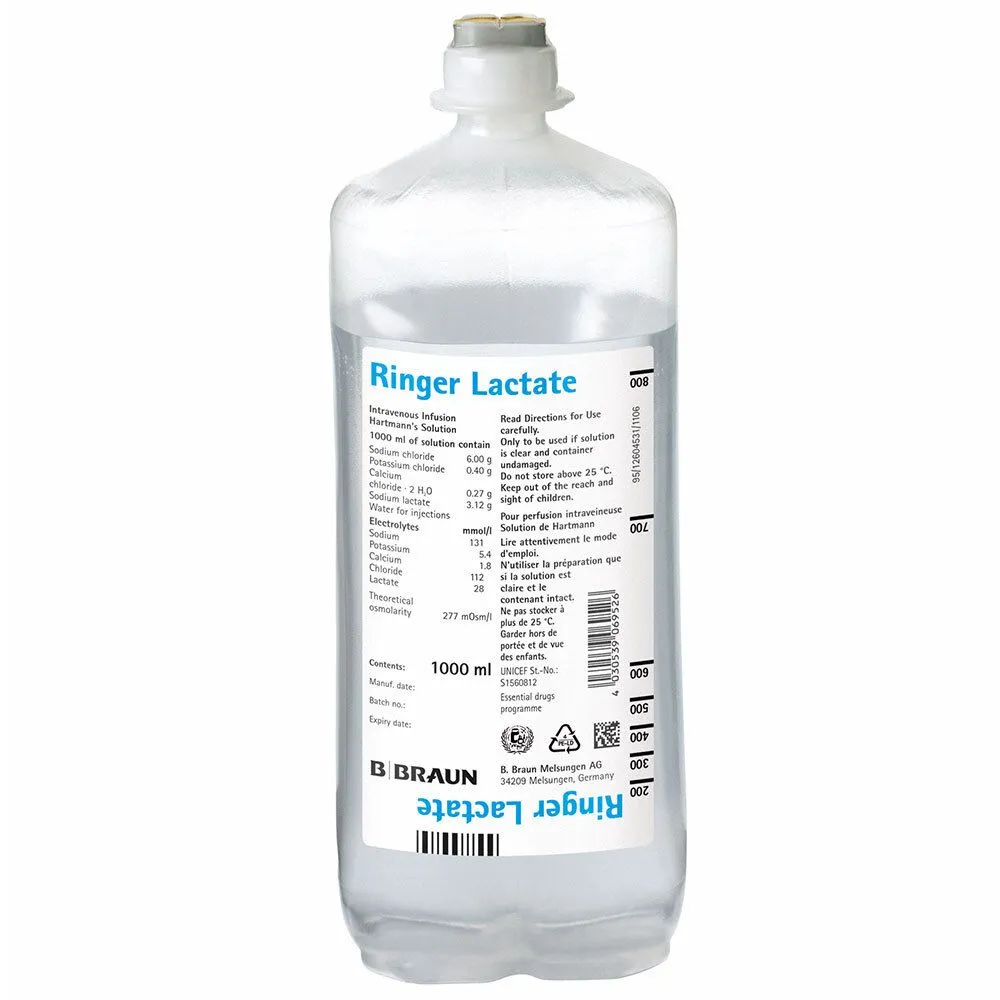
Table of Contents
- PACKAGE LEAFLET: INFORMATION FOR THE USER
- 1. WHAT RINGER LACTATE IS AND WHAT IT IS USED FOR
- 2. IMPORTANT INFORMATION BEFORE USING RINGER LACTATE
- 3. HOW TO USE THE MEDICINAL PRODUCT RINGER LACTATE
- 4. POSSIBLE ADVERSE REACTIONS
- 5. HOW TO STORE RINGER LACTATE
- 6. CONTENTS OF THE PACKAGE AND OTHER INFORMATION
- The following information is intended for healthcare professionals only:
PACKAGE LEAFLET: INFORMATION FOR THE USER
Ringer Lactate, solution for infusion
Active substances: sodium chloride, potassium chloride, calcium chloride dihydrate and sodium lactate
Please read the entire leaflet carefully before using this medicine, as it contains important information for the patient.
- Keep this leaflet, as you may need to read it again.
- If you have any questions, please consult your doctor or nurse.
- If the patient experiences any adverse reactions, including any not listed in this leaflet, inform your doctor or nurse immediately. See section 4.
Table of contents:
- What Ringer Lactate is and what it is used for
- Important information before using Ringer Lactate
- How to use Ringer Lactate
- Possible side effects
- How to store Ringer Lactate
- Contents of the pack and other information
1. WHAT RINGER LACTATE IS AND WHAT IT IS USED FOR
Ringer Lactate is an aqueous solution containing the following substances:
- sodium chloride;
- potassium chloride;
- calcium chloride dihydrate;
- sodium lactate.
Sodium, potassium, calcium, chloride, and lactate are chemical substances (electrolytes) normally present in the blood.
Ringer Lactate is used:
- to treat loss of body fluids and electrolytes (e.g. due to excessive sweating, kidney dysfunction);
- in cases of low blood volume (hypovolemia) or low blood pressure (hypotension);
- in metabolic acidosis (when blood becomes too acidic).
2. IMPORTANT INFORMATION BEFORE USING RINGER LACTATE
DO NOT use Ringer Lactate if the patient has any of the following conditions:
- newborn (under 28 days) receiving ceftriaxone (an antibiotic);
- hypersensitivity to sodium lactate or any of the other components of Ringer Lactate (listed in section 6);
- excessive accumulation of fluid in extracellular spaces (excessive extracellular fluid overload);
- higher than normal blood volume in blood vessels (hypervolemia);
- severe renal failure (when kidney function is impaired and the patient requires dialysis);
- uncompensated heart failure. This is heart failure that is not adequately treated and causes symptoms such as:
- shortness of breath;
- swelling around the ankles.
- elevated potassium levels in the blood (hyperkalemia);
- elevated calcium levels in the blood (hypercalcemia);
- a disorder characterized by excessive alkalinity of the blood (metabolic alkalosis);
- liver disease causing accumulation of fluid in the abdominal cavity (cirrhosis with ascites);
- excessive acidification of the blood, posing a life-threatening condition (severe metabolic acidosis);
- a certain type of metabolic acidosis (lactic acidosis);
- severe liver disease (when liver function is impaired and requires intensive treatment);
- impaired lactate metabolism (occurring in severe liver disease, as lactate is eliminated from the body by the liver);
- when using cardiac glycosides (cardiotonic drugs) used in the treatment of heart failure, such as digitalis preparations or digoxin (see also section "Other medicines and Ringer Lactate").
Warnings and precautions
Before starting Ringer Lactate, consult a doctor or nurse if any of the following conditions are currently present or have occurred in the past:
- receiving ceftriaxone (antibiotic) (see also section "Other medicines and Ringer Lactate");
- heart failure;
- respiratory failure (lung disease) (in the above-mentioned cases, special monitoring of the patient may be required);
- impaired kidney function;
- higher than normal chloride levels in the blood (hyperchloremia);
- elevated blood pressure (hypertension);
- accumulation of fluid under the skin affecting all body parts (generalized edema);
- accumulation of fluid under the skin, especially around the ankles (peripheral edema);
- accumulation of fluid in the lungs (pulmonary edema);
- elevated blood pressure during pregnancy (pre-eclampsia);
- a disease causing high levels of a hormone called aldosterone (aldosteronism);
- higher than normal sodium levels in the blood (hypernatremia) or any other conditions associated with sodium retention (when the body retains excessive amounts of sodium), such as steroid therapy (see also "Other medicines and Ringer Lactate");
- any types of heart disease;
- any conditions in which the patient has an increased risk of elevated potassium levels in the blood (hyperkalemia), such as:
- renal failure;
- adrenal cortex insufficiency (this adrenal gland disease involves hormones controlling chemical substance concentrations in the body);
- acute dehydration (loss of body water, e.g., due to vomiting or diarrhea);
- extensive tissue damage (e.g., after severe burns). Close monitoring of blood potassium levels is necessary.
- diseases associated with elevated vitamin D levels (e.g., sarcoidosis, skin and internal organ diseases);
- kidney stones;
- impaired liver function;
- diabetes;
- a condition that may cause high levels of vasopressin, a hormone regulating fluid volume in the body. Excessively high vasopressin levels in the body may result, for example, from:
- sudden and serious illness;
- pain;
- surgery;
- infection, burns, or brain disease;
- diseases related to the heart, liver, kidneys, or central nervous system;
- taking certain medications (see also section "Other medicines and Ringer Lactate"); This may increase the risk of low sodium levels in the blood and cause headache, nausea, seizures, drowsiness, coma, brain edema, and death. Brain edema increases the risk of death and brain damage. Patients at higher risk of brain edema include:
- children;
- women (especially those of childbearing age);
- patients with problems related to cerebrospinal fluid levels, for example due to meningitis, intracranial hemorrhage, or brain injury.
Patients receiving an infusion of this medicine will undergo blood and urine tests, and the doctor will also monitor:
- fluid volume in the body;
- concentrations of chemical substances such as sodium and potassium in the blood (plasma electrolytes);
- blood and urine acidity (acid-base balance).
Although Ringer Lactate contains potassium, the amount is insufficient to treat very low potassium levels in plasma (severe potassium deficiency).
Calcium chloride may be harmful if injected into body tissues. Therefore, Ringer Lactate must not be administered by intramuscular injection (intramuscular injection). Additionally, the doctor will take all possible precautions to avoid leakage of the solution into surrounding tissues.
Ringer Lactate must not be administered through the same needle used for blood transfusion. This may cause damage to red blood cells or their clumping.
Since Ringer Lactate contains lactate (a substance naturally present in the body), it may cause excessive alkalinity of the blood (metabolic alkalosis).
Particular caution should be exercised when administering Ringer Lactate to infants under 6 months of age.
The doctor will consider whether the patient is receiving parenteral nutrition (nutrition delivered via intravenous infusion). If Ringer Lactate is administered for a prolonged period, the patient will receive nutrients from an additional source.
Other medicines and Ringer Lactate
Inform the doctor or nurse about all medicines currently taken, recently taken, or planned for use.
It is especially important to inform the doctor about the use of:
- ceftriaxone (antibiotic), which should not be administered through the same infusion line without thorough flushing;
- cardiac glycosides (cardiotonic drugs), such as digitalis preparations or digoxin, used in the treatment of heart failure; these must not be used concomitantly with Ringer Lactate (see also section "DO NOT use Ringer Lactate if the patient has..."). The effect of these drugs may be potentiated by calcium. This may lead to life-threatening changes in heart rhythm.
- corticosteroids (anti-inflammatory drugs). These drugs may cause sodium and water retention in the body, leading to:
- tissue swelling due to fluid accumulation under the skin (edema);
- elevated blood pressure (hypertension).
The following medicines may increase potassium levels in the blood. This effect may be life-threatening for the patient. Increased potassium levels are more likely in patients with kidney disease.
- potassium-sparing diuretics (certain diuretics, e.g., amiloride, spironolactone, triamterene) (Note: these drugs may be components of combination medicinal products);
- angiotensin-converting enzyme (ACE) inhibitors (used to treat elevated blood pressure);
- angiotensin II receptor antagonists (used to treat elevated blood pressure);
- tacrolimus (used to prevent transplant rejection and treat certain skin diseases);
- cyclosporine (used to prevent transplant rejection).
Some medicines may affect vasopressin hormone levels. These include:
- antidiabetic drugs (chlorpropamide);
- cholesterol-lowering drugs (clofibrate);
- certain anticancer drugs (vincristine, ifosfamide, cyclophosphamide);
- selective serotonin reuptake inhibitors (used to treat depression);
- antipsychotic drugs;
- opioids used to relieve severe pain;
- analgesic and/or anti-inflammatory drugs (also known as NSAIDs);
- drugs mimicking or enhancing vasopressin action, such as desmopressin (used to treat excessive thirst and urine output), terlipressin (used to treat esophageal bleeding), and oxytocin (used to induce labor);
- antiepileptic drugs (carbamazepine and oxcarbazepine);
- diuretics (diuretic agents).
Other medicines that may affect the action of Ringer Lactate or be affected by it include:
- thiazide diuretics such as hydrochlorothiazide or chlorthalidone;
- vitamin D;
- bisphosphonates (used to treat bone diseases, e.g., osteoporosis);
- fluoride (used to strengthen teeth and bones);
- fluoroquinolones (a class of antibiotics, including ciprofloxacin, norfloxacin, ofloxacin);
- tetracyclines (a class of antibiotics, including tetracycline);
- acid-based drugs, including:
- salicylates used to treat inflammatory conditions (aspirin);
- barbiturates (sleeping pills);
- lithium (used to treat psychiatric disorders).
- alkaline (basic) drugs, including:
- sympathomimetics (stimulant drugs such as ephedrine and pseudoephedrine, components of cough and cold remedies);
- other stimulants (e.g., dexamphetamine, fenfluramine).
Use of Ringer Lactate with food and drink
Ask the doctor what the patient may eat or drink.
Pregnancy, breastfeeding, and fertility
During pregnancy, breastfeeding, or if pregnancy is suspected or planned, consult a doctor or nurse before using this medicine.
Ringer Lactate can be safely used during pregnancy or breastfeeding.
The doctor will monitor chemical substance concentrations in the blood and fluid volume in the body.
Calcium may pass to the unborn child through the placenta and, after birth, through breast milk.
However, if it is necessary to add another medicine to the infusion solution during pregnancy or breastfeeding, the following should be done:
- consult the doctor;
- read the package leaflet of the medicine to be added.
Driving and operating machinery
Ask the doctor or pharmacist for advice before driving or operating machinery.
3. HOW TO USE THE MEDICINAL PRODUCT RINGER LACTATE
Ringer Lactate is administered by a doctor or nurse. The doctor will decide the dose of the medicinal product to be used and when to administer it. This depends on the patient's age, body weight, condition, and the reason for treatment.
DO NOT USE Ringer Lactate if visible particles are present in the solution or
if the packaging is in any way damaged.
Ringer Lactate infusion solution is usually administered through a plastic tube connected to a needle inserted into a vein. This solution is typically administered via a vein in the arm. However, the doctor may choose another method of administration for the patient.
Before and during the infusion, the doctor will monitor:
- fluid levels in the body;
- blood and urine acidity;
- electrolyte concentrations in the body (especially sodium, in patients with high vasopressin hormone levels or those taking other medicines that enhance the effect of vasopressin).
Any unused remnants of the solution must be discarded. Partially used bags of
Ringer Lactate infusion solution MUST NOT be reconnected.
Administration of a higher than recommended dose of Ringer Lactate
If too large an amount of Ringer Lactate infusion solution is administered (overdose) or the solution is infused too rapidly, the following symptoms may occur:
- fluid and/or sodium (salt) overload with excessive accumulation of fluid in tissues (edema) causing swelling;
- hyperkalemia (increased potassium levels in blood compared to normal values), particularly in patients with renal insufficiency, causing symptoms such as:
- tingling sensation in hands and feet (paresthesia);
- muscle weakness;
- inability to move (paralysis);
- irregular heartbeat (cardiac arrhythmia);
- heart block (very slow heartbeat);
- cardiac arrest (heart stops beating; life-threatening condition);
- confusion.
- hypercalcemia (increased calcium levels in blood compared to normal values) causing symptoms such as:
- loss of appetite (anorexia);
- feeling of nausea;
- vomiting;
- constipation;
- abdominal pain;
- mental disturbances such as irritability or depression;
- excessive thirst (polydipsia);
- increased urine production (polyuria);
- kidney disease caused by calcium deposition in the kidneys (nephrocalcinosis);
- kidney stones;
- coma (loss of consciousness);
- chalky taste in the mouth;
- redness (hot flushes);
- dilation of blood vessels in the skin (peripheral vasodilation).
- hypokalemia (decreased potassium levels in blood compared to normal values) and metabolic alkalosis (when blood becomes too alkaline), particularly in patients with renal insufficiency, causing symptoms such as:
- mood changes;
- fatigue;
- shallow breathing;
- muscle stiffness;
- muscle tremors;
- muscle cramps.
If any of these symptoms occur in the patient, the attending doctor must be informed immediately. The infusion will be stopped and the doctor will initiate appropriate treatment depending on the symptoms.
If another medicinal product has been added to the Ringer Lactate infusion solution before the overdose occurred, this additional medicinal product may also cause symptoms. Please read the package leaflet of the added medicinal product to become familiar with the list of possible symptoms.
Discontinuation of Ringer Lactate
The doctor will decide when to stop the infusion.
If you have any further questions regarding the use of this medicinal product, consult your doctor or nurse.
4. POSSIBLE ADVERSE REACTIONS
Like all medicines, this medicine can cause adverse reactions, although not everyone will experience them.
If the patient experiences any of the symptoms listed below, contact a doctor or nurse immediately.
These may be symptoms of a very severe or even life-threatening allergic reaction known as anaphylactic shock:
- urticaria, which may be localised or affect the entire body;
- skin rash;
- skin redness (erythema);
- itching (pruritus);
- skin swelling (angioedema);
- cough;
- narrowing of the airways making breathing difficult (bronchospasm);
- rapid heartbeat (tachycardia);
- slow heartbeat (bradycardia);
- drop in blood pressure;
- feeling of discomfort or chest pain;
- chest tightness (making breathing difficult);
- shallow breathing (dyspnoea);
- sudden facial flushing;
- throat irritation;
- tingling and numbness (paraesthesiae);
- reduced sensation in the mouth (oral hypoaesthesia);
- taste disturbances;
- fever;
- nausea;
- headache.
Higher than normal potassium levels in the blood (hyperkalaemia).
Low sodium levels in the blood, which may be associated with hospital treatment (hospital-acquired hyponatraemia) and related neurological disorders (acute hyponatraemic encephalopathy).
Hyponatraemia may lead to irreversible brain damage and death due to brain swelling/oedema (see also section 2 "Warnings and precautions").
Reactions related to the method of administration, manifesting as one or more of the following symptoms:
- local pain or reaction of redness or swelling at the site of administration;
- irritation and inflammation of the vein into which the solution is administered (phlebitis). This may cause redness, pain, burning, and itching along the vein into which the solution is administered;
- rash or itching (pruritus) at the site of administration.
Other adverse reactions reported with similar medicines (other solutions containing sodium lactate) include:
- other symptoms of hypersensitivity / infusion-related reactions: nasal congestion (nasal hyperaemia), sneezing, throat swelling causing breathing difficulties (laryngeal oedema, also known as Quincke's oedema), skin swelling (angioedema);
- changes in the concentration of chemical substances in the blood (electrolyte disturbances);
- increased blood volume in the vessels (hypervolaemia);
- panic attacks;
- other reactions related to the method of administration: infection at the site of administration, leakage of the solution into the surrounding tissue (extravasation). This may damage tissues and lead to scarring.
If another medicine is added to the intravenous infusion solution, it may also cause adverse reactions.
These will depend on the medicine added. Please read the package leaflet of the added medicine to become familiar with possible adverse reactions.
Reporting of adverse reactions
If any adverse reactions not listed in this leaflet occur, inform a doctor, pharmacist, or nurse. Adverse reactions can be reported directly to the Department of Monitoring Adverse Drug Reactions, Office for Registration of Medicinal Products, Medical Devices and Biocidal Products
Al. Jerozolimskie 181C
PL 02-222 Warsaw
Tel.: + 48 22 49 21 301
Fax: + 48 22 49 21 309
Website: https://smz.ezdrowie.gov.pl
Adverse reactions can also be reported to the marketing authorisation holder.
Reporting adverse reactions helps to provide more information on the safety of the medicine.
5. HOW TO STORE RINGER LACTATE
Keep this medicine out of the sight and reach of children.
250 ml: Do not store above 30°C.
500 ml and 1000 ml: No special storage instructions for this medicine.
DO NOT use RINGER LACTATE after the expiry date stated on the bag (after "Expiry date"). The expiry date refers to the last day of the stated month.
Do not use RINGER LACTATE if visible particles are present or if the packaging is in any way damaged.
6. CONTENTS OF THE PACKAGE AND OTHER INFORMATION
What Ringer Lactate contains
The active substances are:
- sodium chloride: 6.00 g per litre
- potassium chloride: 0.40 g per litre
- calcium chloride dihydrate: 0.27 g per litre
- sodium lactate: 3.20 g per litre
The only excipient is water for injections.
What Ringer Lactate looks like and contents of the pack
Ringer Lactate infusion solution is a clear, transparent solution free from visible particles.
It is available in polyolefin/polyamide plastic bags (Viaflo). Each bag is contained within a sealed, protective, outer plastic wrapper.
Bag sizes:
- 250 ml
- 500 ml
- 1000 ml
Pack sizes:
- 30 bags of 250 ml in a carton
- 1 bag of 250 ml
- 20 bags of 500 ml in a carton
- 1 bag of 500 ml
- 10 bags of 1000 ml in a carton
- 12 bags of 1000 ml in a carton
- 1 bag of 1000 ml
Not all pack sizes may be marketed.
Marketing Authorisation Holder and Manufacturers
Marketing Authorisation Holder:
Baxter Polska Sp. z o.o.
ul. Kruczkowskiego 8
00-380 Warszawa
Manufacturers:
Baxter SA
Boulevard René Branquart, 80
7860 Lessines
Belgium
Bieffe Medital S.A.
Ctra de Biescas, Senegüé
22666 Sabiñanigo (Huesca)
Spain
Baxter and Viaflo are trademarks of Baxter International Inc.
The following information is intended for healthcare professionals only:
Handling and Preparation
The medicinal product for parenteral administration should be inspected visually for particulate matter and discoloration, provided that the solution and container permit such examination. Do not use if the solution is not clear or if the seal is damaged.
Do not remove from the protective packaging until ready for use.
The inner bag ensures sterility of the product.
Administer immediately after connecting the infusion set.
Plastic containers must not be used in series connection. Such use could result in air embolism due to residual air being drawn from the first container before the infusion from the second container is completed. Applying additional pressure to intravenous solutions contained in flexible plastic containers to increase flow rate may cause air embolism if residual air has not been completely removed from the container prior to administration. Use of infusion sets with venting devices, with the vent in the open position, may lead to air embolism. Infusion sets with venting devices in the open position must not be used with flexible plastic containers.
The solution for intravenous administration should be administered using a sterile infusion set under aseptic conditions. The infusion equipment should be pre-filled with the solution to prevent air from entering the system.
Additional medications may be added to the solution before or during infusion via the medication port. When adding another medication, isotonicity must be confirmed prior to parenteral administration. Each additional medication must be thoroughly and carefully mixed under aseptic conditions. Solutions containing added medications should be used immediately and must not be stored.
The addition of other medications or improper administration techniques may result in pyrogenic reactions due to the potential introduction of pyrogens. If an adverse reaction occurs, the infusion must be stopped immediately.
Discard after single use.
Discard any unused solution.
Do not reconnect partially used bags.
Opening
- Remove the Viaflo bag from the protective packaging immediately before use.
- Squeeze the inner bag firmly to check for leakage. If leakage is detected, discard the bag, as the contents may no longer be sterile.
- Check whether the solution is clear and free from insoluble particles. If the solution is not clear or contains insoluble particles, discard it.
Preparation for Administration
Sterile materials must be used during preparation and administration.
- Hang the bag on an IV pole.
- Remove the plastic cover from the administration port located at the bottom of the bag:
- Hold the smaller wing on the neck of the port with one hand;
- Hold the larger wing on the cap with the other hand and twist;
- The cap will pop off.
- Maintain aseptic technique when connecting the infusion.
- Connect the administration set according to the manufacturer's instructions regarding connection, priming, and administration of the solution.
Methods of Adding Additional Medications
Warning: Added medications may be incompatible. Before use, verify compatibility of the added medication with the solution and container. If an additional medication has been added, isotonicity must be confirmed prior to parenteral administration (see section below, "Incompatibilities of Added Medications").
Adding medications prior to administration
- Disinfect the medication addition port.
- Using a syringe with a needle size 19G (1.10 mm) to 22G (0.70 mm), insert the needle through the self-sealing medication port and inject the medication.
- Mix the solution thoroughly. For viscous preparations such as potassium chloride, gently tap the ports with the bag in an upright position (ports up) and mix.
Warning: Do not store bags containing added medications.
Adding medications during administration
- Close the clamp of the administration set.
- Disinfect the medication addition port.
- Using a syringe with a needle size 19G (1.10 mm) to 22G (0.70 mm), insert the needle through the self-sealing medication port and inject the medication.
- Remove the bag from the pole and (or) invert it so that the ports are facing upward.
- Empty both ports by gently tapping them while the bag is in the upright position (ports up).
- Mix the solution thoroughly.
- Rehang the bag in its original position, reopen the clamp, and continue administration.
Stability during Use: Added Medications
Prior to use, the chemical and physical stability of each added medication at the pH of Ringer Lactate in the Viaflo container (pH 5.0–7.0) must be established.
From a microbiological standpoint, the diluted product should be used immediately unless dilution has been performed under controlled and validated aseptic conditions. If the solution is not used immediately, the responsibility for storage conditions and duration prior to use lies with the user.
Incompatibilities of Added Medications
Ceftriaxone must not be mixed with calcium-containing solutions, including Ringer Lactate solution.
As with any parenteral solution, added medications may be incompatible. Compatibility of added medications with Ringer Lactate must be evaluated before addition.
After adding incompatible medications, visible changes in color and/or precipitation, formation of insoluble complexes, or crystals may occur.
Refer to the package insert of the added medication and relevant literature.
Before adding any substance or medication, verify whether it is soluble and/or stable in water at the pH of Ringer Lactate solution (pH 5.0–7.0).
Aseptic technique must be maintained when adding medications to Ringer Lactate solution. Mix thoroughly after adding any additional medication. Solutions containing added medications must not be stored.
The following substances are known to be incompatible with Ringer Lactate solution (this list is not exhaustive ):
-
Medications showing pharmaceutical incompatibility with Ringer Lactate:
- aminocaproic acid
- amphotericin B
- metaraminol bitartrate
- cefamandole
- ceftriaxone
- cortisone acetate
- diethylstilbestrol
- etamivan
- ethanol
- phosphate and carbonate solutions
- oxytetracycline
- sodium thiopental
- disodium versenate
-
Medications showing partial incompatibility with Ringer Lactate:
- tetracycline – stable for 12 hours
- sodium ampicillin – 2%-3% concentration stable for 4 hours; concentration >3% must be administered within 1 hour
- minocycline – stable for 12 hours
- doxycycline – stable for 6 hours
Do not use substances known to be pharmaceutically incompatible.
Baxter and Viaflo are trademarks of Baxter International Inc.