Rimantin
Poland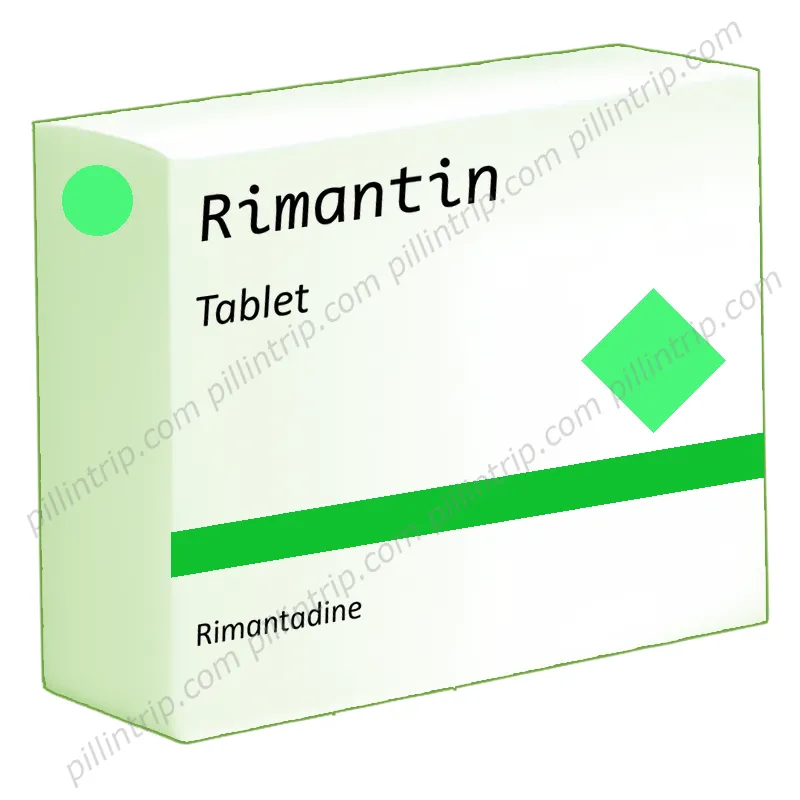
Table of Contents
Rimantin, 50 mg, tablets
Rimantadine hydrochloride
Please read this entire leaflet carefully, as it contains important information for the patient.
Keep this leaflet, so that you can read it again if necessary.
Consult your doctor or pharmacist if you need advice or further information.
If symptoms worsen or do not improve, consult your doctor.
If any of the adverse effects worsen or if any adverse effects not listed in this leaflet occur, inform your doctor or pharmacist.
Table of contents of the leaflet:
- What Rimantin is and what it is used for
- Important information before taking Rimantin
- How to take Rimantin
- Possible side effects
- How to store Rimantin
- Further information
1. WHAT RIMANTIN IS AND WHAT IT IS USED FOR
Rimantin tablets contain 50 mg of rimantadine hydrochloride as the active substance.
It belongs to a group of antiviral drugs.
Rimantin is used in adults and children for the early treatment of influenza A, and also in adults for the prevention of diseases caused by influenza A viruses during influenza epidemics.
2. IMPORTANT INFORMATION BEFORE TAKING RIMANTIN
When not to use Rimantin
- If the patient is hypersensitive to rimantadine hydrochloride or to other drugs belonging to the adamantane group (e.g. amantadine), or to any other component of the medicine.
- If the patient has acute liver disease, acute or chronic kidney disease, or hyperthyroidism.
- In pregnant or breastfeeding women.
- In children under 1 year of age.
When to exercise special caution with Rimantin
- If the patient has gastrointestinal disorders, liver disease, renal insufficiency, severe heart disease, or cardiac rhythm disorders. Caution should be exercised when using the medicine and it should not be used without medical advice.
- In elderly patients.
- If the patient has a history of epilepsy or is taking antiepileptic drugs. The risk of seizures during treatment with Rimantin is then increased. The doctor may recommend reducing the dose to 2 tablets (100 mg) per day. If a seizure occurs, treatment with the medicine should be discontinued.
Consult your doctor even if the above warnings relate to conditions that occurred in the past.
Use of Rimantin with other medicines
Inform your doctor about all medicines you are currently taking, including those obtained without a prescription.
Paracetamol and acetylsalicylic acid reduce the effectiveness of Rimantin.
Alcohol should be avoided during treatment with Rimantin, as unexpected central nervous system effects may occur.
Use of Rimantin with food and drink
Rimantin should be taken after meals, with plenty of water.
Pregnancy and breastfeeding
Before taking any medicine, consult your doctor or pharmacist.
Rimantin should not be used during pregnancy.
Rimantin should not be used during breastfeeding.
Driving and operating machinery
Rimantin may cause, among others: insomnia, drowsiness, concentration disturbances, and dizziness. Exercise caution if any adverse effects affecting the central nervous system occur during treatment (see section: "Possible side effects").
Important information about some components of Rimantin
Rimantin contains lactose.
If the patient has ever been diagnosed with intolerance to certain sugars, he or she should consult a doctor before taking the medicine.
3. HOW TO TAKE RIMANTIN
Rimantin should always be taken as directed by the doctor. In case of doubt, consult your doctor or pharmacist again.
Treatment of influenza
Treatment should be started as early as possible, preferably within 24 to 48 hours after the onset of the first symptoms of influenza, and continued for 5 days or for 24 to 48 hours after symptoms have subsided.
Adults
Two tablets (100 mg) twice daily.
Children
Over 14 years – same dosage as for adults;
11–14 years – 1 tablet (50 mg) three times daily;
7–10 years – 1 tablet (50 mg) twice daily.
For children aged 1 to 6 years, the Rimantin dose should be individually determined by the doctor.
Prevention of influenza in adults
1 tablet (50 mg) once daily, for no longer than 30 days.
Rimantin should be taken orally, after meals, with plenty of water.
If you feel that the effect of Rimantin is too strong or too weak, consult your doctor or pharmacist.
Taking more Rimantin than recommended
No cases of overdose have been reported so far. However, overdose of a similar drug—amantadine—has been described. The following adverse effects occurred: excitement, hallucinations, cardiac arrhythmias, and death.
If you take more than the recommended dose, contact your doctor or pharmacist immediately.
Missing a dose of Rimantin
If you miss a dose at the scheduled time, take it as soon as possible. However, if the time for the next dose is near, skip the missed dose.
Do not take a double dose to make up for the missed tablet.
4. POSSIBLE ADVERSE REACTIONS
Like all medicines, Rimantin may cause adverse reactions, although not everyone experiences them.
The adverse reactions listed below are categorized according to their frequency of occurrence.
Common (occurring in more than 1 in 100, but less than 1 in 10 patients):
- insomnia, nervousness;
- dizziness, headache, fatigue;
- nausea, vomiting, loss of appetite, abdominal pain, dry mouth;
- weakness.
Uncommon (occurring in more than 1 in 1,000, but less than 1 in 100 patients):
- agitation, depression, euphoria;
- motor hyperactivity, difficulty in concentration, coordination disturbances, somnolence;
- tinnitus;
- shortness of breath;
- diarrhoea, dyspepsia;
- rash.
Rare (occurring in more than 1 in 10,000, but less than 1 in 1,000 patients):
- hallucinations, including olfactory hallucinations, disorientation;
- gait disturbances, tremor, seizures, taste disturbances or loss of taste;
- palpitations, heart failure, heart block, cardiac arrhythmias;
- hypertension, cerebral vessel disorders;
- bronchospasm, cough;
- galactorrhoea;
- fainting.
When doses higher than recommended were administered, the following have also been reported: increased lacrimation, increased frequency of urination, fever, constipation, excessive sweating, difficulty in swallowing, hypersensitivity, and eye pain.
The frequency of adverse reactions, particularly those related to the gastrointestinal and nervous systems, increases significantly when higher than recommended doses are used.
If any of the adverse reactions worsen or if any adverse reactions not listed in this leaflet occur, consult a doctor or pharmacist.
Reporting of adverse reactions
If any adverse reactions occur, including those not listed in this leaflet, inform a doctor, pharmacist, or nurse. Adverse reactions can be reported directly to the Department of Monitoring Adverse Drug Reactions, Office for Registration of Medicinal Products, Medical Devices and Biocidal Products:
Al. Jerozolimskie 181C, 02-222 Warsaw, tel.: 22 49-21-301, fax: 22 49-21-309, e-mail: [email protected].
Adverse reactions can also be reported to the marketing authorization holder.
Reporting adverse reactions helps to provide more information on the safety of this medicine.
5. HOW TO STORE RIMANTIN
Keep this medicine out of the sight and reach of children.
Do not use Rimantin after the expiry date stated on the packaging after "Expiry date (EXP)".
Do not store above 25°C; protect from moisture.
Store in the original packaging.
Medicines must not be disposed of via wastewater or household waste. Ask your pharmacist what to do with medicines no longer required. This will help protect the environment.
6. OTHER INFORMATION
What Rimantin contains
The active substance is rimantadine hydrochloride.
Each tablet contains 50 mg of rimantadine hydrochloride.
Other ingredients: monohydrate lactose, potato starch, stearic acid.
What Rimantin looks like and contents of the pack
Uncoated, round, flat tablets, white to off-white in colour.
Pack contains 10 or 20 tablets.
Marketing Authorisation Holder and Manufacturer
Genexo Sp. z o.o.
Gen. Zajączka 26,
01-510 Warsaw, Poland
Rev./PL/RIM/12.2016/PL