Rhinazin
Poland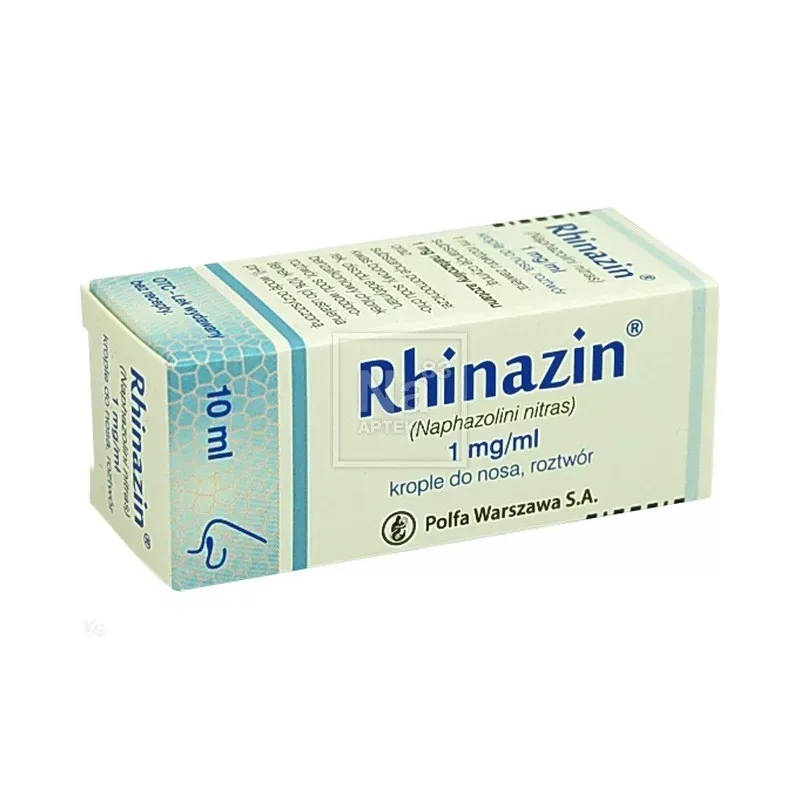
Table of Contents
Package leaflet: Information for the patient
RHINAZIN, 1 mg/ml, nasal drops, solution
Naphazolini nitras
Please read all of this leaflet carefully before using this medicine, because it contains
important information for the patient.
This medicine should always be used exactly as described in this patient leaflet or as directed by
your doctor or pharmacist.
- Keep this leaflet so that you can read it again if necessary.
- If you need advice or further information, please consult your pharmacist.
- If you experience any adverse reactions, including any adverse reactions not listed in this leaflet, inform your doctor or pharmacist. See section 4.
- If there is no improvement after 5 days of treatment, or if symptoms worsen, contact your doctor.
Table of contents
- What Rhinazin is and what it is used for
- Important information before using Rhinazin
- How to use Rhinazin
- Possible side effects
- How to store Rhinazin
- Contents of the pack and other information
1. What Rhinazin is and what it is used for
Rhinazin is a nasal drop formulation containing naphazoline as the active substance,
which belongs to a group of medicines called sympathomimetics.
When applied locally to the nose, Rhinazin rapidly constricts dilated blood vessels.
It also reduces inflammatory symptoms—nasal mucosal swelling and mucus secretion.
The medicine improves nasal passage patency and facilitates drainage of secretions from the paranasal sinuses.
Rhinazin is used as an adjunctive treatment:
- in colds (acute and chronic rhinitis) caused by bacteria, viruses, or allergies.
2. Important information before using Rhinazin
When not to use Rhinazin:
- if the patient is allergic to naphazoline nitrate (symptoms, e.g. rash, facial and throat swelling, shortness of breath) or to substances structurally similar to naphazoline, known as imidazole derivatives, or to any of the other ingredients of this medicine (listed in section 6),
- if the patient has been diagnosed with narrow-angle glaucoma (increased pressure in the eye).
Warnings and precautions
Before starting treatment with Rhinazin, consult a doctor, especially if the patient has:
- high blood pressure,
- diabetes (elevated blood sugar levels),
- prostate enlargement,
- hyperthyroidism,
- cardiovascular diseases.
Do not exceed the recommended dose of the medicine, as transient local irritation and nasal mucosa hyperaemia may occur.
Rhinazin should not be used for longer than 5 days, as prolonged use may lead to persistent changes in the nasal mucosa that are difficult to treat.
Rhinazin and other medicines
Inform the doctor about all medicines currently used or recently used, as well as any medicines the patient plans to use.
Do not use Rhinazin during treatment with antidepressant medicines known as tricyclic antidepressants or MAO inhibitors (monoamine oxidase inhibitors).
Pregnancy and breastfeeding
If the patient is pregnant or breastfeeding, suspects she may be pregnant, or is planning to become pregnant, she should consult a doctor or pharmacist before using this medicine.
The decision on using Rhinazin during pregnancy or breastfeeding should be made by a doctor.
Driving and operating machinery
Rhinazin does not affect the ability to drive or operate machinery.
Rhinazin contains benzalkonium chloride
The medicine contains 0.05 mg of benzalkonium chloride per ml of solution. Benzalkonium chloride may cause irritation or swelling inside the nose, especially if used for a prolonged period.
3. How to use Rhinazin
This medicine should always be used exactly as described in this patient information leaflet, or as directed by a doctor or pharmacist. If in doubt, consult a doctor or pharmacist.
- The medicine is intended for nasal use.
- For hygienic reasons, the medicine container should be used by only one patient.
- Do not use the medicine for longer than 3 to 5 days. Prolonged use should be decided by a doctor.
- Do not exceed the recommended doses. Adults and children over 6 years of age: locally, 1 to 2 drops into each nostril, no more frequently than every 4 to 6 hours.
Use of a higher than recommended dose of Rhinazin
If the patient has used more than the recommended dose (overdose) or has accidentally swallowed the medicine, especially if a child has done so, contact a doctor immediately.
Seek immediate medical attention if the following symptoms occur, as they may indicate overdose or accidental oral ingestion by a child:
- Slowed heartbeat,
- Decreased body temperature,
- Increased or decreased blood pressure with fainting,
- Marked drowsiness,
- Excessive sedation.
Missed dose of Rhinazin
Do not use a double dose to make up for a missed dose.
4. Possible adverse effects
Like all medicines, this medicine can cause adverse effects, although not everybody gets them.
Rarely (less frequently than in 1 out of 1,000 people), the following occur:
headaches, dizziness, nausea, excessive sweating, anxiety, weakness, drowsiness,
increased blood pressure, heart rhythm disturbances, increased blood glucose concentration
(hyperglycaemia).
As a result of prolonged use or doses higher than recommended, temporary swelling and congestion of the nasal mucosa with increased serous-mucous secretion may sometimes occur.
Reporting of adverse effects
If any adverse effects occur, including any not listed in this leaflet, inform your doctor or pharmacist. Adverse effects can be reported directly to the Department of Monitoring Adverse Drug Reactions of the Office for Registration of Medicinal Products, Medical Devices and Biocidal Products
Al. Jerozolimskie 181C
02-222 Warsaw
Phone: +48 22 49 21 301
Fax: +48 22 49 21 309
e-mail: [email protected]
Adverse effects can also be reported to the marketing authorisation holder.
By reporting adverse effects, more information on the safety of this medicine can be collected.
5. How to store Rhinazin
Keep the bottle tightly closed and store below 25°C.
Keep the medicine out of sight and reach of children.
Do not use this medicine after the expiry date stated on the carton and bottle. The expiry date refers to the last day of the stated month.
Medicines should not be disposed of via wastewater or household waste. Ask your pharmacist how to dispose of medicines no longer in use. This will help protect the environment.
6. Contents of the pack and other information
What Rhinazin contains
- The active substance is naphazoline nitrate. Each ml of solution contains 1 mg of naphazoline nitrate.
- The other ingredients are: boric acid, sodium chloride, disodium edetate, benzalkonium chloride solution, sodium hydroxide 10% (for pH adjustment), purified water.
What Rhinazin looks like and contents of the pack
Rhinazin is a nasal drop solution. The medicine is available in polyethylene bottles containing 10 ml of solution, packed in a cardboard box.
Marketing Authorisation Holder and Manufacturer
Warszawskie Zakłady Farmaceutyczne Polfa S.A.
ul. Karolkowa 22/24; 01-207 Warszawa
For further information, please contact the local representative of the Marketing Authorisation Holder:
Warszawskie Zakłady Farmaceutyczne Polfa S.A.
ul. Karolkowa 22/24; 01-207 Warszawa
tel. 22 691 39 00