Relanium
Poland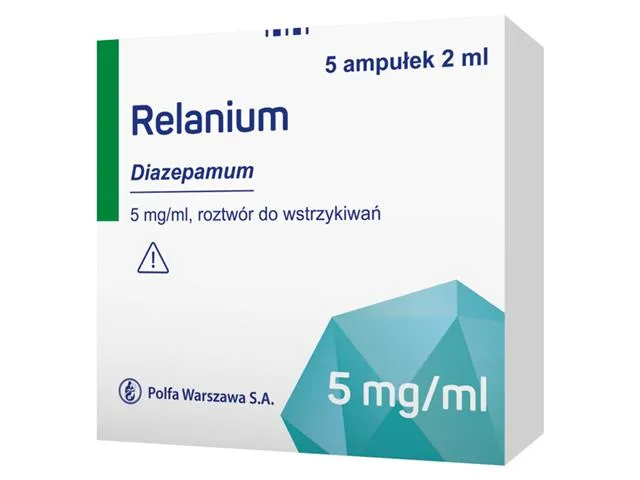
Table of Contents
Patient Information Leaflet
RELANIUM, 5 mg/ml, solution for injection
Diazepam
Please read all of this leaflet carefully before using this medicine, as it contains important information for you.
- Keep this leaflet so that you can read it again if necessary.
- If you have any further questions, please consult your doctor or pharmacist.
- This medicine has been prescribed for a specific individual. Do not pass it on to others. It may harm someone else even if their symptoms are the same.
- If you experience any adverse reactions, including any not listed in this leaflet, inform your doctor or pharmacist immediately. See section 4.
Table of Contents
- What Relanium is and what it is used for
- Important information before using Relanium
- How to use Relanium
- Possible side effects
- How to store Relanium
- Contents of the pack and other information
1. What Relanium is and what it is used for
Relanium contains the active substance diazepam. Diazepam belongs to a group of medicines called benzodiazepines. It works as an anxiolytic, sedative, hypnotic, anticonvulsant, and reduces skeletal muscle tension. Relanium is intended for use in emergency situations.
Relanium is administered intravenously or intramuscularly:
- in acute anxiety states or agitation, delirium tremens (alcohol withdrawal delirium, which may be life-threatening);
- in acute conditions characterized by increased skeletal muscle tone, including tetanus;
- in acute convulsive states occurring during epileptic seizures, high fever (febrile convulsions), or in poisoning;
- in patient preparation (premedication) prior to various procedures, e.g. surgery or endoscopy.
2. Important information before using Relanium
When not to use Relanium
- if the patient is allergic to diazepam (or other benzodiazepines) or any of the other ingredients of this medicine (listed in section 6);
- if the patient has been diagnosed with:
- myasthenia gravis (a chronic disease characterized by muscle weakness);
- severe respiratory insufficiency, respiratory depression (very serious breathing difficulties);
- sleep apnoea syndrome (characterized by brief interruptions in breathing during sleep);
- severe hepatic insufficiency (serious liver function disorders);
- presence of phobias (fear of specific objects or situations) or obsessions (obsessive, recurring thoughts or behaviors);
- chronic psychoses (mental disorders with severe disturbances in perception of reality and loss of self-awareness).
- The medicine should not be used in newborns and premature infants.
Warnings and precautions
Before starting treatment with Relanium, discuss it with your doctor.
Your doctor will exercise particular caution when using Relanium and will take appropriate action in patients:
- of advanced age;
- with liver insufficiency;
- with chronic pulmonary insufficiency;
- with brain damage due to, for example, trauma, atherosclerosis of blood vessels, stroke;
- in serious condition, especially with heart and breathing problems;
- with chronic respiratory insufficiency;
- dependent on drugs or alcohol;
- who have lost close relatives and are in a period of mourning. Patients with any of the above conditions should inform their doctor.
Relanium should not be used as the sole treatment for depression or anxiety associated with depression.
The doctor will appropriately adjust the dose and determine the duration of treatment. Treatment with Relanium
should be as short as possible.
Long-term use of the medicine should be avoided, as it may increase the risk of dependence.
Children
- The medicine should not be used in newborns and premature infants due to the presence of benzyl alcohol – see section 2. "Relanium contains benzyl alcohol, ethanol, sodium benzoate, propylene glycol and sodium".
- Paradoxical reactions (symptoms listed in section 4. "Possible side effects") may occur in children during treatment with Relanium. If such symptoms occur, treatment should be discontinued.
Relanium and other medicines
Tell your doctor about all medicines currently or recently taken, as well as any medicines the patient plans to use.
Relanium and other medicines taken simultaneously may interact and affect each other's action.
This particularly applies to the following medicines listed below:
- strong painkillers (called opioid analgesics, e.g. morphine, buprenorphine); if administration of diazepam together with opioid analgesics is necessary, diazepam should be administered last,
- medicines used in psychiatric disorders (e.g. haloperidol),
- medicines used to treat depression (fluoxetine, fluvoxamine),
- sedatives, anti-anxiety and sleep medicines,
- anticonvulsants (e.g. phenobarbital),
- anaesthetics and certain antiallergic medicines (with sedative effects),
- cimetidine and omeprazole (medicines used in peptic ulcer disease),
- phenytoin and valproic acid (a medicine used in epilepsy treatment),
- rifampicin (an antibiotic).
Concomitant use of Relanium and opioids (strong painkillers, medicines used in substitution therapy for addiction, and some cough medicines) increases the risk of drowsiness, breathing difficulties (respiratory depression), coma, and may be life-threatening. Therefore, concomitant use of these medicines should only be considered if other treatment methods are not possible.
If, however, your doctor has prescribed Relanium together with opioid medicines, the treating doctor should reduce the dose and recommend the shortest possible duration of treatment.
Inform your doctor about all opioid medicines you are taking and strictly follow the doctor's dosing instructions. It may be helpful to inform friends or family members about the risks so they are aware of the symptoms listed above. If such symptoms occur, contact your doctor immediately.
Relanium with alcohol (ethanol)
Alcohol (ethanol) enhances the sedative effect of diazepam. Do not drink alcohol while taking Relanium.
Pregnancy and breastfeeding
If the patient is pregnant, breastfeeding, suspects she may be pregnant, or is planning to have a child, she should consult a doctor or pharmacist before using this medicine.
Relanium should not be used in pregnant women, especially during the first and third trimesters, or during breastfeeding, unless the doctor determines that use of the medicine is necessary.
Driving and operating machinery
After administration of the medicine, sedation, concentration disturbances, and other side effects may occur, which may adversely affect performance of tasks requiring heightened attention. Do not drive or operate machinery for at least 24 hours after administration of Relanium.
Relanium contains benzyl alcohol, ethanol, sodium benzoate, propylene glycol and sodium
The medicine contains 15 mg of benzyl alcohol in 1 ml of solution. Benzyl alcohol may cause allergic reactions.
Administration of benzyl alcohol to newborns is associated with the risk of severe adverse reactions, including breathing disorders (so-called "gasping syndrome").
Do not administer to newborns (up to 4 weeks of age) without a doctor's instruction.
Due to the increased risk of accumulation of benzyl alcohol in young children, the medicine should not be administered to children under 3 years of age for longer than one week.
Pregnant or breastfeeding women, patients with liver or kidney disease should consult a doctor before using the medicine, as large amounts of benzyl alcohol may accumulate in their bodies and cause adverse effects (so-called metabolic acidosis).
The medicine contains 12.4% v/v ethanol (alcohol), i.e. up to 200 mg per 2 ml ampoule, equivalent to 4.75 ml of beer or 1.98 ml of wine per 2 ml ampoule.
Harmful for people with alcohol-related disorders.
This should be taken into account when administering to pregnant or breastfeeding women, children, and people at high risk, such as patients with liver disease or epilepsy.
The medicine contains 450 mg of propylene glycol in each 1 ml. Consult a doctor or pharmacist before administering the medicine to a child under 5 years of age, especially if the child is taking other medicines containing propylene glycol or alcohol.
Pregnant or breastfeeding women, patients with impaired kidney or liver function should not take this medicine without a doctor's advice. The doctor may decide to perform additional tests in such patients.
The medicine contains 48.8 mg of sodium benzoate in 1 ml of solution. Sodium benzoate may increase the risk of jaundice (yellowing of the skin and whites of the eyes) in newborns (up to 4 weeks of age).
The medicine contains 15.6 mg of sodium (main component of table salt) per 2 ml ampoule (7.8 mg sodium per 1 ml).
This corresponds to 0.78% of the maximum recommended daily dietary sodium intake for adults.
The medicine may be diluted in 0.9% NaCl solution or glucose. When calculating the total sodium content in the prepared diluted solution, the sodium from the diluent must be taken into account.
For accurate information on the sodium content in the solution used to dilute the medicine, refer to the patient leaflet of the diluent used.
3. How to use Relanium
This medicine should always be used as directed by the physician. In case of doubt, consult your doctor.
- Relanium is administered by medical personnel.
- The medicine is given intravenously or intramuscularly.
- The doctor will determine the dosage and duration of treatment individually for each patient. It is essential to strictly follow the doctor's instructions.
- The patient should remain under medical supervision for at least one hour after administration of the medicine.
- At home, the patient should always be accompanied by a responsible adult. Someone should stay with the patient until symptoms have subsided.
Detailed dosage instructions, as well as directions for use and preparation of the medicine, are provided at the end of this leaflet under the section “Information intended exclusively for healthcare professionals”.
Use of a higher than recommended dose of Relanium
Relanium is administered exclusively by trained medical personnel; therefore, it is unlikely that a patient would receive more medicine than intended.
After an overdose of diazepam, symptoms such as drowsiness, confusion (disturbances of consciousness, disorientation, anxiety), and lethargy (very deep sleep) may occur. In more severe cases, impaired motor coordination, low blood pressure, serious breathing difficulties, coma, and death (very rarely) may occur. If the patient suspects having received a higher dose than recommended, medical advice should be sought immediately, and the doctor will initiate appropriate treatment.
Discontinuation of Relanium treatment
After stopping Relanium, symptoms of so-called withdrawal syndrome may occur; however, this is unlikely because the medicine is used in emergency situations. Symptoms may include: headache and muscle pain, anxiety, tension, restlessness, confusion, and irritability. In severe cases, the following may occur: loss of sense of reality or self, numbness and tingling in the limbs, increased sensitivity to light, noise, and touch, hallucinations, and seizures. The doctor will carefully select the dose and duration of treatment to minimize the risk of these symptoms.
If you have any further questions about the use of this medicine, consult your doctor, pharmacist, or nurse.
4. Possible adverse effects
Like all medicines, this medicine can cause adverse effects, although not everyone will experience them.
After intravenous administration of the medicine, the following may occur:
- local reactions (pain, redness), thrombophlebitis and venous thrombosis;
- respiratory depression or low blood pressure (in rare cases);
- very serious circulatory and respiratory disturbances (rarely, after too rapid injection).
After intramuscular administration of the medicine, the following may occur:
- pain at the injection site (relatively common);
- erythema at the injection site.
The following may also occur: feeling of fatigue, drowsiness and muscle weakness.
Use of this medicine (even at therapeutic doses) may lead to dependence. Abuse of benzodiazepine medicines has been observed.
Rarely (in 1 to 10 people per 10,000), other adverse effects have been observed, such as:
- confusion, reduced emotional responsiveness, decreased level of consciousness, ataxia, tremor,
- anterograde amnesia (patients do not remember events occurring several hours after administration of Relanium - to reduce the risk of amnesia, patients should be ensured conditions for uninterrupted sleep for 7 to 8 hours after administration of the medicine),
- depression,
- double or blurred vision,
- speech disorders or slurred speech,
- gastrointestinal disturbances, nausea, dry mouth or excessive salivation, constipation, increased appetite,
- headache, dizziness,
- low blood pressure, changes in heart rate, circulatory depression (significant slowing of heart rate), changes in blood tests (visible in so-called morphology tests),
- urinary incontinence or urinary retention,
- increased or decreased libido,
- skin allergic reactions.
Very rarely (in less than 1 person per 10,000), increased activity of certain enzymes (transaminases and alkaline phosphatase), jaundice, and cases of cardiac arrest have been observed.
After administration of diazepam (especially in children and elderly patients), the following may occur: restlessness, agitation, hallucinations, changes in behaviour, aggression, nightmares, psychoses (so-called paradoxical reactions).
In elderly and debilitated patients, adverse effects may be more pronounced.
After administration of diazepam, latent depression may become apparent.
Reporting of adverse effects
If any adverse effects occur, including any not listed in this leaflet, inform a doctor or pharmacist. Adverse effects can be reported directly to the Department of Monitoring of Adverse Drug Reactions of the Office for Registration of Medicinal Products, Medical Devices and Biocidal Products
Al. Jerozolimskie 181C
02-222 Warsaw
Tel.: +48 22 49 21 301
Fax: +48 22 49 21 309
Website: https://smz.ezdrowie.gov.pl
Adverse effects can also be reported to the marketing authorization holder.
Reporting adverse effects helps to collect more information on the safety of the medicine.
5. How to store Relanium
Store below 25 °C.
Keep ampoules in the outer packaging to protect from light. Do not freeze.
Keep the medicine out of sight and reach of children.
Do not use this medicine after the expiry date stated on the carton and ampoule. The expiry date refers to the last day of the stated month.
The marking on the packaging following "EXP" indicates the expiry date, and following "Lot" indicates the batch number.
Medicines should not be disposed of via wastewater or household waste. Ask your pharmacist how to dispose of medicines no longer in use. Such measures will help protect the environment.
6. Contents of the package and other information
What the medicine Relanium contains
- The active substance is diazepam. Each ml of solution contains 5 mg of diazepam.
- The other ingredients are: propylene glycol, 96% ethanol, benzyl alcohol (15 mg), sodium benzoate, glacial acetic acid, 10% acetic acid, water for injections.
What Relanium looks like and contents of the pack
Relanium is a colourless or yellowish-green, clear liquid.
The carton box contains 5 or 50 amber or colourless glass ampoules of 2 ml each.
Marketing Authorisation Holder and Manufacturer
Zakłady Farmaceutyczne POLPHARMA S.A.
ul. Pelplińska 19, 83-200 Starogard Gdański
tel. + 48 22 364 61 01
Information intended exclusively for healthcare professionals:
RELANIUM, 5 mg/ml, solution for injection
Diazepamum
-
The medicine is intended for intravenous or intramuscular administration.
-
Treatment should be limited to the minimum necessary duration; the medicine should be administered only under strict medical supervision.
-
To reduce the likelihood of adverse effects during intravenous sedation, the medicine should be injected slowly (0.5 ml of solution over 30 seconds) until drowsiness, drooping eyelids, and slurred speech occur, while the patient remains capable of following instructions.
-
Intravenous injections are recommended into a large vein in the antecubital fossa. The patient should remain in a supine position throughout the procedure. Do not inject into small veins. Arterial administration and extravasation of the solution must be strictly avoided. Adhering to these recommendations for intravenous administration significantly reduces the risk of hypotension or apnoea. Except in emergencies, another person should always be present during intravenous administration of the medicine, and resuscitation equipment should always be available. Patients should remain under medical supervision for at least one hour after administration. At home, the patient should always be accompanied by a responsible adult.
-
Relanium should generally not be diluted. An exception is slow intravenous infusion in a large volume of 0.9% NaCl or glucose solution in the treatment of tetanus and status epilepticus. Do not dilute more than 40 mg of diazepam (8 ml of solution) in 500 ml of infusion solution. The solution should be prepared immediately before use and used within 6 hours.
-
Over 50% of the diazepam solution may be adsorbed onto plastic infusion bags; therefore, such containers should not be used for administering diazepam solutions. Adsorption onto plastic tubing of the intravenous infusion set may also cause an initial significant reduction in the concentration of administered diazepam, which then slowly increases over several hours. The infusion rate should be frequently adjusted according to the patient's current condition.
-
The medicine should not be mixed with other medicines in the same infusion solution or syringe, as drug stability cannot be guaranteed if this recommendation is not followed.
Instructions for opening the ampoule
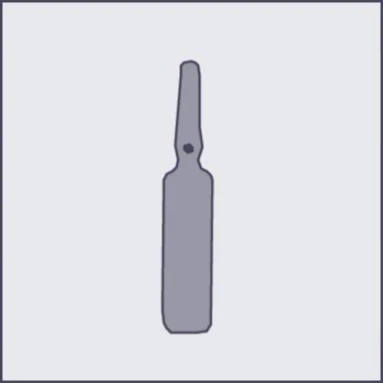
Before opening the ampoule, ensure that all the solution is in the lower part of the ampoule. Gently shake the ampoule or tap it with a finger to help the solution flow down. Each ampoule has a coloured dot (see Figure 1) indicating the score line located beneath it.
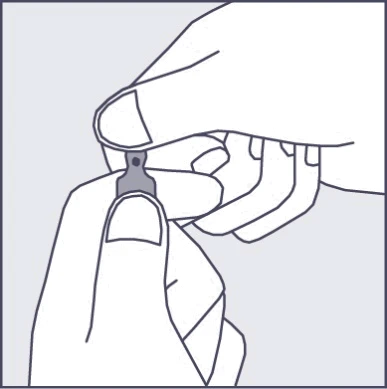
- To open the ampoule, hold it vertically in both hands with the coloured dot facing towards you – see Figure 2. The upper part of the ampoule should be gripped so that the thumb is positioned above the coloured dot.
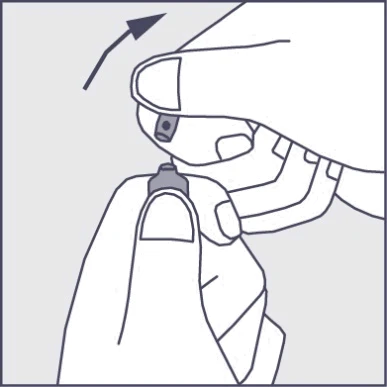
- Press in the direction of the arrow shown in Figure 3. Ampoules are intended for single use only and should be opened immediately before use. Any unused portion of the product should be discarded in accordance with applicable regulations.
Figure 1 Figure 2 Figure 3
DOSAGE
Adults
Acute anxiety or agitation: 10 mg by intravenous or intramuscular injection; the injection may be repeated no sooner than after four hours.
Delirium tremens: 10 to 20 mg by intravenous or intramuscular injection. Higher doses may be necessary depending on symptom severity.
Acute muscle spasms: 10 mg by intravenous or intramuscular injection; the injection may be repeated no sooner than after four hours.
Tetanus: initial intravenous dose of 0.1 mg/kg to 0.3 mg/kg body weight, repeated every 1 to 4 hours. Continuous intravenous infusion over 24 hours may also be used at a dose of 3 mg/kg to 10 mg/kg body weight. The selected dose should depend on symptom severity; higher doses may be used in very severe cases.
Status epilepticus, seizures due to poisoning: 10 to 20 mg intravenously or intramuscularly; the dose may be repeated after 30–60 minutes. If indicated, a slow intravenous infusion may be administered (maximum dose 3 mg/kg body weight within 24 hours).
Preoperative or pre-diagnostic procedure sedation: 0.2 mg/kg body weight. The usual adult dose is 10 to 20 mg, but higher doses may be required depending on clinical response.
Elderly or debilitated patients
Doses administered should not exceed half of the normally recommended doses. Patients in this group should be regularly monitored at the beginning of treatment to minimize administered doses and/or their frequency, in order to avoid overdose due to drug accumulation.
Use in children
Status epilepticus, seizures due to poisoning, febrile seizures: 0.2 mg/kg to 0.3 mg/kg body weight intravenously or intramuscularly, or 1 mg per year of age.
Tetanus: dosing as in adults.
Preoperative or pre-diagnostic procedure sedation: 0.2 mg/kg body weight.