Reasec
Poland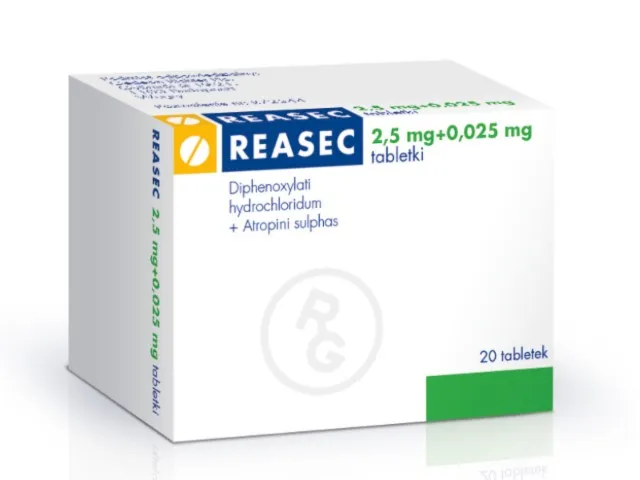
Instructions for Use
Patient Information Leaflet
Reasec, 2.5 mg + 0.025 mg, tablets
Diphenoxylate hydrochloride + Atropine sulphate
Please read the entire leaflet carefully before using this medicine, as it contains important information for the patient.
- Keep this leaflet, so that you can read it again if necessary.
- If you have any questions, please consult your doctor or pharmacist.
- This medicine has been prescribed for a specific individual. Do not pass it on to others. This medicine may harm someone else, even if their symptoms are the same.
- If the patient experiences any adverse reactions, including any adverse reactions not listed in this leaflet, inform your doctor or pharmacist. See section 4.
Table of Contents
- What Reasec is and what it is used for
- Important information before taking Reasec
- How to take Reasec
- Possible side effects
- How to store Reasec
- Contents of the pack and other information
1. What Reasec is and what it is used for
The active substances in Reasec are: diphenoxylate (as diphenoxylate hydrochloride) and atropine (as atropine sulphate). The medicine reduces intestinal motility and has a strong anti-diarrhoeal effect.
Indications:
- Symptomatic treatment of acute and chronic diarrhoea of various origins,
- Reduction of faecal fluid volume following ileostomy (surgical diversion of a segment of the small intestine to the abdominal surface, allowing intestinal content to be expelled externally) and colostomy (surgical diversion of a segment of the large intestine to the abdominal surface, allowing intestinal content to be expelled externally).
2. Important information before using Reasec
When not to use Reasec:
- when the underlying cause of diarrhoea can be treated, such treatment should be used. Reasec is intended only for symptomatic treatment of diarrhoea;
- if the patient is allergic to difenoxin hydrochloride and (or) atropine sulphate or any of the other ingredients of this medicine (listed in section 6);
- in children under 4 years of age;
- in the treatment of diarrhoea caused by enterotoxin-producing bacteria (e.g. toxigenic Escherichia coli, bacteria of the genus Salmonella and Shigella), which may be accompanied by high fever and presence of blood in the stool;
- in the treatment of the acute phase of ulcerative colitis or antibiotic-associated pseudomembranous colitis;
- in severe forms of liver cirrhosis;
- in acute and cholestatic hepatitis presenting with jaundice (yellowing of the skin and eyes), skin itching;
- in the treatment of mechanical jaundice;
- if the patient has narrow-angle glaucoma;
- if the patient has prostate gland disease (prostate);
- in myasthenia (a disease characterised by weakness and fatigue of skeletal muscles);
- in patients with rapid heartbeat;
- in children with bronchial asthma;
- in patients with megacolon (a condition causing hypertrophy and dilation of the colon due to accumulation of intestinal contents);
- in patients with pyloric stenosis;
- if the patient has intestinal obstruction or constipation;
- if the patient is taking other medicines that reduce intestinal motility.
Warnings and precautions
Before starting to use Reasec, discuss this with your doctor or pharmacist.
Whenever possible, treatment of the underlying cause of diarrhoea should be used. This medicine does not eliminate the cause of diarrhoea and is intended only for symptomatic treatment of diarrhoea.
In patients with diarrhoea, especially in children, loss of fluids and electrolytes may occur. In such cases, rehydration and electrolyte replacement are of greatest importance.
In cases of severe dehydration or electrolyte imbalance, Reasec should be discontinued until appropriate fluid and electrolyte replacement is initiated, because inhibition of intestinal motility may lead to fluid retention in the intestines, worsening dehydration and electrolyte imbalance.
If there is no improvement within 48 hours in acute diarrhoea, treatment with Reasec should be discontinued.
Reasec should be discontinued immediately if abdominal distension or constipation occurs.
Patients with impaired liver function should be under medical supervision due to the potential neurotoxic effects of Reasec resulting from slowed drug metabolism.
When using the recommended doses of Reasec, symptoms of atropine side effects may occur. These include: rapid heartbeat, dry mouth, dry skin, and nausea. This particularly applies to children. Inform your doctor or pharmacist about this (see section 4).
Difenoxin belongs to the opioid group. Cases of dependence on Reasec (with very high doses exceeding 125 tablets per day) have been reported. Therefore, particular caution should be exercised when using Reasec in patients with a history of drug dependence. The addition of atropine is intended to prevent drug abuse.
Children and adolescents
The most effective treatment for diarrhoea in children is fluid and electrolyte replacement.
Reasec may be used only in children over 4 years of age and only under medical supervision.
The dosage prescribed by the doctor must be strictly followed, and continuous medical monitoring is required until symptoms resolve (e.g. based on stool assessment).
Young children may be particularly sensitive to the active substances in the medicine. Administration of doses higher than prescribed by the doctor may be dangerous, especially in children.
Reasec and other medicines
Tell your doctor or pharmacist about all medicines currently taken or recently taken, as well as any medicines the patient plans to take.
Alcohol and other medicines affecting the central nervous system (anxiolytics, sleeping pills, and narcotic drugs) should not be taken during treatment with Reasec, as they may mutually enhance sedative effects, drowsiness, and respiratory depression may occur.
Reasec tablets may slow down the metabolism of certain other medicines in the liver, thereby prolonging or intensifying their effects.
The above interactions apply both to medicines previously taken and those to be taken in the near future. If in doubt whether any of the above situations apply, the patient should consult a doctor or pharmacist before using Reasec.
Taking Reasec with food, drink and alcohol
See section 3. During treatment with Reasec, the patient should avoid drinking alcohol.
Pregnancy, breastfeeding and fertility
If the patient is pregnant or breastfeeding, suspects she may be pregnant, or is planning to have a child, she should consult a doctor or pharmacist before using this medicine.
Pregnancy
Reasec may be used during pregnancy only after careful individual assessment by a doctor.
Breastfeeding
Reasec should not be used during breastfeeding.
Driving and operating machinery
Reasec may negatively affect the ability to perform work and drive vehicles. Therefore, the doctor will determine individually for each case at which dose and dosing regimen the patient may drive vehicles.
Reasec contains 85 mg of monohydrate lactose and 7 mg of sucrose in 1 tablet.
If the patient has previously been diagnosed with intolerance to certain sugars, the patient should consult a doctor before starting treatment with this medicine.
3. How to use Reasec
This medicine should always be taken exactly as directed by your doctor or pharmacist. If in doubt,
consult your doctor or pharmacist.
The tablets are for oral use.
In case of sudden onset (acute) diarrhoea in adults, take 1 to 2 tablets three times daily.
As soon as diarrhoea improves, discontinue the medicine immediately or reduce the dose (e.g. from 1 to 2 tablets per day).
If there is no improvement within 2 days, contact your doctor.
In chronic diarrhoea, dosage must be determined by the treating physician.
Usually, for adults, the recommended dose is 1 tablet twice daily, taken before meals.
If there is no improvement within 10 days, consult your doctor, as further use of the medicine is likely to be ineffective.
Use in children and adolescents
Reasec must not be given to children under 4 years of age. Reasec should only be used in children over 4 years of age if prescribed by a doctor. Dosage must be determined exclusively by the treating physician. The prescribed dosage must not be changed without prior consultation with the doctor.
Recommended dosage:
Under 4 years: not recommended.
From 4 to 8 years: 1 tablet three times daily.
From 9 to 12 years: 1 tablet four times daily.
From 13 to 16 years: 2 tablets three times daily.
Taking more Reasec than recommended
If too much medicine is accidentally taken, the following symptoms may occur: dryness of the skin and mucous membranes, blurred vision, urinary retention, constipation, abdominal pain, vomiting, hot flushes, elevated or reduced body temperature, drowsiness, breathing difficulties, pinpoint pupils or, conversely, excitement and restlessness, coma. Taking more tablets than prescribed may be particularly dangerous for children.
Breathing difficulties may occur even 12–30 hours after taking the medicine and may recur despite initial response to antidote.
Therefore, in case of accidental overdose, seek immediate medical attention.
Missed dose of Reasec
Do not take a double dose to make up for a missed tablet. Take the next dose at the usual time.
If you have any further doubts concerning the use of this medicine, consult your doctor or pharmacist.
4. Possible adverse effects
Like all medicinal products, this medicine can cause adverse effects, although not everyone experiences them.
The frequency of occurrence of individual adverse effects cannot be determined based on the available data.
Immune system disorders: allergic reactions manifesting as rash, swelling of the lips, face or tongue, and difficulties in breathing or swallowing.
If any of the above symptoms of allergic reactions occur, seek immediate medical advice.
Psychiatric disorders: anxiety.
Eye disorders: visual disturbances.
Gastrointestinal disorders: abdominal pain, bloating, constipation, nausea and vomiting may occur in some cases; dry mouth may also occur.
If constipation or abdominal bloating occurs in the patient, treatment should be discontinued.
Nervous system disorders: headache, insomnia or anxiety, dizziness, blurred vision.
Cardiac disorders: palpitations.
Skin and subcutaneous tissue disorders: rash, dry skin.
Reporting of adverse effects
If any adverse effects occur, including any adverse effects not listed in this leaflet, inform your doctor or pharmacist. Adverse effects can be reported directly to the Department of Monitoring Adverse Drug Reactions at the Office for Registration of Medicinal Products, Medical Devices and Biocidal Products
Al. Jerozolimskie 181C
02-222 Warsaw
Phone: +48 22 49 21 301
Fax: +48 22 49 21 309
Website: https://smz.ezdrowie.gov.pl
Adverse effects can also be reported to the marketing authorization holder.
Reporting adverse effects helps to provide more information on the safety of this medicine.
5. How to store Reasec
Store below 25ºC.
Keep the medicine out of the sight and reach of children.
Do not use this medicine after the expiry date stated on the packaging after: (EXP).
The expiry date refers to the last day of the stated month.
Medicines must not be disposed of via wastewater or household waste. Ask your pharmacist how to dispose of medicines no longer required. This will help protect the environment.
6. Contents of the pack and other information
What Reasec contains
- The active substances are: diphenoxylate hydrochloride and atropine sulfate. Each tablet contains 2.5 mg of diphenoxylate hydrochloride and 0.025 mg of atropine sulfate.
- The other ingredients are: magnesium stearate, talc, sucrose (7 mg), maize starch, lactose monohydrate (85 mg).
What Reasec looks like and contents of the pack
Almost white, round, biconvex tablets, approximately 7 mm in diameter, with the imprint "REASEC" on one side and a division line on the other.
20 tablets in a polypropylene bottle.
Marketing Authorisation Holder and Manufacturer
Gedeon Richter Plc.
Gyömrői út 19-21
1103 Budapest
Hungary
For further information regarding this medicinal product, please contact the local representative of the Marketing Authorisation Holder:
GEDEON RICHTER POLSKA Sp. z o.o.
Medical Department
ul. Ks. J. Poniatowskiego 5
05-825 Grodzisk Mazowiecki
Tel. +48 (22)755 96 48
[email protected]
fax: +48 (22) 755 96 24
This page has been machine-translated and may contain inaccuracies. The original data is available in the manufacturing country's language.
Last data check: June 04, 2026 · Data source: Rejestr Produktów Leczniczych (URPL)