Pulnozin
Poland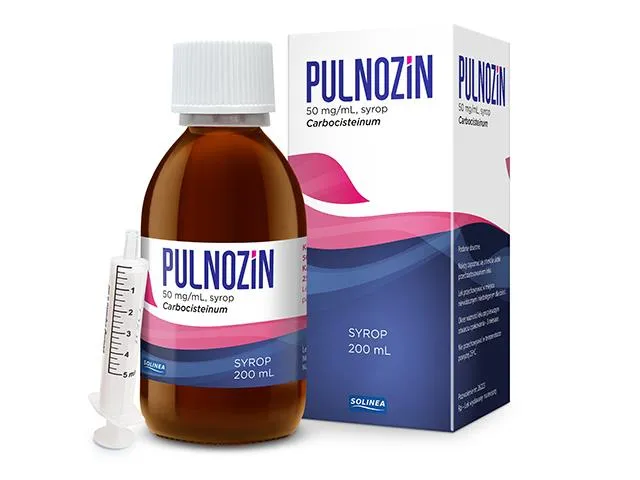
Table of Contents
Package leaflet: Information for the patient
Pulnozin, 50 mg/ml, syrup
Carbocisteinum
Please read the entire leaflet carefully before using the medicine, as it contains
important information for the patient.
- Keep this leaflet so that you can read it again if necessary.
- If you have any questions, please consult your doctor or pharmacist.
- This medicine has been prescribed for a specific individual. Do not pass it on to others. The medicine may harm another person, even if their symptoms are the same.
- If you experience any adverse reactions, including any not listed in this leaflet, tell your doctor or pharmacist. See section 4.
Table of contents of the leaflet
- What Pulnozin is and what it is used for
- Important information before taking Pulnozin
- How to take Pulnozin
- Possible side effects
- How to store Pulnozin
- Contents of the pack and other information
1. What Pulnozin is and what it is used for
Pulnozin, 50 mg/ml, syrup (referred to as Pulnozin in this leaflet) contains a substance called carbocisteine. It belongs to a group of medicines known as "mucolytics", used in the treatment of respiratory tract infections associated with excessive mucus production in the bronchi. It works by reducing the viscosity of mucus, thus facilitating its expectoration.
Pulnozin is used in the treatment of respiratory diseases associated with excessive production of thick and sticky mucus.
2. Important information before taking Pulnozin
When not to use Pulnozin:
- if the patient is allergic to carbocisteine or to any of the other ingredients of this medicine (listed in section 6);
- if the patient has active gastric or duodenal ulcer disease.
Warnings and precautions
Before starting treatment with Pulnozin, discuss this with your doctor or pharmacist.
Special caution is required when using Pulnozin:
- in patients with bronchial asthma and a history of bronchospasm;
- in patients with severe respiratory insufficiency;
- in debilitated patients. Due to reduced cough reflex, there is a risk of airway obstruction due to increased mucus secretion.
Treatment with Pulnozin reduces mucus viscosity and promotes mucus clearance via ciliary activity of the epithelium or through the cough reflex. Therefore, increased coughing and sputum production should be expected. Concomitant use of Pulnozin with antitussive medicines is not recommended.
Since mucolytics may damage the gastric mucosa, caution should be exercised in patients with a predisposition to gastric or duodenal ulcers. Caution is also advised in elderly patients and in those taking other medicines that may cause gastrointestinal bleeding.
Children and adolescents
Do not use in children under 2 years of age.
Pulnozin and other medicines
Tell your doctor or pharmacist if you are currently taking, have recently taken, or plan to take any other medicines.
During treatment with Pulnozin, do not use antitussive medicines or agents that reduce bronchial mucus secretion, as they have an effect opposite to that of carbocisteine.
Pregnancy and breastfeeding
If the patient is pregnant or breastfeeding, suspects she may be pregnant, or is planning to have a child, she should consult her doctor or pharmacist before using this medicine.
Pregnancy:
Use in pregnant women, especially during the first trimester, is not recommended, even though teratogenic effects of carbocisteine have not been demonstrated.
Breastfeeding:
Use during breastfeeding is not recommended, as it is unknown whether carbocisteine passes into breast milk.
Driving and operating machinery
This medicine has no effect or negligible effect on the ability to drive motor vehicles or operate machinery.
Pulnozin contains sucrose, sodium, and methyl parahydroxybenzoate
Pulnozin contains 2.9 g of sucrose in a 5 ml dose, and correspondingly 5.8 g and 8.7 g in 10 ml and 15 ml doses. This should be taken into account in patients with diabetes.
If a patient has previously been diagnosed with intolerance to certain sugars, the patient should consult a doctor before taking this medicine.
The medicine contains methyl parahydroxybenzoate, which may cause allergic reactions (including delayed-type reactions).
The medicine contains up to 7 mg of sodium per 1 ml, equivalent to 0.35% of the recommended daily intake of sodium in the diet of adults.
3. How to use Pulnozin
This medicine should always be used as directed by a doctor or pharmacist. If in doubt,
consult a doctor or pharmacist.
Regardless of whether the medicine is used in adults or children, the appropriate volume
of syrup should be measured using the provided dosing device (an oral syringe with a capacity of 5 ml)
according to the recommended dosage. The oral dosing syringe is graduated in 0.25 ml increments.
One graduation mark, 0.25 ml, corresponds to 12.5 mg of carbocysteine.
How to use the syringe:
Step 1: Check the marking on the side of the syringe to see how much to fill.
Step 2: Press the plunger of the syringe fully down. Then insert the tip of the syringe into the bottle
containing the medicine.
Step 3: Slowly pull the plunger until the syringe fills to the appropriate mark.
Ensure that there are no large air bubbles in the syringe. If there are, empty the syringe and
try again.
Step 4: Place the tip of the syringe in the mouth against the cheek and gently press the plunger to
slowly release the medicine. After use, close the bottle with its cap. Rinse the syringe with warm
water and leave it to dry. Store out of reach of children.
Use in adults
The usual daily dose in adults is 2250 mg in divided doses (15 ml of syrup, 3 times daily). After the
mucolytic effect (thinning of secretions) has been achieved, the dose may be reduced to 1500 mg per day (10 ml of syrup, 3 times daily).
Use in children and adolescents
Do not use in children under 2 years of age.
From 2 to 5 years: 125 mg – 250 mg (from 2.5 ml to 5 ml of syrup), 2 times daily.
From 6 to 12 years: 250 mg (5 ml of syrup), 3 times daily.
After using the syrup, close the bottle tightly.
Use of a higher than recommended dose of Pulnozin
In case of epigastric pain, nausea, and vomiting, discontinue use of Pulnozin and contact a doctor.
If a higher than recommended dose has been taken, seek immediate advice from a doctor or
pharmacist.
Missed dose of Pulnozin
Do not take a double dose to make up for a missed dose.
If a dose is missed, take it as soon as possible. However, if it is almost time for the next dose,
skip the missed dose and take the next dose at the scheduled time. Continue with the usual dosing schedule.
Stopping treatment with Pulnozin
Not applicable.
If you have any further doubts about the use of this medicine, consult your doctor or pharmacist.
4. Possible adverse reactions
Like all medicines, this medicine can cause adverse reactions, although not everyone will experience them.
Uncommon (less frequent than in 1 out of 100 people):
Gastrointestinal disorders: nausea, vomiting, and diarrhoea.
Rare (less frequent than in 1 out of 1,000 people):
Hypersensitivity reactions such as urticaria and bronchospasm. Particular caution is required in patients with asthma due to the risk of bronchoconstriction (muscle contraction in the bronchial wall leading to reduced airflow). In such cases, treatment should be discontinued.
Headache, muscle pain, dizziness, urinary incontinence, palpitations, and dyspnoea.
Very rare (less frequent than in 1 out of 10,000 people):
Allergic reactions such as skin rash, gastrointestinal bleeding.
Frequency not known (frequency cannot be estimated from the available data):
Hypothyroidism, abdominal discomfort, muscle pain, bronchial mucus secretion, Stevens-Johnson syndrome (blisters progressing to erosions on mucous membranes of the oral cavity, conjunctiva, and genital organs), erythema multiforme.
Particular attention should be paid to patients with thyroid function disorders due to the risk of developing hypothyroidism.
Reporting of adverse reactions
If any adverse reactions occur, including any adverse reactions not listed in this leaflet, inform your doctor, pharmacist, or nurse. Adverse reactions can be reported directly to the Department of Monitoring Adverse Drug Reactions of the Office for Registration of Medicinal Products, Medical Devices and Biocidal Products: Al. Jerozolimskie 181C, 02-222 Warsaw,
Phone: +48 22 49-21-301, Fax: +48 22 49-21-309, Website: https://smz.ezdrowie.gov.pl
Adverse reactions can also be reported to the marketing authorization holder.
Reporting adverse reactions helps to provide more information on the safety of the medicine.
5. How to store Pulnozin
Keep this medicine out of sight and reach of children.
Do not store above 25°C.
Do not use this medicine after the expiry date stated on the packaging following: "Expiry date (EXP):".
The expiry date refers to the last day of the stated month.
Period of validity after first opening the container - 3 months.
If the syrup appears discoloured or shows any other signs of deterioration, contact your pharmacist.
Medicines must not be disposed of via wastewater or household waste. Ask your pharmacist how to dispose of medicines no longer in use. This helps protect the environment.
6. Contents of the packaging and other information
What Pulnozin contains
- The active substance is carbocysteine. 5 ml of syrup contains 250 mg of carbocysteine.
- The other ingredients are: sucrose, caramel (E150), blackcurrant flavour Aroma grosella 63.2334, sodium hydroxide (for pH adjustment), methyl 4-hydroxybenzoate (E218), purified water.
What Pulnozin looks like and contents of the pack
Pulnozin syrup is a clear amber liquid with a blackcurrant odour and sweet taste.
Pack: bottle containing 200 ml or 300 ml of syrup, with an oral syringe supplied
(5 ml oral syringe, graduated every 0.25 ml).
Marketing Authorisation Holder and Manufacturer
Marketing Authorisation Holder
Solinea Sp. z o.o.
Elizówka, ul. Szafranowa 6
21-003 Ciecierzyn
Poland
Manufacturer:
Laboratórios Basi - Indústria Farmacêutica, S.A
Parque Industrial Manuel Lourenço Ferreira, Lotes 8, 15 e 16
3450-232 Mortágua
PORTUGAL.