Pulmicort
Poland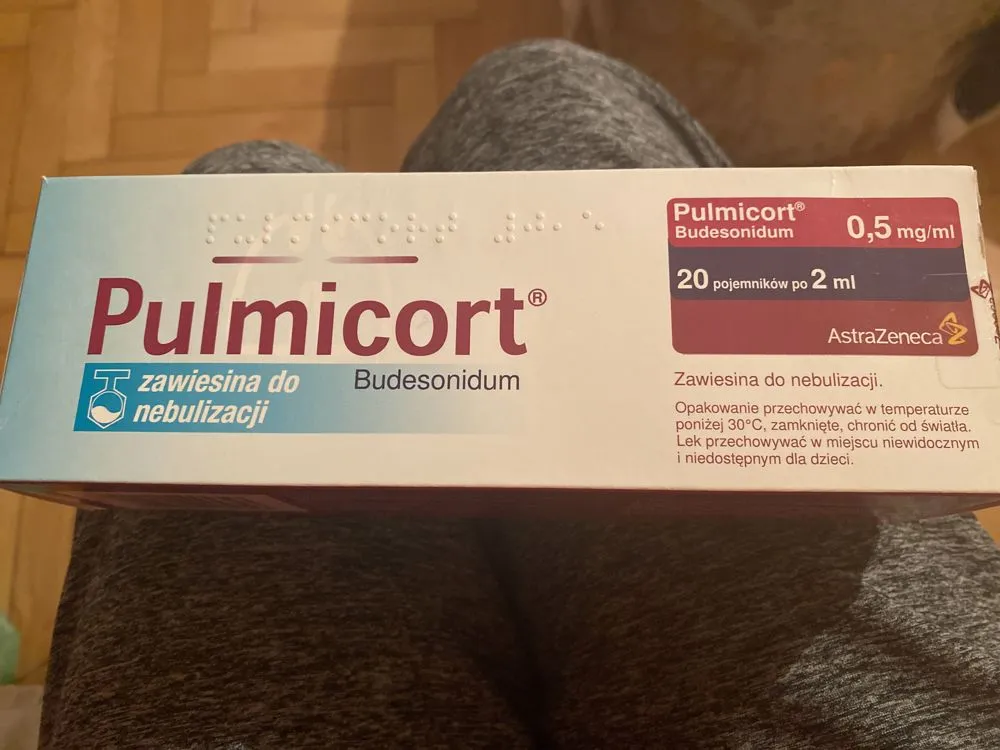
Table of Contents
Patient Information Leaflet
Caution! Please retain the leaflet. Information on the immediate packaging is in a foreign language.
Pulmicort, 0.5 mg/ml, suspension for nebulization
Budesonidum
Please read this leaflet carefully before using the medicine, as it contains
important information for the patient.
- Keep this leaflet for future reference.
- If you have any questions, please consult your doctor or pharmacist.
- This medicine has been prescribed for a specific individual. Do not pass it on to others. The medicine may harm other people, even if their symptoms are the same.
- If the patient experiences any adverse reactions, including any not listed in this leaflet, inform the doctor, pharmacist, or nurse. See section 4.
Table of contents:
- What Pulmicort is and what it is used for
- Important information before using Pulmicort
- How to use Pulmicort
- Possible side effects
- How to store Pulmicort
- Contents of the pack and other information
1. What Pulmicort is and what it is used for
Budesonide, the active substance in Pulmicort, belongs to a group of medicines called glucocorticosteroids. Medicines in this group have local anti-inflammatory action. Pulmicort is used:
- in patients with bronchial asthma who require long-term glucocorticosteroid therapy to control the inflammatory process in the respiratory tract. Asthma is caused by inflammation of the respiratory system. Nebulizers are recommended when pressurized metered-dose inhalers (pMDI) or dry powder inhalers (DPI) are unsatisfactory or not appropriate.
- in patients with croup syndrome—acute laryngotracheobronchitis—regardless of etiology, associated with significant narrowing of the upper airways, dyspnea, or "barking" cough, leading to breathing difficulties.
- in the treatment of acute exacerbations of chronic obstructive pulmonary disease (COPD), when administration of budesonide as a nebulized suspension is justified. COPD is a chronic lung disease causing breathlessness and cough.
2. Important information before using Pulmicort
When not to use Pulmicort
- if the patient is allergic (hypersensitive) to budesonide or any of the other ingredients of Pulmicort (listed in section 6). You should inform your doctor about any troubling reactions that occurred after taking a medicine containing budesonide or any other ingredient of this medicine.
Warnings and precautions
Pulmicort is intended for long-term treatment and does not provide rapid relief of symptoms during acute asthma attacks, for which short-acting bronchodilators are indicated.
If there is no noticeable improvement after using short-acting bronchodilators, or if there is a need to use them more frequently than usual, you should consult your doctor.
In such cases, your doctor may consider intensifying anti-inflammatory treatment, for example by increasing the inhaled dose of budesonide or initiating treatment with oral glucocorticosteroids.
Special caution is required when switching treatment from oral glucocorticosteroids to inhaled products. During this period, transient adrenal cortex insufficiency may occur.
Patients who have recently required emergency treatment with high doses of oral glucocorticosteroids or long-term treatment with the highest recommended doses of inhaled glucocorticosteroids also belong to the group at increased risk of adrenal cortex insufficiency when exposed to severe stress situations. You should inform your doctor about anticipated stressful situations (e.g. examinations) or planned surgical procedures.
Your doctor may consider increasing the dose of oral glucocorticosteroids.
Note. When switching from treatment with oral glucocorticosteroid-containing medicines to Pulmicort nebuliser suspension, the following transient symptoms may occur: watery nasal discharge, rash, muscle and joint pain. In case of allergic reactions, such as rhinorrhea or rash, your doctor may recommend treatment with antihistamines and/or locally acting medicines. If any of the symptoms are severe and troubling, or if symptoms such as headache, fatigue, nausea or vomiting occur, you should contact your doctor. Your doctor may recommend a temporary increase in the dose of oral glucocorticosteroids.
Regular monitoring of growth in children and adolescents receiving glucocorticosteroids, regardless of the route of administration, is recommended due to the risk of growth retardation.
If growth is slowed, your doctor may reassess the treatment regimen by reducing the dose of glucocorticosteroids.
Before starting treatment, you should inform your treating doctor about any other diseases or conditions besides asthma, particularly:
- active or recent infections,
- liver function disorders. You should also consult your doctor if the above warnings apply to past medical history.
As with other inhaled medicines, paradoxical bronchospasm may occur immediately after using Pulmicort. If a severe reaction occurs, discontinue use immediately and seek medical advice without delay.
Oral fungal infections may occur during treatment with inhaled glucocorticosteroids. Such infections may require appropriate antifungal therapy, and in some patients, discontinuation of inhaled glucocorticosteroids. You should also consult your doctor if symptoms of illness persist despite regular use of the recommended doses of the medicine.
If the patient experiences blurred vision or other visual disturbances, you should contact your doctor.
Children
Pulmicort may be used in the treatment of asthma in children from 6 months of age. The treating doctor will determine the dose individually for each patient.
Pulmicort and other medicines
You should inform your doctor about all medicines currently used or recently used, including those available without a prescription, as well as any medicines the patient plans to take.
You should inform your doctor about any troubling reactions that occurred after taking other medicines.
Particularly, you should inform your doctor about currently used antifungal medicines such as ketoconazole or itraconazole (strong inhibitors of CYP3A4 isoenzyme) and HIV protease inhibitors such as ritonavir and atazanavir, which may increase budesonide plasma concentrations. If concomitant use of such medicines with Pulmicort is necessary, the interval between doses of each medicine should be as long as possible, and your doctor may recommend reducing the budesonide dose.
No interactions between budesonide and other medicines used in asthma treatment have been observed.
Pregnancy and breastfeeding
Pregnancy
If a woman is pregnant or planning pregnancy, she should consult her doctor before using this medicine – do not use the medicine unless advised by a doctor.
If a woman being treated with Pulmicort becomes pregnant, she should not discontinue treatment on her own but must inform her doctor as soon as possible.
Breastfeeding
If a woman is breastfeeding, she should consult her doctor before using this medicine.
Driving and operating machinery
Pulmicort does not affect the ability to drive or operate machinery.
3. How to use Pulmicort
The following strengths of Pulmicort are available: 0.125 mg/ml, 0.25 mg/ml, and 0.5 mg/ml.
This medicine should always be used as directed by the physician.
The dosage of Pulmicort suspension for nebulization is individually determined.
If in doubt, consult your doctor again.
Pulmicort suspension for nebulization must only be used with a nebulizer (inhalation device). The medicine is delivered into the lungs during breathing through a mouthpiece or a face mask. Before starting treatment, carefully read the “Instructions for use of Pulmicort suspension for nebulization” provided at the end of this leaflet and follow the instructions given.
Remember to rinse your mouth with water after each inhalation. If a face mask was used, wash the face after each inhalation as well.
Not every inhalation device (nebulizer) is suitable for administering Pulmicort suspension for nebulization.
Do not use ultrasonic nebulizers.
Asthma
Initial dose
Recommended initial dose for children from 6 months of age: total daily dose of 0.25 mg to 0.5 mg. If the child is taking an oral glucocorticosteroid, the doctor may increase the daily dose up to 1 mg if necessary.
Recommended initial dose for adults and elderly patients: 1 mg to 2 mg per day.
The treating physician may adjust the dosage after some time.
Maintenance dose
It is recommended to use the lowest effective maintenance dose.
Children from 6 months of age: total daily dose of 0.25 mg to 2 mg.
Adults, including elderly patients: total daily dose of 0.5 mg to 4 mg.
If symptoms are very severe, the doctor may increase the dose.
If the daily dose is up to 1 mg, the medicine may be administered once daily, either in the morning or evening.
If you feel the medicine’s effect is too strong or too weak, consult your doctor.
If the patient's condition improves, the treating physician may decide to reduce the dose.
Improvement in the patient's condition after using Pulmicort may occur within a few hours of starting treatment. Full therapeutic effect is achieved after several weeks of treatment.
Pulmicort should be used even when there are no symptoms of the disease.
Patients treated with oral glucocorticosteroids
Pulmicort suspension for nebulization may be prescribed to patients who are taking oral glucocorticosteroids.
Pulmicort suspension for nebulization can partially or completely replace oral glucocorticosteroids while maintaining the same or increased treatment efficacy.
The gradual reduction of the oral medication should be directed by the physician.
When switching from oral glucocorticosteroids to inhaled therapy, the patient should be in a stable condition.
For 10 days, it is recommended to use high doses of Pulmicort in combination with the previously used oral glucocorticosteroid at the unchanged dose. Then, the dose of the oral glucocorticosteroid should be gradually reduced by approximately 2.5 mg of prednisolone or an equivalent dose of another glucocorticosteroid per month, down to the lowest dose that maintains control of disease symptoms. Often, treatment with oral glucocorticosteroids can be completely discontinued.
Budesonide administered as a nebulized suspension is delivered to the lungs during inhalation. It is very important that during administration, the patient performs calm, even breaths through the nebulizer mouthpiece or face mask.
Croup syndrome
The usual dose in infants and children with croup syndrome is 2 mg of budesonide administered as a nebulization. This dose may be given as a single dose or divided into two doses of 1 mg each, administered 30 minutes apart. This dosing regimen may be repeated every 12 hours, for up to 36 hours or until improvement in the patient's condition is achieved.
Exacerbations of COPD
Based on limited clinical trial data, the recommended dose of Pulmicort suspension for nebulization is 4 to 8 mg per day, divided into 2 to 4 doses. Treatment should continue until clinical improvement is achieved, but treatment longer than 10 days is not recommended.
Dosage instructions
Pulmicort may be mixed with 0.9% sodium chloride solution and with solutions of terbutaline, salbutamol, fenoterol, acetylcysteine, sodium cromoglicate, or ipratropium. The prepared mixture should be used within 30 minutes.
The volume in the container may be divided to achieve the appropriate dose. Unit-dose containers are marked with a horizontal line. When the container is inverted, this line indicates a volume of 1 ml. If only 1 ml is to be used, remove the liquid above the indicator line. Store the opened container in its protective foil, protected from light. The contents of an opened container should be used within 12 hours.
| Dose (mg) | Volume of Pulmicort medication, nebulizer suspension (0.5 mg/ml) |
| 1.0 | 2 ml |
| 1.5 | 3 ml |
| 2.0 | 4 ml |
Use of a higher than recommended dose of Pulmicort
It is important that the patient uses the medicine according to the instructions provided in the leaflet or as directed by the physician. The dose should not be increased or decreased without consulting a doctor.
If an overdose of the medicine has been taken, seek immediate advice from a doctor or pharmacist.
If a single dose of Pulmicort has been used in excess, this should not cause harmful effects.
However, if doses higher than those recommended by the physician have been taken for a prolonged period, symptoms similar to those observed with oral glucocorticosteroids may occur, such as increased blood concentration of adrenal cortex hormones and suppression of adrenal function. In such a case, the doctor should recommend continuing treatment with Pulmicort at a dose sufficient to maintain control of bronchial asthma symptoms.
Missed dose of Pulmicort
If one prescribed dose of Pulmicort suspension for nebulization has been missed, there is no need to make up for the missed dose. The next dose should be taken as directed by the physician. A double dose must not be used to compensate for the missed dose.
If you have any further questions concerning the use of this medicine, consult your doctor or pharmacist.
4. Possible adverse effects
Like all medicines, this medicine can cause adverse effects, although not everyone will experience them.
If any of the symptoms listed below occur, stop using the medicine
Pulmicort and contact your doctor immediately:
- swelling of the face, particularly around the mouth, tongue, eyes and ears, rash, itching, contact dermatitis, urticaria and bronchospasm (constriction of the muscles in the airways, causing wheezing). These may indicate an allergic reaction. This adverse effect is rare (occurs in fewer than 1 in 1,000 people).
- sudden onset of wheezing after inhaling the medicine. This adverse effect is rare (occurs in fewer than 1 in 1,000 people).
Other possible adverse effects:
Common (occur in fewer than 1 in 10 people)
- Oral candidiasis (fungal infections in the mouth). To reduce the risk of this occurring, rinse the mouth with water after using Pulmicort.
- Sore throat, cough, hoarseness, loss of voice.
- Pneumonia (lung infection) in patients with COPD.
Tell your doctor if any of the following symptoms occur during treatment with
budesonide; these may be signs of a lung infection:
- fever or chills,
- increased mucus production, change in mucus colour,
- worsening cough or increased difficulty breathing.
Uncommon (occur in fewer than 1 in 100 people)
- Cataract (clouding of the eye lens).
- Blurred vision.
- Muscle spasms.
- Muscle tremors.
- Depression.
- Anxiety.
Rare (occur in fewer than 1 in 1,000 people)
- Skin rash on the face after using a face mask. This can be prevented by washing the face with water after using the face mask.
- Nervousness, behavioural changes (mainly in children).
- Easy bruising.
- Hoarseness and loss of voice (in children).
Adverse effects for which frequency is unknown (frequency cannot be estimated from
available data):
- Sleep disturbances, anxiety, excessive excitement, aggression. Inhaled glucocorticosteroids may affect the normal production of steroid hormones in the body, particularly if used long-term at high doses. Such symptoms may include:
- glaucoma (increased intraocular pressure), frequency unknown.
- growth retardation in children and adolescents (rare).
- effects on adrenal glands (small glands near the kidneys) (rare). The occurrence of these symptoms following inhaled glucocorticosteroids is less likely than with oral glucocorticosteroid tablets.
Reporting of adverse effects
If any adverse effects occur, including any not listed in this leaflet, inform your doctor, pharmacist or nurse. Adverse effects can be reported directly to the Department of Monitoring Adverse Drug Reactions, Office for Registration of Medicinal Products, Medical Devices and Biocidal Products
Al. Jerozolimskie 181C
02-222 Warsaw
Tel.: +48 (22) 49 21 301
Fax: +48 (22) 49 21 309
Website: https://smz.ezdrowie.gov.pl
Reporting adverse effects helps to provide more information on the safety of the medicine.
5. How to store Pulmicort
Keep this medicine out of the sight and reach of children.
Do not use this medicine after the expiry date stated on the packaging. The expiry date refers to the last day of the stated month.
Translation of some inscriptions appearing on the aluminium foil sachet:
Ο φάκελος αλουμινίου ανοίχτηκε (ημερομηνία):........ - Aluminium foil sachet opened (date):........
Do not store above 25°C. Store in the original packaging to protect from light. Store containers in an upright position. Do not freeze.
Single-dose containers must be stored in aluminium foil sachets to protect them from light.
After opening the aluminium foil sachet, the medicine in the single-dose containers, protected from light, remains stable for 3 months.
The contents of a single-dose container must be used within 12 hours of opening.
If only 1 ml of the suspension has been used from a single-dose container, the remaining volume of the suspension is no longer sterile.
Medicines must not be disposed of via wastewater or household waste. Ask your pharmacist how to dispose of medicines no longer required. Such measures will help protect the environment.
6. Contents of the packaging and other information
What Pulmicort contains
- The active substance is budesonide. 1 ml of nebulising suspension contains 0.5 mg of budesonide. Each container contains 1 mg of budesonide in 2 ml of nebulising suspension.
- The other ingredients are: disodium edetate, sodium chloride, polysorbate 80, citric acid, sodium citrate, purified water.
What Pulmicort looks like and contents of the pack
Liquid in a single-dose container.
20 containers of 2 ml (4 aluminium foil pouches containing 5 containers each) in a cardboard box.
For more detailed information, please contact the marketing authorisation holder or the parallel importer.
Marketing authorisation holder in Greece, country of export:
AstraZeneca A.E.
Agisilaou 6-8
151 23 Marousi
Greece
Manufacturer:
AstraZeneca AB
Forskargatan 18
S-151 85 Södertälje
Sweden
Parallel importer:
Delfarma Sp. z o.o.
ul. Św. Teresy od Dzieciątka Jezus 111
91-222 Łódź
Repackaged in:
Delfarma Sp. z o.o.
ul. Św. Teresy od Dzieciątka Jezus 111
91-222 Łódź
Marketing authorisation number in Greece, country of export: 37040/10/18-03-2011
58121/10-12-2013
Parallel import authorisation number: 526/15
Instructions for use of Pulmicort nebulising suspension
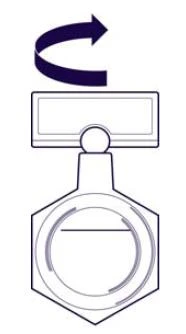
- Before use, gently mix the contents of the container by rotating it in a circular motion.
- Hold the container in an upright position (see figure), then open the container by twisting the "wings".
- Attach the open end of the container precisely to the nebulizer reservoir and slowly squeeze it out.
The containers are marked with a line indicating a volume of 1 ml when the container is inverted.
If only 1 ml is to be used, empty the container contents down to the level of the indicator line.
Before using the remaining medication, gently mix the contents of the container.
- Record the date of opening the aluminium foil pouch (see "Translation of certain information on the aluminium foil pouch" in section 5). Do not use single-dose containers after 3 months from the date of opening the aluminium foil pouch.
- The contents of a single-dose container must be used within 12 hours of opening.
- Do not store above 25°C. Store in the original packaging to protect from light. Store containers in an upright position. Do not freeze.
- Single-dose containers should always be stored in the aluminium foil pouch to protect from light. If the entire contents of a container are not used at once, the remaining portion should be protected from light.
WARNING
- Rinse the mouth after each use of the medicine.
- If the patient uses a face mask, they should ensure that the mask fits tightly against the face during inhalation. Wash the face after using the medicine.
CLEANING
The nebulizer chamber, mouthpiece, or face mask should be washed after each use.
These parts should be cleaned with warm running water, using a mild detergent recommended by the nebulizer manufacturer. The nebulizer chamber should then be thoroughly rinsed and dried by connecting the compressor to the outlet port.