Provive
Poland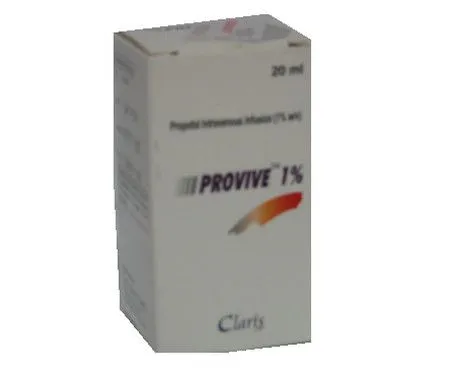
Table of Contents
- Package leaflet: Information for the user
- 1. What Provive is and what it is used for
- 2. Important information before using Provive
- 3. How to use Provive
- 4. Possible adverse reactions
- 5. How to store Provive
- 6. Contents of the pack and other information
- Information intended exclusively for healthcare professionals:
Package leaflet: Information for the user
Provive
10 mg/ml, emulsion for injection / for infusion
Propofolum
Please read this leaflet carefully before using this medicine because it contains important information for you.
- Keep this leaflet so that you can read it again if necessary.
- If you have any questions, please consult your doctor, pharmacist, or nurse.
- This medicine has been prescribed for a specific individual. Do not pass it on to others. This medicine may harm others, even if their symptoms are the same.
- If you experience any adverse reactions, including any not listed in this leaflet, inform your doctor, pharmacist, or nurse. See: section 4.
Table of contents of the leaflet
- What Provive is and what it is used for
- Important information before using Provive
- How to use Provive
- Possible side effects
- How to store Provive
- Contents of the pack and other information
1. What Provive is and what it is used for
Provive is an injectable solution containing the active substance called propofol.
Propofol belongs to a group of medicines known as anaesthetic agents. These medicines are used to induce loss of consciousness (deep sleep) for surgical or other procedures. It may also be used to achieve sedation (a state in which the patient is drowsy but not completely unconscious).
Provive is used for:
- Induction and maintenance of general anaesthesia in adults and children over 1 month of age.
- Sedation of adults and children from 1 month of age during diagnostic and surgical procedures, either as a single agent or in combination with local or regional anaesthesia.
- Sedation of ventilated patients over 16 years of age requiring intensive medical care.
2. Important information before using Provive
When not to use Provive
- Do not use Provive if the patient is allergic to propofol or to any of the other ingredients of this medicine (listed in section 6).
- Provive must not be used for sedation in intensive care settings in children aged 16 years and younger (see also "Warnings and precautions").
Warnings and precautions
- Administration of Provive is not recommended in neonates.
- Provive must not be used for sedation in intensive care settings in children aged 16 years and younger, as the safety and efficacy of this medicine have not been established in this age group.
- Before starting Provive, discuss with the doctor if:
- the patient has ever had a seizure or convulsions,
- the patient has previously been diagnosed with very high levels of fats in the blood, or if the patient has disorders in fat metabolism,
- the patient has any other diseases, such as heart, respiratory, kidney or liver disorders,
- the patient has been feeling unwell for some time,
- the patient has a disorder of energy metabolism, so-called mitochondrial disease. Provive may worsen the condition of such a patient.
- The person administering Provive will continuously monitor the patient's condition. Other medicines, such as sleeping tablets and painkillers, may be used together with Provive. In such cases, the patient will be monitored for cardiovascular and respiratory function.
- Prolonged use of Provive in intensive care settings may lead to the need for zinc supplementation (a trace element) in some patients. The healthcare provider administering Provive will decide when supplementation is needed and which product to use. In exceptional cases, postoperative patients have experienced periods of unconsciousness. These patients recovered without complications.
- If the patient has any of the following conditions, there is a risk of very rare adverse effects. These conditions include:
- reduced blood flow to tissues,
- severe nerve damage,
- blood infection (sepsis).
Provive and other medicines
Inform the doctor or pharmacist about all medicines currently taken or recently used, as well as any medicines the patient plans to take. This includes medicines available without a prescription.
If the patient is taking any of the following medicines, adverse effects may occur when used in combination with propofol. This includes, for example, concomitant use of:
- other anaesthetic medicines (administered epidurally or by inhalation),
- medicines used in premedication (the anaesthesiologist will know which medicines are relevant),
- muscle relaxants (e.g. suxamethonium or benzodiazepines),
- painkillers (e.g. fentanyl),
- medicines affecting the heart (e.g. digoxin),
- rifampicin (an antibiotic).
Pregnancy and breastfeeding
If the patient is pregnant or breastfeeding, suspects she may be pregnant, or is planning to have a child, she should consult a doctor or pharmacist before using this medicine.
Provive should not be administered to pregnant women unless absolutely necessary.
Due to safety concerns for the infant, breastfeeding must be discontinued during treatment with Provive.
Driving and operating machinery
The ability to drive and operate machinery may be impaired for some time after the procedure due to the use of this medicine. If the patient returns home on the day of the procedure, he or she must not drive or operate machinery. If necessary, ask the doctor when it is safe to return to work.
Provive contains soybean oil
Provive contains soybean oil. Do not use if the patient has a known hypersensitivity to peanuts or soy.
Provive contains egg yolk lecithin
In individuals with hypersensitivity to this ingredient, its presence may pose a problem.
This medicine contains less than 1 mmol of sodium (23 mg) per dose, i.e. the medicine is considered "sodium-free".
3. How to use Provive
- Provive is administered by an anaesthetist or a physician specialising in intensive care medicine.
- Provive is given by intravenous injection into a vein on the back of the hand or the forearm.
- Sometimes a local anaesthetic (such as lidocaine) may also be administered at the injection site to reduce injection pain.
- The dose administered will depend on the patient's age, body weight, and general health condition. The physician will administer an appropriate dose to induce and maintain anaesthesia or to achieve the required level of sedation. Special attention will be paid to the patient's response and vital signs (pulse, blood pressure, respiratory function, etc.).
If you have any further questions regarding the use of this medicinal product,
please consult your doctor, pharmacist, or nurse.
4. Possible adverse reactions
Like all medicines, this medicine can cause adverse reactions, although not everyone experiences them.
The following adverse reactions have been reported:
Very common (may occur in more than 1 in 10 people):
- Pain at the injection site during administration of anaesthesia
Common (may occur in no more than 1 in 10 people):
- Slow heart rate (bradycardia)
- Headache after waking up
- Transient breathing changes (apnoea) during administration of anaesthesia
- Nausea and vomiting after waking up
- Low blood pressure (hypotension)
Uncommon (may occur in no more than 1 in 100 people):
- Blood clots in a vein or artery (thrombosis)
- Inflammation of veins (phlebitis)
Rare (may occur in no more than 1 in 1,000 people):
- At the beginning of anaesthesia, during and after waking up: muscle tremors (movements resembling epilepsy), including seizures / epileptic fits (convulsions)
Very rare (may occur in no more than 1 in 10,000 people):
- Fluid accumulation in the lungs (pulmonary oedema)
- Pancreatitis, accompanied by severe upper abdominal pain radiating to the back and nausea and vomiting (pancreatitis)
- Discoloration of urine (usually green)
- Postoperative fever
- Loss of consciousness after surgery
- Hypersensitivity to certain substances (anaphylaxis), which may present as: sudden fluid accumulation in the skin and mucous membranes (e.g. throat or tongue), difficulty breathing and (or) itching and rash (angioedema); shortness of breath due to muscle or airway spasms (bronchospasm); skin redness (flushing); low blood pressure (hypotension)
- Genital discharge
- Local tissue necrosis (only if Provive is accidentally administered outside the vein)
Frequency not known (cannot be estimated from available data):
- Blood acidification (metabolic acidosis), too high potassium levels in the blood (hyperkalaemia; may present as muscle cramps, diarrhoea, nausea or headache), too high fat levels in the blood (hyperlipidaemia)
- Excessive sense of well-being (euphoria)
- Drug abuse
- Involuntary movements
- Irregular heartbeat (arrhythmia), abnormal heart function (heart failure)
- Respiratory depression (depending on the dose of Provive administered)
- Enlarged liver (hepatomegaly)
- Breakdown of muscle tissue, accompanied by muscle cramps, fever and red-brown discoloration of urine (rhabdomyolysis)
- Kidney failure
- Pain at injection site, swelling at injection site (only if Provive is accidentally administered outside the vein)
- Changes in ECG recording (changes suggestive of Brugada syndrome)
- Prolonged and painful erection (priapism)
- Hepatitis, acute liver failure [symptoms may include yellowing of the skin and eyes, itching, dark urine, abdominal pain and liver tenderness on palpation (indicated as pain under the front part of the rib cage on the right side of the body), sometimes with loss of appetite].
Reporting of adverse reactions
If any adverse reactions occur, including any not listed in this leaflet, inform your doctor, pharmacist, or nurse.
Adverse reactions can be reported directly to the Department of Monitoring Adverse Drug Reactions at the Office for Registration of Medicinal Products, Medical Devices and Biocidal Products: Al. Jerozolimskie 181C, 02-222 Warsaw, tel.: +48 22 49-21-301, fax: +48 22 49-21-309, website: https://smz.ezdrowie.gov.pl
Adverse reactions can also be reported to the marketing authorisation holder.
Reporting adverse reactions helps to provide more information on the safety of this medicine.
5. How to store Provive
Keep the medicine out of sight and reach of children.
Provive is stored in a hospital setting. The hospital staff is responsible for the proper storage, administration, and disposal of any unused or leftover Provive medication.
Do not use this medicine after the expiry date stated on the packaging (EXP). The expiry date refers to the last day of the specified month.
Do not store above 25°C.
Keep in the original packaging to protect from light.
Do not store in a refrigerator or freeze.
After first opening, the medicine should be used immediately.
Shake the vial before use.
Do not use the emulsion if, after shaking, two layers are visible.
Use only medicine with a uniform consistency and from undamaged packaging.
For single use only. Any unused emulsion must be discarded.
Medicines must not be disposed of via wastewater or household waste. Ask a pharmacist how to dispose of medicines no longer required. Proper disposal helps protect the environment.
6. Contents of the pack and other information
What Provive contains
The active substance in Provive is propofol.
Each 1 ml of the injectable emulsion contains 10 mg of propofol.
A 10 ml vial of the medicine contains 100 mg of propofol.
A 20 ml vial of the medicine contains 200 mg of propofol.
A 50 ml vial of the medicine contains 500 mg of propofol.
A 100 ml vial of the medicine contains 1000 mg of propofol.
The other ingredients are: purified soybean oil, glycerol, egg lecithin, sodium oleate, sodium hydroxide (for pH adjustment), and water for injections.
What Provive looks like and contents of the pack
Provive 10 mg/ml is a white oil-in-water emulsion for injection or infusion.
This medicine is supplied in a vial made of colourless Type II glass, closed with a grey bromobutyl rubber stopper and a plastic cap.
Pack sizes:
10 ml vial of colourless Type II glass with a grey bromobutyl rubber stopper, pack containing 1 vial.
20 ml vial of colourless Type II glass with a grey bromobutyl rubber stopper, pack containing 1, 5 or 10 vials.
50 ml vial of colourless Type II glass with a grey bromobutyl rubber stopper, pack containing 1 vial.
100 ml vial of colourless Type II glass with a grey bromobutyl rubber stopper, pack containing 1 vial.
Not all pack sizes may be marketed.
Marketing Authorisation Holder
Baxter Holding B.V.
Kobaltweg 49,
3542 CE Utrecht
The Netherlands
Manufacturer/Importer
Tramco Sp. z o.o.
Wolskie, ul. Wolska 14
05-860 Płochocin
Poland
Bieffe Medital S.p.A.
Via Nuova Provinciale
23034 Grosotto (SO)
Italy
Baxter
Boulevard René Branquart 80,
7860 Lessines
Belgium
Information intended exclusively for healthcare professionals:
Provive may only be administered in hospitals or appropriately equipped medical facilities by physicians specialized in anesthesiology or intensive care medicine.
Continuous monitoring of the patient's cardiovascular and respiratory functions is required, and equipment for maintaining airway patency, artificial ventilation, administration of oxygen with increased concentration, and other resuscitation equipment must be readily available at all times.
Provive 10 mg/ml must not be administered by the person performing a diagnostic or surgical procedure.
The solution may be administered using various infusion control techniques; however, the infusion system itself cannot prevent the risk of uncontrolled administration of large volumes of diluted Provive 10 mg/ml. The infusion set must include a burette, drip counter, or volumetric infusion pump. The risk of uncontrolled infusion also exists when the maximum amount of Provive 10 mg/ml is present in the burette.
The vial should be shaken before use. The emulsion must not be used if two layers are visible after shaking.
Only medication with a uniform consistency and from undamaged packaging should be used.
For single use only. Any remaining unused medication must be discarded.
Before use, the rubber membrane should be cleaned with alcohol from a spray bottle or an alcohol-soaked swab. Opened vials must be discarded after use. Provive 10 mg/ml is a lipid emulsion without preservatives and may support microbial growth.
The emulsion should be aseptically withdrawn immediately after piercing the vial stopper into a sterile syringe or infusion set. Administration should begin promptly. Sterility of Provive and the infusion set must be maintained throughout the entire infusion period. All infusion fluids added to the infusion system through which Provive is administered should be given close to the venflon insertion site. Provive must not be administered through infusion systems equipped with microbiological filters.
Provive 10 mg/ml and any infusion sets containing Provive 10 mg/ml are intended for single use in one patient only. According to established guidelines for other lipid emulsions, the duration of a single infusion must not exceed 12 hours. After administration of the drug or 12 hours after initiation of administration—whichever occurs first—the container with Provive or the infusion set must be disconnected or, if necessary, replaced with a new one.
When administering undiluted Provive 10 mg/ml, devices such as burettes, drip counters, syringe pumps, or volumetric infusion pumps are recommended to control the infusion rate.
Provive can be administered undiluted or diluted.
Provive should only be mixed with: glucose 50 mg/ml (5%) injection solution, sodium chloride 9 mg/ml (0.9%) injection solution, sodium chloride 1.8 mg/ml (0.18%) and glucose 40 mg/ml (4%) injection solution, or lidocaine 10 mg/ml (1%) injection solution without preservatives. The final concentration of propofol should not be less than 2 mg/ml.
It should be noted that simultaneous administration of Provive with glucose 50 mg/ml (5%) injection solution, sodium chloride 9 mg/ml (0.9%) injection solution, or sodium chloride 1.8 mg/ml (0.18%) and glucose 40 mg/ml (4%) injection solution is possible using a Y-connector placed close to the venflon insertion site.
Provive must not be administered through infusion systems equipped with microbiological filters.
Provive and any infusion sets containing Provive are intended for single use in one patient only. Any remaining unused Provive must be discarded.