Prolastin
PolandTable of Contents
Package leaflet: Information for the user
Prolastin,
4000 mg, powder and solvent for solution for infusion
Prolastin,
5000 mg, powder and solvent for solution for infusion
alpha-1-Proteinase inhibitor human
Please read all of this leaflet carefully before using this medicine, because it contains
important information for the patient.
- Keep this leaflet so that you can read it again if necessary.
- If you have any further questions, please ask your doctor, pharmacist, or nurse.
- This medicine has been prescribed for a specific individual. Do not pass it on to others. The medicine may harm others, even if their symptoms are the same.
- If the patient experiences any adverse reactions, including any adverse reactions not listed in this leaflet, inform the doctor, pharmacist, or nurse. See section 4.
Table of contents:
- What Prolastin is and what it is used for
- Important information before using Prolastin
- How to use Prolastin
- Possible side effects
- How to store Prolastin
- Contents of the pack and other information
1. What Prolastin is and what it is used for
Prolastin belongs to a group of medicines called proteinase inhibitors.
Alpha-1-proteinase inhibitor (alpha1-PI) is produced by the body to inhibit the activity of substances called elastases, which damage lung tissue. Hereditary deficiency of alpha1-PI leads to an imbalance between alpha1-PI and elastases. This may result in progressive lung tissue damage and development of emphysema. Emphysema is abnormal lung expansion accompanied by destruction of lung tissue. Prolastin is used to restore the balance between alpha1-PI and elastases in the lungs, thereby preventing further progression of emphysema.
Prolastin is used in long-term maintenance therapy in patients with alpha-1-proteinase inhibitor deficiency, in whom the doctor has recommended this form of treatment.
2. Important information before using Prolastin
When not to use Prolastin:
- if the patient is allergic (hypersensitive) to the active substance alpha-1-proteinase inhibitor or to any of the other ingredients of Prolastin (listed in section 6);
- if the patient has a deficiency of a specific class of immunoglobulins (IgA), as there is then a risk of severe allergic reactions, up to and including anaphylactic shock.
Warnings and precautions
-
Before starting treatment with Prolastin, discuss this with your doctor,
pharmacist, or nurse. -
Inform your doctor if the patient has severe heart failure. Special caution is necessary because Prolastin may cause a transient increase in blood volume.
Allergic reactions (hypersensitivity)
In rare cases, hypersensitivity reactions to Prolastin may occur, even if the patient
previously tolerated alpha-1-proteinase inhibitor well during earlier administrations.
Your doctor will inform you about the symptoms of allergic reactions and what to do if they
occur (see also section 4).
If any symptoms of an allergic reaction occur during infusion, the patient should
immediately inform the doctor or nurse.
Information on safety regarding the risk of infections
When a medicine is manufactured from human blood or plasma, appropriate precautions are taken
to prevent transmission of infections to the patient.
These measures include:
- careful selection of blood and plasma donors to exclude the possibility of transmitting infection,
- testing of individual donations and pooled plasma for viruses/infections,
- inclusion of effective virus inactivation or removal steps in the manufacturing process.
Nevertheless, it cannot be completely ruled out that using medicinal products prepared from human blood or plasma may transmit infections, including those caused by currently unknown or newly emerging viruses and other infectious agents.
Current preventive measures are considered effective against enveloped viruses such as human immunodeficiency virus (HIV), hepatitis B virus, and hepatitis C virus. However, they may have limited effectiveness against non-enveloped viruses such as hepatitis A virus and parvovirus B19.
Parvovirus B19 infection may have harmful consequences for pregnant women (fetal infection) and for patients with immune disorders or certain types of anemia (e.g. sickle cell anemia, hemolytic anemia).
If inhibitors of proteinases derived from human plasma are used regularly or repeatedly, the doctor may recommend vaccination against hepatitis A and B.
It is especially recommended to record the name and batch number of the Prolastin product each time it is administered, so that it can be determined which patient received which batch.
Smoking
Since smoking reduces the effectiveness of Prolastin, patients should be strongly advised to stop smoking.
Children and adolescents
To date, there is no experience with the use of Prolastin in children and adolescents under 18 years of age.
Prolastin and other medicines
No interactions between Prolastin and other medicines are currently known.
Nevertheless, inform your doctor or pharmacist about all medicines currently taken or recently taken, including those obtained without a prescription.
Pregnancy and breastfeeding
Before using any medicine, consult your doctor or pharmacist.
There are no data available on the use of Prolastin during pregnancy. Inform your doctor if you are pregnant or planning pregnancy. It is not known whether Prolastin passes into human milk. Breastfeeding women should consult their doctor.
Driving and operating machinery
There are no data available on the effects of Prolastin on the ability to drive or operate machinery.
Prolastin contains sodium
Prolastin 4000 mg contains approximately 441.6 mg of sodium and Prolastin 5000 mg contains approximately 552.0 mg of sodium (main component of table salt).
For a patient weighing 75 kg, the recommended dose corresponds to 24.84% of the maximum recommended daily dietary intake of sodium for adults. Patients who are controlling sodium intake in their diet should consult their doctor or pharmacist.
3. How to use Prolastin
After reconstitution with the solvent provided in the package, Prolastin is administered as an intravenous infusion. The first infusions of Prolastin should be supervised by a physician experienced in the treatment of chronic obstructive pulmonary disease.
Home therapy
After the initial infusions, Prolastin may also be administered by another qualified healthcare professional, but only after appropriate training. The treating physician will decide whether the patient qualifies for home therapy and ensure that the healthcare professional receives instructions on the following topics:
- how to prepare and administer the infusion solution (see the illustrated instructions at the end of this leaflet);
- how to maintain sterility of the product (principles of aseptic infusion procedures);
- how to keep a treatment diary;
- how to recognize adverse reactions, including symptoms of allergic reactions, and what measures should be taken if such reactions occur (see also section 4).
Dosage
The dose of Prolastin administered depends on the patient's body weight. Typically, a weekly dose of 60 mg of active substance per kilogram of body weight (corresponding to 180 ml of the ready-to-use solution containing 25 mg/ml of human alpha-1-proteinase inhibitor for a patient weighing 75 kg) is sufficient to maintain serum levels of alpha-1-proteinase inhibitor that protect against further progression of emphysema.
The duration of treatment is determined by the treating physician. There are no recommendations regarding a maximum treatment duration.
If you feel that the effect of Prolastin is too strong or too weak, consult your doctor or pharmacist.
Overdose of Prolastin
There is no known experience with overdose of Prolastin.
- If a patient believes they have received more than the recommended dose of Prolastin, they should inform their doctor or another qualified healthcare professional, who will take appropriate action.
Missed dose of Prolastin
- Consult your doctor to determine whether the missed dose should be administered.
- Do not administer a double dose to make up for a missed infusion.
Stopping Prolastin treatment
If treatment with Prolastin is discontinued, the disease may worsen. Speak with your doctor if you are considering stopping treatment with Prolastin.
If you have any further questions about the use of this medicine, please consult your doctor, pharmacist, or nurse.
4. Possible adverse reactions
Like all medicines, Prolastin may cause adverse reactions, although not everyone will experience them.
If adverse reactions occur during Prolastin infusion, depending on their type and severity, the infusion should be paused or discontinued.
Possible serious adverse reactions
Hypersensitivity reactions may occur rarely (in up to 1 in 1,000 patients), and in very rare cases (in up to 1 in 10,000 patients), these reactions may manifest as anaphylactic reactions of any kind, even if the patient did not experience allergic symptoms during previous infusions.
Immediately inform the doctor or nurse if the patient observes any of the following symptoms:
- rash, urticaria, itching;
- difficulty swallowing;
- facial or lip swelling;
- sudden skin redness;
- breathing difficulties (dyspnoea);
- drop in blood pressure;
- change in heart rate;
- chills.
The doctor or another healthcare professional may decide, as needed, to reduce the infusion rate or discontinue the infusion and initiate appropriate treatment. In case of home treatment, the infusion must be stopped immediately and contact must be made with a doctor or another healthcare professional.
The following adverse reactions have been reported during treatment with Prolastin:
Uncommon (may occur in 1 out of 100 patients):
- chills, fever, influenza-like symptoms, chest pain;
- urticaria;
- dizziness, lightheadedness, headache;
- breathing difficulties (dyspnoea);
- rash;
- nausea;
- joint pain.
Rare (may occur in 1 out of 1,000 patients):
- hypersensitivity reactions;
- rapid heartbeat (tachycardia);
- low blood pressure (hypotension);
- high blood pressure (hypertension);
- back pain.
Very rare (may occur in 1 out of 10,000 patients):
- anaphylactic shock.
Reporting of adverse reactions
If any adverse symptoms occur, including any not listed in this leaflet, inform your doctor or pharmacist.
Adverse reactions can be reported directly to the Department of Monitoring Adverse Drug Reactions at the Office for Registration of Medicinal Products, Medical Devices and Biocidal Products, Al. Jerozolimskie 181C, PL-02-222 Warsaw, tel.: +48 22 4921301, fax: +48 22 4921309,
Website: https://smz.ezdrowie.gov.pl
Adverse reactions can also be reported directly to the marketing authorization holder.
Reporting adverse reactions helps to collect more information on the safety of the medicine.
5. How to store Prolastin
Do not store above 25°C.
Do not freeze.
The prepared solution should not be stored in the refrigerator and must be used within 3 hours after preparation. Any unused portion of the medicinal product should be discarded.
Medicines must not be disposed of via wastewater or household waste. Ask your pharmacist how to dispose of medicines no longer required. Such measures will help protect the environment.
Keep the medicine out of the sight and reach of children.
Do not use Prolastin after the expiry date stated on the vial label and on the outer cardboard packaging.
6. Contents of the pack and other information
What Prolastin contains
- The active substance is human (derived from human blood or plasma) alpha-1-proteinase inhibitor.
- Other ingredients are: sodium chloride, sodium dihydrogen phosphate, water for injections (solvent/diluent).
What Prolastin looks like and contents of the pack
Alpha-1-proteinase inhibitor is a powder or porous mass, white, light yellow, or light brown in colour. After reconstitution with water for injections, the solution should be clear to slightly opalescent, colourless, light green, light yellow, or light brown, and should not contain visible particles.
1 ml of reconstituted solution contains 25 mg of alpha-1-proteinase inhibitor.
Single pack contains:
Prolastin 4000 mg, powder and solvent for solution for infusion:
- 1 vial containing 4000 mg of human alpha-1-proteinase inhibitor;
- 1 vial containing 160 ml of solvent (water for injections);
- 1 transfer device for solution preparation.
Prolastin 5000 mg, powder and solvent for solution for infusion:
- 1 vial containing 5000 mg of human alpha-1-proteinase inhibitor;
- 1 vial containing 200 ml of solvent (water for injections);
- 1 transfer device for solution preparation.
Marketing Authorisation Holder and Manufacturer
Marketing Authorisation Holder:
Grifols Deutschland GmbH
Colmarer Straße 22
60528 Frankfurt
Germany
Tel.: +49 69/660 593 100
Manufacturer:
Instituto Grifols, S.A.
Calle De Can Guasch 2
Poligono Industrial Llevant
Parets Del Vallés
08150 Barcelona
Spain
For further information, please contact:
Grifols Polska Sp. z o.o.
ul. Siedmiogrodzka 9
01-204 Warszawa
Poland
Tel.: (22) 378 85 61
This medicinal product is authorised for use in the European Economic Area countries under the following names:
Prolastin [4000 mg/5000 mg]: Austria, France, Greece, the Netherlands, Ireland, Germany, Poland, Portugal, Italy.
Prolastina [4000 mg/5000 mg]: Denmark, Finland, Spain, Norway, Sweden.
Pulmolast [4000 mg/5000 mg]: Belgium.
Detailed information about this medicinal product is available on the website of the Office for Registration of Medicinal Products, Medical Devices and Biocidal Products (URPL): www.urpl.gov.pl.
Information intended exclusively for healthcare professionals and patients eligible for home treatment:
Preparation of the ready-to-use infusion solution
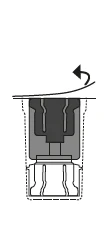
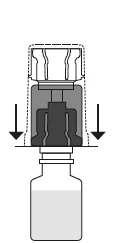
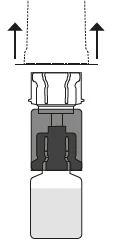
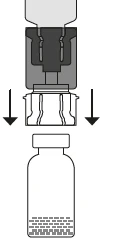
- Follow aseptic techniques (cleanliness and hygiene) to maintain sterility. The preparation of the ready-to-use solution should be performed on a flat surface.
- Ensure that the vials of Prolastin medicinal product and the solvent (sterile water for injections) are at room temperature (20°C to 25°C).
- Remove the caps from the Prolastin vial and the solvent vial, and disinfect the neck rims and rubber stoppers using an alcohol swab. Allow the rubber stoppers to dry before proceeding.
 |
 |
 |
 |
 |
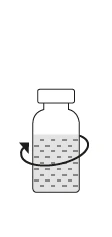 |
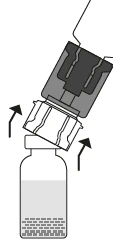
- If more than one vial is required to achieve the desired dose, repeat the above steps using an additional package containing a new connector adapter for solution preparation. Do not reuse the adapter.
Complete dissolution should occur within approximately 15 minutes for Prolastin in the 4000 mg and 5000 mg dose.
Only a clear to slightly opalescent, colorless or light green, light yellow, or light brown solution, free from visible particles, is suitable for use. Prolastin must not be mixed with other infusion solutions.
The prepared solution must be used within 3 hours after preparation.
The prepared solution should be administered by slow intravenous infusion using an appropriate infusion set (not included in the package). The infusion rate should not exceed 0.08 ml per kg of body weight (corresponding to 6 ml for a 75 kg patient) per minute.