Proficar
Poland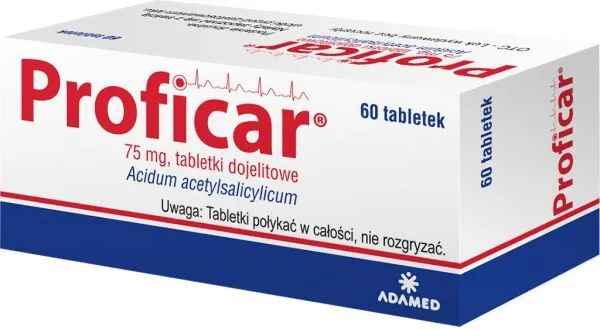
Table of Contents
Package leaflet: Information for the patient
PROFICAR, 75 mg, enteric-coated tablets
Acetylsalicylic acid
Please read all of this leaflet carefully before taking this medicine, because it contains
important information for the patient.
This medicine should always be taken exactly as described in this patient leaflet or as directed by the
physician or pharmacist.
- Keep this leaflet, so that it can be read again if necessary.
- If advice or further information is needed, consult a pharmacist.
- If any adverse reactions occur, including any possible adverse reactions not listed in this leaflet, inform the physician or pharmacist. See section 4.
- If there is no improvement or if the patient feels worse after several days, contact the physician.
Contents of the leaflet
- What Proficar is and what it is used for
- Important information before taking Proficar
- How to take Proficar
- Possible side effects
- How to store Proficar
- Contents of the pack and other information
1. What Proficar is and what it is used for
The active substance in Proficar, acetylsalicylic acid, inhibits platelet aggregation. The formulation –
enteric-coated tablet – releases the drug in the intestine and protects the gastric mucosa from irritation.
Proficar is indicated for:
-
inhibition of platelet aggregation:
- in ischaemic heart disease,
- in acute myocardial infarction or suspected acute myocardial infarction,
- in prevention of thromboembolic complications after coronary artery bypass grafting (CABG), after percutaneous transluminal coronary angioplasty (PTCA),
- in prevention of transient ischaemic attacks (TIA) and ischaemic stroke in patients with TIA,
- in prevention of first myocardial infarction in patients with multiple risk factors,
- in prevention of deep vein thrombosis in patients with prolonged immobilization, e.g. after major surgical procedures, as an adjunct to other prophylactic methods.
If there is no improvement or if the patient feels worse after several days, consult a physician.
2. Important information before using Proficar
When not to take Proficar
- if the patient is allergic to acetylsalicylic acid, other salicylates, or any of the other components of this medicine (listed in section 6),
- if the patient has a bleeding disorder,
- if the patient has active peptic ulcer disease of the stomach and/or duodenum,
- if the patient has severe renal insufficiency, severe hepatic insufficiency, or severe heart failure,
- if the patient has previously experienced bronchial asthma attacks after taking salicylates or substances with similar action, particularly nonsteroidal anti-inflammatory drugs,
- in patients concurrently using methotrexate at doses of 15 mg per week or higher,
- in women during the third trimester of pregnancy,
- in children under 12 years of age during viral infections due to the risk of Reye’s syndrome – a rare but serious condition causing liver and brain damage.
Warnings and precautions
Before starting treatment with Proficar, consult a doctor or pharmacist.
Special caution is required when using Proficar in patients:
- with hypersensitivity to nonsteroidal anti-inflammatory and antirheumatic drugs or other allergenic substances,
- during the first and second trimesters of pregnancy,
- during breastfeeding,
- concurrently using anticoagulant drugs,
- concurrently using ibuprofen,
- with impaired liver or kidney function,
- with a history of gastrointestinal ulcers or bleeding,
- with glucose-6-phosphate dehydrogenase deficiency. Acetylsalicylic acid may cause bronchospasm and trigger asthma attacks or other hypersensitivity reactions. Risk factors include bronchial asthma, chronic respiratory diseases, and hay fever with nasal mucosal polyps. This warning also applies to patients who exhibit allergic reactions (e.g. skin rashes, itching, urticaria) to other substances. Acetylsalicylic acid, due to its antiplatelet effect, may prolong bleeding time during or after surgical procedures (including minor procedures such as tooth extraction). Acetylsalicylic acid, even in low doses, reduces uric acid excretion. In patients with reduced uric acid excretion, the drug may provoke an attack of gout.
Children and adolescents
Proficar should not be used in children under 12 years of age during viral infections due to the risk of Reye’s syndrome.
Proficar with other medicines
Inform your doctor or pharmacist about all medicines currently taken or recently used, as well as any medicines planned for future use.
Medicines contraindicated for concomitant use with acetylsalicylic acid:
- methotrexate at doses of 15 mg per week or higher
Increased toxicity of methotrexate on bone marrow (reduced renal clearance of methotrexate when used concomitantly with anti-inflammatory drugs – including acetylsalicylic acid – and displacement of methotrexate from plasma protein binding by salicylates).
Interactions requiring special caution:
-
methotrexate at doses less than 15 mg per week
Increased toxicity of methotrexate on bone marrow (reduced renal clearance of methotrexate when used concomitantly with anti-inflammatory drugs – including acetylsalicylic acid – and displacement of methotrexate from plasma protein binding by salicylates). -
ibuprofen
Concomitant use of ibuprofen antagonizes the irreversible inhibition of platelet aggregation by acetylsalicylic acid. In patients at increased risk of cardiovascular events, treatment with ibuprofen may reduce the cardioprotective effect of acetylsalicylic acid. -
metamizole
Concomitant use of metamizole with acetylsalicylic acid may reduce the antiplatelet effect of acetylsalicylic acid. Therefore, metamizole should be used cautiously in patients receiving low-dose acetylsalicylic acid for cardiovascular protection. -
anticoagulants, e.g. coumarin derivatives, heparin
Concomitant use of acetylsalicylic acid with anticoagulants may enhance anticoagulant effects: increased risk of prolonged bleeding time and hemorrhage, resulting from displacement of anticoagulants from plasma protein binding and the antiplatelet properties of acetylsalicylic acid. -
other nonsteroidal anti-inflammatory drugs (NSAIDs), including high-dose salicylates (≥ 3 g/day)
Concomitant use of NSAIDs with acetylsalicylic acid increases the risk of peptic ulcer disease of the stomach and/or duodenum, gastrointestinal bleeding, and kidney damage due to synergistic effects of these drugs. -
uricosuric agents, e.g. benzbromarone, probenecid
Acetylsalicylic acid used concomitantly with uricosuric agents reduces the effectiveness of drugs used in the treatment of gout (competition in the renal tubular excretion of uric acid). -
digoxin
Concomitant use of acetylsalicylic acid with digoxin increases digoxin plasma concentration due to reduced renal excretion of digoxin. -
antidiabetic agents, e.g. insulin, sulfonylurea derivatives
Due to its hypoglycemic properties and displacement of sulfonylureas from plasma protein binding, acetylsalicylic acid enhances the effect of antidiabetic drugs. -
thrombolytic agents or other drugs inhibiting platelet aggregation, e.g. ticlopidine, used concomitantly with acetylsalicylic acid may increase the risk of prolonged bleeding time and hemorrhage.
-
diuretics used concomitantly with acetylsalicylic acid at doses of 3 g per day or higher – reduced diuretic effect due to sodium and water retention resulting from decreased glomerular filtration caused by reduced prostaglandin synthesis in the kidneys. Acetylsalicylic acid may enhance the ototoxic effect of furosemide.
-
systemic glucocorticoids, except hydrocortisone used as replacement therapy in Addison’s disease, used concomitantly with acetylsalicylic acid – increased risk of peptic ulcer disease of the stomach and/or duodenum, gastrointestinal bleeding, reduced salicylate plasma concentration during corticosteroid therapy, and increased risk of salicylate overdose after discontinuation of glucocorticoids.
-
angiotensin-converting enzyme (ACE) inhibitors used concomitantly with acetylsalicylic acid at doses of 3 g per day or higher – reduced antihypertensive effect due to decreased glomerular filtration resulting from inhibition of vasodilatory prostaglandin production.
-
valproic acid
Acetylsalicylic acid increases the toxicity of valproic acid by displacing it from plasma protein binding. Valproic acid enhances the antiplatelet effect of acetylsalicylic acid due to synergistic antiplatelet action of both drugs. -
alcohol
Alcohol may increase the risk of gastrointestinal adverse effects, such as mucosal ulceration or bleeding.
Pregnancy, breastfeeding, and effects on fertility
If the patient is pregnant or breastfeeding, suspects she may be pregnant, or plans to become pregnant, she should consult a doctor or pharmacist before using this medicine.
The medicine may be used during the first and second trimesters of pregnancy only if clearly necessary, after careful consideration of the risk-benefit ratio of treatment.
Use of acetylsalicylic acid in doses exceeding 300 mg per day during the third trimester of pregnancy leads to premature closure of the ductus arteriosus in the fetus and inhibition of uterine contractility. Increased tendency to bleeding has been observed in both mother and child.
Use of acetylsalicylic acid in doses exceeding 300 mg per day during the perinatal period may – particularly in premature infants – lead to intracranial hemorrhage.
Use of acetylsalicylic acid during the third trimester of pregnancy is contraindicated.
Acetylsalicylic acid and its metabolites pass into breast milk in small amounts. Since no adverse effects have been observed in breastfed infants during short-term use of salicylates by mothers, interruption of breastfeeding is generally not necessary. However, in cases of regular intake of high doses of acetylsalicylic acid, breastfeeding should be discontinued beforehand.
Driving and operating machinery
This medicine has no influence on the ability to drive motor vehicles or operate machinery.
3. How to take Proficar
This medicine should always be taken exactly as described in the patient leaflet or as directed by the doctor or pharmacist. In case of doubt, consult a doctor or pharmacist.
Recommended dose:
Initial single dose – 150 mg per day.
Maintenance dose – 75 mg per day.
Tablets should be swallowed whole, not chewed.
Overdose of Proficar
Overdose in elderly patients and young children (intake of higher than recommended doses or accidental poisoning) requires special attention, as it may lead to death in these patient groups.
Symptoms:
Mild overdose: uncontrolled hand tremors, particularly in elderly patients, diarrhea, abdominal pain, drowsiness, rapid and deep breathing, nausea, vomiting, tinnitus, sensation of hearing loss, headache, dizziness, disorientation; these symptoms may resolve after dose reduction.
Severe overdose: initial hyperventilation, followed by shallow breathing and breathing difficulties, fever, ketone acidosis, respiratory alkalosis, metabolic acidosis, coma, cardiovascular shock, respiratory failure, severe hypoglycemia, presence of blood in urine, seizures, hallucinations, ketonuria, proteinuria, hypokalemia.
Management in case of overdose:
The patient should be immediately transported to hospital. Management depends on the amount ingested, stage, and clinical symptoms. Measures to reduce absorption of the active substance should be implemented: gastric lavage, administration of activated charcoal, and monitoring of acid-base balance (monitoring of the following blood parameters is essential: pH, pCO₂, bicarbonate concentration, potassium concentration). If normal kidney function is preserved, alkaline diuresis may be applied until urine pH reaches 7.5–8. Forced alkaline diuresis should be considered if serum salicylate concentration exceeds 500 mg/l (3.6 mmol/l) in adults or 300 mg/l (2.2 mmol/l) in children. Intravenous infusions containing NaHCO₃, KCl, and diuretics should be administered.
In cases of severe poisoning, hemodialysis or peritoneal dialysis may be applied. Fluid replacement and general symptomatic treatment should be provided.
Missed dose of Proficar
Do not take a double dose to make up for a missed dose.
4. Possible adverse effects
Like all medicines, this medicine can cause adverse effects, although not everyone experiences them.
Gastrointestinal disorders:
Symptoms of indigestion (dyspepsia, nausea, vomiting), abdominal pain, rarely inflammatory conditions affecting the stomach and intestines; gastric and (or) duodenal ulceration very rarely leading to haemorrhage and perforation, with corresponding laboratory and clinical signs.
Hepatobiliary disorders:
Rarely, transient disturbances in liver function with increased activity of liver enzymes have been reported.
Nervous system disorders:
Dizziness and tinnitus, usually symptoms of overdose.
Blood and lymphatic system disorders:
Increased risk of bleeding, prolonged bleeding time and prothrombin time, thrombocytopenia (reduced platelet count). Bleeding events observed include: perioperative haemorrhage, bruising, epistaxis, urinary-genital tract bleeding, gingival bleeding. Severe bleeding events, such as gastrointestinal haemorrhage and cerebral haemorrhage (particularly in patients with uncontrolled hypertension and (or) concomitant use of anticoagulant drugs), have been reported rarely or very rarely; in individual cases, these may potentially be life-threatening.
Haemorrhage may lead to acute or chronic anaemia due to blood loss and (or) iron-deficiency anaemia (e.g. due to occult microbleeding), with corresponding laboratory and clinical signs such as: asthenia, pallor, hypoperfusion (reduced blood flow).
Renal and urinary disorders:
Rarely, with long-term use of high doses of acetylsalicylic acid, renal papillary necrosis and interstitial nephritis have occurred.
Immune system disorders:
Hypersensitivity reactions with corresponding laboratory and clinical signs, including: asthma, skin reactions, rash, urticaria, oedema, pruritus, cardiovascular-respiratory disturbances. Very rarely, severe reactions including anaphylactic shock have been observed.
Prolonged use of medicines containing acetylsalicylic acid may cause headache, which intensifies with subsequent doses.
Prolonged use of analgesics, particularly those containing multiple active substances, may lead to severe renal dysfunction and renal failure.
Reporting of adverse effects
If any adverse effects occur, including any adverse effects not listed in this leaflet, inform your doctor or pharmacist. Adverse effects can be reported directly to the Department of Monitoring Adverse Drug Reactions at the Office for Registration of Medicinal Products, Medical Devices and Biocidal Products:
Al. Jerozolimskie 181C,
02-222 Warsaw,
tel.: 22 49-21-301,
fax: 22 49-21-309,
e-mail: [email protected].
Adverse effects can also be reported to the marketing authorization holder.
Reporting adverse effects helps provide more information on the safety of the medicine.
5. How to store the medicine Proficar
Keep the medicine out of the sight and reach of children.
Do not use this medicine after the expiry date stated on the packaging. The expiry date refers to the last day of the stated month.
Store below 25 °C. Protect from moisture.
Medicines must not be disposed of via wastewater or household waste. Ask your pharmacist how to dispose of medicines no longer required. Such measures will help protect the environment.
6. Contents of the pack and other information
What Proficar contains
- The active substance is acetylsalicylic acid.
- The other ingredients are: maize starch, microcrystalline cellulose, talc.
Coating ingredients: methacrylic acid and ethyl acrylate copolymer (1:1), triethyl citrate, povidone, talc, titanium dioxide (E 171), yellow iron oxide (E 172).
What Proficar looks like and contents of the pack
Film-coated tablets, yellow in colour with a uniform surface.
Packaging: aluminium blisters, PVC/Al or PE containers with PE screw cap,
in a cardboard box. The unit pack contains 30 or 60 tablets.
Marketing Authorisation Holder and Manufacturer
Marketing Authorisation Holder
Adamed Pharma S.A.
Pieńków, ul. M. Adamkiewicza 6A
05-152 Czosnów
Manufacturer
Polfarmex S.A.
ul. Józefów 9
99-300 Kutno
Adamed Pharma S.A.
Pieńków, ul. M. Adamkiewicza 6A
05-152 Czosnów