Pred-ophtalene
PolandTable of Contents
Patient Information Leaflet
Pred-Ophtalene, 5 mg/g, eye ointment
prednisolone pivoxil
Please read this leaflet carefully before using the medicine, as it contains
important information for the patient.
- Keep this leaflet so that you can read it again if necessary.
- If you have any further questions, please ask your doctor or pharmacist.
- This medicine has been prescribed for a specific individual. Do not pass it on to others. The medicine may harm someone else, even if their symptoms are the same.
- If you experience any adverse reactions, including any not listed in this leaflet, inform your doctor or pharmacist. See section 4.
Table of contents:
- What Pred-Ophtalene is and what it is used for
- Important information before using Pred-Ophtalene
- How to use Pred-Ophtalene
- Possible side effects
- How to store Pred-Ophtalene
- Contents of the pack and other information
1. What Pred-Ophtalene is and what it is used for
Pred-Ophtalene is intended for use in adults to treat:
severe inflammatory conditions in the front part of the eye not caused by infection.
Pred-Ophtalene contains the active substance prednisolone pivoxil.
Prednisolone pivoxil is a glucocorticoid (steroid) with strong anti-inflammatory action. It inhibits the release of inflammatory mediators in the body, thereby preventing symptoms of inflammation such as swelling, blood vessel dilation, and scarring.
2. Important information before using Pred-Ophtalene
When not to use Pred-Ophtalene:
- If the patient is allergic to the active substance prednisolone pivoxil, to other glucocorticosteroids, or to any of the other ingredients of this medicine (listed in section 6).
- If the patient has an eye infection caused by the herpes simplex virus (dendritic keratitis) or any other viral eye infection.
- If the patient has an untreated bacterial or viral eye infection.
- If the patient has closed-angle glaucoma or advanced glaucoma, and treatment with medication alone does not provide sufficient effect.
Warnings and precautions
Before starting treatment with Pred-Ophtalene eye ointment, the patient should consult a doctor or pharmacist if:
- They have or have had corneal ulceration or thinning of ocular tissues due to disease or previous ophthalmic treatment.
- They have undergone cataract surgery (removal of the cloudy lens).
- They have or have had eye infections of bacterial, viral (e.g. herpes simplex virus), or fungal origin.
- They have cataracts or are being treated for elevated intraocular pressure.
- They have recently used or are currently using any other eye medications containing glucocorticosteroids. Frequent or prolonged use of glucocorticosteroids may lead to additional adverse effects.
Pred-Ophtalene and other medicines
Inform your doctor or pharmacist if you are taking, have recently taken, or might have taken any other medicines.
No interactions with other drugs have been observed.
If the patient is using other eye medications alongside Pred-Ophtalene that may increase intraocular pressure, this effect may be intensified.
Pregnancy and breastfeeding
Pregnancy
The effect of this medicine on the fetus is unknown. If the patient is pregnant, suspects she may be pregnant, or is planning to become pregnant, she should consult her doctor or pharmacist before using this medicine.
Breastfeeding
Pred-Ophtalene passes into breast milk, but is unlikely to affect breastfed infants. Pred-Ophtalene may be used during breastfeeding.
Driving and using machines
Pred-Ophtalene may cause blurred vision, a transient adverse effect. In such cases, patients should not drive or operate machinery until vision returns to normal.
Pred-Ophtalene contains lanolin and cetylstearyl alcohol
Lanolin and cetylstearyl alcohol may cause local skin irritation (e.g. contact dermatitis).
3. How to use Pred-Ophtalene
Always use this medicine exactly as directed by your doctor. If in doubt, consult your doctor.
Recommended dose:
Unless otherwise advised by your doctor, apply a 3–5 mm strip of ointment into the affected eye 2 to 4 times daily. The maximum daily dose is a 5 mm strip of ointment applied 4 times daily.
The duration of treatment should be determined by your doctor. If symptoms persist after 2 days, consult your doctor. If the patient needs to use the medicine for more than 10 days, an ophthalmologist must regularly examine the cornea and check intraocular pressure.
In the following days and weeks, the use of the medicine should then be gradually reduced.
How to open the tube:
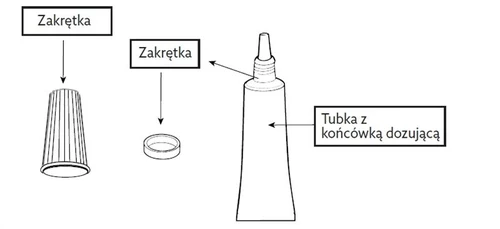
- The tube is sealed and has a protective ring around the neck of the tube before first use.
- Before first use, unscrew the cap and the dispensing tip, then remove the protective ring.
- Screw the dispensing tip back onto the tube to pierce the tube's seal.
- The tube is now ready for use.
- Carefully squeeze out the contents.
Do not use the medicine if the protective ring is missing and consult your pharmacist.
Instructions for use
- Do not use the medicine if the protective seal on the tube is damaged before first opening.
- Wash your hands.
- To prevent contamination of the medicine and injury, ensure that the dispensing tip does not touch the eye, eyelid, surrounding area, or any other object.
- Contact lenses must be removed before applying the ointment and must not be reinserted for at least 15 minutes after application.
- Tilt your head backward.
- Hold the open tube in one hand and gently pull down the lower eyelid with the index finger of the other hand to form a "pocket" between the eyelid and the eyeball.
- Hold the tip of the tube close to the eye.
- Gently squeeze the tube to place a 3–5 mm strip of ointment into the "pocket" between the eyelid and the eyeball.
- Blink 2–3 times. The ointment will then spread into a thin layer over the eye surface.
- If the medicine is to be used in both eyes, repeat the same procedure for the second eye.
- Immediately close the tube after use to avoid contamination.
- If the patient is using any other eye medicines, wait at least 5 minutes before applying the next medicine.
- If the patient is using several different eye medicines, apply the ointment last.
- Nasolacrimal occlusion should be performed for 1 minute.
- Close the eye and press gently on the inner corner of the eye next to the nose for one minute. Immediately wipe off any excess ointment from the face. This helps prevent Pred-Ophtalene from being absorbed into the rest of the body through the tear ducts and skin.
Use of more Pred-Ophtalene than recommended
Applying too much ointment into the eye(s) is unlikely to cause adverse effects. In such a case, blink several times to move the ointment onto the eyelashes, then gently wipe it away.
If you forget to use Pred-Ophtalene
If you miss a dose of Pred-Ophtalene, use it as soon as possible. Take the next dose at the usual time. Irregular use or missing doses of Pred-Ophtalene may reduce the effectiveness of treatment.
Stopping Pred-Ophtalene treatment
Pred-Ophtalene should be used regularly as directed by your doctor. Continue using Pred-Ophtalene for the period recommended by your doctor.
If you have any questions about the use of this medicine, consult your doctor or pharmacist.
4. Possible adverse reactions
Like all medicines, Pred-Ophtalene eye ointment can cause side effects, although not everyone experiences them.
If eye pain occurs, contact your doctor immediately, as this may be due to corneal or ocular surface ulceration. This is a rare adverse reaction (may occur in less than 1 in 1,000 people).
Other possible adverse reactions:
Common (may occur in less than 1 in 10 people):
Elevated intraocular pressure during prolonged treatment, burning sensation, tingling, eye irritation, sensation of foreign body in the eye.
Uncommon (may occur in less than 1 in 100 people): Blurred vision
Rare (may occur in less than 1 in 1,000 people): Allergic reactions in the eye(s), clouding of the lens (cataract).
Not known: frequency cannot be estimated from available data: Hypersensitivity, urticaria, headache, pupil dilation, rash or itching, impaired sense of taste, eye infection of bacterial, fungal or viral origin.
With the use of other glucocorticosteroids in eye treatment, the following adverse reactions have been observed:
Rare (may occur in less than 1 in 1,000 people): Eye inflammation, drooping eyelids, difficulty focusing.
Reporting of adverse reactions
If any adverse reactions occur, including any not listed in this leaflet, inform your doctor or pharmacist. Adverse reactions can be reported directly to:
Department of Monitoring Adverse Drug Reactions
Office for Registration of Medicinal Products, Medical Devices and Biocidal Products
Al. Jerozolimskie 181C
02-222 Warsaw
Phone: +48 22 49 21 301
Fax: +48 22 49 21 309
Website: https://smz.ezdrowie.gov.pl
Adverse reactions can also be reported to the marketing authorization holder.
Reporting adverse reactions helps to provide more information on the safety of the medicine.
5. How to store Pred-Ophtalene
Keep the medicine out of sight and reach of children.
This medicinal product does not require any special storage conditions.
Do not use this medicine after the expiry date stated on the label. The expiry date refers to the last day of the stated month. Do not use this medicine if the tube seal appears damaged.
Use within 4 weeks of first opening the container.
Medicines must not be disposed of via household waste. Ask your pharmacist how to dispose of medicines no longer required. This will help protect the environment.
6. Contents of the packaging and other information
What Pred-Ophtalene contains
The active substance is prednisolone pivalate.
1 g of ointment contains 5 mg of prednisolone pivalate.
A 1 cm strip of ointment contains approximately 0.1 mg of prednisolone pivalate.
The other ingredients are:
cetyl stearyl alcohol; liquid paraffin, white soft paraffin, lanolin; purified water.
What Pred-Ophtalene looks like and contents of the pack
5 g of odourless, white to slightly yellowish ointment in a closed aluminium tube coated with
epoxy-phenolic resin, with a white HDPE nozzle tip and a white cap and security ring made of HDPE,
packaged in a cardboard box.
Marketing Authorisation Holder and Manufacturer
AGEPHA Pharma s.r.o
Diaľničná cesta 5
903 01 Senec
Slovakia