Polsen
Poland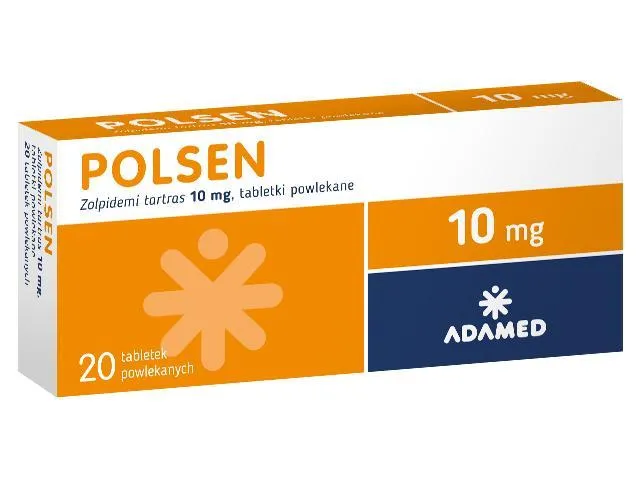
Table of Contents
Package leaflet: Information for the patient
Polsen, 10 mg, coated tablets
zolpidem tartrate
Please read the entire leaflet carefully before taking this medicine, as it contains important information for the patient.
- Keep this leaflet for future reference.
- If you have any doubts, consult your doctor, pharmacist, or nurse.
- This medicine has been prescribed for a specific individual. Do not share it with others. This medicine may harm others, even if their symptoms are the same. If the patient experiences any adverse effects, including those not listed in this leaflet, inform the doctor, pharmacist, or nurse. See section 4.
Table of contents:
- What Polsen is and what it is used for
- What you need to know before taking Polsen
- How to take Polsen
- Possible side effects
- How to store Polsen
- Contents of the pack and other information
1. What Polsen is and what it is used for
Polsen contains zolpidem tartrate as the active substance. It is a hypnotic agent with effects similar to benzodiazepines. It is characterized by a rapid onset of hypnotic action, lasting up to 6 hours.
Indications
Polsen is indicated for the short-term treatment of insomnia in adults.
It should only be used to treat insomnia that significantly impairs normal functioning or causes considerable distress.
2. Important Information Before Taking the Medicine Polsen
Do not use the medicine Polsen if any of the following apply:
- Hypersensitivity to zolpidem or any component of the medicine;
- Sleep apnoea syndrome;
- Myasthenia gravis (muscle weakness);
- Severe hepatic insufficiency;
- Severe respiratory insufficiency and respiratory centre depression;
- The medicine should not be used in children and adolescents under 18 years of age.
Warnings and Precautions
The decision to start treatment with this medicine must always be made by a physician.
Patients currently or previously addicted to drugs or alcohol should exercise particular caution due to an increased risk of habituation and psychological dependence.
Below are general considerations regarding the use of benzodiazepines and other hypnotic medicines that the prescribing physician should take into account.
Tolerance, i.e. reduced hypnotic effect, may occur after several weeks of treatment with benzodiazepines and benzodiazepine-like medicines.
Taking Polsen may lead to psychological and physical dependence. This risk increases proportionally with the dose and duration of treatment and is higher in patients with a history of drug or alcohol addiction. In individuals physically dependent on the medicine, abrupt discontinuation may result in withdrawal symptoms such as headache and muscle pain, increased anxiety and mental tension, restlessness, confusion, and irritability.
In severe cases, additional symptoms may occur: derealization (perception of surroundings as unreal, altered, or foreign), depersonalization (feeling of unreality of one's own personality), numbness and tingling in the limbs, hypersensitivity to light, noise, and touch, hallucinations, or seizures.
Rebound insomnia may occur during treatment.
This is a transient syndrome characterized by increased insomnia, possibly following discontinuation of a hypnotic medicine. It may be accompanied by other reactions such as mood changes, anxiety, and motor restlessness. Withdrawal symptoms may also occur between doses, especially when doses are high.
Withdrawal symptoms are highly likely following abrupt discontinuation of the medicine; therefore, the dose should be gradually reduced.
Treatment duration should be kept to a minimum. The maximum duration of treatment should not exceed 4 weeks, including the period of tapering off the medicine.
Polsen may cause anterograde amnesia, most commonly within a few hours after taking the medicine. Therefore, to avoid this effect, the patient should ensure 7–8 hours of uninterrupted sleep.
During treatment with sedative-hypnotic medicines, paradoxical reactions may occur, such as agitation, excitement, irritability, aggression, delusions, rage attacks, nightmares, hallucinations, psychoses, inappropriate behaviour, and other behavioural disturbances. These symptoms occur more frequently in elderly patients. If any of these symptoms occur, contact your doctor.
Particular caution is required when using zolpidem in patients with psychoses or those taking neuroleptics.
Due to its muscle-relaxing effect, there is a risk of falls and hip fractures, especially in elderly patients who get up at night.
The medicine should be used cautiously in patients with chronic respiratory insufficiency, as there is a risk of respiratory depression.
Polsen should be used with caution in patients with symptoms of depression, as suicidal tendencies may occur. Due to the risk of intentional overdose, such patients should be prescribed the smallest necessary dose.
Benzodiazepines and other benzodiazepine-like medicines should not be used as the sole treatment for depression or anxiety associated with depression (in these patients, this may lead to suicide).
Next-day psychomotor disturbances (see also: Driving and Operating Machinery)
The day after taking Polsen, the risk of psychomotor impairment, including reduced ability to drive, may be increased if:
- The patient took the medicine less than 8 hours before activities requiring heightened mental alertness;
- The patient took a dose higher than the recommended dose;
- The patient took zolpidem while undergoing treatment with other centrally acting nervous system depressants or other medicines that increase blood levels of zolpidem, while consuming alcohol, or while using illicit substances.
A single dose should be taken immediately before bedtime.
Do not take another dose during the same night.
If any other disturbing symptoms occur during treatment with zolpidem, discontinue use and consult your doctor.
Consult your doctor even if the above warnings refer to conditions that occurred in the past.
Children and Adolescents
The medicine should not be used in children and adolescents under 18 years of age, as safety and efficacy have not been established in this patient group.
Polsen and Other Medicines
Inform your doctor about all medicines you are currently taking, including those obtained without a prescription.
Do not consume alcohol during treatment, as it may enhance the sedative effect of the medicine.
When zolpidem is taken with certain other medicines, drowsiness and next-day psychomotor disturbances—including impaired ability to drive—may be intensified. These medicines include:
- Medicines used to treat certain mental health disorders (antipsychotics);
- Medicines used to treat sleep problems (hypnotics);
- Sedatives or anxiolytics;
- Medicines used to treat depression;
- Medicines used to treat moderate to severe pain (opioid analgesics);
- Medicines used to treat epilepsy;
- Medicines used in anaesthesia;
- Medicines used to treat hay fever, rashes, or other allergies, which may cause drowsiness (sedating antihistamines).
When zolpidem is taken with antidepressants, including bupropion, desipramine, fluoxetine, sertraline, and venlafaxine, the patient may experience unreal sensations (visual hallucinations).
Concomitant use of zolpidem with fluvoxamine or ciprofloxacin is not recommended.
Opioids
Concomitant use of Polsen and opioids (strong painkillers, medications used in substitution therapy for addiction, and some cough medicines) increases the risk of drowsiness, breathing difficulties (respiratory failure), coma, and may be life-threatening. Therefore, concomitant use of these medicines should only be considered if no other treatment options are available.
If your doctor prescribes Polsen together with opioids, the dose and duration of concomitant use should be minimized.
Inform your doctor about all opioid medicines you are taking and strictly follow dosing instructions. It may be helpful to inform friends or family about the risks so they are aware of the mentioned signs and symptoms. If any of these symptoms occur, contact your doctor immediately.
Inhibitors of hepatic microsomal enzymes, especially the cytochrome P-450 enzyme system, may enhance the effect of Polsen.
The effect of zolpidem is reduced when taken concomitantly with rifampicin.
Taking Polsen with Food and Drink
Do not take the medicine immediately after a meal, as this may impair gastrointestinal absorption.
Pregnancy and Breastfeeding
Consult your doctor before using the medicine.
The safety of using the medicine during pregnancy has not been established. Therefore, the medicine should not be used in pregnant women, especially during the first trimester.
If zolpidem is used during late pregnancy or during delivery, adverse effects may occur in the newborn.
Newborns of mothers who took the medicine long-term during late pregnancy may develop physical dependence or withdrawal syndrome in the postnatal period.
Due to the passage of zolpidem into breast milk in small amounts, the medicine is not recommended for use in breastfeeding women.
Use of Polsen in Patients with Renal and/or Hepatic Impairment
Although dosage adjustment is not necessary in patients with renal impairment, the medicine should be used with caution.
In patients with hepatic impairment, the dose should be reduced to 5 mg due to decreased metabolism and clearance of zolpidem.
The medicine should not be used in patients with severe hepatic insufficiency due to the risk of encephalopathy.
Use in Elderly Patients
In elderly and debilitated patients, a reduced dose of 5 mg daily is recommended due to possible increased sensitivity to the medicine.
Driving and Operating Machinery
Polsen has a major influence on the ability to drive and operate machinery and may cause events such as "falling asleep at the wheel." The day after taking Polsen (as with other hypnotic medicines), the following may occur:
- The patient feels drowsy, sleepy, dizzy, or disoriented;
- The patient requires more time to make quick decisions (impaired reflexes);
- The patient may experience blurred or double vision;
- The patient may be less alert.
To minimize the risk of these events, it is recommended to maintain at least an 8-hour interval between taking zolpidem and driving, operating machinery, or working at heights.
Do not consume alcohol or psychoactive substances while taking Polsen, as this may intensify the effects mentioned above.
Polsen Contains Sodium
The coated tablet contains less than 1 mmol (23 mg) of sodium per tablet, meaning the medicine is considered "sodium-free."
3. How to take Polsen
This medicine should always be taken as directed by the physician. In case of doubt, consult your
doctor.
Do not take the medicine immediately after a meal.
The recommended dose of Polsen is 10 mg once every 24 hours. The physician may prescribe a lower
dose for some patients. Polsen should be taken:
- as a single dose,
- immediately before bedtime.
The patient must maintain a period of at least 8 hours between taking the medicine and engaging in
activities requiring increased concentration.
Do not exceed the dose of 10 mg per 24 hours.
In elderly patients and in debilitated patients, a reduced dose of 5 mg (half a tablet) per day is
recommended due to the possibility of increased sensitivity to the medicine.
Also in patients with hepatic impairment, the dose should be reduced to 5 mg due to decreased
metabolism and clearance of zolpidem. In adult patients under the age of 65, the dose may be
increased to 10 mg in case of good general health and when the medicine is well tolerated.
The usual duration of treatment should be from several days to 2 weeks. The maximum duration of
treatment should not exceed 4 weeks.
If you feel that the effect of Polsen is too strong or too weak, consult your doctor.
Taking more Polsen than you should
If you take more medicine than recommended, contact your doctor or pharmacist immediately.
After an overdose of zolpidem, disturbances in consciousness of varying severity may occur – from
increased drowsiness to mild coma. These symptoms are reversible.
In case of overdose, gastric lavage should be performed first, when clinically indicated, followed by
symptomatic and supportive treatment, including intravenous fluid infusion, as needed. If gastric
lavage is ineffective or not possible, activated charcoal should be administered to reduce drug
absorption from the gastrointestinal tract. Avoid administering sedatives, even in cases of agitation.
In severe cases, consider administering flumazenil. The patient should remain under close
monitoring during flumazenil administration, as flumazenil may cause neurological symptoms (e.g.
seizures).
Zolpidem is not removed by hemodialysis.
If you forget to take Polsen
Do not take a double dose to make up for a missed dose.
4. Possible adverse reactions
Like all medicines, Polsen may cause adverse reactions, although not everyone experiences them.
The frequency of the possible adverse reactions listed below is defined as follows:
- very common: (occurs in more than 1 in 10 people);
- common: (occurs in 1 to 10 people in 100);
- uncommon: (occurs in 1 to 10 people in 1,000);
- rare: (occurs in 1 to 10 people in 10,000);
- very rare: (occurs in less than 1 in 10,000);
- unknown: (frequency cannot be estimated from the available data).
There is evidence of a dose-dependent relationship for zolpidem-related adverse effects, particularly regarding certain central nervous system and gastrointestinal events.
Adverse reactions appear to depend on individual patient sensitivity and occur more frequently within one hour after taking the medicinal product if the patient does not immediately lie down or fall asleep (see section 4.2).
Immune system disorders
Frequency unknown: angioedema.
Psychiatric disorders
Common: hallucinations, agitation, nightmares.
Uncommon: confusion, irritability.
Frequency unknown: psychomotor unrest, aggression, delusions, anger, psychosis, abnormal behaviour, sleepwalking (see section 4.4), dependence (withdrawal symptoms or rebound symptoms may occur after discontinuation of the medicinal product), libido disorders.
Most of the above-mentioned psychiatric adverse reactions are paradoxical reactions.
Nervous system disorders
Common: somnolence, headache, dizziness, worsening of insomnia, retrograde amnesia (amnesic symptoms may lead to inappropriate behaviours).
Frequency unknown: disturbances of consciousness.
Eye disorders
Uncommon: diplopia (double vision).
Gastrointestinal disorders
Common: diarrhoea.
Hepatobiliary disorders
Frequency unknown: increased liver enzyme activity.
Skin and subcutaneous tissue disorders
Frequency unknown: rash, pruritus, urticaria.
Musculoskeletal and connective tissue disorders
Frequency unknown: muscle weakness.
General disorders and administration site conditions
Common: fatigue.
Frequency unknown: gait disturbances, development of drug tolerance, falls (mainly in elderly patients and when zolpidem is used contrary to recommendations).
If any adverse reactions not listed in this leaflet occur, they should be reported to a physician.
Reporting of adverse reactions
If any adverse reactions occur, including any adverse reactions not listed in this leaflet, inform a doctor or pharmacist. Adverse reactions can be reported directly to the Department of Monitoring Adverse Drug Reactions of the Office for Registration of Medicinal Products, Medical Devices and Biocidal Products: Al. Jerozolimskie 181C, 02-222 Warsaw, Tel.: + 48 22 49 21 301, Fax: + 48 22 49 21 309, website: https://smz.ezdrowie.gov.pl.
Adverse reactions can also be reported to the marketing authorization holder.
Reporting adverse reactions contributes to the further monitoring of the safety of the medicine.
5. How to store Polsen
Keep this medicine out of sight and reach of children.
Do not use this medicine after the expiry date stated on the outer carton and blister after EXP. The expiry date refers to the last day of the stated month.
Store below 25°C. Keep in the original packaging.
Medicines must not be disposed of via the sewage system or household waste. Ask your pharmacist how to dispose of medicines no longer required.
This will help protect the environment.
6. Contents of the pack and other information
What Polsen contains
The active substance is zolpidem tartrate.
Each tablet contains 10 mg of zolpidem tartrate.
The other ingredients are: core: microcrystalline cellulose, sodium carboxymethyl starch (type A),
povidone 90, calcium stearate;
coating: hypromellose, macrogol 8000, hydroxypropylcellulose, titanium dioxide (E 171).
What Polsen looks like and contents of the pack
Film-coated tablets, white or almost white, round, biconvex, with a uniform surface and a central dividing score line.
The unit pack contains: 10 tablets, 20 tablets or 30 tablets.
Marketing Authorisation Holder
Adamed Pharma S.A.
Pieńków, ul. M. Adamkiewicza 6A
05-152 Czosnów
Manufacturer
Adamed Pharma S.A.
Pieńków, ul. M. Adamkiewicza 6A
05-152 Czosnów