Polopiryna c
Poland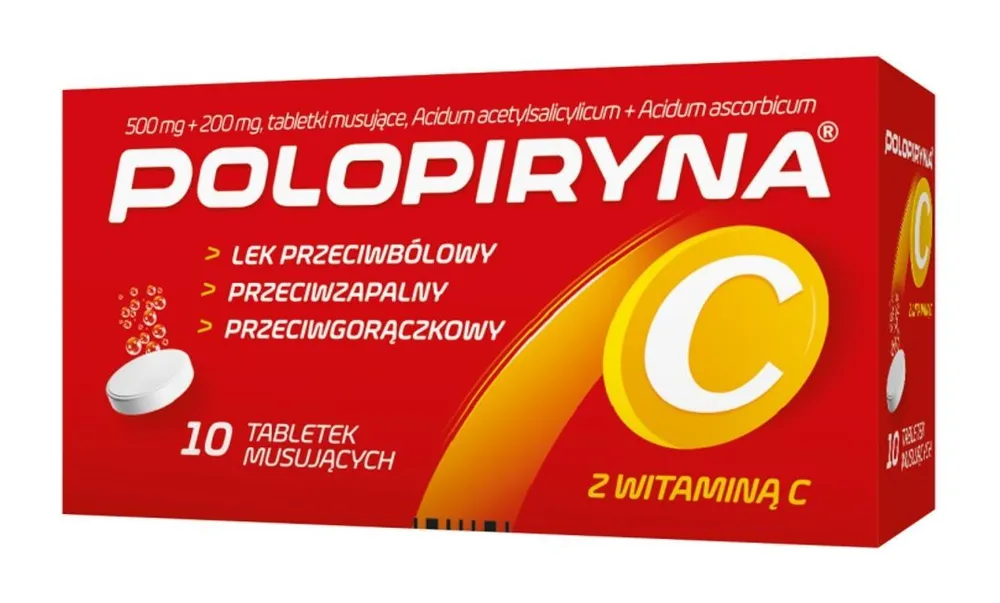
Table of Contents
Patient Information Leaflet
Polopiryna C, 500 mg + 200 mg, effervescent tablets
Acetylsalicylic acid + Ascorbic acid
Please read all of this leaflet carefully before taking this medicine, because it contains
important information for the patient.
This medicine should always be taken exactly as described in this patient leaflet or as directed
by a doctor or pharmacist.
- Keep this leaflet, as you may need to read it again.
- If you need advice or further information, please consult your pharmacist.
- If you experience any side effects, including any not listed in this leaflet, tell your doctor or pharmacist. See section 4.
- If there is no improvement after 3 days or if your condition worsens, consult your doctor.
Table of contents
- What Polopiryna C is and what it is used for
- Important information before taking Polopiryna C
- How to take Polopiryna C
- Possible side effects
- How to store Polopiryna C
- Contents of the pack and other information
1. What Polopiryna C is and what it is used for
Polopiryna C is a combination medicine containing acetylsalicylic acid and ascorbic acid
(vitamin C). Acetylsalicylic acid has analgesic, antipyretic, and anti-inflammatory properties. Vitamin C plays an important role in metabolic processes in the body. During illness and recovery, the body's requirement for vitamin C increases. The effervescent tablet ensures rapid and complete absorption of the active ingredients.
Indications:
- Mild to moderate pain, e.g.: headache, muscle and joint pain, and others.
- Fever associated with colds, viral infections, and other diseases.
2. Important information before using Polopiryna C
When not to use Polopiryna C
- if the patient is allergic to acetylsalicylic acid or ascorbic acid, or to any of the other ingredients of this medicine (listed in section 6). Hypersensitivity to acetylsalicylic acid occurs in 0.3% of the population, including 20% of patients with bronchial asthma or chronic urticaria. Symptoms of hypersensitivity (urticaria, or even shock) may occur within 3 hours after taking acetylsalicylic acid;
- if the patient has a known allergy (hypersensitivity) to other nonsteroidal anti-inflammatory drugs (NSAIDs), presenting with symptoms such as bronchospasm, rhinitis, or shock;
- if the patient suffers from bronchial asthma, chronic respiratory diseases, hay fever, or nasal mucosal oedema, as patients with these conditions may react to nonsteroidal anti-inflammatory drugs with asthma attacks, limited skin and mucosal oedema (angioedema), or urticaria more frequently than other patients;
- if the patient has active gastric or duodenal ulcer disease and/or gastrointestinal inflammation or bleeding (which may lead to gastrointestinal bleeding or exacerbation of peptic ulcer disease);
- if the patient has severe liver, kidney, or heart failure;
- if the patient has blood coagulation disorders (e.g. haemophilia, thrombocytopenia), or is being treated concomitantly with anticoagulant agents (e.g. coumarin derivatives, heparin);
- if the patient has glucose-6-phosphate dehydrogenase deficiency (a rare inherited disorder);
- if the patient is concurrently receiving methotrexate at doses of 15 mg weekly or higher, due to harmful effects on bone marrow;
- in children under 12 years of age, especially during viral infections (such as chickenpox or influenza), due to the risk of Reye's syndrome, a rare but serious condition causing liver and brain damage;
- if the patient is in the last three months of pregnancy, do not use doses exceeding 100 mg of acetylsalicylic acid per day (see section "Pregnancy and breastfeeding");
- during breastfeeding;
- if the immediate packaging has been damaged due to external factors (exposure to air and moisture), the vitamin C contained in the tablet undergoes gradual oxidation, leading to a colour change from white to brown. Tablets with altered colour must not be used.
Warnings and precautions
Before starting treatment with Polopiryna C, consult a doctor or pharmacist in the following situations:
- in patients with impaired kidney function or chronic kidney failure;
- in patients with juvenile rheumatoid arthritis and/or systemic lupus erythematosus, and in those with liver failure, as the toxicity of salicylates may increase; liver function should be monitored in these patients;
- in cases of uterine bleeding, excessive menstrual bleeding, use of intrauterine contraceptive devices, hypertension, or heart failure;
- during concomitant use with methotrexate at doses lower than 15 mg per week, due to increased risk of methotrexate toxicity to bone marrow. Concurrent use with methotrexate at doses exceeding 15 mg per week is contraindicated.
Polopiryna C should not be used if the patient is taking oral antidiabetic sulfonylureas, due to the risk of enhanced hypoglycaemic (blood glucose-lowering) effect, or if the patient is taking medications for gout.
Acetylsalicylic acid should be discontinued 5 to 7 days before any planned surgical procedure, due to the risk of prolonged bleeding time, both during and after surgery.
Alcohol should not be consumed during treatment with acetylsalicylic acid, due to increased risk of gastrointestinal mucosal damage.
This medicine belongs to the group of nonsteroidal anti-inflammatory drugs (NSAIDs), which may adversely affect fertility in women. This effect is reversible and resolves after discontinuation of treatment.
Use in patients with impaired liver and/or kidney function
In patients with impaired liver and/or kidney function, there is an increased risk of adverse drug reactions; therefore, dose adjustment may be necessary depending on the severity of liver and/or kidney failure.
This medicine is contraindicated in cases of severe liver and/or kidney failure.
Use in elderly patients
In elderly patients (over 65 years of age), the medicine should be used at lower doses and with longer intervals between doses, due to increased risk of adverse reactions in this patient group.
Interaction of Polopiryna C with other medicines
Inform your doctor or pharmacist about all medicines currently used or recently taken, as well as any medicines you plan to use.
Exercise caution when using Polopiryna C concomitantly with:
- angiotensin-converting enzyme (ACE) inhibitors (e.g. enalapril, captopril), as acetylsalicylic acid may reduce their antihypertensive effect;
- acetazolamide, as acetylsalicylic acid may increase acetazolamide toxicity;
- anticoagulants (heparin and warfarin), due to increased risk of bleeding;
- valproic acid, as acetylsalicylic acid enhances the toxic effect of valproic acid, while valproic acid enhances the antiplatelet (anti-aggregation) effect of acetylsalicylic acid;
- diuretics, as acetylsalicylic acid may reduce their effectiveness and enhance the ototoxicity (hearing damage) of furosemide;
- methotrexate, as acetylsalicylic acid enhances its toxic effects on bone marrow. Concomitant use of acetylsalicylic acid with methotrexate at doses of 15 mg per week or higher is contraindicated;
- other nonsteroidal anti-inflammatory drugs (e.g. ibuprofen), due to increased risk of gastrointestinal adverse effects;
- systemic glucocorticoids (except hydrocortisone used as replacement therapy in Addison's disease), as they increase the risk of peptic ulcer disease and gastrointestinal bleeding, reduce salicylate plasma concentrations during treatment, and increase the risk of salicylate overdose after treatment discontinuation;
- antidiabetic agents, as acetylsalicylic acid enhances their hypoglycaemic (blood glucose-lowering) effect;
- uricosuric agents (e.g. probenecid, sulfinpyrazone), as salicylates reduce the effectiveness of these drugs. Concomitant use of acetylsalicylic acid with these agents is not recommended;
- digoxin, as acetylsalicylic acid may enhance the effect of this drug;
- thrombolytic agents (clot-dissolving drugs) such as streptokinase and alteplase, as acetylsalicylic acid may enhance their effects.
Omeprazole does not affect the absorption of acetylsalicylic acid.
Ascorbic acid lowers urine pH, which may affect the excretion of other drugs.
Ascorbic acid may also alter the results of certain laboratory tests.
Polopiryna C with food, drink, and alcohol
The medicine should be taken during a meal.
Alcohol should not be consumed during treatment with acetylsalicylic acid, due to increased risk of gastrointestinal mucosal damage.
Pregnancy and breastfeeding
If the patient is pregnant or breastfeeding, suspects she may be pregnant, or plans to become pregnant, she should consult a doctor or pharmacist before using this medicine.
Pregnancy
If the patient continues or starts treatment with Polopiryna C during pregnancy as advised by a doctor, she should follow the doctor's instructions and not exceed the recommended dose.
Pregnancy – third trimester
Acetylsalicylic acid should not be used in doses exceeding 100 mg per day during the last three months of pregnancy, as it may harm the unborn child or cause complications during delivery. Use of Polopiryna C may cause kidney and heart problems in the unborn child. It may also increase the risk of bleeding in both the mother and the child, and may delay or prolong labour.
If the patient takes acetylsalicylic acid in low doses (up to 100 mg per day inclusive), strict obstetric monitoring is required as advised by the doctor.
Pregnancy – first and second trimester
Due to the presence of acetylsalicylic acid, this medicine should not be used during the first six months of pregnancy unless absolutely necessary and prescribed by a doctor. If treatment is required during this period or when trying to conceive, the lowest effective dose should be used for the shortest possible duration. Use of acetylsalicylic acid for longer than a few days, starting from week 20 of pregnancy, may cause kidney problems in the unborn child, leading to low levels of amniotic fluid surrounding the baby (oligohydramnios), or narrowing of a blood vessel (ductus arteriosus) in the baby's heart. If prolonged treatment is necessary, the doctor may recommend additional monitoring.
Breastfeeding
The medicine is contraindicated during breastfeeding.
Driving and operating machinery
This medicine does not impair psychophysical performance.
Polopiryna C contains sodium
The medicine contains 356 mg of sodium (the main component of table salt) per tablet. This corresponds to 17.8% of the maximum recommended daily dietary sodium intake for adults. This should be taken into account in patients with reduced kidney function and in patients controlling sodium intake in their diet.
3. How to use Polopiryna C
This medicine should always be taken exactly as described in this patient information leaflet or as directed by a doctor or pharmacist. If in doubt, consult a doctor or pharmacist.
The medicine should be taken with food. Before use, the tablet should be dissolved in ¾ of a glass of water.
For analgesic and antipyretic use, the usual dosage is:
Adults: single dose of 1 to 2 tablets. If necessary, the dose may be repeated 2 to 3 times daily. Do not take more than 6 tablets per day.
Adolescents over 12 years of age: 1 to 2 tablets per day.
The lowest effective dose should be used.
Symptomatic treatment without medical advice should not last longer than 3 days.
Use of a higher than recommended dose of Polopiryna C
If a higher than recommended dose of the medicine is taken, seek immediate advice from a doctor or pharmacist.
After an overdose of acetylsalicylic acid, the following may occur: nausea, vomiting, hyperventilation, tinnitus.
Other symptoms observed include: hearing loss, visual disturbances, headache, motor agitation, drowsiness and coma, seizures, hyperthermia (body temperature above normal). In severe poisoning, acid-base and water-electrolyte imbalances occur (metabolic acidosis and dehydration).
The patient should be taken to hospital. There is no specific antidote.
Missed dose of Polopiryna C
If a dose is missed, take the next dose at the scheduled time. Do not take a double dose to make up for the missed dose.
4. Possible adverse effects
Like all medicines, this medicine can cause adverse effects, although not everyone will experience them.
Blood and lymphatic system disorders
Thrombocytopenia (reduced number of blood platelets), anemia due to gastrointestinal microbleeding, hemolytic anemia in patients with glucose-6-phosphate dehydrogenase deficiency, leukopenia (reduced number of white blood cells), agranulocytosis (absence of granulocytes in the blood), eosinopenia (reduced number of eosinophils in the blood), increased risk of bleeding, prolonged bleeding time and/or prolonged prothrombin time.
Immune system disorders
Hypersensitivity reactions: rash, urticaria, angioedema (swelling of the face, tongue and trachea causing breathing difficulties), bronchospasm. If any of these occur, contact your doctor immediately.
Nervous system disorders
Tinnitus (usually as a sign of overdose), hearing disturbances, dizziness, fatigue, burning sensation behind the sternum, insomnia or drowsiness.
Cardiac disorders
Heart failure.
Vascular disorders
Hypertension, facial flushing.
Gastrointestinal disorders
Dyspepsia, heartburn, feeling of fullness in the epigastrium, nausea, vomiting, loss of appetite, abdominal pain, gastrointestinal bleeding, gastric mucosal damage, exacerbation of peptic ulcer disease, perforations.
Gastric ulceration occurs in 15% of patients on long-term acetylsalicylic acid therapy.
Hepatobiliary disorders
Focal necrosis of liver cells, tenderness and enlargement of the liver, particularly in patients with juvenile rheumatoid arthritis, systemic lupus erythematosus, rheumatic fever or liver disease; transient increases in serum aminotransferase and alkaline phosphatase activity, as well as bilirubin concentration.
Renal and urinary disorders
Proteinuria, presence of leukocytes and erythrocytes in urine, renal papillary necrosis, interstitial nephritis.
Ascorbic acid reduces urine pH, which may promote precipitation of urates, cystine or oxalates.
Reporting of adverse effects
If any adverse effects occur, including any not listed in this leaflet, inform your doctor or pharmacist. Adverse effects can be reported directly to the Department of Monitoring Adverse Drug Reactions, Office for Registration of Medicinal Products, Medical Devices and Biocidal Products
Al. Jerozolimskie 181C
02-222 Warsaw
Tel.: +48 22 49 21 301
Fax: +48 22 49 21 309
Website: https://smz.ezdrowie.gov.pl
Adverse effects can also be reported to the marketing authorization holder.
Reporting adverse effects helps to provide more information on the safety of the medicine.
5. How to store Polopiryna C
Store in the original packaging at a temperature below 25°C.
Keep the medicine out of sight and reach of children.
Do not use this medicine after the expiry date stated on the packaging. The expiry date refers to the last day of the specified month.
Medicines must not be disposed of via wastewater or household waste. Ask your pharmacist how to dispose of medicines no longer required. This will help protect the environment.
6. Contents of the pack and other information
What Polopiryna C contains
- The active substances are acetylsalicylic acid and ascorbic acid. Each effervescent tablet contains 500 mg of acetylsalicylic acid and 200 mg of ascorbic acid.
- Other components are: anhydrous citric acid, sodium hydrogen carbonate.
What Polopiryna C looks like and contents of the pack
White, round, flat on both sides effervescent tablets, which dissolve vigorously with effervescence when placed in water.
The pack contains 6, 10 or 18 effervescent tablets.
Not all pack sizes may be marketed.
Marketing Authorisation Holder and Manufacturer
POLPHARMA S.A. Pharmaceutical Works
Pelplińska Street 19, 83-200 Starogard Gdański, Poland
tel. + 48 22 364 61 01