Polhumin n
Poland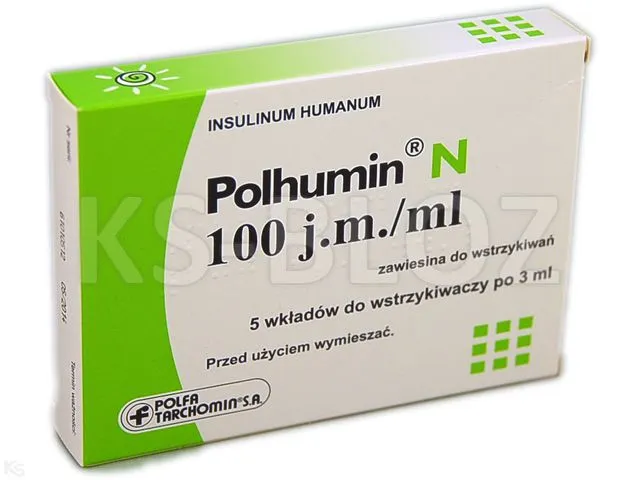
Table of Contents
Package leaflet: Information for the user
Polhumin N, 100 IU/ml, suspension for injection
Insulinum humanum
Please read all of this leaflet carefully before using this medicine because it contains
important information for you.
- Keep this leaflet as you may need to read it again.
- If you have any further questions, please consult your doctor or pharmacist.
- This medicine has been prescribed for a specific individual. Do not pass it on to others. It may harm other people, even if their symptoms are the same.
- If you experience any side effects, including any not listed in this leaflet, tell your doctor or pharmacist. See section 4.
Contents of the leaflet:
- What Polhumin N is and what it is used for
- Important information before using Polhumin N
- How to use Polhumin N
- Possible side effects
- How to store Polhumin N
- Contents of the pack and other information
1. What it is and what it is used for
Polhumin N is human insulin used in the treatment of diabetes. This insulin is produced using genetic engineering techniques (recombinant DNA) in Escherichia coli bacteria. It is identical to insulin produced naturally in the human body.
Insulin is a hormone produced in the human body by the pancreas. It plays a role in the metabolism of carbohydrates, fats and proteins, among other things lowering blood glucose (sugar) levels.
Diabetes is caused by the pancreas being unable to produce insulin in amounts sufficient to control blood glucose levels.
Polhumin N is an intermediate-acting insulin. This means that the onset of action, consisting of a reduction in blood sugar concentration, occurs approximately 1.5 hours after injection, peak action occurs between 4–12 hours, and the total duration of action is approximately 24 hours.
The medicine is available in a 3 ml cartridge and is intended for use with an injection pen.
Warning! Do not introduce any other products into insulin cartridges. Insulin must not be administered together with other medicines in the same syringe.
2. Important information before using Polhumin N
When not to use Polhumin N
- if you are allergic to this insulin or to any of the other ingredients of this medicine (listed in section 6).
- if you are experiencing symptoms indicating an impending hypoglycaemic state (low blood sugar).
Warnings and precautions
- If your current treatment provides good control of diabetes, the warning symptoms of excessive reduction in glucose levels (hypoglycaemia – see below) in the blood may not be noticeable. You should carefully plan meal times, frequency of physical activity, and overall activity level. You should also monitor your blood glucose levels frequently.
- Some individuals who experienced hypoglycaemia (low blood glucose) after switching from animal to human insulin have reported that the warning symptoms of hypoglycaemia were less pronounced or different than before. If hypoglycaemia occurs frequently or if you have difficulty recognizing its warning symptoms, consult your doctor.
- Your insulin requirement may also change after consuming alcohol.
- If you plan to travel abroad, inform your doctor. Differences in time zones may require you to administer injections and eat meals at different times.
- If you have been diagnosed with kidney or liver disease, inform your doctor. Your doctor will adjust your insulin dose accordingly. Please remember that in many disease states (e.g. liver, kidney, adrenal or pituitary disorders, colds) and stressful situations, significant fluctuations in blood glucose levels may occur, which may lead to complications of insulin therapy: hypoglycaemia (low blood sugar) or hyperglycaemia (high blood sugar).
Polhumin N in cartridges is intended exclusively for subcutaneous injection using a reusable injection pen. If insulin must be administered by another method, consult your doctor.
Skin changes at the injection site
You should rotate injection sites to prevent the development of skin changes, such as lumps under the skin surface. Insulin injected into an area with lumps may not work properly (see “How to use Polhumin N”). If insulin is currently being injected into an area with lumps, contact your doctor before changing the site.
Your doctor may recommend more frequent monitoring of blood glucose levels and may adjust your insulin dose or other antidiabetic medications.
➢ Hypoglycaemia (low blood sugar) may be caused by administering too high a dose of insulin, delaying or skipping a meal, eating meals with reduced carbohydrate content, increased physical activity, or increased insulin absorption rate (e.g. due to elevated skin temperature during sunbathing or bathing in hot water).
Symptoms of hypoglycaemia include excessive sweating, weakness, hunger, palpitations, feeling cold, anxiety, hand tremors, blurred vision, headache, and in more severe cases – disorientation, seizures, loss of consciousness.
Warning! If hypoglycaemia occurs repeatedly, contact your doctor to determine the cause of low blood sugar and possibly adjust insulin dosage. Do not administer fluids or food orally to an unconscious person due to the risk of choking. Place the unconscious person in the recovery position and call a doctor immediately. If severe hypoglycaemia is not treated promptly, it may cause temporary or permanent brain damage or death.
➢ Hyperglycaemia. Abnormally high blood glucose levels occurring during insulin therapy are most commonly due to: failure to follow a diabetic diet, inadequate insulin therapy (too low insulin dose), increased insulin requirements (infectious diseases, surgery, trauma), changes in lifestyle (reduced physical activity), or concomitant use of other medicines, e.g. oral contraceptives, glucocorticosteroids, or thiazide diuretics. Symptoms of hyperglycaemia include excessive thirst, loss of appetite, frequent urination of large volumes, fatigue, drowsiness, dry skin and mucous membranes.
Prolonged hyperglycaemia may lead to ketoacidosis (acetone-like breath odour, rapid and deep breathing, presence of ketone bodies in urine) or coma. The appearance of the above symptoms requires immediate medical intervention.
To avoid hypoglycaemia or hyperglycaemia:
- Always carry a spare injection pen and a cartridge of Polhumin N insulin.
- Always carry something that informs others that you have diabetes.
- Always carry sugar cubes.
Children
Your doctor will recommend an appropriate dosage to achieve normal blood glucose levels (normoglycaemia), according to physiological needs.
Polhumin N and other medicines
You must tell your doctor about all medicines you are currently taking or have recently taken, as well as any medicines you plan to take.
You must inform any doctor treating you for a condition other than diabetes that you are using insulin.
Your body's insulin requirement may change when taking the following medicines concurrently:
Medicines that reduce insulin action:
- estrogens (including oral contraceptives, hormone replacement therapy),
- thyroid hormones,
- lithium compounds (used in the treatment of certain psychiatric disorders),
- danazol (used, among others, in the treatment of benign breast disorders (fibrocystic breast disease), endometriosis (growth of uterine lining tissue outside the uterine cavity)),
- sympathomimetic agents (e.g. epinephrine, terbutaline used in asthma treatment),
- nicotinic acid,
- steroids (used in inflammatory conditions),
- phenytoin (an anticonvulsant)
Medicines that enhance insulin action:
- β-adrenergic blocking agents (used in the treatment of heart diseases, hypertension – e.g. propranolol),
- certain antidepressants (e.g. monoamine oxidase inhibitors such as iproniazid),
- salicylates (e.g. aspirin),
- somatostatin analogues (e.g. octreotide),
- ethyl alcohol. Oral antidiabetic drugs reduce insulin requirements.
Warning! Do not introduce other medicines into insulin cartridges. Insulin must not be administered together with other medicines in the same syringe.
Pregnancy and breastfeeding
If you are pregnant or breastfeeding, think you may be pregnant, or are planning to have a child, consult your doctor or pharmacist before using this medicine.
In women of childbearing age with diabetes, it is essential to achieve normal blood glucose levels during insulin therapy.
Insulin does not cross the placenta into the fetal bloodstream.
Insulin requirements decrease during the first trimester of pregnancy but increase during the second and third trimesters. In the final stage of pregnancy, insulin requirements are approximately twice as high compared to the pre-pregnancy period.
Insulin requirements decrease at the onset of labour and after delivery (insulin dose approaches that used in non-pregnant diabetic women).
Insulin does not pass into human milk. Diabetic patients treated with insulin may breastfeed. Insulin dosage or diet adjustments are often necessary.
Driving and operating machinery
Be aware of possible hypoglycaemic symptoms. Your ability to concentrate and react is usually impaired during hypoglycaemia. Never drive if you experience symptoms indicating impending hypoglycaemia. Consult your doctor to discuss whether you may drive or operate machinery if you frequently experience hypoglycaemic episodes or have difficulty recognizing their symptoms.
Polhumin N contains sodium
This medicine contains less than 1 mmol (23 mg) of sodium per dose, meaning the medicine is considered “sodium-free”.
3. How to use Polhumin N
This medicine should always be used as directed by the physician. If in doubt, consult your doctor.
Insulin dosage is individual for each patient. The dose of insulin is determined based on the patient's age, physical activity, health status (e.g. presence of kidney failure), as well as concomitant use of other medications. The exact insulin dose should be established according to regular monitoring of blood and urine glucose levels.
Whenever changing insulin, e.g. from mixed (porcine-bovine) or bovine insulin to human insulin, or changing formulation or even manufacturer, a change in dosage may be necessary and must be carried out under medical supervision.
In patients for whom highly purified porcine insulin or other highly purified human insulins provide adequate glucose control, no changes in dosage other than routine adjustments aimed at maintaining stable patient condition are anticipated.
It is essential to strictly adhere to the schedule of follow-up visits recommended by the physician.
During treatment, systematic monitoring of blood or urine glucose levels is required.
Polhumin N in a prefilled cartridge is intended exclusively for subcutaneous injection. If insulin administration by another route is necessary, consult your doctor.
Subcutaneous injection should be administered into the abdominal area, buttocks, thigh, or upper arm. Injection sites should be rotated to avoid lipohypertrophy.
Preparing the insulin in cartridges
Before inserting the insulin-containing cartridge into the insulin delivery device, the cartridge should be rotated upside down and back several times so that the glass bead can move freely from one end to the other. This procedure should be repeated several times (approximately 10 times) until a uniform cloudy or milky suspension is obtained. If the cartridge is already in the injection device, rotate the device several times as described above.
These steps must be performed before each insulin injection.
Administering the injection
- Grasp the skin between two fingers, then insert the needle into the skin fold at an angle of approximately 45° and inject insulin subcutaneously;
- Withdraw the needle and gently press the injection site for several seconds to prevent insulin leakage. Injection sites should be rotated according to the physician's instructions. Do not reuse used needles. Needles should be disposed of safely. Do not share needles or injection devices with others. A cartridge may be used until its contents are exhausted, after which it should be safely discarded. If you feel the medicine's effect is too strong or too weak, consult your doctor.
Use of a higher than recommended dose of Polhumin N
If more than the recommended dose of Polhumin N has been used, seek medical advice immediately.
Insulin overdose may lead to hypoglycemia (causes and symptoms of hypoglycemia – see section 2 "Important information before using Polhumin N").
Management of insulin overdose depends on the severity of hypoglycemia:
- In mild to moderate hypoglycemia, immediately consume 2–5 sugar cubes or teaspoons of sugar dissolved in water, or a glass of sugary drink. Do not administer insulin if symptoms suggest possible hypoglycemia. Always carry sugar, sweets, biscuits, or fruit juice;
- In severe hypoglycemia, when the patient loses consciousness, a trained person should administer glucagon. As soon as consciousness is regained, the patient should consume sugar or a sugary snack. If the patient does not regain consciousness after glucagon administration, immediate hospital treatment is required. After each glucagon administration, medical advice should be sought to determine the cause of hypoglycemia and to prevent future episodes. Inform family members, friends, and coworkers that in case of loss of consciousness, the unconscious person should be placed in the recovery position and immediate medical help should be obtained. Food or drink must not be given to an unconscious patient due to the risk of aspiration. In cases of hypoglycemia with loss of consciousness or frequent hypoglycemic episodes, contact the treating physician, as adjustment of insulin dosage, timing of administration, diet, and physical activity may be necessary.
Missed dose of Polhumin N
If a dose of insulin is missed, contact your doctor.
Missing a dose of insulin may lead to hyperglycemia.
Do not use a double dose to make up for a missed dose.
If a dose is missed at a fixed, scheduled time, the missed dose should be administered as soon as possible, provided sufficient time remains before the next scheduled dose; otherwise, administer the next dose at the usual time and continue regular dosing.
4. Possible adverse reactions
Like all medicines, this medicine can cause adverse reactions, although not everyone experiences them.
As with other insulins, hypoglycaemia is the most commonly occurring complication of insulin therapy.
Adverse reactions reported commonly (in less than 1 in 10 patients):
Local allergic reaction – symptoms at the injection site (redness, swelling, itching, pain, and bruising at the injection site) may occur during insulin treatment. Most of these symptoms are usually transient and resolve during continued treatment.
Skin changes at the injection site
If insulin is injected too frequently into the same site, fatty tissue may shrink (lipoatrophy) or thicken (lipohypertrophy) (uncommon – no more than 1 in 100 patients). Lumps under the skin may also be caused by accumulation of a protein called amyloid (cutaneous amyloidosis, frequency unknown). Insulin injected into an area where lumps are present may not work properly. The injection site should always be rotated – this helps prevent these skin changes.
Adverse reactions reported very rarely (in less than 1 in 10,000 patients):
Generalised allergic reaction – may manifest as widespread skin rash, itching, sweating, gastrointestinal disturbances, angioedema, breathing difficulties, palpitations, drop in blood pressure, and fainting/loss of consciousness.
➢ If any of these symptoms occur while using Polhumin N, contact a doctor immediately.
Reporting of adverse reactions
If any adverse reactions occur, including any adverse reactions not listed in this leaflet, inform a doctor, pharmacist, or nurse. Adverse reactions can be reported directly to the Department of Monitoring of Adverse Drug Reactions of the Office for Registration of Medicinal Products, Medical Devices and Biocidal Products
Al. Jerozolimskie 181C, 02-222 Warsaw
Tel.: + 48 22 49 21 301
Fax: + 48 22 49 21 309
Website: https://smz.ezdrowie.gov.pl
Adverse reactions can also be reported to the marketing authorisation holder.
Reporting adverse reactions helps provide more information on the safety of the medicine.
5. How to store Polhumin N
Keep out of the sight and reach of children.
Store in a refrigerator (2°C – 8°C).
Do not freeze.
Store in the original packaging to protect from light.
After first opening, store the contents at a temperature below 25°C and use within 28 days.
Do not use this medicine after the expiry date stated on the container. The expiry date refers to the last day of the month indicated.
Do not use this medicine if you notice any change in the appearance of the contents.
Medicines must not be disposed of via wastewater or household waste. Ask your pharmacist how to dispose of medicines no longer required. Such measures help protect the environment.
6. Contents of the pack and other information
What Polhumin N contains
The active substance is biosynthetic highly purified human isophane insulin.
1 ml of suspension contains 100 IU of human insulin.
One cartridge contains 3 ml of suspension, equivalent to 300 IU of isophane insulin.
Other ingredients are: protamine sulfate, disodium phosphate dodecahydrate, phenol, metacresol,
glycerol, zinc chloride (4% Zn solution), hydrochloric acid (0.1 mol/l solution), sodium hydroxide
(0.1 mol/l solution) and water for injections.
What Polhumin N looks like and contents of the pack
White or almost white, neutral, sterile, aqueous suspension of human insulin in a cartridge with pH 6.9–7.8.
Packaging
5 cartridges of 3 ml each in a PVC/Aluminum blister pack, in a cardboard box.
The cartridges are colorless neutral glass cylinders, internally siliconized, sealed on both sides with a rubber stopper and an aluminum cap with a bromobutyl rubber disc. Each cartridge contains 2 glass beads.
Marketing Authorization Holder and Manufacturer
Tarchomin Pharmaceutical Works "Polfa" Joint Stock Company
A. Fleminga 2 Street
03-176 Warsaw
Phone number: 22 811-18-14
For more detailed information, please contact the representative of the Marketing Authorization Holder.