Pevaryl
Poland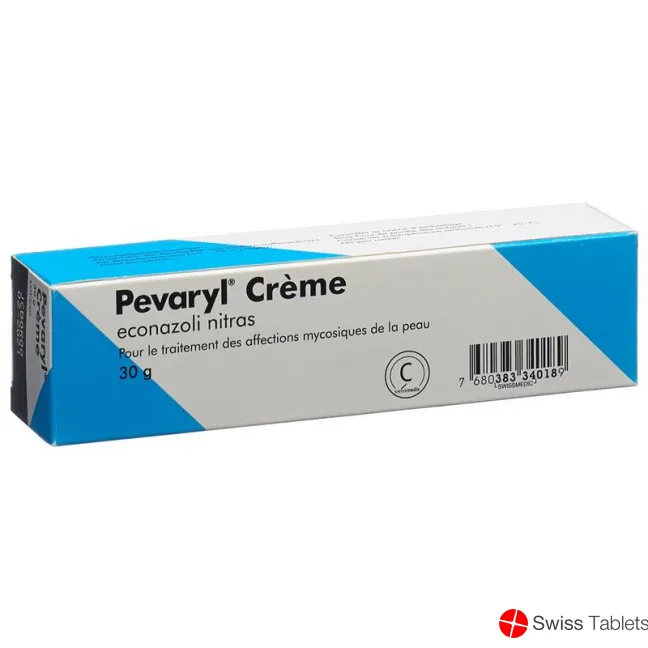
Table of Contents
Package leaflet: Information for the patient
PEVARYL, 10 mg/g, cream
Econazole nitrate
Read carefully the entire leaflet before using the medicine, because it contains
important information for the patient.
- Keep this leaflet, as you may need to read it again.
- If you have any questions, ask your doctor, pharmacist, or nurse.
- This medicine has been prescribed for a specific individual. Do not pass it on to others. The medicine may harm another person, even if their symptoms are the same.
- If you experience any adverse reactions, including any not listed in this leaflet, inform your doctor, pharmacist, or nurse. See section 4.
Table of contents:
- What Pevaryl is and what it is used for
- Important information before using Pevaryl
- How to use Pevaryl
- Possible side effects
- How to store Pevaryl
- Contents of the pack and other information
1. What Pevaryl is and what it is used for
Pevaryl cream for topical application contains the active substance econazole nitrate.
Econazole belongs to a group of antifungal medicines and, when applied topically, acts against certain fungi and yeasts.
Indications
Topical treatment of fungal skin infections.
2. Important information before using Pevaryl
When not to use Pevaryl
- if you are allergic to econazole nitrate or any of the other ingredients of this medicine (listed in section 6). Warnings and precautions Pevaryl is intended for topical use on the skin. It must not be used in the eyes or taken orally. Allergic reactions to the medicine are rare. If they occur, discontinue use and contact your doctor. Patients allergic to imidazole derivatives may also be allergic to Pevaryl. Children and adolescents Do not use in children under 2 years of age. Use is not recommended in children under 16 years of age due to insufficient data on safety and efficacy. Pevaryl with other medicines Inform your doctor or pharmacist about all medicines you are currently using, have recently used, or plan to use.
Please review information about concomitantly used medicines to check for possible interactions.
Clinically significant interactions are rare. Contact your doctor if you are using oral anticoagulants (warfarin, acenocoumarol), as the anticoagulant effect should be monitored during concomitant treatment with Pevaryl.
Pregnancy and breastfeeding
If you are pregnant, suspect you may be pregnant, planning pregnancy, or breastfeeding, consult your doctor before using this medicine.
Driving and operating machinery
No effects of the medicine on the ability to drive or operate machinery have been observed.
Pevaryl contains benzoic acid and butylated hydroxyanisole
This medicine contains 60 mg of benzoic acid (E 210) in each 30 g tube, equivalent to 2 mg of benzoic acid per 1 g of cream. Benzoic acid may cause local irritation.
This medicine contains butylated hydroxyanisole (E 320), which may cause a local skin reaction (e.g. contact dermatitis) or irritation of the eyes and mucous membranes.
3. How to use PEVARYL
This medicine should always be used exactly as your doctor has told you. If you are unsure, consult your doctor or pharmacist.
This medicine is for topical use on the skin.
Usually, a small amount of the medicine should be applied twice daily to the affected areas and gently rubbed into the skin.
Duration of treatment:
Treatment usually lasts from 2 to 4 weeks.
Your doctor will decide how long you should use this medicine.
Use in children and adolescents:
Do not use in children under 2 years of age.
Use is not recommended in children under 16 years of age.
Elderly patients:
There is insufficient data on the use of this medicine in elderly patients (over 65 years of age).
Overdose of Pevaryl
This medicine is intended for external use on the skin only.
In case of accidental oral ingestion, symptomatic treatment should be administered. If the medicine gets into the eyes by accident, rinse thoroughly with clean water or physiological saline solution; if adverse symptoms persist, consult a doctor.
If you apply more medicine than recommended or accidentally ingest it, contact your doctor.
Missed dose of Pevaryl
Apply the missed dose as soon as possible, then continue with the next dose at the usual time.
Stopping treatment with Pevaryl
Use this medicine exactly as prescribed by your doctor. Continue treatment until the skin lesions have completely resolved.
If you have any further questions about the use of this medicine, consult your doctor, pharmacist, or nurse.
4. Possible adverse reactions
Like all medicines, this medicine can cause adverse reactions, although not everybody will experience them.
The most frequently observed adverse reactions (in less than 1 in 10 people) in clinical trials and after the medicine was placed on the market were: itching, burning sensation and pain at the application site.
Uncommonly (affecting less than 1 in 100 people), redness, discomfort and swelling at the application site occurred.
Very rarely (in less than 1 in 10,000 people), hypersensitivity, angioedema (sudden swelling of the face or throat causing difficulty speaking, swallowing, or even breathing), contact dermatitis, rash, urticaria, blisters and skin peeling occurred.
If any of the above-mentioned adverse symptoms occur, use of the medicine should be stopped immediately and medical advice should be sought.
Reporting of adverse reactions
If any adverse effects occur, including any adverse effects not listed in this leaflet, inform your doctor, pharmacist or nurse. Adverse reactions can be reported directly to the Department of Monitoring Adverse Drug Reactions of the Office for Registration of Medicinal Products, Medical Devices and Biocidal Products
Al. Jerozolimskie 181C
02-222 Warsaw
Phone: +48 22 49 21 301
Fax: +48 22 49 21 309
Website: https://smz.ezdrowie.gov.pl
Adverse reactions can also be reported to the marketing authorization holder.
Reporting adverse reactions helps to provide more information on the safety of the medicine.
5. How to store PEVARYL
Do not store above 25°C.
Keep the medicine in a place invisible and out of reach of children.
Do not use this medicine after the expiry date stated on the packaging.
The expiry date (EXP) refers to the last day of the stated month.
Medicines must not be disposed of via wastewater or household waste. Ask your pharmacist how to dispose of medicines no longer required. This will help protect the environment.
6. Contents of the pack and other information
What Pevaryl contains
- The active substance is econazole nitrate; 1 g of cream contains 10 mg of econazole nitrate.
- The other ingredients (excipients) are: butylhydroxyanisole (E 320), benzoic acid (E 210), liquid paraffin, macrogol glyceryl oleates, macrogol stearates (macrogol-6 and macrogol-32), purified water.
What Pevaryl looks like and contents of the pack
Pevaryl is a cream.
The medicine is available in an aluminium tube internally coated with epoxy resin, closed with a membrane and a PP or PE cap, containing 30 g of cream, packed in a cardboard box.
Marketing Authorisation Holder
Karo Pharma AB
Box 16184, 103 24, Stockholm
Sweden
[email protected]
Manufacturer
Lusomedicamenta
- Sociedade Técnica Farmacêutica, S.A. Estrada Consiglieri Pedroso 69 B, Queluz de Baixo 2730-055 Barcarena Portugal