Panacit
Poland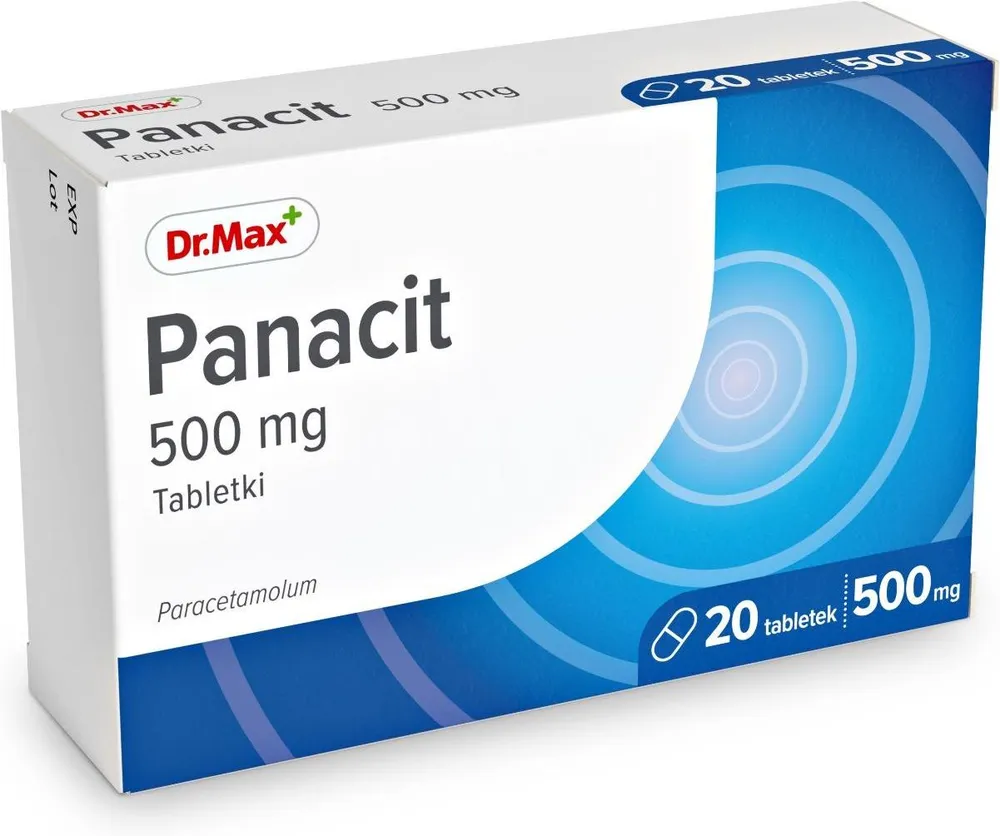
Table of Contents
Package leaflet: Information for the patient
Panacit, 500 mg, tablets
Paracetamolum
Please read this leaflet carefully before using the medicine, as it contains
important information for the patient.
This medicine should always be used exactly as described in this patient leaflet or as directed by
the doctor or pharmacist.
- Keep this leaflet, so that you can read it again if necessary.
- If you need advice or further information, please consult your pharmacist.
- If you experience any adverse reactions, including any possible side effects not listed in this leaflet, inform your doctor or pharmacist. See section 4.
- If there is no improvement or if you feel worse after 5 days of treatment for pain or after 3 days for fever, you should contact your doctor.
Table of contents of the leaflet:
- What Panacit is and what it is used for
- Important information before taking Panacit
- How to take Panacit
- Possible side effects
- How to store Panacit
- Contents of the pack and other information
1. What Panacit is and what it is used for
The active substance in Panacit is paracetamol, which belongs to a group of medicines known as analgesics (pain relievers) and antipyretics (fever reducers).
Panacit is used for the symptomatic relief of mild to moderate pain, such as headache, toothache, back pain, menstrual pain (period pain), and muscle and joint pain associated with influenza and (or) fever.
If there is no improvement or if you feel worse after 5 days of treatment for pain or after 3 days for fever, you should contact your doctor.
2. Important information before using Panacit
When not to use Panacit
- if the patient is allergic to paracetamol or any of the other ingredients of this medicine (listed in section 6).
- if the patient has severe liver failure or acute hepatitis.
- if the patient has severe haemolytic anaemia (abnormal breakdown of red blood cells).
Warnings and precautions
Before taking this medicine, talk to your doctor or pharmacist if:
- the patient has kidney or liver disease (including Gilbert's syndrome or acute hepatitis),
- the patient has a deficiency of an enzyme called glucose-6-phosphate dehydrogenase,
- the patient has haemolytic anaemia (abnormal breakdown of red blood cells),
- the patient regularly consumes large amounts of alcohol; never take more than 2 grams of paracetamol (4 x 500 mg tablets) per day.
- the patient with asthma is hypersensitive to acetylsalicylic acid and/or non-steroidal anti-inflammatory drugs (NSAIDs),
- in case of dehydration or prolonged malnutrition.
During treatment with Panacit, inform your doctor immediately:
If the patient has severe conditions, including severe kidney dysfunction or sepsis (when bacteria and their toxins circulate in the blood, leading to organ damage), malnutrition, chronic alcoholism, or if the patient is also taking flucloxacillin (an antibiotic).
Cases of a serious condition called metabolic acidosis (abnormality in blood and body fluids) have been reported in patients who take paracetamol regularly over a long period or who take paracetamol together with flucloxacillin. Symptoms of metabolic acidosis may include: severe breathing difficulties, including rapid deep breathing, drowsiness, nausea and vomiting.
Do not take Panacit together with other medicines containing paracetamol.
Children
Panacit must not be used in children under 6 years of age.
Panacit and other medicines
Tell your doctor or pharmacist if the patient is currently taking, has recently taken, or might take any other medicines. Several medicines may interact with paracetamol.
Talk to your doctor before starting paracetamol if the patient is taking any of the following medicines:
- barbiturates (a group of medicines used as sedatives and for anaesthesia),
- certain antidepressants,
- probenecid (used in gout),
- chloramphenicol (an antibiotic),
- metoclopramide or domperidone (used to treat nausea and vomiting),
- cholestyramine (a medicine that lowers cholesterol levels),
- warfarin and other coumarins (blood-thinning medicines),
- zidovudine (a medicine used to treat AIDS),
- salicylamide or non-steroidal anti-inflammatory drugs (NSAIDs) (painkillers),
- isoniazid (used to treat tuberculosis),
- lamotrigine (an antiepileptic medicine),
- flucloxacillin (an antibiotic), due to the serious risk of blood and body fluid disorders (called metabolic acidosis), which require urgent treatment (see section 2).
Paracetamol may affect the results of various laboratory tests and examinations (e.g. blood glucose tests, urine analysis).
Panacit with food and drink
Exercise caution when taking paracetamol if the patient regularly consumes large amounts of alcohol. In this case, do not take more than 2 g of paracetamol (4 x 500 mg tablets) per day. Alcohol must not be consumed during treatment.
Pregnancy and breastfeeding
If the patient is pregnant or breastfeeding, suspects she may be pregnant, or is planning to become pregnant, she should consult a doctor or pharmacist before using this medicine.
Panacit may be used during pregnancy. The lowest possible dose that reduces pain and/or fever should be used, and for the shortest possible duration. If pain and/or fever persist, or if it becomes necessary to take the medicine more frequently than recommended, consult a doctor.
Although paracetamol passes into breast milk in small amounts, no adverse effects have been observed in breastfed infants. At recommended doses, paracetamol may be used short-term by breastfeeding women.
Driving and using machines
Paracetamol has no effect on the ability to drive and use machinery.
Panacit contains sodium
This medicine contains less than 1 mmol (23 mg) of sodium per dose, i.e. this medicine is considered "sodium-free".
3. How to use Panacit
This medicine should always be taken exactly as described in this patient information leaflet or as directed by a doctor or pharmacist. If in doubt, consult a doctor or pharmacist.
Recommended dosage:
Adults and adolescents aged 15 years and older:
1-2 tablets, up to four times daily, with at least a 4-hour interval between doses.
1 tablet is appropriate for individuals weighing 34–60 kg; 2 tablets for individuals weighing over 60 kg.
The maximum single dose is 1 g (2 tablets); the maximum daily dose is 4 g (8 tablets).
Use in children and adolescents
Ages 12–15 years: 1 tablet, 4–6 times within 24 hours. Maximum daily dose is 3 g (6 tablets).
Ages 6–12 years: 250–500 mg paracetamol (½ to 1 tablet). A single dose of ½ tablet is intended for children weighing 21–32 kg; 1 tablet for children weighing 33 kg or more. An interval of 4–6 hours should be maintained between doses. Maximum daily dose for children weighing 21–24 kg is 1.25 g (2½ tablets); maximum daily dose for children weighing 25–32 kg is 1.5 g (3 tablets); maximum daily dose for children weighing 33–40 kg is 2 g (4 tablets).
The tablets should be swallowed with a large amount of water or dissolved in a large amount of water, stirred well, and then consumed.
Panacit should not be used in children under 6 years of age.
The interval between doses must be at least 4 hours.
This medicine should not be taken together with other products containing paracetamol. Do not exceed the recommended daily dose.
Tablets may be divided into equal doses.
If pain persists for more than 5 days or fever lasts longer than 3 days, or if symptoms worsen or other symptoms develop, treatment should be discontinued and medical advice sought.
The effective daily dose should not exceed 60 mg paracetamol/kg body weight per day (up to 2 g paracetamol/day) in the following cases:
- adults with body weight less than 50 kg,
- mild or moderate liver impairment, Gilbert's syndrome (hereditary non-hemolytic jaundice),
- dehydration,
- prolonged malnutrition.
If you feel that the effect of Panacit is too strong or too weak, consult your doctor or pharmacist.
Taking more than the recommended dose of Panacit
In case of overdose with paracetamol, seek immediate medical advice from a doctor or pharmacist due to the risk of delayed, severe liver damage.
If an excessive amount of the medicine is taken, symptoms such as nausea, vomiting, sweating, and loss of appetite may occur. In most cases, loss of consciousness does not occur. However, immediate medical assistance should be sought.
If treatment is delayed, liver damage may become irreversible.
Missing a dose of Panacit
Take the missed dose as soon as possible, unless it is almost time for the next dose. In that case, skip the missed dose and take the next dose at the usual time.
Do not take a double dose to make up for a missed dose.
If you have any further doubts about the use of this medicine, consult your doctor or pharmacist.
4. Possible adverse effects
Like all medicines, this medicine can cause adverse effects, although not everyone will experience them.
The possible adverse effects are listed below:
Rare (may affect up to 1 in 1,000 patients):
- certain blood disorders, including agranulocytosis, thrombocytopenia, neutropenia, thrombocytopenic purpura, hemolytic anemia, leukopenia
- allergic reactions (excluding angioedema)
- liver function disorders, liver failure, liver cirrhosis and jaundice
- itching (pruritus), rash, sweating, purpura and urticaria
- overdose and poisoning
- depression, confusion and hallucinations
- seizures and headaches
- blurred vision
- swelling
- bleeding, abdominal pain, diarrhea, nausea, vomiting
- dizziness, fever and drowsiness
Very rare (may affect up to 1 in 10,000 patients):
- pancytopenia (reduction in all blood cells)
- allergic reactions; if they occur, treatment should be discontinued, including angioedema, breathing difficulties, sweating, nausea, drop in blood pressure,
shock and anaphylactic shock
- problems with bronchial muscle contraction (bronchospasm) in individuals hypersensitive to acetylsalicylic acid and other non-steroidal anti-inflammatory drugs (a group of pain-relieving medicines with anti-inflammatory and antipyretic effects)
- liver toxicity
- skin rash
- hypoglycemia (low blood sugar levels)
- dark urine color (sterile pyuria) and kidney-related disorders
- severe skin reactions
Frequency not known (cannot be estimated from available data):
- a serious condition that may cause the blood to become more acidic (so-called metabolic acidosis), in patients with severe disease taking paracetamol (see section 2).
Also, long-term use of 3 to 4 grams of paracetamol (6 to 8 tablets) per day may
damage the liver. If a patient uses 6 grams of paracetamol (12 tablets) per day, the liver may
be damaged.
Reporting of adverse effects
If any adverse effects occur, including any adverse effects not listed
in this leaflet, please inform your doctor or pharmacist. Adverse effects can
be reported directly to the Department of Monitoring of Adverse Drug Reactions of the Office for Registration of Medicinal Products, Medical Devices and Biocidal Products, Al. Jerozolimskie 181C, 02-222 Warsaw, phone: +48 22 49 21 301, fax: +48 22 49 21 309, website: https://smz.ezdrowie.gov.pl
Adverse effects can also be reported to the marketing authorization holder.
By reporting adverse effects, additional information regarding the safety of the medicine can be collected.
5. How to store Panacit
Keep this medicine out of sight and reach of children.
No special storage instructions apply to this medicine.
Do not use this medicine after the expiry date stated on the carton and blister after: EXP.
The expiry date refers to the last day of the stated month.
Medicines should not be disposed of via wastewater or household waste. Ask your pharmacist how to dispose of medicines no longer required. These measures will help protect the environment.
6. Contents of the packaging and other information
What Panacit contains
- The active substance is paracetamol; each tablet contains 500 mg of paracetamol.
- Other ingredients are: povidone K30, pregelatinized corn starch, sodium carboxymethyl starch type A, stearic acid 50.
What Panacit looks like and contents of the pack
Panacit is a white, capsule-shaped tablet, marked with "500" on one side and a division line on the reverse, packed in PVC/Aluminum blisters within a cardboard box. The tablets can be divided into equal doses.
Pack sizes: 10, 12, 16, 20, 24, 30 or 50 tablets.
Not all pack sizes may be marketed.
Marketing Authorisation Holder and Manufacturer
Marketing Authorisation Holder:
Dr. Max Pharma s.r.o.
Na Florenci 2116/15
110 00 Prague
Czech Republic
Tel.: (+420) 516 770 199
Manufacturer:
MEDIS INTERNATIONAL a.s.
Výrobní závod Bolatice,
Průmyslová 961/16, 747 23 Bolatice
Czech Republic
Qualimetrix S.A.
579 Mesogeion Avenue
Agia Paraskevi
15343 Athens
Greece
This medicinal product is authorised in the Member States of the European Economic Area under the following names:
Poland: Panacit
Czech Republic: Parapyrex
Slovakia: Parapyrex