Ozzion
Poland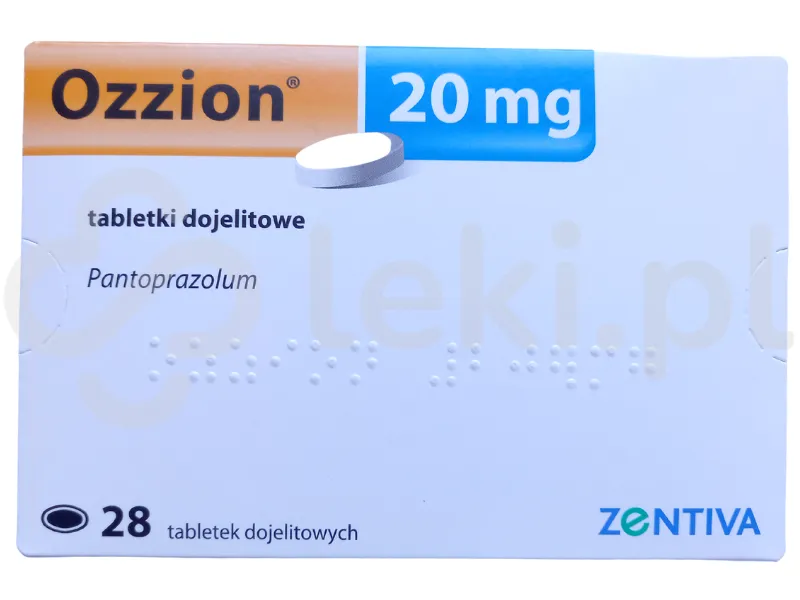
Table of Contents
Package leaflet: Information for the patient
Ozzion, 40 mg, enteric-coated tablets
Pantoprazole
Please read the entire leaflet carefully before taking this medicine, as it contains
important information for the patient.
Keep this leaflet, as you may need to read it again.
If you have any further questions, please consult your doctor or pharmacist.
This medicine has been prescribed for a specific individual. Do not pass it on to others. This medicine may harm others, even if their symptoms are the same.
If you experience any adverse reactions, including any not listed in this leaflet, inform your doctor or pharmacist immediately.
See section 4.
Contents of the leaflet
- What Ozzion is and what it is used for
- Important information before taking Ozzion
- How to take Ozzion
- Possible side effects
- How to store Ozzion
- Contents of the pack and other information
1. What Ozzion is and what it is used for
Ozzion contains the active substance pantoprazole. Ozzion is a selective proton pump inhibitor that reduces the amount of hydrochloric acid secreted in the stomach. It is used in the treatment of stomach and intestinal disorders related to acid secretion.
Ozzion 40 mg tablets are used
In adults and adolescents aged 12 years and older for the treatment of:
- Gastroesophageal reflux disease (GERD). This is inflammation of the oesophagus (the tube connecting the throat to the stomach) caused by regurgitation of acidic stomach contents.
In adults for the treatment of:
- Infections caused by the bacterium Helicobacter pylori, in combination with appropriate antibiotic therapy in patients with duodenal or gastric ulcer (so-called eradication). The aim of treatment is to eliminate the bacteria and reduce the risk of recurrence of peptic ulcer disease.
- Gastric and duodenal ulcers.
- Zollinger-Ellison syndrome and other conditions associated with excessive secretion of hydrochloric acid in the stomach.
2. Important information before taking Ozzion
When not to take Ozzion
- if the patient is allergic to pantoprazole, peanuts, soybean oil, or any of the other ingredients of this medicine (listed in section 6).
- if the patient is allergic to medicines containing other proton pump inhibitors.
Warnings and precautions
Before starting to take Ozzion, talk to a doctor or pharmacist in the following situations:
- in case of severe liver disease. Inform the doctor about any history of liver function disorders. The doctor may decide to perform more frequent liver enzyme activity tests, especially during long-term treatment with Ozzion. If liver enzyme activity increases, treatment should be discontinued.
- in case of low vitamin B levels in the body or presence of risk factors for vitamin B deficiency, and concomitant long-term use of pantoprazole. As with all drugs that reduce gastric acid secretion, pantoprazole may lead to reduced absorption of vitamin B12. Contact a doctor if any of the following symptoms occur, which may indicate low vitamin B12 levels:
- exceptionally severe fatigue or lack of energy,
- numbness and tingling sensations,
- pain or redness of the tongue, mouth ulcers,
- muscle weakness,
- vision disturbances,
- memory problems, disorientation, depression.
- if taking protease inhibitors for HIV, such as atazanavir (used in the treatment of HIV infection), together with pantoprazole, seek detailed advice from a doctor.
- when taking proton pump inhibitors such as Ozzion, especially for longer than one year, there may be a slight increase in the risk of fractures of the hip, wrist, or spine. Inform the doctor if the patient has been diagnosed with osteoporosis (reduced bone density) or if the doctor has informed the patient of an increased risk of osteoporosis (for example, if the patient is taking steroid medicines).
- if Ozzion is taken for longer than three months, magnesium levels in the patient's blood may decrease. Low magnesium levels may cause fatigue, involuntary muscle contractions, seizures, confusion, dizziness, or rapid heartbeat. If any of these symptoms occur, inform the doctor immediately. Low magnesium levels may also lead to reduced potassium or calcium levels in the blood. The doctor may recommend regular blood tests to monitor magnesium levels.
- if the patient has ever experienced a skin reaction while taking a medicine similar to Ozzion that reduces gastric acid secretion.
- if a skin rash appears, especially in areas exposed to sunlight, inform the doctor immediately, as it may be necessary to discontinue Ozzion. Also remember to mention other symptoms such as joint pain.
- serious skin reactions, including Stevens-Johnson syndrome, toxic epidermal necrolysis (TEN), drug reaction with eosinophilia and systemic symptoms (DRESS), and erythema multiforme have been reported with the use of pantoprazole. Discontinue pantoprazole and seek immediate medical advice if any symptoms suggestive of these serious skin reactions described in section 4 occur.
- prior to undergoing a specific blood test (chromogranin A levels).
Contact a doctor immediately before or after taking the medicine if any of the following symptoms occur, which may indicate another, more serious illness:
- unintentional weight loss,
- vomiting, particularly recurrent,
- vomiting blood, which may look like dark coffee grounds,
- presence of blood in stool, black or tarry stools,
- difficulty swallowing or pain when swallowing,
- pallor and weakness (anaemia),
- chest pain,
- abdominal pain,
- severe and/or persistent diarrhoea (because use of this medicine is associated with a small increased risk of infectious diarrhoea).
The doctor may decide that additional tests are necessary to rule out malignancy, as pantoprazole may mask symptoms of cancer and could delay diagnosis. If symptoms persist despite treatment, the doctor will consider further investigations.
In case of long-term use of Ozzion (longer than 1 year), the doctor will decide whether regular health monitoring is necessary. Always inform the doctor about any new or unusual symptoms or circumstances.
Children and adolescents
Ozzion is not recommended for use in children, as its efficacy has not been demonstrated in children under 12 years of age.
Ozzion and other medicines
Tell the doctor or pharmacist about all medicines the patient is currently taking or has recently taken, as well as any medicines the patient plans to take, including those available without a prescription.
Ozzion may affect the effectiveness of other medicines; therefore, inform the doctor about taking:
- medicines such as ketoconazole, itraconazole, or posaconazole (used to treat fungal infections) or erlotinib (used to treat certain types of cancer), as Ozzion may reduce their effectiveness.
- warfarin and phenprocoumon, which affect blood clotting and prevent thrombosis. Additional monitoring may be required.
- medicines used to treat HIV infection, such as atazanavir.
- methotrexate (a medicine used to treat rheumatoid arthritis, psoriasis, and cancer) – if the patient is taking methotrexate, the doctor may temporarily discontinue treatment with Ozzion, as pantoprazole may increase methotrexate blood levels.
- fluvoxamine (a medicine used to treat depression and other psychiatric disorders) – if the patient is taking fluvoxamine, the doctor may reduce its dose.
- rifampicin (a medicine used to treat infections).
- St John’s wort (Hypericum perforatum) (used to treat mild depression).
Discuss with the doctor before starting pantoprazole if the patient is scheduled for a specific urine test (for tetrahydrocannabinol [THC]).
Pregnancy, breastfeeding, and fertility
There is insufficient data on the use of pantoprazole in pregnant women. Excretion of the drug in breast milk has been reported. If the patient is pregnant or breastfeeding, suspects she may be pregnant, or is planning to have a child, she should consult a doctor or pharmacist before using this medicine. The patient should use this medicine only if the doctor considers that the benefits to the mother outweigh the possible risks to the fetus or child.
Driving and using machines
Ozzion has no effect or has a negligible effect on the ability to drive and use machines. However, if the patient experiences adverse effects such as dizziness or visual disturbances, driving and operating machinery should be avoided.
Ozzion contains soya lecithin, maltitol, and sodium
Do not take this medicine if the patient is allergic to peanuts or soya.
Patients with known intolerance to certain sugars should consult their doctor before starting this medicine.
This medicine contains less than 1 mmol of sodium (23 mg) per tablet, meaning the medicine is considered "sodium-free".
3. How to take Ozzion
This medicine should always be taken as directed by your doctor or pharmacist. If you have any doubts,
you should consult your doctor or pharmacist.
Method of administration
The tablets should be taken 1 hour before a meal. Do not chew or crush them; swallow whole with an adequate amount of water.
Recommended dose
- Adults and adolescents aged 12 years and above Treatment of reflux esophagitis The usual dose is 1 tablet per day. Your doctor may recommend increasing the dose to 2 tablets per day. Treatment of reflux esophagitis usually lasts 4–8 weeks. Your doctor will inform you of the recommended duration of treatment.
- Adults Treatment of infections caused by the bacterium Helicobacter pylori in patients with peptic ulcer disease of the stomach and/or duodenum, in combination with two antibiotics (eradication) One tablet twice daily, together with two antibiotics prescribed by your doctor from the following: amoxicillin, clarithromycin and metronidazole (or tinidazole), each medicine taken twice daily, simultaneously with pantoprazole. The first dose of pantoprazole should be taken 1 hour before breakfast, the second dose of pantoprazole should be taken 1 hour before the evening meal. You must follow your doctor's instructions and read the patient leaflets included in the antibiotic packaging. Treatment usually lasts one to two weeks.
Peptic ulcer disease of the stomach and/or duodenum
The usual dose is one tablet per day. After consultation with your doctor, the dose may be increased to two tablets per day.
Your doctor will decide on the required duration of treatment. Treatment of gastric ulcer usually lasts 4 to 8 weeks. Treatment of duodenal ulcer usually lasts 2 to 4 weeks.
Long-term treatment of Zollinger-Ellison syndrome and other conditions associated with excessive
gastric acid secretion
The usual initial recommended dose is two tablets per day.
Take two tablets 1 hour before a meal. Your doctor will decide on subsequent dose adjustments depending on the amount of gastric acid secreted.
If your doctor recommends taking more than two tablets per day, they should be administered twice daily.
If your doctor recommends taking more than four tablets per day, they will inform you of the required treatment duration.
Patients with renal impairment
- In patients with kidney disease, Ozzion should not be used at a dose of 40 mg for eradication of Helicobacter pylori infection.
Patients with hepatic impairment
- In patients with severe liver disease, do not take more than one 20 mg pantoprazole tablet per day (for this reason, tablets containing 20 mg pantoprazole are available).
- In patients with moderate or severe liver disease, Ozzion 40 mg should not be used for eradication of Helicobacter pylori infection.
Use in children and adolescents
The tablets are not recommended for use in children under 12 years of age.
If you take more Ozzion than you should
Inform your doctor or pharmacist. Symptoms of overdose are not known.
If you forget to take Ozzion
Do not take a double dose to make up for a forgotten dose. Take the next dose at the usual time.
Stopping Ozzion
Do not stop taking this medicine without consulting your doctor or pharmacist.
If you have any further questions about the use of this medicine, consult your doctor or pharmacist.
4. Possible adverse reactions
Like all medicines, this medicine can cause adverse reactions, although not everyone will experience them.
If any of the following adverse reactions occur, stop using the
medicine immediately and contact your doctor or nearest hospital:
- Serious allergic reactions (frequency: rare: may occur in fewer than 1 in 1,000 people): swelling of the tongue and/or throat, difficulty swallowing, hives (blistering rash), breathing difficulties, allergic facial swelling (angioedema/Quincke's edema/angioedema), severe dizziness with rapid heartbeat and excessive sweating.
- Serious skin reactions (frequency unknown: frequency cannot be estimated from available data): the patient may notice one or more of the following symptoms: skin blisters and rapid deterioration in general condition, peeling of the skin (including minor bleeding) around the eyes, nose, mouth or genital organs, or rash, particularly in areas of skin exposed to sunlight. Joint pain or flu-like symptoms may also occur, along with fever, swollen glands (e.g. under the arms), and blood tests may show changes in certain white blood cells or liver enzymes.
- Reddish, non-elevated spots or circular patches on the trunk, often with blisters in the center, skin peeling, ulceration of the mouth, throat, nose, genital organs, and eyes. Such severe skin rash may be preceded by fever and flu-like symptoms (Stevens-Johnson syndrome, toxic epidermal necrolysis).
- Widespread rash, high body temperature, and swollen lymph nodes (DRESS syndrome or drug hypersensitivity syndrome).
- Other serious reactions (frequency unknown): yellowing of the skin or whites of the eyes (due to severe liver cell damage, jaundice) or fever, rash, kidney enlargement sometimes associated with painful urination and lower back pain (severe kidney inflammation, which may lead to kidney failure).
Other adverse reactions are as follows:
Common (may occur in fewer than 1 in 10 people):
- Benign gastric polyps.
Uncommon (may occur in fewer than 1 in 100 people):
- Headache, dizziness; diarrhoea; nausea, vomiting; bloating and flatulence, constipation; dryness of the mouth; abdominal pain and discomfort; skin rash, papular rash; itching; weakness, fatigue or malaise; sleep disturbances; fractures of the hip, wrist or spine.
Rare (may occur in fewer than 1 in 1,000 people):
- Taste disturbances or complete loss of taste; visual disturbances such as blurred vision; urticaria; joint pain; muscle pain; changes in body weight; elevated body temperature; high fever; limb swelling (peripheral oedema); allergic reactions; depression; gynaecomastia in men.
Very rare (may occur in fewer than 1 in 10,000 patients):
- Disorientation.
Frequency unknown (frequency cannot be estimated from available data):
- Hallucinations; confusion (particularly in patients who have previously experienced such symptoms), sensations of tingling, pricking, burning or numbness; rash possibly accompanied by joint pain; inflammation of the large intestine causing persistent watery diarrhoea.
Adverse reactions identified by blood tests:
Uncommon (may occur in fewer than 1 in 100):
- Increased liver enzyme activity.
Rare (may occur in fewer than 1 in 1,000):
- Increased bilirubin levels; increased blood lipid levels; sudden decrease in circulating white blood cells, associated with high fever.
Very rare (may occur in fewer than 1 in 10,000):
- Decreased platelet count, which may lead to increased tendency to bleed and bruising; decreased white blood cell count, which may predispose to more frequent infections; concurrent marked decrease in red blood cells, white blood cells, and platelets.
Frequency unknown (frequency cannot be estimated from available data):
Decreased blood levels of sodium, magnesium, calcium or potassium (see section 2).
Reporting of adverse reactions
If any adverse effects occur, including any possible adverse effects
not listed in this leaflet, inform your doctor or pharmacist. Adverse reactions
can be reported directly to the Department of Monitoring of Adverse Drug Reactions of the Office for Registration of Medicinal Products, Medical Devices and Biocidal Products
Al. Jerozolimskie 181 C
02 - 222 Warsaw
Tel.: + 48 22 49 21 301
Fax: + 48 22 49 21 309
e-mail: [email protected]
Adverse reactions can also be reported to the marketing authorization holder or its representative
in Poland.
Reporting adverse reactions helps provide more information on the safety of the medicine.
5. How to store Ozzion
Keep this medicine out of the sight and reach of children.
Do not use this medicine after the expiry date stated on the carton after: Expiry date. The expiry date refers to the last day of the stated month.
HDPE bottle – after opening the bottle, the medicine should be used within 3 months.
Medicines must not be disposed of via wastewater or household waste. Ask your pharmacist how to dispose of medicines no longer required. This will help protect the environment.
Do not store above 25°C.
6. Contents of the pack and other information
What Ozzion contains
- The active substance is pantoprazole. Each enteric-coated tablet contains 40 mg of pantoprazole (equivalent to 45.150 mg of sodium pantoprazole monohydrate).
- Other ingredients are:
Core: maltitol (E 965), crospovidone, sodium carmellose, anhydrous sodium carbonate (E 500), calcium stearate.
Coating: polyvinyl alcohol, talc (E 533b), titanium dioxide (E 171), macrogol 3350, soybean lecithin (E 322), yellow iron oxide (E 172), anhydrous sodium carbonate (E 500), copolymer of methacrylic acid and ethyl acrylate (1:1) dispersion 30%, triethyl citrate (E 1505).
What Ozzion 40 mg looks like and contents of the pack
Oval, yellow enteric-coated tablets measuring 10.3 × 5.5 mm.
Pack type:
Nylon/Aluminium/PVC/Aluminium blisters.
OPA/Aluminium/PVC/Aluminium blisters.
HDPE bottle with PP closure and desiccant.
Pack sizes:
14, 28, 56, 84 and 98 enteric-coated tablets (blisters).
14 and 28 enteric-coated tablets (HDPE bottles).
Not all pack sizes may be marketed.
Marketing Authorisation Holder
Zentiva k.s., U kabelovny 130, Dolní Měcholupy, 102 37 Prague 10, Czech Republic.
Manufacturer/Importer
Opella Healthcare Poland Sp. z o.o. Branch in Rzeszów, ul. Lubelska 52, 35-233 Rzeszów, Poland.
SC Zentiva SA, Theodor Pallady Bvd, no 50, 3rd district, 032266, Bucharest, Romania.
This medicinal product is authorised in the Member States of the European Economic Area under the following names:
| Czech Republic: | Pantoprazole Zentiva |
| Poland: | Ozzion |
| Romania: | Zencopan 20 (40) mg gastro-resistant tablets |
| Slovak Republic: | Ozzion 20 (40) mg gastro-resistant tablets |
For more detailed information about the medicine, please contact the representative of the marketing authorisation holder in Poland:
Zentiva Polska Sp. z o.o.
ul. Bonifraterska 17
00-203 Warszawa
tel.: +48 22 375 92 00