Oxytocin richter
Poland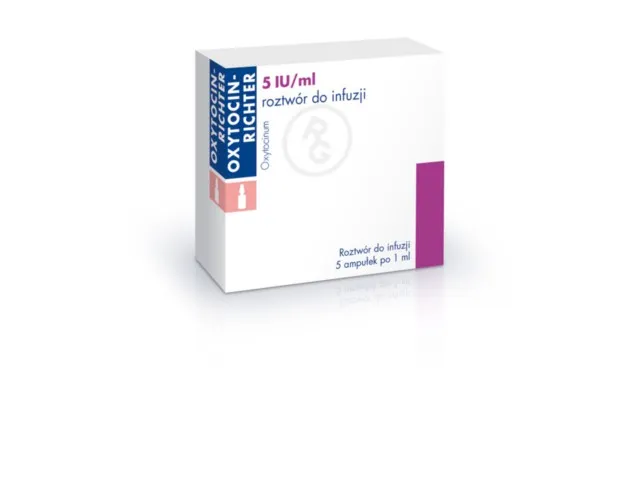
Table of Contents
Package leaflet: Information for the patient
Oxytocin-Richter
concentrate for solution for infusion, 5 IU/ml
oxytocinum
Please read all of this leaflet carefully before using this medicine, because it contains
important information for the patient
- Keep this leaflet, as you may need to read it again.
- If you have any further questions, please ask your doctor or pharmacist.
- This medicine has been prescribed for a specific individual. Do not pass it on to others. It may harm them even if their symptoms are the same as yours.
- If you experience any adverse reactions, including any not listed in this leaflet, inform your doctor or pharmacist. See section 4.
Leaflet contents:
- What Oxytocin-Richter is and what it is used for
- Important information before using Oxytocin-Richter
- How to use Oxytocin-Richter
- Possible side effects
- How to store Oxytocin-Richter
- Contents of the pack and other information
1. What Oxytocin-Richter is and what it is used for
Oxytocin-Richter is a medicine used to initiate or strengthen uterine contractions.
Its action is identical to that of endogenous oxytocin produced by the posterior pituitary gland.
Oxytocin-Richter may be used in the following cases:
- to induce labour;
- to stimulate uterine contractions during childbirth;
- to control postpartum uterine bleeding;
- as supportive treatment in cases of incomplete or inevitable miscarriage;
- in high-risk pregnancies, Oxytocin-Richter may be used to perform the so-called oxytocin challenge test.
2. Information before using Oxytocin-Richter
When not to use Oxytocin-Richter:
- if the patient is allergic to oxytocin or any of the other ingredients of this medicine (listed in section 6);
- in case of abnormal disproportion between the fetal head and the mother's pelvis (significant fetopelvic disproportion);
- in case of abnormal fetal presentation known as abnormal fetal lie (transverse fetal position); an abnormal position assumed by the fetus in the birth canal during labor;
- induction of labor and stimulation of uterine contractions are also contraindicated in cases of prolapsed umbilical cord (the umbilical cord prematurely descends into the vagina) and placenta praevia (a complication in which the placenta is attached to the uterine wall near or covering the cervix);
- in case of fetal hypoxia (fetal distress) when labor has not yet begun;
- in cases of toxemia of pregnancy, a severe condition characterized by high blood pressure and edema;
- in case of uterine hypertension; this is a pathological increase in uterine tone.
Oxytocin-Richter should NOT be used long-term if:
- there are no labor contractions;
- the patient has a condition known as severe pre-eclampsia (high blood pressure, protein in urine, and edema);
- oxytocin should not be administered within 6 hours after vaginal administration of prostaglandins.
Warnings and precautions
Before starting treatment with Oxytocin-Richter, discuss with the doctor:
- borderline cases of preterm labor and cases of maternal-fetal disproportion;
- previous major surgical procedures on the uterus or cervix (including cesarean section);
- multiparity – if the patient has given birth two or more times;
- if the patient has cervical cancer;
- if the uterus is overdistended (excessively tense);
- if the patient has kidney disease or fluid retention;
- if the patient has heart disorders.
To avoid complications during intravenous infusion of oxytocin, continuous monitoring is required of:
- uterine contractions,
- maternal and fetal heart activity,
- maternal blood pressure.
Latex allergy
The active substance in Oxytocin-Richter may cause a severe allergic reaction (anaphylactic shock) in patients allergic to latex. If the patient knows she is allergic to latex, she should inform her doctor.
Oxytocin must not be administered as a rapid intravenous injection (so-called bolus).
Oxytocin may be administered only via one of two routes: intramuscularly or intravenously.
Children and adolescents
Oxytocin-Richter is not intended for use in children.
Oxytocin-Richter and other medicines
Inform the doctor about all medicines the patient is currently taking or has recently taken, as well as any medicines she plans to take.
Severe hypertension (high blood pressure) may occur after administration of oxytocin three to four hours following administration of vasoconstrictive drugs (vasoconstrictors) during sacral epidural anesthesia [regional anesthesia involving injection of anesthetic agents into the sacral segment of the spinal canal, i.e., into the extradural space].
Oxytocin should not be used within 6 hours after administration of certain drugs used to induce labor (vaginally administered prostaglandins).
The use of oxytocin is not recommended in patients with cardiac rhythm disorders (e.g., prolonged QT interval syndrome) or in patients receiving medications affecting heart rhythm (which may cause QT prolongation).
Cyclopropane, enflurane, halothane, and isoflurane used during anesthesia may modify the cardiovascular effects of oxytocin, leading to unexpected adverse reactions such as hypotension (low blood pressure). When oxytocin is used concomitantly with cyclopropane, enflurane, halothane, and isoflurane during anesthesia in mothers, sinus bradycardia (slow heart rate) and atrioventricular rhythm disturbances may be observed.
Pregnancy, breastfeeding, and fertility
If the patient is pregnant or breastfeeding, suspects she may be pregnant, or is planning to have a child, she should consult a doctor or pharmacist before using this medicine.
Pregnancy
It seems unlikely that this medicine, when used according to indications, would cause harmful effects on the fetus. In the first trimester, oxytocin administration is indicated only in cases of spontaneous or induced abortion.
Breastfeeding:
Oxytocin may pass into small amounts into breast milk. However, oxytocin is not expected to cause harmful effects in the newborn, as it enters the gastrointestinal tract where it is rapidly inactivated.
Driving and operating machinery:
Women receiving oxytocin should not drive or operate machinery.
Oxytocin-Richter, infusion solution contains ethanol (alcohol)
The medicinal product contains small amounts of ethanol (alcohol), less than 100 mg per dose.
Oxytocin-Richter, infusion solution contains sodium
The medicine contains less than 1 mmol (23 mg) of sodium per dose, meaning the medicine is considered "sodium-free".
3. How to use Oxytocin-Richter
This medicine should always be used exactly as prescribed by your doctor or pharmacist.
If in doubt, consult your doctor or pharmacist.
When used to induce labour, Oxytocin-Richter is administered as an intravenous infusion.
The dose should be individually adjusted (depending on the mother's and baby's response to oxytocin).
If use of the medicine is indicated to control postpartum uterine bleeding, oxytocin may be administered either as an intravenous infusion or intramuscularly.
This medicine should be used exactly as prescribed by your doctor regarding dose, route of administration, and duration of treatment.
Oxytocin infusions should be administered at the dose, in the manner, and for the duration recommended by the doctor.
-
When used to initiate or strengthen uterine contractions during labour, Oxytocin-Richter must be given only as an intravenous infusion, under hospital conditions and under the supervision of qualified medical personnel. When administered as recommended, Oxytocin-Richter enhances uterine contractions in a manner similar to endogenous oxytocin during natural labour. Even with correct dosing and monitoring, women who are hypersensitive to oxytocin may experience abnormally strong uterine contractions. Therefore, during administration of Oxytocin-Richter, the patient must remain under continuous medical supervision, with ongoing monitoring of uterine contractions, blood pressure, pulse, and fetal heart activity. The dose will be individually adjusted depending on the mother's and baby's response to oxytocin.
-
When used to control postpartum bleeding, Oxytocin-Richter may be administered either as an intravenous infusion or intramuscularly.
-
Oxytocin should not be administered as an infusion within 6 hours after vaginal prostaglandin administration.
Oxytocin may be administered by only one route at a time: either intramuscularly or intravenously.
Overdose of Oxytocin-Richter
In principle, overdose of Oxytocin-Richter relates to uterine sensitivity to oxytocin – which should be clearly distinguished from an allergic (hypersensitivity) reaction to the active substance.
Excessive doses may cause:
- very rapid (precipitate) labour,
- uterine rupture (disruption of uterine wall continuity),
- injury to the cervix and vagina,
- postpartum haemorrhage,
- reduced blood flow between the uterus and placenta,
- impaired fetal heart function,
- fetal hypoxia,
- muscle spasms in the limbs associated with water retention following oxytocin administration,
- fetal death.
These reactions require immediate initiation of appropriate emergency treatment.
If you have any further doubts about the use of this medicine, consult your doctor, pharmacist, or nurse.
4. Possible adverse reactions
Like all medicines, this medicine can cause adverse reactions, although not everyone experiences them.
Adverse reactions concerning the mother:
- heart rhythm disorders, rapid heartbeat, partial or complete blockage of heart arteries (myocardial ischaemia),
- decrease in arterial blood pressure,
- blood clots in small blood vessels throughout the body (disseminated intravascular coagulation),
- increased bleeding,
- increased fluid in the lungs (pulmonary oedema),
- nausea or vomiting,
- water intoxication,
- headache,
- uterine rupture (uterine tear),
- intensified uterine muscle contractions,
- tetanic uterine contractions,
- allergic reaction and hypersensitivity.
Adverse reactions concerning the child:
- low Apgar score within the first 5 minutes after birth (assessment of newborn's physical condition),
- heart rhythm disorders, decreased and increased heart rate,
- bleeding from retinal blood vessels (retinal haemorrhage),
- asphyxia of the child,
- death of the child,
- low blood sodium concentration,
- lack of oxygen - hypoxia (fetal distress),
- brain damage.
Reporting of adverse reactions
If any adverse reactions occur, including any not listed in this leaflet, inform your doctor or pharmacist. Adverse reactions can be reported directly to the Department of Monitoring of Adverse Drug Reactions of the Office for Registration of Medicinal Products, Medical Devices and Biocidal Products
Al. Jerozolimskie 181C
PL-02 222 Warsaw
Tel.: + 48 22 49 21 301
Fax: + 48 22 49 21 309
e-mail: [email protected]
Adverse reactions can also be reported to the marketing authorisation holder.
Reporting adverse reactions enables continued monitoring of the medicine's safety and helps to gather more information on its safe use.
5. How to store the medicine Oxytocin-Richter
The medicine should be stored out of sight and reach of children.
Do not use this medicine after the expiry date stated on the packaging.
The expiry date refers to the last day of the stated month.
Store in a refrigerator (2°C - 8°C). Store in the original packaging.
Do not use Oxytocin-Richter medicine if
the oxytocin infusion solution was prepared more than 8 hours previously.
Medicines should not be disposed of via wastewater or household waste. Ask your
pharmacist how to dispose of medicines no longer in use. This will help protect
the environment.
6. Contents of the package and other information
Composition:
1 ampoule of 1 ml contains:
active substance: 5 international units (IU) of oxytocin
excipients: glacial acetic acid, chlorobutanol hemihydrate, 96% ethanol, acetic acid 20% (for pH adjustment), sodium hydroxide 10% (for pH adjustment), water for injections.
Packaging:
Carton box containing ampoules made of colorless glass.
5 ampoules of 1 ml each.
Marketing Authorisation Holder and Manufacturer:
Gedeon Richter Plc.
1103 Budapest
Gyömrői út 19-21
Hungary
For further information, please contact:
GEDEON RICHTER POLSKA Sp. z o.o.
Medical Department
ks. J. Poniatowskiego 5
05-825 Grodzisk Mazowiecki
Poland
Tel. +48 (22) 755 96 48
[email protected]
Fax: +48 (22) 755 96 24