Orizon
Poland
Table of Contents
Patient Information Leaflet: Information for the User
ORIZON, 1 mg/ml, oral solution
Risperidone
Please read all of this leaflet carefully before taking this medicine, because it contains important information for you.
- Keep this leaflet. You may need to read it again.
- If you have any further questions, please ask your doctor or pharmacist.
- This medicine has been prescribed for a specific individual. Do not pass it on to others. It may harm someone else, even if their symptoms are the same.
- If you experience any side effects not listed in this leaflet, tell your doctor or pharmacist. See section 4.
Table of Contents
- What Orizon is and what it is used for
- Important information before taking Orizon
- How to take Orizon
- Possible side effects
- How to store Orizon
- Contents of the pack and other information
1. What Orizon is and what it is used for
Orizon belongs to a group of medicines called antipsychotics.
Orizon is used:
- In the treatment of schizophrenia – a condition in which the patient may see, hear or feel things that are not there, believe things that are not true, or experience unusual suspiciousness or confusion.
- In the treatment of manic episodes – a condition in which the patient may feel intense excitement, agitation, restlessness, enthusiasm, or be excessively active. Manic episodes occur in the course of bipolar affective disorder.
- In short-term treatment (up to 6 weeks) of persistent aggression in patients with Alzheimer's-type dementia who are a danger to themselves or others. Non-pharmacological alternative approaches should be considered before initiating treatment with this medicine.
- In short-term treatment (up to 6 weeks) of severe aggression in intellectually disabled children (over 5 years of age) and adolescents with behavioural disorders. Orizon may help to relieve symptoms of the illness and prevent their recurrence.
2. Important information before using Orizon
When not to use Orizon
- if the patient is allergic to risperidone or any of the other ingredients of this medicine (listed in section 6). If the patient is unsure whether the above information applies to them, they should consult a doctor or pharmacist before using Orizon.
Warnings and precautions
Before starting treatment with Orizon, discuss the following with a doctor or pharmacist:
- if the patient has heart function disorders, such as irregular heartbeat, or if they are prone to low blood pressure, or if they are taking medications to control blood pressure. Orizon may cause a drop in blood pressure. Dose adjustment may be necessary.
- if the patient has any risk factors for stroke, such as high blood pressure, cardiovascular disorders, or cerebrovascular disorders,
- if the patient has ever experienced involuntary rhythmic movements of the tongue, mouth, or face,
- if the patient has ever had a condition characterized by fever, severe muscle stiffness, sweating, or decreased level of consciousness (also known as neuroleptic malignant syndrome),
- in patients with Parkinson's disease or dementia,
- if the patient has previously had a low white blood cell count (which may or may not have been caused by other medications),
- in patients with diabetes,
- in patients with epilepsy,
- if the patient is a man who has experienced prolonged or painful erection,
- if the patient has disorders of body temperature regulation or is overheating,
- if the patient has kidney function disorders,
- if the patient has liver function disorders,
- if the patient has been diagnosed with abnormally high levels of the hormone prolactin in the blood or if there is suspicion of a prolactin-dependent tumor,
- if the patient or any of their relatives have previously had blood clots, as antipsychotic medications are associated with an increased risk of thrombosis.
If the patient is unsure whether any of the symptoms described above apply to them, they should consult a doctor or pharmacist before using Orizon.
The treating physician may order a white blood cell count test, as very rarely, a dangerously low number of certain types of white blood cells—essential for fighting infections—has been observed in patients taking Orizon.
Orizon may cause weight gain. Significant weight gain may negatively affect health. The treating physician will regularly monitor the patient's body weight.
The doctor should check whether the patient shows symptoms of high blood glucose levels, as diabetes and worsening of pre-existing diabetes have been observed in patients taking Orizon. In patients with pre-existing diabetes, blood glucose levels should be monitored regularly.
Orizon often increases the level of a hormone called "prolactin." This may cause adverse effects such as menstrual disorders, fertility problems in women, breast swelling in men (see "Possible side effects"). If such adverse effects occur, measuring prolactin levels in the blood is recommended.
During cataract removal surgery, the pupil may not dilate sufficiently. Also, the iris may be flaccid during the procedure, which could lead to eye damage. If the patient is scheduled for eye surgery, they must inform the ophthalmologist about taking this medicine.
Elderly patients with dementia
In elderly patients with dementia, there is an increased risk of stroke. Patients with dementia caused by stroke should not take risperidone.
During treatment with Orizon, the patient should have regular consultations with their doctor.
Seek immediate medical help if the patient or caregiver notices a sudden change in mental status, sudden weakness or numbness of the face, arms, or legs—especially on one side—or speech disturbances, even if they last only briefly. These symptoms may indicate a stroke.
Children and adolescents
Before starting treatment for behavioral disorders, other causes of aggressive behavior should be ruled out.
If fatigue occurs during treatment, changing the time of risperidone administration may improve concentration. Before starting treatment in both adult and child patients, body weight measurement may be necessary, and regular monitoring of body weight during treatment is recommended.
In a small study, increased growth was observed in children taking risperidone, but it is not known whether this is due to the drug or other factors.
Orizon and other medicines
Inform the doctor or pharmacist about all medicines currently used, recently taken, or planned for use.
Patients should especially inform the doctor or pharmacist if they are taking any of the following medicines:
- medicines acting on the brain, such as those used to calm down (benzodiazepines) or certain painkillers (opioids), antihistamines, as risperidone may enhance their sedative effects,
- medicines that may cause changes in the heart's electrical activity, such as antimalarial drugs, antiarrhythmics, antihistamines, certain antidepressants, or other medicines used to treat psychiatric disorders,
- medicines that slow down heart rate,
- medicines that reduce potassium levels in the blood (e.g., certain diuretics),
- medicines used for high blood pressure. Orizon may lower blood pressure,
- medicines used in Parkinson's disease, e.g., levodopa,
- medicines that increase central nervous system activity (psychostimulants, such as methylphenidate),
- diuretics (water pills), used in patients with heart disease or to reduce swelling in areas with excessive fluid accumulation (e.g., furosemide or hydrochlorothiazide). Orizon, taken alone or together with furosemide, may increase the risk of stroke or death in elderly patients with dementia.
The following medicines may reduce the effect of risperidone:
- rifampicin (used to treat certain infections),
- carbamazepine, phenytoin (antiepileptic drugs),
- phenobarbital. If starting or stopping these medicines, a change in risperidone dose may be necessary.
The following medicines may enhance the effect of risperidone:
- quinidine (used in certain heart conditions),
- antidepressants such as paroxetine, fluoxetine, tricyclic antidepressants,
- medicines known as beta-blockers (used to treat high blood pressure),
- phenothiazines (used to treat psychosis or for calming),
- cimetidine, ranitidine (reducing stomach acid),
- itraconazole or ketoconazole (used for fungal infections),
- certain medicines used to treat HIV/AIDS, such as ritonavir,
- verapamil, used to treat high blood pressure and (or) heart rhythm disorders,
- sertraline and fluvoxamine, used to treat depression and other psychiatric disorders. If starting or stopping these medicines, a change in risperidone dose may be necessary.
If the patient is unsure whether they have taken or are taking any of the medicines listed above, they should consult a doctor or pharmacist before using Orizon.
Food, drink, and alcohol
This medicine can be taken with or without food. During treatment with Orizon, alcohol consumption should be avoided. The oral solution may be swallowed directly or mixed with mineral water, orange juice, or black coffee. If mixed in this way, the drink must be consumed immediately after preparation.
Pregnancy, breastfeeding, and fertility
If the patient is pregnant or breastfeeding, suspects she may be pregnant, or is planning to have a child, she should consult a doctor or pharmacist before using this medicine.
The doctor will decide whether the patient may take Orizon.
Newborns whose mothers used Orizon during the third trimester of pregnancy (last 3 months of pregnancy) may experience the following symptoms: tremors, muscle stiffness and (or) weakness, drowsiness, agitation, breathing difficulties, and feeding problems. If such symptoms are observed in the child, contact a doctor immediately.
Orizon may increase the level of a hormone called "prolactin," which may affect fertility (see "Possible side effects").
Driving and operating machinery
Dizziness, fatigue, and vision disturbances may occur during treatment with Orizon. Therefore, do not drive or operate machinery without consulting a doctor.
Orizon contains benzoic acid (E 210)
This medicine contains 1.5 mg of benzoic acid in each 1 ml of oral solution. Benzoic acid may increase the risk of jaundice (yellowing of the skin and whites of the eyes) in newborns (up to 4 weeks of life).
3. How to take Orizon
This medicine should always be taken exactly as directed by your doctor. If you have any doubts,
you should consult your doctor or pharmacist.
The recommended doses are given below:
In the treatment of schizophrenia
Adults
- The usual starting dose is 2 mg once daily. This dose may be increased on the second day to 4 mg once daily.
- Depending on the patient's response to treatment, your doctor may adjust the dose.
- For most patients, the most appropriate daily dose ranges from 4 mg to 6 mg.
- This total daily dose may be taken as a single dose or divided into two doses. Your doctor will advise which dosing schedule is best for you.
Elderly patients
- The usual starting dose is 0.5 mg twice daily.
- Your doctor may then gradually increase the dose to 1 mg – 2 mg twice daily.
- Your doctor will advise which dosing schedule is best for you.
In the treatment of manic episodes
Adults
- The usual starting dose is 2 mg once daily.
- Depending on the patient's response to treatment, your doctor may gradually adjust the dose.
- For most patients, the most appropriate dose ranges from 1 mg to 6 mg once daily.
Elderly patients
- The usual starting dose is 0.5 mg twice daily.
- Your doctor may then gradually adjust the dose to 1 mg – 2 mg twice daily, depending on the patient's response to treatment.
In the treatment of persistent aggression in patients with Alzheimer-type dementia
Adults (including elderly patients)
- The usual starting dose is 0.25 mg twice daily.
- Depending on the patient's response to treatment, your doctor may gradually adjust the dose.
- For most patients, the most appropriate daily dose is 0.5 mg twice daily. Some patients may require a dose of 1 mg twice daily.
- The duration of treatment in patients with Alzheimer-type dementia should not exceed 6 weeks.
Use in children and adolescents
Orizon must not be used in children and adolescents under 18 years of age for the treatment of schizophrenia or mania.
In the treatment of behavioural disorders, the dose depends on body weight:
In children with body weight less than 50 kg
- The usual starting dose is 0.25 mg once daily.
- The dose may be increased every other day (gradually) by 0.25 mg daily.
- The usual maintenance dose is usually between 0.25 mg and 0.75 mg once daily.
In children with body weight of 50 kg or more
- The usual starting dose is 0.5 mg once daily.
- The dose may be increased every other day by 0.5 mg daily.
- The usual maintenance dose is usually between 0.5 mg and 1.5 mg once daily.
The duration of treatment in patients with behavioural disorders should not exceed 6 weeks.
Orizon must not be used in children under 5 years of age for the treatment of behavioural disorders.
Patients with renal or hepatic impairment
Regardless of the condition being treated, all starting and subsequent doses should be reduced by half. Doses should also be increased more slowly in these patients.
Risperidone should be used with caution in this patient group.
Method of administration
Oral use.
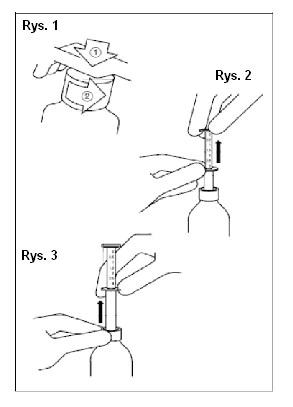
Instructions for using the Orizon oral solution dropper:
- Remove the safety cap from the bottle by pressing down on the cap while turning it counterclockwise (Figure 1).
- Place the bottle on a flat surface.
- Insert the dropper into the solution in the bottle.
- Holding the lower ring, pull the upper ring upwards until the mark indicating the required amount in mg or ml appears (Figure 2).
- Holding the lower ring, remove the dropper from the bottle (Figure 3).
- To empty the dropper, press down the upper ring while continuing to hold the lower ring.
- The contents of the dropper can be emptied directly into the mouth or into a drink – mineral water, orange juice, or black coffee.
- Rinse the dropper with water.
- Replace the safety cap on the bottle, screwing it clockwise until tight.
Please note – each millilitre (ml) of solution corresponds to 1 mg.
Taking more Orizon than recommended
Seek medical advice immediately. Take the medicine pack with you.
In case of overdose, the patient may experience drowsiness or fatigue, or may develop abnormal body movements, difficulty standing or walking, may feel dizzy due to low blood pressure, or may have an abnormal heart rhythm, or a seizure may occur.
If you miss a dose of Orizon
If the patient forgets to take a dose, they should take the next dose as soon as they remember. However, if it is almost time for the next dose, the missed dose should be skipped and the next dose taken at the usual time according to the prescribed schedule. If the patient forgets two or more doses, they should contact their doctor.
Do not take a double dose (two doses at the same time) to make up for a missed dose.
Stopping Orizon
Do not stop taking this medicine unless instructed by your doctor. Symptoms of the illness may recur. If your doctor decides to discontinue treatment, the dose may be gradually reduced over several days.
If you have any further questions about the use of this medicine, consult your doctor or pharmacist.
4. Possible adverse reactions
Like all medicines, this medicine can cause adverse reactions, although not everyone will experience them.
Immediately inform a doctor if the patient experiences any of the following
uncommon adverse reactions ( may occur in less than 1 in 100 people ):
- In a patient with dementia, sudden change in mental state or sudden weakness or numbness of the face or limbs, particularly on one side, or speech disturbances, even if brief. These symptoms may indicate a stroke.
- Late dyskinesias (uncontrolled jerking or twitching movements of the face, tongue or other body parts). Immediately inform the doctor if rhythmic involuntary movements of the tongue, lips or face occur. Discontinuation of Orizon may be necessary.
Immediately inform a doctor if the patient experiences any of the following
rare adverse reactions ( may occur in less than 1 in 1,000 people ):
- Blood clots in the veins, especially in the legs (symptoms include pain and redness in the leg), which may travel through blood vessels to the lungs, causing chest pain and difficulty breathing. In such cases, seek immediate medical help.
- Fever, muscle stiffness, sweating or decreased level of consciousness (a condition known as neuroleptic malignant syndrome). Immediate treatment may be required.
- Prolonged or painful erection in men. This condition is known as priapism. Immediate treatment may be necessary.
- Severe allergic reaction characterized by fever, swelling of the lips, face, tongue or throat, breathing difficulties, skin itching, rash or drop in blood pressure.
Other adverse reactions that may occur:
Very common ( may occur in more than 1 in 10 people ):
- Difficulty falling asleep or waking up.
- Parkinsonism: This condition may include slow or abnormal movements, feeling of stiffness or muscle tension (causing uneven, jerky movements), and sometimes even a sensation of "freezing" of movements followed by sudden release. Other symptoms of parkinsonism include: slow shuffling gait, resting tremor, increased salivation/drooling, and expressionless face.
- Drowsiness or reduced alertness.
- Headache.
Common ( may occur in 1 in 10 people ):
- Pneumonia, respiratory tract infection (bronchitis), cold symptoms, sinus infection, urinary tract infection, ear infection, flu-like symptoms.
- Orizon may increase blood levels of the hormone prolactin (with or without symptoms). Symptoms of increased prolactin levels occur uncommonly and may include in men: breast swelling, difficulty achieving or maintaining erection, reduced sex drive, or other sexual disorders. In women, symptoms may include breast discomfort, milk discharge from the breasts, absence of menstrual bleeding, or other menstrual cycle disorders, or fertility problems.
- Weight gain, increased appetite, decreased appetite.
- Sleep disturbances, irritability, depression, anxiety, restlessness.
- Dystonia: in this condition, slow or sustained involuntary muscle contractions occur. Although it may affect any part of the body (possibly resulting in abnormal posture), dystonia most commonly affects facial muscles, including abnormal eye, mouth, tongue or jaw movements.
- Dizziness.
- Dyskinesias: in this condition, involuntary muscle movements occur, including repetitive, spasmodic or twisting movements or jerks.
- Tremor. Blurred vision, eye infection or conjunctivitis.
- Rapid heartbeat, high blood pressure, shallow breathing (shortness of breath).
- Sore throat, cough, nosebleed, nasal congestion.
- Abdominal pain, discomfort in the abdominal cavity, vomiting, nausea, constipation, diarrhoea, indigestion, dry mouth, toothache.
- Rash, skin redness.
- Muscle cramps, bone or muscle pain, back pain, joint pain.
- Urinary incontinence.
- Swelling of the body, upper or lower limbs, fever, chest pain, weakness, fatigue, pain.
- Fall.
Uncommon ( may occur in 1 in 100 people ):
- Respiratory tract infection, bladder infection, eye infection, tonsillitis, fungal nail infection, skin infection, localized skin infection, viral infection, dermatitis caused by mites.
- Decreased white blood cell count (including those that help protect against infections), decreased platelet count (blood cells that help stop bleeding), anaemia, decreased red blood cell count, increased eosinophil count (a type of white blood cells).
- Allergic reaction.
- Development of diabetes or worsening of existing diabetes, high blood sugar levels, excessive thirst.
- Weight loss, loss of appetite leading to malnutrition and low body weight.
- Increased blood cholesterol levels.
- Elevated mood (mania), confusion, decreased libido, nervousness, nightmares.
- Lack of response to stimuli, loss of consciousness, low level of consciousness.
- Seizures, fainting.
- Need to move body parts, balance disorders, abnormal coordination, dizziness upon changing to upright position, concentration difficulties, speech difficulties, loss or abnormal sense of taste, reduced sensation to pain and touch on the skin, tingling, pricking or numbness of the skin.
- Light sensitivity of the eyes, dry eye, increased tearing, eye redness.
- Dizziness, ringing in the ears, ear pain.
- Atrial fibrillation (irregular heartbeat), conduction block between heart chambers, abnormal conduction of electrical impulses in the heart, QT interval prolongation in the heart, slow heartbeat, abnormal electrocardiogram (ECG), palpitations.
- Low blood pressure, low blood pressure upon changing to upright position (as a result of which some patients taking Orizon may faint, feel dizzy or lose consciousness when standing up suddenly or rising quickly), sudden flushing.
- Aspiration pneumonia (caused by food entering the airways), pulmonary congestion, respiratory tract hyperaemia, crackles, rales, speech difficulties, respiratory tract disorders.
- Stomach or intestinal infection, faecal incontinence, very hard stool, difficulty swallowing, excessive flatulence.
- Urticaria, itching, hair loss, skin thickening, rash, dry skin, skin depigmentation, acne, scaly and itchy scalp and body skin, skin disorders, skin lesions.
- Increased blood levels of creatine phosphokinase (CPK), an enzyme sometimes released from damaged muscles.
- Abnormal posture, joint stiffness, joint swelling, muscle weakness, neck pain.
- Frequent urination, urinary incontinence, painful urination.
- Erectile dysfunction, ejaculation disorders.
- Absence of menstruation, amenorrhea and other menstrual cycle disorders (in women).
- Breast enlargement in men, milk discharge from the breasts, sexual disorders, breast pain, breast discomfort, vaginal discharge.
- Swelling of the face, lips, eyes or mouth.
- Chills, increased body temperature.
- Change in walking pattern.
- Thirst, malaise, chest discomfort, feeling unwell, discomfort.
- Increased blood aminotransferase activity, increased blood GGTP enzyme activity (liver enzyme - gamma-glutamyl transferase), increased liver enzyme activity in blood.
- Pain associated with medical procedures.
Rare ( may occur in 1 in 1,000 people ):
- Infection.
- Abnormal secretion of the hormone regulating urine output.
- Sleepwalking (somnambulism).
- Sleep-related eating disorders.
- Sugar in urine, low blood sugar, high blood triglyceride (fat) levels.
- Lack of emotion, inability to achieve orgasm.
- Reduced motor activity and lack of response in a patient with preserved consciousness (catatonia).
- Cerebrovascular disorders.
- Coma due to uncontrolled diabetes.
- Trembling or nodding head movements.
- Glaucoma (increased intraocular pressure), eye movement disorders, rotary eye movements, eyelid margin ulcers.
- Eye complications during cataract surgery. During this procedure, intraoperative floppy iris syndrome (IFIS) may occur if the patient is currently or has previously been taking Orizon. If cataract surgery is planned, inform the ophthalmologist about current or past use of this medicine.
- Dangerously low count of certain white blood cells responsible for fighting infections.
- Dangerous, excessive water drinking.
- Irregular heartbeat.
- Breathing disorders during sleep (sleep apnoea), rapid, shallow breathing.
- Pancreatitis, intestinal obstruction.
- Tongue swelling, chapped lips, drug eruption.
- Pityriasis.
- Muscle fibre breakdown and muscle pain (rhabdomyolysis).
- Delayed menstruation, breast gland enlargement, breast enlargement, breast discharge.
- Increased blood insulin levels (hormone regulating blood sugar levels).
- Skin sclerosis.
- Low body temperature, cold hands and feet.
- Withdrawal symptoms.
- Yellowing of the skin and eyes (jaundice).
Very rare ( may occur in 1 in 10,000 people ):
- Life-threatening complications related to unbalanced diabetes.
- Severe allergic reaction with swelling, which may involve the throat and lead to breathing difficulties.
- Loss of intestinal function leading to obstruction.
Not known (frequency cannot be estimated from available data):
- Severe or life-threatening rash with blisters and skin peeling, which may start in the mouth, nose, eyes and genital areas or nearby regions and spread to other parts of the body (Stevens-Johnson syndrome or toxic epidermal necrolysis). Adverse reactions observed during use of another medicine, paliperidone, very similar to risperidone, which may also occur during use of Orizon: rapid heartbeat upon changing to upright position.
Additional adverse reactions in children and adolescents
In general, adverse reactions in children are expected to be similar to those in adults. The following adverse reactions have been observed more frequently in children and adolescents (aged 5 to 17 years) than in adults: drowsiness or reduced alertness, feeling of fatigue (tiredness), headache, increased appetite, vomiting, common cold symptoms, nasal mucosa congestion, abdominal pain, dizziness, cough, fever, tremor (shaking), diarrhoea and urinary incontinence (lack of control during urination).
Reporting of adverse reactions
If any adverse reactions occur, including any not listed in this leaflet, inform your doctor, pharmacist or nurse. Adverse reactions can be reported directly to the Department of Monitoring Adverse Reactions of Medicinal Products, Office for Registration of Medicinal Products, Medical Devices and Biocidal Products: Al. Jerozolimskie 181C, 02-222 Warsaw, tel.: 22 49 21 301, fax: 22 49 21 309, Website: https://smz.ezdrowie.gov.pl
Adverse reactions can also be reported to the marketing authorization holder.
Reporting adverse reactions helps to provide more information on the safety of the medicine.
5. How to store Orizon medicine
Keep out of the sight and reach of children.
No special storage conditions required.
Do not use this medicine after the expiry date stated on the label and carton.
The expiry date refers to the last day of the stated month.
Usable period after opening the bottle – 4 months.
Medicines must not be disposed of via wastewater or household waste. Ask your pharmacist how to dispose of medicines no longer in use. This will help protect the environment.
6. Contents of the package and other information
What Orizon oral solution contains
- The active substance is risperidone. 1 ml of the medicinal product contains 1 mg of risperidone.
- The other ingredients are: benzoic acid (E 210), tartaric acid, hydrochloric acid concentrated (for pH adjustment to 1.60–1.95), purified water.
What Orizon oral solution looks like and contents of the pack
The solution is clear and colourless.
The medicinal product is available in an amber glass bottle (type III) with a cap (PP/LDPE) with child-resistant closure and tamper-evident seal, together with a dosing pipette made of PS/LDPE, packed in a cardboard box.
Pack sizes: 30 ml and 100 ml. Not all pack sizes may be marketed.
Marketing Authorisation Holder
Orion Corporation
Orionintie 1
02200 Espoo
Finland
Manufacturer
Orion Corporation, Orion Pharma
Orionintie 1
02200 Espoo
Finland
Orion Corporation Orion Pharma
Joensuunkatu 7
FI-24100 Salo
Finland
For further information about this medicinal product, please contact the local representative of the Marketing Authorisation Holder:
Orion Pharma Poland Sp. z o.o.
[email protected]
This medicinal product is authorised in the Member States of the European Economic Area under the following names:
Czech Republic, Finland, Slovakia: Risperidon Orion
Poland: Orizon