Opokan actigel
Poland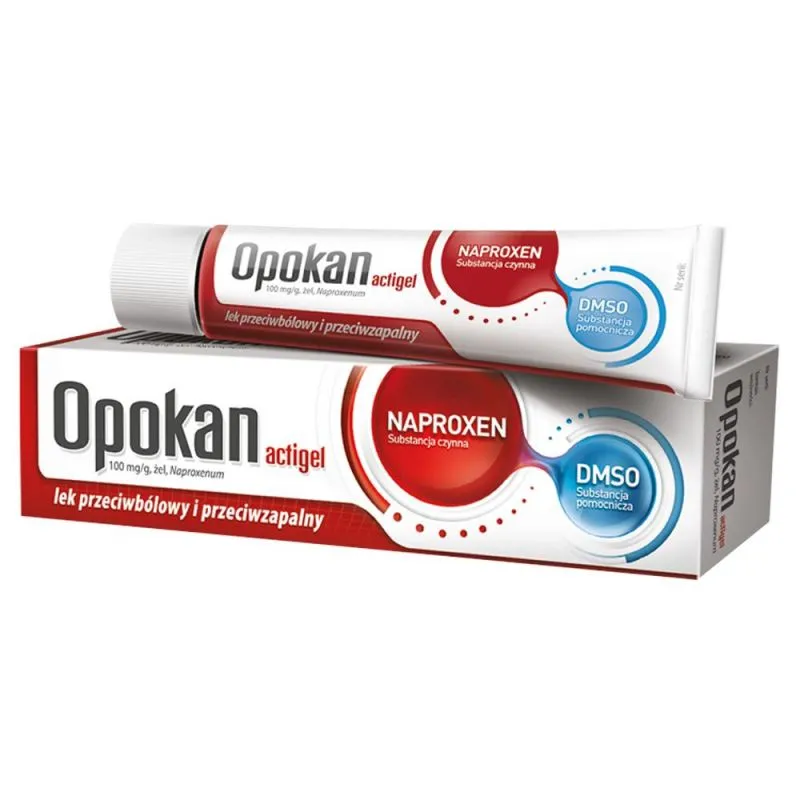
Table of Contents
Package leaflet: information for the patient
OPOKAN ACTIGEL, 100 mg/g, gel
Naproxenum
Please read the entire leaflet carefully before using the medicine, as it contains
important information for the patient.
This medicine should always be used exactly as described in this patient leaflet or as directed by
the doctor or pharmacist.
- Keep this leaflet so that it can be read again if necessary.
- If advice or additional information is needed, please consult a pharmacist.
- If the patient experiences any adverse reactions, including any adverse reactions not listed in this leaflet, inform a doctor or pharmacist. See section 4.
- If there is no improvement or if the patient feels worse after 7 days, consult a doctor.
Table of contents of the leaflet
- What Opokan Actigel is and what it is used for
- Important information before using Opokan Actigel
- How to use Opokan Actigel
- Possible side effects
- How to store Opokan Actigel
- Contents of the pack and other information
1. What Opokan Actigel is and what it is used for
Opokan Actigel contains the active substance naproxen, which has analgesic,
anti-inflammatory and antipyretic properties.
Indications
- Traumatic pain of muscles and joints (sprains, dislocations, contusions),
- Back pain,
- Pain in degenerative joint disease and rheumatoid arthritis.
2. Important information before using Opokan Actigel
When not to use Opokan Actigel
- if the patient is allergic to naproxen or any of the other ingredients of this medicine (listed in section 6);
- if the patient is allergic to other non-steroidal anti-inflammatory drugs (NSAIDs) or salicylates;
- if the patient has damaged skin (abrasions, open, oozing wounds, rashes);
- in children under 3 years of age;
- if the patient is in the third trimester of pregnancy.
Warnings and precautions
Before starting treatment with Opokan Actigel, discuss this with your doctor or pharmacist:
- if the patient has liver and/or kidney impairment;
- if the patient has peptic ulcer disease of the stomach and/or duodenum;
- if the patient has blood clotting disorders;
- if the patient has circulatory failure;
- if the patient is elderly (over 65 years of age).
While using Opokan Actigel, observe the following warnings.
- Do not use the medicine on large areas of skin or for prolonged periods, as naproxen is absorbed into the bloodstream and may cause adverse reactions (listed in section 4: Possible side effects).
- If an allergic reaction or skin changes occur at the site of application of Opokan Actigel, consult a doctor.
- Avoid contact of the medicine with eyes and mucous membranes. In case of accidental contact, wash the affected areas thoroughly with plenty of cool water.
- After applying Opokan Actigel to the skin, do not cover the area with any dressing (especially plastic film or adhesive bandage), as this increases drug absorption (see section 4: Possible side effects).
- During treatment and for 2 weeks after stopping treatment, avoid exposure to sunlight and sunbathing (including in solariums), as the medicine may cause photosensitivity to sunlight and UV radiation.
Effect on laboratory test results
Naproxen may alter values of adrenal cortex function markers and increase levels of 5-hydroxyindoleacetic acid, a metabolite of serotonin.
Children
Do not use in children under 3 years of age.
Opokan Actigel and other medicines
Inform your doctor or pharmacist about all medicines currently or recently used, as well as any medicines you plan to use.
No interactions have been reported so far between topically applied naproxen and other medicines. However, interactions may occur with prolonged use of naproxen on large skin areas.
Concurrent topical use of other medicines may cause or intensify their irritant effects. Therefore, do not apply two topical medicines simultaneously to the same area of skin.
Opokan Actigel may enhance the effect of:
- oral anticoagulants (used to reduce blood clotting);
- sulfonamides (medicines used to treat bacterial infections);
- oral antidiabetic medicines (sulfonylureas);
- acetylsalicylic acid and other non-steroidal anti-inflammatory drugs (NSAIDs) (e.g. ibuprofen);
- phenytoin, hydantoins, and valproic acid derivatives (medicines used to treat epilepsy);
- methotrexate (a medicine used to treat certain cancers and rheumatoid arthritis);
- lithium (a medicine used to treat depression);
- digoxin (a medicine used to treat heart failure and cardiac arrhythmias);
- aminoglycosides (antibiotics used to treat bacterial infections).
Do not use Opokan Actigel simultaneously with:
- probenecid (a medicine used to treat gout), as it increases naproxen blood concentration;
- antihypertensive medicines, as naproxen may reduce their effectiveness;
- diuretics (e.g. furosemide), due to the risk of electrolyte disturbances in blood (sodium, potassium).
Pregnancy and breastfeeding
Oral formulations (e.g. tablets) of naproxen may cause adverse effects in the unborn child. It is unknown whether the same risk applies when using Opokan Actigel on the skin.
If the patient is pregnant or breastfeeding, suspects she may be pregnant, or is planning to become pregnant, she should consult a doctor or pharmacist before using this medicine.
Pregnancy
Do not use Opokan Actigel during the last 3 months of pregnancy. Opokan Actigel should not be used during the first 6 months of pregnancy unless absolutely necessary and recommended by a doctor. If treatment is required during this period, the lowest dose for the shortest possible duration should be used.
Breastfeeding
Opokan Actigel should not be used in women who are breastfeeding.
Driving and operating machinery
There are no data available on the effect of this medicine on the ability to drive or operate machinery.
Opokan Actigel contains propylene glycol, ethanol, and dimethyl sulfoxide
Propylene glycol
The medicine contains 100 mg of propylene glycol in each gram of gel.
Ethanol
This medicine contains 285.6 mg of alcohol (ethanol) in each gram of gel.
May cause stinging on damaged skin.
Flammable medicine. Do not use near open flames, lit cigarettes, or certain devices (e.g. hair dryers).
Dimethyl sulfoxide
The medicine may cause skin irritation.
3. How to use Opokan Actigel
This medicine should always be used exactly as described in this patient leaflet or as directed by a doctor or pharmacist. If in doubt, consult a doctor or pharmacist.
Method of administration
The medicine is intended for topical application to the skin.
A small amount of gel (approximately a 5 cm strip) should be applied to the affected area 4 to 5 times daily, gently rubbed in until completely absorbed.
The maximum daily dose of naproxen for topical use is 500 mg (approximately a 25 cm strip of gel). A 5 cm strip of gel contains on average 100 mg of naproxen.
The gel should be applied to clean, dry skin.
After each application, hands should be thoroughly washed.
Duration of treatment
This medicine should not be used for longer than 7 days without consulting a doctor.
Children
Do not use in children under 3 years of age.
Use of more than the recommended dose of Opokan Actigel
If more medicine than recommended has been applied, wash off the gel immediately with soap and water, then apply the recommended amount.
In case of accidental ingestion of naproxen, seek medical advice immediately.
Symptoms may include drowsiness, nausea, and vomiting.
Ingestion of large doses may lead to respiratory depression, coma, convulsions, gastrointestinal bleeding, changes in blood pressure, or acute kidney failure. If less than 1 hour has passed since the overdose, vomiting should be induced (provided the patient is conscious).
Missed dose of Opokan Actigel
Continue using the medicine as before, without increasing the next dose.
Do not use a double dose to make up for a missed dose.
If you have any further questions about the use of this medicine, consult your doctor or pharmacist.
4. Possible adverse effects
Like all medicines, this medicine can cause adverse effects, although not everyone will experience them.
Use on large areas of skin or under an occlusive dressing may lead to the following adverse effects, which occur very rarely:
- itching, rash (itchy red bumps on the skin), urticaria (pinkish, itchy blisters on the skin), burning sensation, redness of the skin;
- severe allergic reactions such as: breathing difficulties, coughing fits, facial swelling, shortness of breath, palpitations (irregular, rapid heartbeat).
Opokan Actigel increases skin sensitivity to sunlight (see section: Warnings and precautions).
Prolonged use of the gel, especially on large areas of skin, may lead to systemic adverse effects typical of naproxen, such as:
- gastrointestinal disturbances (nausea, vomiting, constipation, diarrhoea, heartburn, abdominal pain);
- worsening of peptic ulcer symptoms of the stomach and/or duodenum;
- jaundice (yellowing of the skin and whites of the eyes);
- impaired kidney function;
- headaches and dizziness;
- difficulty concentrating, insomnia;
- tinnitus, visual disturbances.
If any of the above symptoms occur, discontinue use of the medicine and contact your doctor.
Reporting of adverse effects
If any adverse symptoms occur, including any not listed in this leaflet, inform your doctor or pharmacist.
Adverse effects can be reported directly to the Department of Monitoring Adverse Drug Reactions at the Office for Registration of Medicinal Products, Medical Devices and Biocidal Products
Al. Jerozolimskie 181C
02-222 Warsaw
Phone: +48 22 49 21 301
Fax: +48 22 49 21 309
Website: https://smz.ezdrowie.gov.pl
Adverse effects can also be reported to the marketing authorization holder.
Reporting adverse effects helps to provide more information on the safety of the medicine.
5. How to store Opokan Actigel
Keep this medicine out of sight and reach of children.
Store below 25°C. Protect from light and moisture. Keep in tightly
closed tubes.
Do not use this medicine after the expiry date stated on the tube and the outer packaging.
The expiry date refers to the last day of the stated month.
Medicines must not be disposed of via wastewater or household waste. Ask your pharmacist how to dispose of medicines no longer required. These measures will help protect the environment.
6. Contents of the package and other information
What Opokan Actigel contains
- The active substance is naproxen. 1 g of gel contains 100 mg of naproxen (in the form of sodium naproxen).
- The other ingredients are: dimethyl sulfoxide, 96% ethanol, propylene glycol, hydroxypropylcellulose, purified water.
What Opokan Actigel looks like and contents of the pack
Opokan Actigel is a gel, colourless to straw-coloured, free from impurities and visible particles to the naked eye. It may exhibit opalescence.
The medicinal product is packed in an aluminium tube with a membrane, latex ring and a polipropylene cap, placed in a cardboard box containing 50 g of gel.
Marketing Authorisation Holder and Manufacturer
Aflofarm Farmacja Polska Sp. z o.o.
ul. Partyzancka 133/151
95-200 Pabianice
tel. + 48 42 22-53-100