Ondemet
PolandTable of Contents
Package leaflet: Information for the user
Ondemet, 0.25 mg/mL, suspension for nebulization
Ondemet, 0.5 mg/mL, suspension for nebulization
Budesonidum
Please read this leaflet carefully before using the medicine, as it contains important information for the patient.
- Keep this leaflet so that you can read it again if necessary.
- If you have any questions, please consult your doctor or pharmacist.
- This medicine has been prescribed for a specific individual. Do not pass it on to others. The medicine may harm someone else, even if their symptoms are the same.
- If you experience any adverse reactions, including any adverse reactions not listed in this leaflet, inform your doctor or pharmacist. See section 4.
Table of contents of the leaflet:
- What Ondemet is and what it is used for
- Important information before using Ondemet
- How to use Ondemet
- Possible side effects
- How to store Ondemet
- Contents of the pack and other information
1. What Ondemet is and what it is used for
Ondemet belongs to a group of medicines called glucocorticosteroids (cortisone). Medicines in this group have anti-inflammatory effects.
Ondemet is indicated for:
- Treatment, reduction, and prevention of inflammatory conditions of the airways in asthma
- Treatment of symptoms of chronic obstructive pulmonary disease (COPD) by reducing airway inflammation
- Treatment of severe croup syndrome (inflammation of the larynx, which may cause breathing difficulties)
Ondemet should not be used as a substitute for a bronchodilator medicine.
2. Important information before using Ondemet
When not to use Ondemet
- if the patient is allergic to budesonide or any of the other ingredients of the medicine (listed in section 6).
Warnings and precautions
Before starting treatment with Ondemet, discuss this with your doctor or pharmacist if:
- the patient has or has had liver disease or liver problems
- the patient suffers from tuberculosis (active or inactive)
- the patient has fungal or viral respiratory infections
When switching from a corticosteroid-containing medicine to Ondemet, allergic symptoms such as rhinitis and eczema may recur in some cases. The patient may also experience fatigue, headache, muscle and joint pain, and sometimes nausea and vomiting. This is because the amount of corticosteroid produced by the body may decrease after prolonged use of corticosteroid medicines. These problems usually resolve after some time of continued treatment with Ondemet, but if symptoms are severe, immediately contact your doctor.
After taking the medicine, rinse the mouth with water to minimize the risk of developing oral or throat fungal infection. Contact your doctor if symptoms of fungal infection occur.
In rare cases, long-term treatment with Ondemet may slow down growth in children and adolescents. If a child is using this medicine for a prolonged period, the doctor will usually monitor the child's growth regularly.
If asthma symptoms worsen, consult your doctor. This may indicate the need to adjust the dosage or change treatment.
In case of an acute asthma attack, use a fast-acting bronchodilator.
If blurred vision or other visual disturbances occur, contact your doctor.
Children and adolescents
The doctor should regularly monitor the growth of children receiving long-term treatment with Ondemet. If growth is slowed, therapy should be re-evaluated.
Ondemet with other medicines
Tell your doctor or pharmacist about all medicines the patient is currently taking or has recently taken, as well as any medicines the patient plans to take, including over-the-counter and herbal medicines.
Some medicines may affect treatment with Ondemet, for example those containing:
- ketoconazole or itraconazole (found in medicines used to treat fungal infections)
- saquinavir, indinavir, ritonavir, nelfinavir, amprenavir, lopinavir, fosamprenavir, atazanavir or tipranavir (so-called HIV protease inhibitors used in the treatment of HIV)
Ondemet may affect pituitary function test results, specifically the ACTH stimulation test, leading to falsely low values.
Pregnancy and breastfeeding
Experience with use during pregnancy does not indicate an increased risk of developmental abnormalities. However, before using the medicine during pregnancy, consult your doctor, as asthma symptoms may change in severity and treatment adjustments may be necessary.
Budesonide passes into human breast milk. The effect of therapeutic doses of Ondemet on breastfed infants is considered unlikely. Ondemet may be used during breastfeeding.
If the patient is pregnant or breastfeeding, suspects she may be pregnant, or is planning to have a child, she should consult her doctor or pharmacist before using this medicine.
Driving and operating machinery
Ondemet has no influence on the ability to drive or operate machinery.
3. How to use Ondemet
This medicine should always be used exactly as prescribed by the doctor. If in doubt, consult
your doctor or pharmacist.
The doctor will inform the patient how much medicine to take. This will depend on the severity of the disease.
Ondemet should be used daily or as directed by the doctor, even if there are no symptoms of asthma.
Ondemet is administered using a nebulizer (an inhalation device). During inhalation through a mouthpiece or face mask, the medicine is carried with inhaled air into the airways. Therefore, it is important to breathe calmly and evenly while taking the dose – see the instructions for use.
Instructions for using the nebulizer.
Ondemet should only be used with a special inhalation device called a nebulizer.
Instructions for using Ondemet ampoules:
- Separate the required number of ampoules from the strip. Keep the remaining ampoules in the sachet to protect them from light.
- Gently shake the ampoule(s) for 30 seconds.
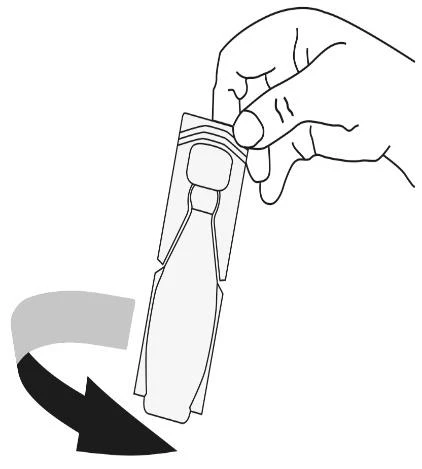
- Hold the ampoule in an upright position. Unscrew the top part of the ampoule(s).
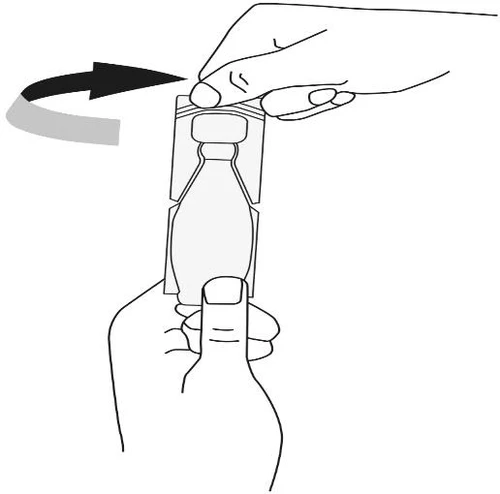
- Pour the prescribed amount of medicine into the nebulizer chamber. The single-dose container is marked with a line. If only 1 ml is to be used, hold the single-dose container upside down and empty it until the fluid level reaches the line.
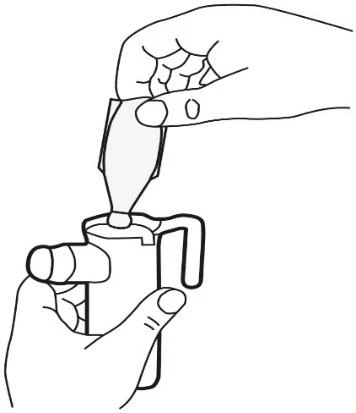
- Use the nebulizer according to the manufacturer's instructions and the doctor's recommendations.
- Discard used ampoules. If any solution remains unused in the ampoule, it may be used within 12 hours after opening the ampoule.
- Using a face mask or mouthpiece, inhale the mist from the nebulizer calmly and deeply while sitting or standing upright. When using a face mask, ensure that the mask fits properly. A face mask may be used for children to make inhalation easier.
- Rinse the mouth with water. Spit out the water. Do not swallow. If a face mask was used, also wash the face.
- After each use, wash the medicine container and the mouthpiece (or face mask) of the nebulizer with a mild detergent, then rinse thoroughly and dry completely. Refer to the instructions for cleaning and disinfecting the nebulizer.
An opened single-dose ampoule should be used within 12 hours and stored away from light before use.
Since at the beginning of nebulization there should always be at least 2 ml in the nebulization chamber, if the patient is to inhale only 1 ml of Ondemet, it must be diluted with physiological saline (sodium chloride solution 9 mg/ml [0.9%] for injection).
Use of a higher than recommended dose of Ondemet
If a single dose of Ondemet exceeds the recommended amount, it should not cause harmful effects.
However, if doses higher than those recommended by the doctor are taken for a prolonged period (several months), adverse effects may occur.
In case of overdose or accidental ingestion of the medicine by a child, contact a doctor or hospital immediately for risk assessment and advice.
It is important to take the dose exactly as indicated on the packaging or as directed by the doctor. Do not increase or decrease the dose without consulting your doctor.
Missed dose of Ondemet
If a prescribed dose of Ondemet has been missed, take the next dose as scheduled. Do not take a double dose to make up for the missed dose.
If you have any further doubts regarding the use of this medicine, consult your doctor or pharmacist.
4. Possible adverse effects
Like all medicines, this medicine may cause adverse effects, although not everyone will experience them.
Serious adverse effects:
Common (may occur in less than 1 in 10 people)
- Lung inflammation (in patients with COPD).
Tell the doctor if any of the following symptoms occur in the patient during treatment with Ondemet, as they may be symptoms of lung inflammation:
- fever or chills
- increased mucus production, change in mucus color
- worsening cough or increased breathing difficulties.
Rare (may occur in less than 1 in 1,000 people)
- Angioedema (swelling around the eyes, lips, genitals, hands, feet, or other parts of the body), anaphylaxis (swelling of lips and tongue, tightness in throat, breathing difficulties, feeling faint), bronchospasm (constriction of airway muscles).
Treatment with Ondemet should be discontinued and medical advice sought immediately if the patient experiences any of the following symptoms, which may be related to angioedema, anaphylaxis, or bronchospasm:
- swelling of the face, tongue, or throat
- difficulty swallowing
- difficulty breathing
- urticaria (hives)
Other possible adverse effects:
Common (occur in less than 1 in 10 people)
- Throat irritation, cough, oral candidiasis (fungal infection of the mouth and/or throat). Oral candidiasis is less likely if the mouth is rinsed with water after using Ondemet.
Uncommon (occur in less than 1 in 100 people)
- Blurred vision, cataract (clouding of the eye lens), depression, anxiety, muscle cramps, tremor
Rare (occur in less than 1 in 1,000 people)
- Immediate and delayed allergic reactions, such as urticaria and other skin rashes
- Adverse effects of corticosteroids. Inhaled corticosteroids may affect the body's physiological production of steroid hormones, especially with long-term use of high doses. Adverse effects include:
- Changes in bone mineral density (bone thinning).
- Glaucoma (increased eye pressure).
- Reduced growth rate in children and adolescents.
- Suppression of adrenal function (small gland located near the kidney).
The likelihood of these effects is significantly lower with inhaled corticosteroids than with oral cortisone tablets.
- Bruising, dysphonia (voice disorders), hoarseness, anxiety, behavioral disturbances (mainly in children).
Adverse effects with unknown frequency; frequency cannot be estimated from available data
- sleep disorders,
- aggression, feeling of intense excitement and/or irritability.
- glaucoma (increased eye pressure)
Reporting of adverse effects
If any adverse effects occur, including any not listed in this leaflet, inform a doctor or pharmacist. Adverse effects can be reported directly to the Department of Monitoring Adverse Drug Reactions of the Office for Registration of Medicinal Products, Medical Devices and Biocidal Products.
Al. Jerozolimskie 181C
02-222 Warsaw
Phone: +48 22 49 21 301
Fax: +48 22 49 21 309
Website: https://smz.ezdrowie.gov.pl
Adverse effects can also be reported to the responsible entity.
Reporting adverse effects helps to provide more information on the safety of the medicine.
5. How to store Ondemet
Keep this medicine out of the sight and reach of children.
Do not use this medicine after the expiry date stated on the outer packaging, sachet, and ampoule after EXP. The expiry date refers to the last day of the stated month.
Do not freeze.
Store in the original packaging to protect from light.
Shelf-life after opening the aluminium sachet: 3 months.
Shelf-life after opening the vial: 12 hours. Please note that if only 1 ml has been used, the remaining volume is not sterile.
Shelf-life after reconstitution of the medicinal product: the prepared suspension should be used within 30 minutes.
This product does not require any special storage conditions.
Medicines must not be disposed of via wastewater or household waste. Ask your pharmacist how to dispose of medicines no longer required. These measures will help protect the environment.
6. Contents of the pack and other information
What Ondemet contains
- The active substance is budesonide.
Ondemet 0,25 mg/mL: Each 2 mL ampoule contains 0.5 mg budesonide
Ondemet 0,5 mg/mL: Each 2 mL ampoule contains 1 mg budesonide - Other ingredients are: disodium edetate (E385), sodium chloride, polysorbate 80 (E433), anhydrous citric acid (E330), sodium citrate (E331), hydrochloric acid and sodium hydroxide (to adjust pH), and water for injections
What Ondemet looks like and contents of the pack
- Each ampoule contains 2 mL of a liquid, white to almost white in colour
- Ampoules are packed in strips of 5 units in sealed aluminium foil sachets (PET/Alu/PE)
- Pack sizes: Each pack contains 10, 20, 40, 60, 80 or 120 ampoules. Not all pack sizes may be marketed
Marketing Authorisation Holder
Zentiva k.s.
Dolní Měcholupy
U kabelovny 130
102 37 Prague 10
Czech Republic
Manufacturer
Genetic S.p.A.
Contrada Canfora
84084 Fisciano, Italy
This medicinal product is authorised in the European Economic Area under the following names:
Sweden, Norway: Budesonide Zentiva
Poland: Ondemet
For further information, please contact the Marketing Authorisation Holder:
Zentiva Polska Sp. z o.o.
ul. Bonifraterska 17
00-203 Warsaw
Tel.: +48 22 375 92 00