Normosan
Poland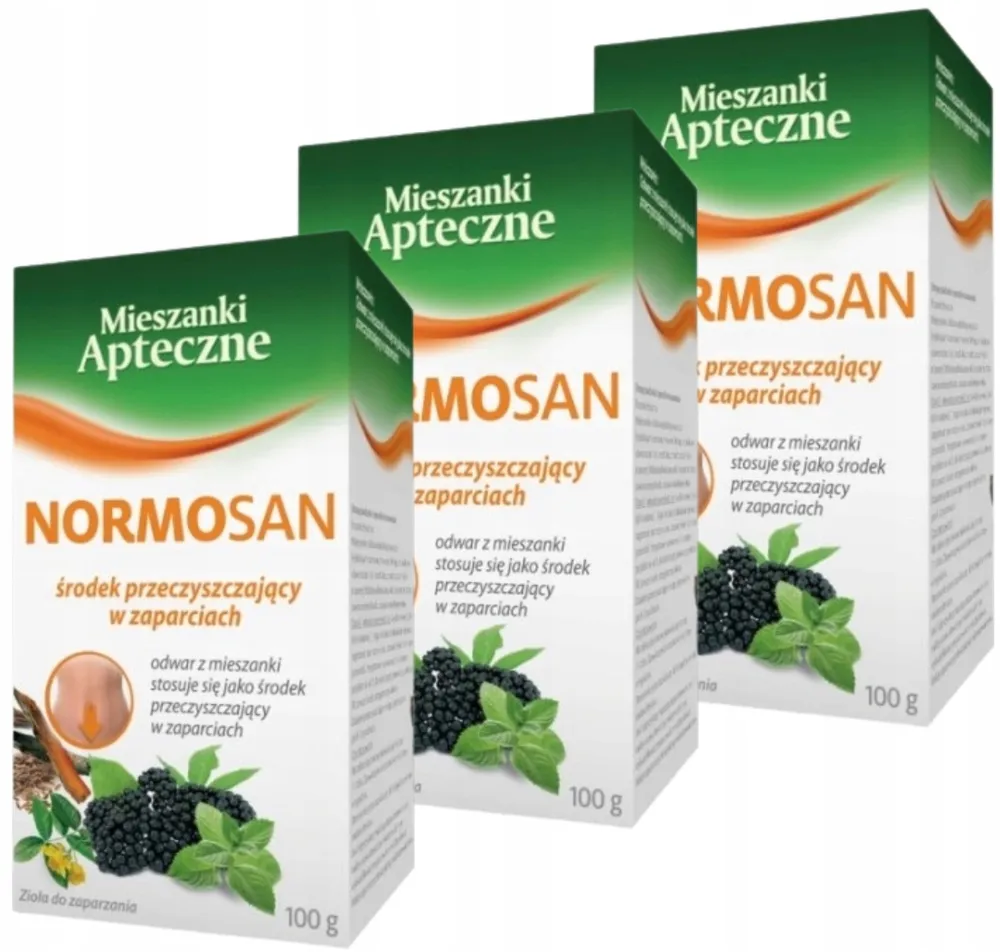
Table of Contents
Package leaflet: Information for the patient
NORMOSAN
22.02–29.79 mg of anthraquinone derivatives calculated as glucofrangulin A / 1.4 g,
herbal preparation for infusion
Please read all of this leaflet carefully before taking this medicine, because it contains
important information for the patient.
This medicine should always be taken exactly as described in this patient leaflet or as directed by
the physician or pharmacist.
- Keep this leaflet, so that you can read it again if necessary.
- If you need advice or further information, please consult your pharmacist.
- If you experience any adverse reactions, including any adverse reactions not listed in this leaflet, inform your doctor or pharmacist. See section 4.
- If there is no improvement after 7 days of treatment, or if your condition worsens, consult your doctor.
Contents of the leaflet
- What Normosan is and what it is used for
- Important information before taking Normosan
- How to take Normosan
- Possible side effects
- How to store Normosan
- Contents of the package and other information
1. What Normosan is and what it is used for
The herbal infusion is used as a herbal medicinal product intended for short-term use in occasional constipation.
2. Important information before taking Normosan
When not to take Normosan
- if the patient is allergic to buckthorn, senna, menthol or plants from the Apiaceae family (formerly Umbelliferae) (anise, caraway, celery, coriander, dill), common yarrow, or birch;
- if the patient has intestinal obstruction or narrowing, intestinal atony (stasis), appendicitis, inflammatory bowel diseases (e.g. Crohn's disease, ulcerative colitis), abdominal pain of unknown origin, severe dehydration with water and electrolyte deficiency;
- during pregnancy and breastfeeding;
- in children under 12 years of age.
Warnings and precautions
Before starting treatment with Normosan, consult a doctor or pharmacist.
- Avoid prolonged use of laxatives. Use exceeding 7 days may lead to intestinal dysfunction and development of dependency.
- If laxatives are needed daily, consult a doctor to determine the cause of constipation.
- This medicine should be used only when constipation persists despite dietary changes and use of stool-softening agents.
- Patients taking cardiac glycosides, antiarrhythmic drugs, drugs causing QT prolongation, diuretics, adrenocorticosteroids, or products containing liquorice root should consult a doctor before starting this medicine.
- This medicine should not be used in patients suffering from faecal impaction, or undiagnosed acute or persistent gastrointestinal disorders such as abdominal pain, nausea and vomiting, unless otherwise directed by a doctor.
- In patients with impaired kidney function, use of this medicine may cause electrolyte imbalance (hypokalaemia - reduced concentration of potassium ions in circulating blood, caused by excessive loss of potassium in urine or through the gastrointestinal tract).
- Use of this medicine is not recommended in patients with deficiency or absence of hydrochloric acid in the stomach, liver disease, gallstones, biliary tract inflammation, or other biliary tract disorders.
- Patients with gastro-oesophageal reflux (heartburn) should avoid using this medicine due to the risk of worsening symptoms. Patients with gallstones and other biliary tract disorders should exercise particular caution when using preparations containing peppermint leaves.
- When using buckthorn bark and senna leaf in patients with faecal incontinence, clothing and personal hygiene items should be changed more frequently to minimize skin contact with faeces. If symptoms worsen during treatment, consult a doctor or pharmacist.
Children
Do not use in children under 12 years of age.
Normosan and other medicines
Inform your doctor or pharmacist about all medicines currently or recently taken, as well as any medicines you plan to take.
Prolonged use of this medicine may cause excessive loss of potassium ions (hypokalaemia), which may enhance the effect of cardiac glycosides and lead to interactions with antiarrhythmic drugs.
Concurrent use with diuretics, adrenocorticosteroids, and products containing liquorice root may increase potassium loss.
Pregnancy and breastfeeding
If the patient is pregnant or breastfeeding, suspects she may be pregnant, or is planning to have a child, she should consult a doctor or pharmacist before using this medicine.
Use in pregnant women and women who are breastfeeding is contraindicated.
There are no data on the effect on fertility.
Driving and operating machinery
No studies have been conducted on the influence on the ability to drive or operate machinery.
3. How to take Normosan
This medicine should always be taken exactly as described in the patient leaflet or as directed by
your doctor or pharmacist. If in doubt, consult your doctor or pharmacist.
The maximum daily dose of hydroxyanthracene glycosides is 30 mg. This corresponds to 1.4 g of the product, equivalent to ¾ of a measuring spoon.
The appropriate individual dose is the lowest dose necessary to achieve soft stools.
Adolescents over 12 years of age, adults, elderly patients
Single dose:
1.4 g of herbal material for infusion (equivalent to ¾ of a measuring spoon (½ + ¼ of a measuring spoon)) should be poured with one glass of cold water, boiled with the lid on, then removed from heat and left to stand. After approximately 15 minutes, strain. The prepared infusion should be consumed in the evening, after a meal (from ⅔ to the full amount of the prepared infusion). Always drink freshly prepared infusion. The laxative effect usually occurs after 8–12 hours.
Duration of use
Do not use this medicine for longer than 1 week. Usually, it is sufficient to take this medicine 2 to 3 times per week.
Method of administration
Oral use.
If symptoms persist during treatment, consult your doctor or pharmacist.
Taking more Normosan than recommended
The main symptoms of overdose or abuse are severe abdominal pain and serious diarrhoea causing fluid and electrolyte loss. If you have taken more than the recommended dose, seek immediate medical advice. The doctor will recommend appropriate treatment (supportive therapy with intensive rehydration and monitoring of electrolyte levels, especially potassium). This is particularly important in elderly patients.
Long-term use of high doses of drugs containing anthranoids may lead to toxic liver inflammation.
If you forget to take Normosan
Do not take a double dose to make up for the missed dose.
Stopping Normosan
If you have any further doubts regarding the use of this medicine, consult your doctor or pharmacist.
4. Possible adverse effects
Like all medicines, this medicine may cause adverse effects, although not everyone will experience them.
Hypersensitivity reactions may occur: itching, urticaria, localised or generalised rash. Senna bark and senna leaf may cause abdominal pain and cramps, as well as watery diarrhoea, particularly in patients with irritable bowel syndrome. These symptoms are often due to overdose, and in such cases the dose should be reduced.
In patients with gastro-oesophageal reflux, the condition may worsen and heartburn may intensify.
Prolonged use of the medicine may lead to reversible pigmentation changes in the mucous membrane of the large intestine (pseudomelanosis coli).
Long-term use may lead to disturbances in water and electrolyte balance, potentially resulting in proteinuria and haematuria.
During treatment, urine may change colour to yellow or red-brown (depending on urine pH), however this symptom has no significant clinical relevance.
The frequency of occurrence of adverse effects is unknown (cannot be estimated from available data).
Reporting of adverse effects
If any adverse effects occur, including any not listed in this leaflet, inform a doctor or pharmacist. Adverse effects can be reported directly to the Department of Monitoring of Adverse Drug Reactions at the Office for Registration of Medicinal Products, Medical Devices and Biocidal Products
Al. Jerozolimskie 181C
02-222 Warsaw
Phone: +48 22 4921 301
Fax: +48 22 4921 309
Website: https://smz.ezdrowie.gov.pl
Adverse effects can also be reported to the marketing authorisation holder.
Reporting adverse effects helps to provide more information on the safety of the medicine.
5. How to store Normosan
Keep in tightly closed containers, at a temperature not exceeding 25°C. Protect from light, moisture and exposure to foreign odours.
The medicine should be stored out of sight and reach of children.
Do not use this medicine after the expiry date stated on the packaging. The expiry date refers to the last day of the stated month.
Medicines should not be disposed of via wastewater or household waste. Ask a pharmacist how to dispose of medicines no longer required. This will help protect the environment.
6. Contents of the packaging and other information
What Normosan contains
100 g of the mixture contains:
Rhamnus frangula L. ( Frangula alnus Miller) , cortex (buckthorn bark) 16.4-23.6 g
Cassia senna L. ( C. acutifolia Delile), known as Alexandrian or Charta sena, or Cassia angustifolia Vahl, known as Tinnevelly sena, foliolum (senna leaf) 7.9-14.3 g
Carum carvi L., fructus (caraway fruit) 35 g
Sambucus nigra L., fructus (black elderberry fruit) 10.1-23.7 g
Mentha x piperita L., folium (peppermint leaf) 17 g
1.4 g of herbal material for infusion (corresponding to ¾ measuring spoon (½ + ¼ measuring spoon)) contains 22.02-29.79 mg of anthraquinone derivatives calculated as glucofrangulin A.
What Normosan looks like and contents of the pack
A polypropylene foil sachet with an attached measuring spoon, packed in a cardboard box covered with foil.
Pack size: 100 g.
Marketing Authorisation Holder
Zakłady Farmaceutyczne POLPHARMA S.A.
Pelplińska Street 19, 83-200 Starogard Gdański, Poland
Manufacturer
Herbapol-Lublin S.A.,
Diamentowa Street 25, 20-471 Lublin, Poland