Normalac
Poland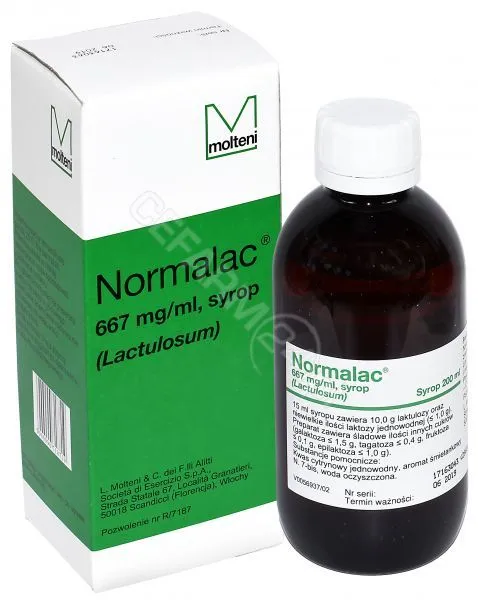
Table of Contents
Patient Information Leaflet
Normalac, 667 mg/ml, syrup
(Lactulosum)
Please read this leaflet carefully before using the medicine, as it contains
important information for the patient.
- This medicine should always be taken exactly as described in this patient leaflet or as directed by the physician or pharmacist.
- Keep this leaflet so that you can read it again if necessary.
- If you need advice or further information, consult your pharmacist.
- If you experience any adverse reactions, including any not listed in this leaflet, inform your doctor or pharmacist. See section 4.
- If there is no improvement after a few days, or if you feel worse, contact your doctor.
Table of contents
- What Normalac is and what it is used for
- Important information before taking Normalac
- How to take Normalac
- Possible side effects
- How to store Normalac
- Contents of the pack and other information
1. What Normalac is and what it is used for
The medicine contains the active substance lactulose, a synthetic disaccharide that is not broken down in the small intestine. Lactulose reaches the colon unchanged, where it is metabolized by bacteria into carbon dioxide and low-molecular-weight organic acids (such as lactic acid, acetic acid, and formic acid).
These acids cause:
- a reduction in pH in the colon, thereby increasing acidity, which significantly affects various metabolic processes and the balance of intestinal bacterial flora;
- natural regulation of bowel movements by increasing water content in the stool.
Indications:
- hepatic encephalopathy (neuropsychiatric disorders resulting from liver damage, particularly liver cirrhosis);
- constipation (regulation of bowel movements).
2. Important information before taking Normalac
When not to take Normalac
- if the patient is allergic to the active substance or to any of the other ingredients of this medicine (listed in section 6);
- if the patient has galactosaemia (a rare inherited disorder of sugar metabolism – inability to convert galactose into glucose);
- if the patient has intestinal obstruction (severe cramping abdominal pain, vomiting, bloating, patient does not pass gas or stool);
- if the patient has acute inflammatory bowel diseases, including ulcerative colitis and proctitis, Crohn's disease (characterized, among others, by chronic diarrhoea).
Warnings and precautions
- Normalac must not be used if abdominal pain, nausea and vomiting occur.
- Before using Normalac, the patient should inform the doctor: if chronic constipation occurs,
- if the patient has diabetes (see section: Normalac contains monohydrate lactose, galactose, fructose).
If Normalac is used for prolonged periods, contact your doctor, who may
order blood tests (electrolyte levels).
Children
In special cases, a doctor may prescribe Normalac for use in a child, infant,
or newborn. Normalac may be administered to infants and young children only
on a doctor's advice, as it may interfere with the natural defecation reflex.
In such cases, treatment will be closely supervised by a doctor.
Interaction of Normalac with other medicines
Inform your pharmacist or doctor about all medicines currently taken or
recently used, as well as any medicines the patient plans to use.
Before taking Normalac, the patient should inform the doctor if they are taking:
- neomycin (an antibiotic used to treat infections);
- digoxin (a medicine used to treat heart failure and heart rhythm disorders), because Normalac may enhance its toxic effects, especially when used in high doses;
- medicines used to treat constipation, as they should not be taken simultaneously with Normalac.
Pregnancy, breastfeeding and fertility
If the patient is pregnant or breastfeeding, suspects she may be pregnant, or is planning to become pregnant, she should consult a doctor or pharmacist before using this medicine.
There have been no adequate studies on the safety of using this medicine during pregnancy
and breastfeeding; therefore, consult a doctor or pharmacist before use.
Driving and operating machinery
Normalac has no effect on the ability to drive motor vehicles or
operate machinery.
Normalac contains monohydrate lactose, galactose, fructose
If the patient has previously been diagnosed with intolerance to certain sugars, the patient should
consult a doctor before taking this medicine.
3. How to take Normalac
This medicine should always be taken exactly as described in the patient leaflet, or according to
the instructions of a doctor or pharmacist. If in doubt, consult a doctor or pharmacist.
The medicine should be taken orally, with water, fruit juice or milk. The single dose should be swallowed without holding it too long in the mouth.
During treatment with laxatives, it is recommended to drink plenty of fluids (about 1.5–2
litres/day, i.e. 6–8 glasses).
Recommended dose
Hepatic encephalopathy (only in adults)
Initial dose: 30–45 ml 3–4 times daily.
This dose may be adjusted to a maintenance dose so that the patient has soft stools 2–3 times
per day.
Use in children:
There are no available data on use in children (under 18 years of age) with hepatic encephalopathy.
Constipation
| Initial daily dose | Maintenance daily dose | |
| Adults and adolescents | 15-45 ml | 15-30 ml |
| Children (7-14 years) | 15 ml | 10-15 ml |
| Children (1-6 years) | 5-10 ml | 5-10 ml |
| Infants (below 1 year) | up to 5 ml | up to 5 ml |
The medicine can be taken as a single daily dose or in two divided doses. In the case of a single daily dose, it should be taken at the same time each day, for example during breakfast.
After several days, the initial dose may be adjusted to a maintenance dose based on the treatment response achieved. The therapeutic effect may occur after a few days (2–3 days) of treatment.
Use in children:
Laxatives in children, infants, and newborns should be used only in special circumstances and under medical supervision, as they may interfere with the natural defecation reflex.
Do not administer Normalac to children (< 14 years of age) without consulting a physician, who will prescribe the medicine and supervise the treatment.
To measure the dose, use the measuring cup provided with the package.
Elderly individuals and patients with renal or hepatic impairment:
No special dosage recommendations are required.
Overdose of Normalac
If an overdose of Normalac has been taken, contact a physician immediately.
Overdose may cause osmotic diarrhoea (caused by impaired absorption) and cramp-like abdominal pain. These symptoms resolve after discontinuation of the medicine.
Missed dose of Normalac
Continue taking the medicine as prescribed, without increasing the next dose.
Do not take a double dose to make up for a missed dose.
If you have any further questions regarding the use of this medicine, consult your physician or pharmacist.
4. Possible adverse reactions
Like all medicines, this medicine can cause adverse reactions, although not everybody will experience them.
The following adverse reactions may occur.
Common (occur in 1 to 10 people in 100):
- Excessive passage of gas (flatulence), abdominal pain, diarrhoea, bloating, especially when the medicine is taken in high doses.
Frequency not known:
- Electrolyte deficiencies (sodium, potassium) caused by diarrhoea. In such cases, consult a doctor (see section: Warnings and precautions).
- Allergic reactions, rash, itching, urticaria.
Reporting of adverse reactions
If any adverse reactions occur, including any possible adverse reactions not listed in this leaflet, inform your doctor or pharmacist.
Adverse reactions can be reported directly to the Department of Monitoring of Adverse Drug Reactions at the Office for Registration of Medicinal Products, Medical Devices and Biocidal Products
Al. Jerozolimskie 181C, 02-222 Warsaw
Tel.: + 48 22 49 21 301; Fax: + 48 22 49 21 309. Website: https://smz.ezdrowie.gov.pl.
Adverse reactions can also be reported to the marketing authorization holder.
Reporting adverse reactions helps provide more information on the safety of this medicine.
5. How to store the medicine Normalac
Keep the medicine out of the sight and reach of children. Store at a temperature below 25°C.
Storing the medicine at low temperatures may cause it to thicken. After warming, the consistency of the medicine will return to its original state.
Slight darkening of the solution does not affect its therapeutic properties.
Do not use this medicine after the expiry date stated on the packaging. The expiry date refers to the last day of the stated month.
Medicines must not be disposed of via wastewater or household waste. Ask your pharmacist how to dispose of medicines no longer required. Such measures help protect the environment.
6. Contents of the pack and other information
What Normalac contains
- The active substance is lactulose. 15 ml of syrup contains 10.0 g of lactulose and a small amount of lactose monohydrate (1.0 g). The medicine contains trace amounts of other sugars (galactose 1.5 g, tagatose 0.4 g, fructose 0.1 g, epilactose 1.0 g).
- Other ingredients: citric acid monohydrate, cream flavour N.7-bis, purified water.
What Normalac looks like and contents of the pack
Normalac is a clear yellow syrup with a sweet taste.
Packaging:
- A bottle made of coloured glass containing 150 ml of medicine, with an aluminium cap lined with lacquer and a polyethylene seal, placed in a cardboard box with the patient leaflet and a PP measuring cup,
- A PET bottle containing 200 ml of medicine, with an HPDE cap, placed in a cardboard box with the patient leaflet and a PP measuring cup.
Marketing Authorisation Holder and Manufacturer:
L. Molteni & C. dei F.lli Alitti Società di Esercizio S.p.A.,
Strada Statale 67, Località Granatieri,
50018 Scandicci (Florence), Italy
For further information about this medicine, please contact the representative of the Marketing Authorisation Holder:
Molteni Farmaceutici Polska Sp. z o.o.
Józefa Korzeniowskiego 39 Street,
30-214 Kraków,
Tel.: (12) 653 15 71 or 653 15 72