Nootropil
Poland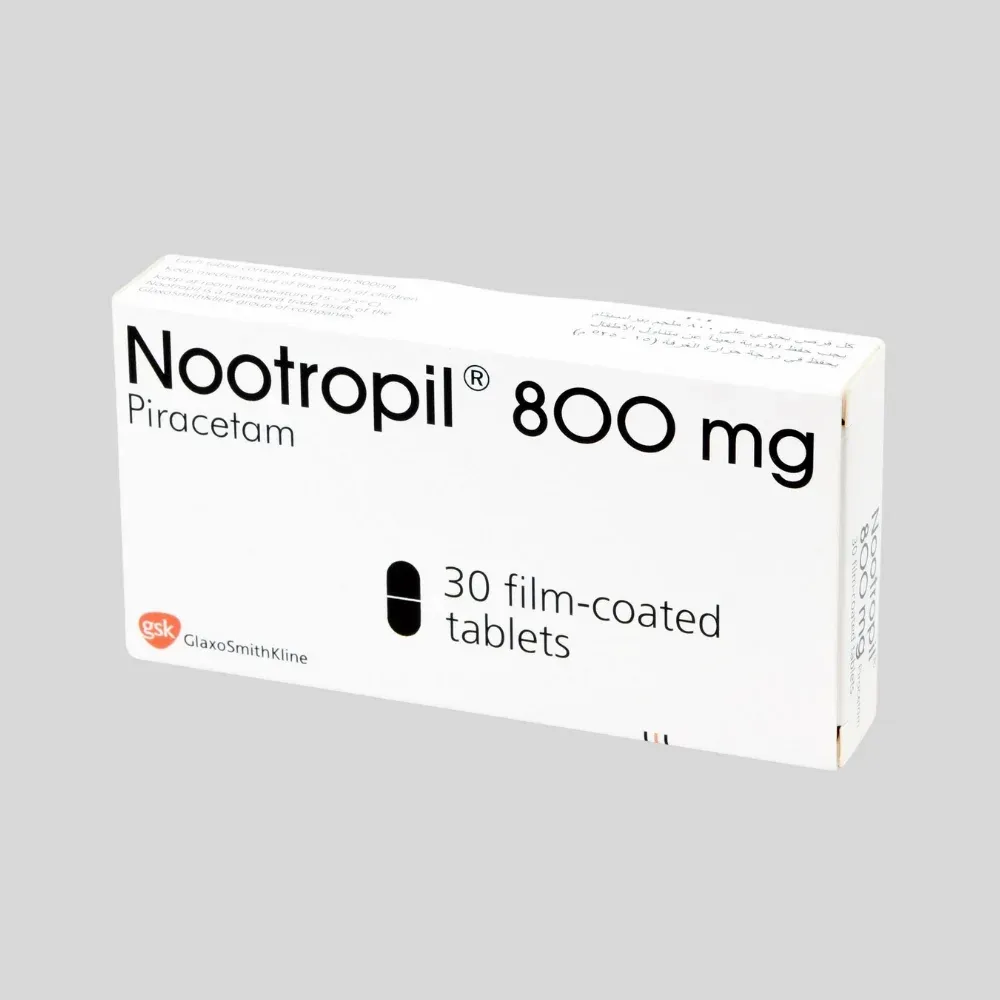
Table of Contents
Package leaflet: information for the patient
Warning! Keep this leaflet. Information on the immediate packaging is in a foreign language.
Nootropil (Nooτροπ)
1200 mg, coated tablets
Piracetamum
Nootropil and Nooτροπ are different trade names of the same medicinal product written in Polish and Greek.
Please read this leaflet carefully before using the medicine, as it contains
important information for the patient.
- Keep this leaflet, so that you can read it again if necessary.
- If you have any doubts, please consult your doctor or pharmacist.
- This medicine has been prescribed for a specific individual. Do not pass it on to others. The medicine may harm another person, even if their symptoms are the same.
- If any adverse reactions occur in the patient, including any adverse reactions not listed in this leaflet, inform your doctor, pharmacist or nurse. See section 4.
Table of contents of the leaflet:
- What Nootropil is and what it is used for
- Important information before taking Nootropil
- How to take Nootropil
- Possible side effects
- How to store Nootropil
- Contents of the pack and other information
1. What Nootropil is and what it is used for
Nootropil is a medicine belonging to the group of nootropic agents. It reduces blood viscosity, increases blood flow through cerebral vessels without vasodilatory effects, and enhances oxygen utilization and glucose consumption in ischemic brain tissue.
Indications for Nootropil
Nootropil is used in the treatment of:
- cortical myoclonus (brief, sudden, "lightning-like" muscle jerks affecting one or more limbs or the trunk);
- dyslexic disorders in children, in combination with speech therapy;
- vertigo (dizziness).
2. Important information before using Nootropil
When not to use Nootropil:
- if the patient is allergic to piracetam, other pyrrolidone derivatives, or to any of the other ingredients of this medicine (listed in section 6);
- if the patient has intracranial bleeding;
- if the patient has end-stage renal failure;
- if the patient has Huntington's chorea.
Warnings and precautions
Before starting treatment with Nootropil, discuss it with your doctor or pharmacist.
Due to the effect of piracetam on platelet aggregation, caution is advised in patients with
coagulation disorders, those undergoing major surgical procedures, and those with severe
bleeding or at risk of bleeding, e.g. in peptic ulcer disease of the stomach and intestines, coagulation disorders, history of haemorrhagic stroke, undergoing major surgical procedures including dental procedures, or those taking anticoagulant products or platelet aggregation inhibitors, including low-dose acetylsalicylic acid.
Do not abruptly discontinue treatment in patients treated for myoclonus, to avoid recurrence of myoclonus or generalized seizures.
Taking Nootropil with food, drink and alcohol
Nootropil may be taken during or between meals.
Children and adolescents
See: "How to take Nootropil".
Use of Nootropil in patients with impaired kidney and/or liver function
Piracetam is excreted by the kidneys. Caution is required when administering the medicine to patients with impaired renal function. Depending on the severity of renal impairment, dose adjustment may be necessary.
Use of Nootropil in elderly patients
In elderly patients with impaired renal function, the doctor will adjust the dose.
Pregnancy and breastfeeding
If the patient is pregnant or breastfeeding, suspects she may be pregnant, or is planning to have a child, she should consult her doctor or pharmacist before using this medicine.
There is insufficient data on the use of piracetam in pregnant women. Piracetam crosses the placental barrier. Drug concentrations in newborns' blood are approximately 70–90% of maternal concentrations.
Piracetam passes into human milk. Therefore, the use of piracetam during breastfeeding should be avoided or breastfeeding should be discontinued during treatment with piracetam.
Driving and operating machinery
This medicine may affect the ability to drive and operate machinery, and this effect should be taken into account.
Nootropil and other medicines
Inform your doctor or pharmacist about all medicines currently or recently taken, as well as any medicines planned for use.
In particular, inform about the use of:
- thyroid hormones. Cases of confusion, irritability and insomnia have been reported when the medicine is used concomitantly with thyroid hormones (T* + T*).
- anticoagulant medicines, such as acenocoumarol.
The likelihood of piracetam affecting the metabolism of other drugs is low.
Concomitant administration of alcohol has no effect on serum piracetam concentrations. Oral administration of a 1.6 g dose of piracetam does not affect alcohol concentrations. However, alcohol consumption is not recommended during treatment with this medicine.
Nootropil contains sodium
1 coated tablet contains less than 1 mmol (23 mg) of sodium.
The maximum daily dose (24 g of piracetam) contains approximately 46 mg of sodium, a major component of table salt. This corresponds to 2.3% of the maximum recommended daily dietary intake of sodium in adults.
3. How to use Nootropil
Nootropil is available in the following strengths: 800 mg and 1200 mg.
This medicine should always be used according to the instructions given by your doctor or pharmacist. If you are in any doubt,
you should consult your doctor or pharmacist.
1000 mg converted into grams is: 1 g.
1200 mg coated tablets converted into grams is: 1.2 g.
Treatment of cortical myoclonus
Treatment should be initiated at a dose of 7.2 g of Nootropil per day, increasing every 3 or 4 days
by 4.8 g of Nootropil per day up to a maximum dose of 24 g per day. Nootropil should be taken
in divided doses 2 or 3 times daily.
When used concomitantly with other antimyoclonic drugs, the doses of other medications should be
maintained at their recommended therapeutic levels. If clinical improvement is achieved and it is feasible,
the doses of other drugs should be reduced.
In patients with myoclonus, symptoms may evolve over time; therefore, every 6 months
the physician should attempt to reduce the dose or discontinue the drug. To achieve this, the dose of
piracetam should be reduced by 1.2 g every two days to prevent sudden recurrence of the disease.
Treatment of dyslexic disorders in children in combination with speech therapy
In combination with speech therapy in children aged 8 to 13 years: 3.2 g of Nootropil per day in 2 divided doses.
Treatment of vertigo
2.4 g of Nootropil per day in 3 divided doses of 0.8 g each, for 8 weeks.
The physician may reduce the dose of piracetam in patients with impaired renal function.
Use in elderly patients
In elderly patients undergoing long-term treatment with piracetam, the physician will individually adjust
the dose after assessing renal function.
Use of a higher than recommended dose of Nootropil
If a higher than recommended dose is taken, medical advice should be sought immediately from a doctor or pharmacist.
Symptoms of overdose: one case of bloody diarrhoea and abdominal pain has been reported in a patient who overdosed on the drug.
There is no specific antidote in case of piracetam overdose. Treatment of overdose is symptomatic and may include hemodialysis,
gastric lavage, or induction of emesis.
Missed dose of Nootropil
Do not take a double dose to make up for a missed dose.
4. Possible adverse reactions
Like all medicines, this medicine can cause adverse reactions, although not everyone experiences them.
The adverse reactions reported in clinical trials and after marketing of the medicine are listed below, classified by frequency as follows:
Very common: more than 1 in 10 patients;
Common: 1 to 10 in 100 patients;
Uncommon: 1 to 10 in 1,000 patients;
Rare: 1 to 10 in 10,000 patients;
Very rare: less than 1 in 10,000 patients;
Frequency not known: cannot be estimated from available data.
Common
- Nervousness
- Weight gain
- Increased motor activity (hyperkinesia)
Uncommon
- Weakness (asthenia)
- Depression
- Somnolence
Frequency not known
- Bleeding disorders
- Anaphylactoid reactions (a type of drug hypersensitivity reaction)
- Hypersensitivity
- Agitation
- Anxiety
- Confusion
- Hallucinations
- Dizziness
- Abdominal pain
- Epigastric pain
- Diarrhea
- Nausea
- Vomiting
- Angioedema
- Dermatitis
- Itching
- Urticaria
- Coordination disorders (ataxia)
- Balance disorders
- Worsening of epilepsy
- Headache
- Insomnia
Immediately inform a doctor if symptoms such as skin redness, swelling, urticaria, shortness of breath, laryngeal edema, or breathing difficulties occur.
Reporting of adverse reactions
If any adverse reactions occur, including any adverse reactions not listed in this leaflet, inform a doctor, pharmacist, or nurse. Adverse reactions can be reported directly to the Department of Monitoring of Adverse Drug Reactions at the Office for Registration of Medicinal Products, Medical Devices and Biocidal Products, Al. Jerozolimskie 181C, 02-222 Warsaw, phone: +48 22 49 21 301, fax: +48 22 49 21 309, website: https://smz.ezdrowie.gov.pl
Reporting adverse reactions enables the collection of further information on the safety of the medicine.
5. How to store Nootropil
Keep this medicine out of the sight and reach of children.
There are no special requirements for the storage of this medicinal product.
Do not use this medicine after the expiry date stated on the container. The expiry date refers to the last day of the stated month.
Medicines must not be disposed of via wastewater or household waste. Ask your pharmacist how to dispose of medicines no longer required. These measures will help protect the environment.
6. Contents of the packaging and other information
What Nootropil contains
The active substance in Nootropil is piracetam. One coated tablet contains 1200 mg of piracetam.
The other ingredients are:
core: polyethylene glycol 6000, anhydrous colloidal silicon dioxide (Aerosil), magnesium stearate,
sodium croscarmellose.
coating: polyethylene glycol 6000, Opadry Y-1-7000 (polyethylene glycol 400, titanium dioxide, hypromellose 2910 5 cp), Opadry OY-S-29019 clear (polyethylene glycol 6000, hypromellose 2910 50 cp).
What Nootropil looks like and contents of the packaging
White, elongated, divisible tablets marked with N/N.
Packaging contains: 20, 60, 100 or 120 coated tablets.
For more detailed information, please contact the marketing authorisation holder or the parallel importer.
Marketing authorisation holder in Greece, country of export:
UCB A.E., Agiou Dimitriou 63, 174 56 Alimos, Greece
Manufacturer:
UCB Pharma S.A., Chemin du Foriest, B-1420 Braine l’Alleud, Belgium
Aesica Pharmaceuticals GmbH, Alfred-Nobel-Str. 10, 40789 Monheim am Rhein, Germany
Parallel importer:
Delfarma Sp. z o.o., ul. Św. Teresy od Dzieciątka Jezus 111, 91-222 Łódź
Repackaged in:
Delfarma Sp. z o.o., ul. Św. Teresy od Dzieciątka Jezus 111, 91-222 Łódź
Marketing authorisation number in Greece, country of export: 6918/02-02-2006
42558/10/31-05-2011
Parallel import authorisation number: 242/20