Nizoral
Poland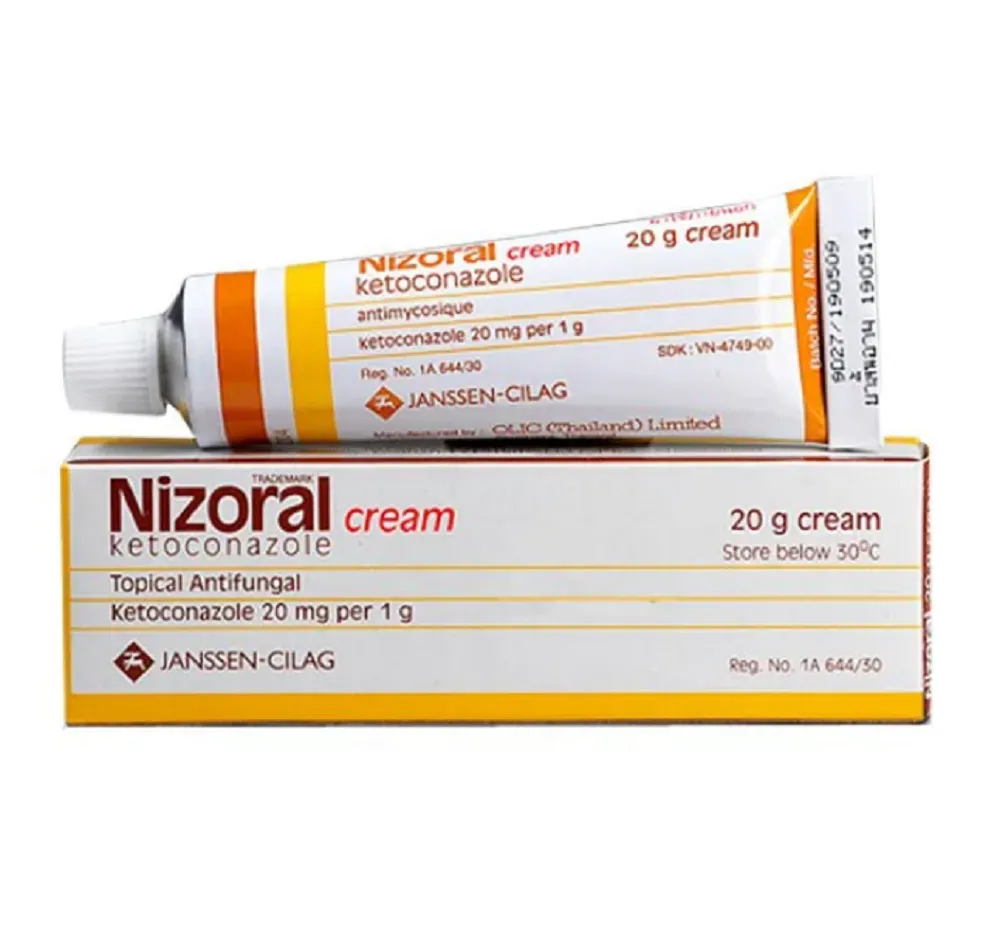
Table of Contents
Package leaflet: Information for the user
Warning! Keep this leaflet. The information on the immediate packaging is in a foreign language.
Nizoral (Fungarest)
20 mg/g, cream
Ketoconazole
Nizoral and Fungarest are different trade names for the same medicine.
Please read this leaflet carefully before using the medicine, as it contains
important information for the patient.
This medicine should always be used exactly as described in this patient leaflet or as directed by
the doctor or pharmacist.
- Keep this leaflet, so that you can read it again if necessary.
- If you need advice or further information, please consult your pharmacist.
- If you experience any adverse reactions, including any possible adverse reactions not listed in this leaflet, inform your doctor, pharmacist, or nurse. See section 4.
- If your condition does not improve or worsens, contact your doctor.
Table of contents
- What Nizoral cream is and what it is used for
- Important information before using Nizoral cream
- How to use Nizoral cream
- Possible side effects
- How to store Nizoral cream
- Contents of the pack and other information
1. What Nizoral cream is and what it is used for
Nizoral cream contains the active substance ketoconazole, which has strong antifungal activity. Ketoconazole acts against dermatophytes of the genera: Trichophyton, Epidermophyton, Microsporum, as well as yeasts of the genera Candida and Malassezia (Pityrosporum).
Indications
Topical treatment of fungal skin infections of the trunk, groin, hands and feet caused by the following dermatophytes:
Trichophyton rubrum, Trichophyton mentagrophytes, Microsporum canis, Epidermophyton floccosum,
as well as cutaneous candidiasis and pityriasis versicolor (Pityriasis versicolor).
Nizoral cream is also indicated for the treatment of seborrhoeic dermatitis associated with the yeast Malassezia ovale (Pityrosporum ovale).
2. Important information before using Nizoral cream
When not to use Nizoral cream
- if the patient is allergic to ketoconazole or to any of the other ingredients of this medicine (listed in section 6).
Warnings and precautions
Before starting to use Nizoral cream, discuss this with your doctor or pharmacist.
Avoid contact of the medicine with the eyes.
Page 1 of 4
In case of prior topical treatment of seborrhoeic dermatitis with corticosteroids,
corticosteroid treatment should be gradually discontinued over a period of 2 weeks before using
Nizoral cream, as abrupt discontinuation has been associated with worsening of disease symptoms.
Nizoral cream and other medicines
No data available.
Inform your doctor or pharmacist about all medicines the patient is currently taking or has recently taken, as well as any medicines the patient plans to use.
Pregnancy and breastfeeding
If the patient is pregnant or breastfeeding, suspects she may be pregnant, or is planning to become pregnant, she should consult her doctor or pharmacist before using this medicine.
Nizoral cream should only be used during pregnancy and breastfeeding if recommended by a doctor, as there are no data on the safety of the medicine during pregnancy and breastfeeding.
Driving and operating machinery
No studies have been conducted on the influence of the medicine on the ability to drive motor vehicles
and operate machinery.
Nizoral cream contains propylene glycol, cetyl alcohol and stearyl alcohol
The medicine contains 200 mg of propylene glycol in each 1 g of cream. Propylene glycol may cause skin irritation.
Due to the presence of excipients – cetyl alcohol and stearyl alcohol – the medicine may cause local skin reactions (e.g. contact dermatitis).
3. How to use Nizoral cream
This medicine should always be used exactly as described in the patient information leaflet or as directed by a doctor or pharmacist. If in doubt, consult a doctor or pharmacist.
Nizoral cream is intended for topical use on adults.
Cutaneous candidiasis, tinea corporis, tinea cruris, tinea manuum and tinea pedis, pityriasis versicolor:
Apply Nizoral cream to the affected areas of skin and to the skin immediately surrounding them, once daily.
Average duration of treatment:
- pityriasis versicolor: 2 to 3 weeks,
- cutaneous candidiasis: 2 to 3 weeks,
- tinea cruris: 2 to 4 weeks,
- tinea corporis: 3 to 4 weeks,
- tinea pedis: 4 to 6 weeks.
Seborrhoeic dermatitis:
For skin infections presenting with brownish-red patches or white and yellow scales (seborrhoeic dermatitis), apply Nizoral cream once or twice daily. Symptoms usually resolve within 2 to 4 weeks.
Improvement is usually noticeable after 4 weeks of treatment. If no improvement is observed, consult a doctor.
Continue using the medicine for several days after complete disappearance of infection symptoms.
Even after full recovery, to prevent recurrence of the disease, the patient should continue using Nizoral cream once a week or once every two weeks.
During treatment, basic hygiene measures should be followed to prevent re-infection.
Use of more than the recommended dose of Nizoral cream
Significant overdose may cause redness, burning sensation, and swelling of the skin.
If such symptoms occur, consult a doctor.
In case of accidental ingestion of Nizoral cream, contact a doctor for appropriate treatment.
Missed application of Nizoral cream
If a dose is missed, apply the cream as soon as possible. Do not use a double dose to make up for the missed dose.
4. Possible adverse reactions
Like all medicines, this medicine can cause adverse reactions, although not everybody will experience them.
The following adverse reactions may occur:
- Common (in more than 1 in 100 and less than 1 in 10 patients): erythema and itching at the application site; sensation of burning of the skin;
- Uncommon (in more than 1 in 1,000 and less than 1 in 100 patients): at the application site there may occur bleeding, discomfort and dryness, inflammation, irritation, paresthesia (unpleasant sensation of tingling, numbness, or changes in skin temperature, i.e. feeling of intense heat or cold), reactions at the application site. Hypersensitivity, vesicular changes, contact dermatitis, rash, desquamation, and stickiness of the skin may also occur uncommonly. After administration of Nizoral cream, urticaria occurred very rarely (in less than 1 in 10,000 patients).
Reporting of adverse reactions
If any adverse reactions occur, including any adverse reactions not listed in the leaflet, inform your doctor, pharmacist, or nurse. Adverse reactions can be reported directly to the Department of Monitoring of Adverse Drug Reactions of the Office for Registration of Medicinal Products, Medical Devices and Biocidal Products
Al. Jerozolimskie 181C
02-222 Warsaw
Phone: +48 (22) 49 21 301
Fax: +48 (22) 49 21 309
Website: https://smz.ezdrowie.gov.pl
Reporting adverse reactions allows further information on the safety of the medicine to be collected.
5. How to store Nizoral cream
Page 3 of 4
Keep the medicine out of the sight and reach of children.
No special storage instructions apply.
The tube should be kept closed.
Do not use this medicine after the expiry date stated on the packaging.
The expiry date refers to the last day of the stated month.
Medicines should not be disposed of via wastewater or household waste. Ask your pharmacist how to dispose of medicines you no longer use. This will help protect the environment.
6. Contents of the package and other information
What Nizoral cream contains
- The active substance is ketoconazole. 1 g of cream contains 20 mg of ketoconazole.
- The other ingredients are: propylene glycol, stearyl alcohol, cetyl alcohol, sorbitan stearate, polysorbate 60, isopropyl myristate, sodium sulfite, polysorbate 80, purified water.
What Nizoral cream looks like and contents of the pack
The medicine is a cream.
The packaging consists of an aluminium tube with a PP cap, containing 30 g of cream, placed in a cardboard box.
For more detailed information, please contact the marketing authorisation holder or the parallel importer.
Marketing authorisation holder in Spain, country of export:
Laboratorio STADA, S.L., Frederic Mompou, 5, 08960 Sant Just Desvern (Barcelona), Spain
Manufacturer:
JANSSEN PHARMACEUTICA, N.V., Turnhoutseweg, 30, 2340 Beerse, Belgium
STADA Arzneimittel AG, Stadastrasse 2-18, 61118 Bad Vilbel, Germany
Parallel importer:
Delfarma Sp. z o.o., ul. Św. Teresy od Dzieciątka Jezus 111, 91-222 Łódź
Repackaged in:
Delfarma Sp. z o.o., ul. Św. Teresy od Dzieciątka Jezus 111, 91-222 Łódź
Marketing authorisation number in Spain, country of export: 977314.4
Parallel import authorisation number: 26/25
Page 4 of 4