Nitromint
Poland
Table of Contents
Package leaflet: Information for the user
Nitromint
0.4 mg per dose, sublingual aerosol, solution
Glyceroli trinitras
Please read all of this leaflet carefully before using this medicine, because it contains
important information for the patient.
- Keep this leaflet, as you may need to read it again.
- If you have any questions, please consult your doctor or pharmacist.
- This medicine has been prescribed for a specific individual. Do not pass it on to others. This medicine may harm other people, even if their symptoms are the same.
- If the patient experiences any adverse reactions, including any not listed in this leaflet, they should inform their doctor or pharmacist. See section 4.
Table of contents
- What Nitromint is and what it is used for
- Important information before using Nitromint
- How to use Nitromint
- Possible side effects
- How to store Nitromint
- Contents of the pack and other information
1. What Nitromint is and what it is used for
Glycerol trinitrate, the active substance in Nitromint, is a vasodilator. By acting on the smooth muscles of blood vessels, glycerol trinitrate dilates peripheral veins and arteries, thereby reducing the heart's preload and afterload, decreasing cardiac workload and oxygen demand, improving coronary circulation and oxygen supply to the ischemic myocardium. These effects improve cardiac performance and exercise tolerance.
Nitromint may be used during acute angina attacks (chest pain) and for preventing angina episodes by administering the medicine before anticipated physical exertion. It may also be used as supportive treatment in acute cases of left ventricular failure.
When administered to the buccal mucosa, glycerol trinitrate is rapidly absorbed, and its effect begins within 1 to 1.5 minutes.
2. Important information before using Nitromint
When not to use Nitromint
- If the patient is allergic to glyceryl trinitrate, other nitrates, or any of the other ingredients of this medicine (listed in section 6) (if the patient previously experienced facial swelling, limb swelling, swelling of the lips, oral cavity, tongue, glottis, and (or) larynx when using any preparation containing nitrates).
- If the patient has angina pectoris caused by hypertrophic cardiomyopathy with outflow tract obstruction (abnormal enlargement of the heart).
- If the patient is taking certain medications used to treat erectile dysfunction (medications containing sildenafil, vardenafil, or tadalafil as the active substance), because concomitant use may lead to severe, life-threatening hypotension.
- If the patient suffers from a condition in which intracranial pressure may increase (e.g., head trauma, stroke).
- If the patient is taking riociguat, a medication used to treat high blood pressure in the pulmonary arteries (pulmonary hypertension), because concomitant use may lead to a drop in blood pressure.
Warnings and precautions
Before starting treatment with Nitromint, consult your doctor or pharmacist.
Special caution and careful medical monitoring may be necessary:
- In case of shock (severe form of circulatory failure) or syncope (fainting),
- In certain cases of heart valve disorders (e.g., aortic or mitral valve stenosis),
- If the patient has cardiac tamponade (accumulation of fluid in the sac surrounding the heart),
- If the patient has constrictive pericarditis (inflammation of the smooth membrane surrounding the heart),
- If the patient has previously experienced problems due to sudden drop in blood pressure upon changing body position (sitting or standing up),
- In case of significant hypotension (low blood pressure with systolic pressure below 90 mmHg),
- If the patient suffers from a condition in which the heart is unable to deliver sufficient oxygenated blood to the body's tissues (cardiogenic shock),
- If the patient suffers from a disease affecting blood vessels supplying the brain (cerebrovascular disease),
- If the patient has lung disease or heart disease associated with lung disease,
- If the patient recently suffered a heart attack (myocardial infarction),
- If the patient suffers from migraine,
- If the patient has narrow-angle glaucoma (a type of increased intraocular pressure),
- If the patient has severe anemia (reduced number of red blood cells or reduced hemoglobin levels in blood),
- If the patient has liver disease, alcoholic liver disease, epilepsy, brain injury, or another central nervous system disorder (the aerosol contains small amounts of alcohol and may be harmful to patients with the above conditions),
- If the patient is elderly, as the risk of blood pressure drop or fainting is higher.
If symptoms of heart failure (difficulty breathing, leg swelling) worsen during treatment, consult a doctor immediately.
Call a doctor immediately if the patient has coronary artery disease and chest pain occurs more frequently, in different circumstances than usual, lasts longer, or does not resolve with standard treatment.
Tolerance to this medicine or cross-tolerance to other nitrates may develop, meaning the medicine may lose its effectiveness.
If symptoms do not resolve after a total of 3 doses (sprays), call emergency services immediately.
Lack of effect may indicate an early heart attack. In such a case, call emergency services immediately.
The product is flammable and explosive. The container must not be thrown into fire, even when empty.
DO NOT use the aerosol near open flames or while smoking.
Glyceryl trinitrate increases urinary excretion of certain organic substances such as catecholamines and VMA (vanillylmandelic acid). Inform your doctor about using Nitromint before undergoing blood or urine tests.
Children
There are no data on the use of Nitromint in children.
Nitromint and other medicines
Tell your doctor about all medicines the patient is currently taking or has recently taken, as well as any medicines the patient plans to take.
Never use Nitromint
- with medications containing sildenafil, vardenafil, or tadalafil used to treat erectile dysfunction (this may enhance the blood pressure-lowering effect of Nitromint);
- with medications containing riociguat used to treat high blood pressure in the pulmonary arteries (pulmonary hypertension), as this may cause a drop in blood pressure.
Concomitant use with the following medications depends on the decision of the treating physician:
- Medications that lower blood pressure, such as vasodilators and other antihypertensives, neuroleptics (used to treat psychiatric disorders), antidepressants (e.g., tricyclic antidepressants), sapropterin (used to treat phenylketonuria), and N-acetylcysteine (an amino acid supplement). Each of these medications may increase blood pressure, thereby weakening the effect of Nitromint.
- Dihydroergotamine (used to treat migraine or to stimulate uterine contractions). Nitromint may enhance the effect of this medication.
- Blood-thinning preparations containing heparin (heparin's effectiveness may be reduced).
- Medications used to treat acute or chronic pain and inflammation (nonsteroidal anti-inflammatory drugs, except acetylsalicylic acid). The effect of Nitromint may be weakened.
- Amifostine (used in cancer treatment) may increase blood pressure, thereby weakening the effect of Nitromint.
- Acetylsalicylic acid (may enhance the blood pressure-lowering effect of glyceryl trinitrate; additive inhibition of platelet function has also been demonstrated).
- Disulfiram – there are no data on a possible interaction between disulfiram and Nitromint, which contains a small amount of ethanol. Since such an interaction cannot be ruled out, this fact should be taken into account when both medications are used concomitantly.
Patients previously treated with organic nitrates (e.g., isosorbide dinitrate, isosorbide mononitrate) may require higher doses of glyceryl trinitrate.
If your doctor has prescribed sublingual tablets for use during an angina attack, do not use the aerosol during the same attack.
Using Nitromint with alcohol
Consumption of alcoholic beverages during treatment with this medicine is strictly prohibited, as certain adverse effects may occur more severely than usual (see section 4).
Pregnancy and breastfeeding
If the patient is pregnant or breastfeeding, suspects she may be pregnant, or plans to have a child, she should consult her doctor or pharmacist before using any medicine.
Pregnancy
Nitromint may be used in pregnant women only if the doctor considers that the benefits to the mother outweigh any potential risk to the fetus.
Breastfeeding
Taking into account the benefits of breastfeeding for the child and the benefits of treatment for the mother, a decision should be made whether to discontinue breastfeeding or to stop/discontinue treatment with Nitromint.
Driving and operating machinery
In the initial phase of treatment, dizziness and fainting may occur. Therefore, avoid driving, operating machinery, and engaging in activities with an increased risk of accidents. Subsequently, consult your doctor whether you may perform the above activities.
Nitromint contains ethanol (alcohol) and propylene glycol
This medicine contains 42.65 mg of ethanol (alcohol) per dose (1 spray).
The amount of alcohol in one dose of this medicine is equivalent to less than 2 mL of beer or 1 mL of wine.
The small amount of alcohol in this medicine will not cause noticeable effects.
This medicine contains 11.22 mg of propylene glycol per dose (1 spray),
which may cause irritation of the mucous membranes.
3. How to use Nitromint
This medicine should always be used as directed by a doctor or pharmacist. If in doubt,
consult a doctor or pharmacist.
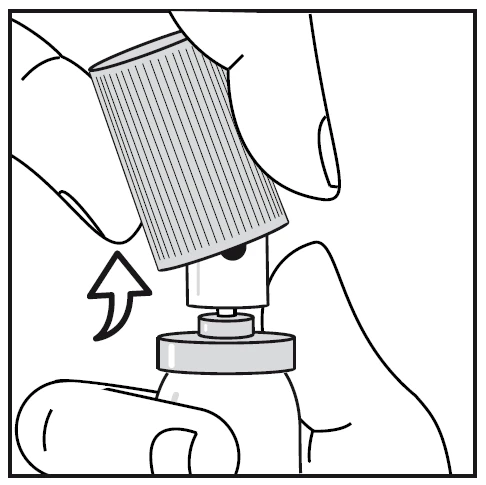
The cap can be easily removed from the container (see Figure 1 below).
Figure 1. Removing the cap from the container
The metering pump should be primed before first use by removing the protective cap and
spraying several times into the air until an aerosol appears. Re-priming the pump may be necessary
if it has not been used for a prolonged period.
Shaking the inhaler before use is not required.
If possible, sit down.
Remove the cap. Hold the container upright with the index finger placed on the white metering
device button. Place the nozzle of the metering valve close to the mouth. Briefly hold your breath
to avoid inhaling the aerosol, then open your mouth and spray one dose of the aerosol under the
tongue by pressing the pump button to release the aerosol.
Immediately close your mouth, but do not inhale the medicine. Hold your breath during
administration of the medicine.
After using the medicine, replace the cap on the aerosol container.
Always carry the medicine with you, as it may need to be used quickly.
Each use should be marked on the packaging.
Always keep a spare supply of the medicine, as it may run out.
It may be helpful to learn the location of the metering valve nozzle so that administering the
medicine at night does not cause difficulty.
Use as directed by your doctor.
Pressing the metering valve releases one measured dose of aerosol (0.4 mg glyceryl trinitrate)
from a container equipped with a mechanical pump.
The following doses are recommended:
in the case of angina attacks, spray one dose (one spray) under the tongue. If symptoms do not
subside, this dose (one spray) may be repeated every 5 minutes, up to a total of 3 doses (sprays of
aerosol). If symptoms persist after 3 doses (sprays), the patient should call emergency services.
Lack of response may indicate early myocardial infarction. In such a case, emergency services
should be called immediately.
In the case of acute cardiogenic pulmonary edema, in patients who are not hypotensive (i.e.,
with systolic blood pressure > 100 mmHg), one dose (one spray) should be administered under
the tongue. If symptoms do not improve, this dose (one spray) may be repeated every 5–10 minutes,
while carefully monitoring the patient's clinical condition, including blood pressure. If symptoms
do not resolve, the physician may switch to intravenous therapy or another vasodilator, depending
on the clinical response.
For prevention of angina attacks, administer 1 dose (one aerosol spray) before exertion that
may trigger angina episodes in the patient.
Elderly patients
Decreased blood pressure and fainting may be particular concerns when using nitrates in elderly
patients. When taking glyceryl trinitrate sublingually, sit down if at all possible.
Children and adolescents
Nitromint is not recommended for use in children.
Overdose of Nitromint
Call a doctor immediately if a patient has used more than the recommended dose and experiences
symptoms of overdose (headache, hypotension, rapid heartbeat, dizziness, hot flushes, vomiting,
diarrhea, gasping for air, or rapid breathing).
If there are any further doubts about the use of this medicine, consult a doctor or pharmacist.
4. Possible adverse reactions
Like all medicines, this medicine can cause adverse reactions, although not everyone experiences them.
Very common (may affect more than 1 in 10 people)
- Headache
Common (may affect up to 1 in 10 people)
- Dizziness
- Drowsiness
- Fast heartbeat
- Low blood pressure*
- Drop in blood pressure upon standing or sitting up*
- Weakness
Uncommon (may affect up to 1 in 100 people)
- Fainting
- Worsening of angina symptoms (increased chest pain)
- Slow heartbeat
- Cyanosis (bluish or purplish skin or mucous membrane discoloration due to low oxygen content in tissues just beneath the skin surface)
- Facial flushing
- Circulatory collapse (occasionally with slow heart rate and loss of consciousness)
- Nausea
- Vomiting
Very rare (may affect up to 1 in 10,000 people)
- Methemoglobinemia (a condition characterized by higher than normal levels of methemoglobin in the blood, which may reduce the ability of red blood cells to release oxygen to tissues)
- Motor restlessness
- Reduced oxygen supply to the brain
- Heartburn
- Unpleasant taste in the mouth
- Breathing disorders
- Skin inflammation
- Skin rash
Headache is the most frequently reported adverse reaction during glyceryl trinitrate therapy and may occur at the beginning of treatment. This so-called "nitrate headache" usually resolves after a few days.
*Especially during initiation of therapy and after dose increase.
Frequency not known (frequency cannot be estimated from the available data)
- Allergic reactions may occur.
- Palpitations (awareness of strong heartbeat)
- Administration of the medicine may cause a mild, transient burning sensation in the mouth.
Reporting of adverse reactions
If any adverse reactions occur, including any not listed in this leaflet, inform your doctor or pharmacist. Adverse reactions can be reported directly to the Department of Monitoring Adverse Drug Reactions, Office for Registration of Medicinal Products, Medical Devices and Biocidal Products
Al. Jerozolimskie 181C, 02-222 Warsaw
Tel.: + 48 22 49 21 301
Fax: + 48 22 49 21 309
Website: https://smz.ezdrowie.gov.pl
Adverse reactions can also be reported to the marketing authorization holder.
Reporting adverse reactions helps to provide more information on the safety of the medicine.
5. How to store Nitromint
Store below 25°C.
Keep in the original packaging to protect from light.
Store out of sight and reach of children.
This product is flammable and explosive.
Storage and use near open flames or while smoking are prohibited.
Do not throw empty containers into fire.
Do not use this medicine after the expiry date (EXP) stated on the container. The expiry date refers to the last day of the specified month.
Medicines must not be disposed of via the sewage system or in household waste. Ask your pharmacist how to dispose of medicines no longer required. This will help protect the environment.
6. Contents of the pack and other information
What Nitromint contains
The active substance is glyceryl trinitrate. Each dose contains 0.4 mg of glyceryl trinitrate in the form of a 1% ethanolic solution.
The other ingredients are ethanol, propylene glycol.
What Nitromint looks like and contents of the pack
A nearly colourless, transparent, sediment-free solution with a faint characteristic odour.
The pack contains 11 g (200 doses) in a metal aerosol container equipped with a mechanical pump and dosing valve, closed with a protective cap, presented in a folding cardboard box with the Patient Leaflet included.
Marketing Authorisation Holder
PROTERAPIA Spółka z o.o.
ul. Komitetu Obrony Robotników 45D
02-146 Warszawa
Poland
Manufacturer
EGIS Pharmaceuticals PLC
9900 Körmend Mátyás király u.65
Hungary
For further information about this medicine, please contact:
PROTERAPIA Spółka z o.o.
ul. Komitetu Obrony Robotników 45D
02-146 Warszawa
Poland
Tel.: +48 22 417 92 00