Nicorette spray
Poland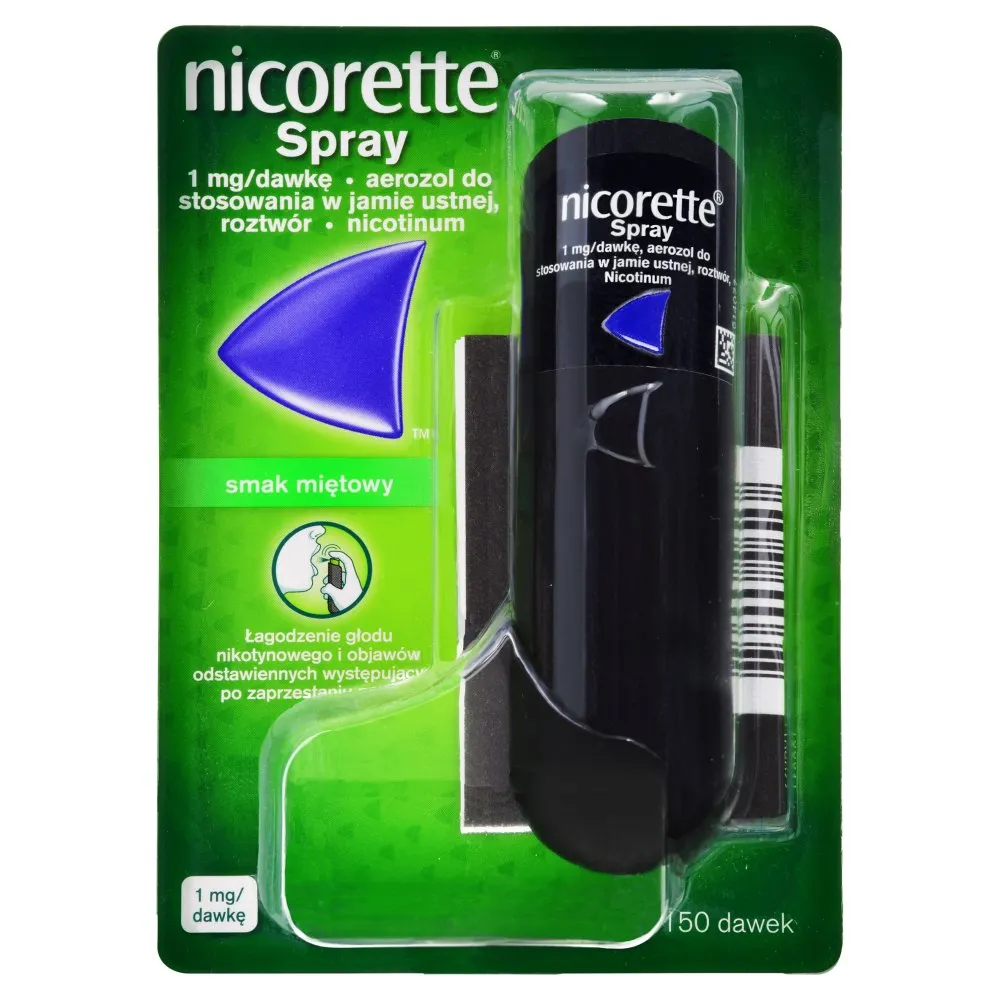
Table of Contents
Package leaflet: Information for the user
Warning! Keep this leaflet! Information on the immediate packaging in a foreign language.
Nicorette Spray (Nicorette Quickspray)
1 mg/dose, oral spray, solution
Nicotinum
Nicorette Spray and Nicorette Quickspray are different brand names for the same medicine.
Please read this leaflet carefully before using the medicine, as it contains important information for you.
This medicine should always be used exactly as described in this patient leaflet or as directed by your doctor or pharmacist.
- Keep this leaflet, as you may need to read it again.
- If you need advice or further information, consult your pharmacist.
- If you experience any adverse reactions, including any not listed in this leaflet, inform your doctor or pharmacist. See section 4.
- If after 6 months of using Nicorette Spray you still cannot refrain from smoking, consult your doctor.
Contents of the leaflet:
- What Nicorette Spray is and what it is used for
- Important information before using Nicorette Spray
- How to use Nicorette Spray
- Possible side effects
- How to store Nicorette Spray
- Contents of the pack and other information
1. What Nicorette Spray is and what it is used for
Nicorette Spray is used to help people who want to stop smoking immediately or reduce smoking before completely quitting. It is a type of treatment called nicotine replacement therapy (NRT).
Nicorette Spray helps relieve withdrawal symptoms that occur when you stop smoking, including nicotine cravings. When nicotine from tobacco is suddenly no longer supplied to the body, various unpleasant sensations develop, known as withdrawal symptoms. Using Nicorette Spray can prevent these unpleasant sensations or reduce their intensity and decrease the urge to smoke a cigarette. This is because a small amount of nicotine continues to be supplied to the body for a short period. Nicorette Spray does not contain tar, carbon monoxide, or other toxins present in tobacco smoke.
To increase the chances of successfully quitting smoking, it is also recommended to seek counseling and psychological support.
2. Important information before using Nicorette Spray
When not to use Nicorette Spray
- If the patient is allergic to nicotine or any of the other ingredients of this medicine (listed in section 6).
- If the patient is under 18 years of age.
- If the patient has never smoked.
Warnings and precautions
Before starting to use Nicorette Spray, consult a doctor if the patient has any of the following conditions:
- Recent myocardial infarction (within the last 3 months) or stroke,
- Chest pain (unstable angina) or angina symptoms at rest,
- A heart disease affecting the heart rate or rhythm,
- High blood pressure not controlled by medication,
- A history of allergic reactions, such as swelling of the lips, face, and throat (angioedema) or itchy rash (urticaria); nicotine replacement therapy (NRT) may sometimes provoke such reactions,
- Severe or moderately severe liver disease,
- Severe kidney disease,
- Diabetes,
- Overactive thyroid gland,
- Adrenal gland tumour (pheochromocytoma),
- Peptic ulcer disease of the stomach or duodenum,
- Oesophagitis,
- A history of epilepsy or seizures.
Nicorette Spray should not be used by non-smokers.
Children and adolescents
This medicine should not be used in children and adolescents.
Nicorette Spray and other medicines
Inform your doctor or pharmacist about all medicines currently taken or recently taken, as well as any medicines the patient plans to take, including those available without a prescription. This is particularly important if the patient is taking medicines containing:
- Theophylline for asthma,
- Tacrine for Alzheimer's disease,
- Clozapine for schizophrenia,
- Ropinirole for Parkinson's disease.
Nicorette Spray with food and drink
Do not eat or drink while administering the oral aerosol.
Pregnancy, breastfeeding, and fertility
It is very important to stop smoking during pregnancy, as smoking can impair fetal development and may cause miscarriage or stillbirth. It is best to try to quit smoking without using nicotine-containing medicines. If this is not successful, Nicorette Spray may be used only after consultation with the doctor managing the pregnancy, a general practitioner, or a specialist in tobacco addiction treatment.
Nicorette Spray should not be used during breastfeeding, as nicotine passes into breast milk and may affect the infant. If a doctor recommends using Nicorette Spray, the aerosol should be used immediately after breastfeeding and no later than 2 hours before the next feeding.
Smoking increases the risk of infertility in both women and men. The effect of nicotine on fertility is unknown.
Driving and operating machinery
No influence of the medicine on the ability to drive or operate machinery has been observed.
Nicorette Spray contains propylene glycol (E 1520), anhydrous ethanol, sodium, and
butylated hydroxytoluene (E 321)
Propylene glycol (E 1520)
The medicine contains 11 mg of propylene glycol (E 1520) per dose.
Anhydrous ethanol
This medicine contains approximately 7 mg of alcohol (ethanol) per dose, equivalent to 97 mg/ml. The amount of alcohol in one dose of this medicine is equivalent to less than 2 ml of beer or 1 ml of wine. The small amount of alcohol in this medicine will not cause noticeable effects.
Sodium
The medicine contains less than 1 mmol (23 mg) of sodium per dose, meaning the medicine is considered "sodium-free".
Butylated hydroxytoluene (E 321)
Due to the presence of butylated hydroxytoluene (E 321), Nicorette Spray may cause local skin reactions (e.g. contact dermatitis) or irritation of the eyes and mucous membranes.
3. How to use Nicorette Spray
This medicine should always be used exactly as described in this patient information leaflet or as directed by your doctor or pharmacist. If in doubt, consult your doctor or pharmacist.
Nicorette Spray must not be used by individuals under 18 years of age.
If after 6 weeks of treatment it has not been possible to reduce the number of doses used or the number of cigarettes smoked, or if the patient needs to use Nicorette Spray for longer than 6 months, medical advice should be sought. Nicorette Spray is usually used for 3 months, but not for longer than 6 months.
The way to use Nicorette Spray depends on whether the patient intends to stop smoking immediately or gradually, by progressively reducing the number of cigarettes smoked before complete cessation.
Immediate smoking cessation
The aim is to stop smoking immediately and to use the spray to relieve nicotine cravings.
Do not use more than 2 doses at once or more than 4 doses per hour for 16 hours. The maximum dose is 64 doses (applications) over 16 hours in any 24-hour period.
Stage 1: weeks 1–6
Instead of reaching for a cigarette or when experiencing nicotine cravings, apply 1 or 2 doses. First use one dose, and if the craving has not subsided within a few minutes, use a second dose. If two doses are needed, next time both may be used immediately. For most smokers, this means using 1 or 2 doses every 30 minutes to 1 hour.
For example, if the average number of cigarettes smoked per day is 15, use 1–2 doses at least 15 times per day.
Stage 2: weeks 7–9
Begin to reduce the number of daily doses.
By the end of week 9, the patient should be using HALF the average number of doses used during stage 1.
Stage 3: weeks 10–12
Continue to reduce the number of daily doses so that by week 12, no more than 4 doses are used per day. When the number of daily doses has been reduced to 2–4, stop using Nicorette Spray.
Gradual smoking cessation
This approach involves gradually replacing some cigarettes with Nicorette Spray. Once this is achieved, the patient completely stops smoking cigarettes and continues using the spray. Eventually, the use of the spray is also discontinued.
When experiencing a strong urge to smoke, use 1 or 2 doses of the medicine instead of a cigarette to control nicotine cravings. The spray is used to replace cigarettes, so do not smoke after using the spray. Using the spray without simultaneously reducing the number of cigarettes smoked may lead to symptoms of overdose (see section “Use of more than the recommended dose of Nicorette Spray”). Reduce the number of cigarettes smoked per day to the minimum and replace them with the spray. If after 6 weeks of treatment it has not been possible to reduce the number of cigarettes smoked per day, consult your doctor. The patient should stop smoking as soon as they feel ready, but no later than 12 weeks after starting treatment. After completely stopping smoking, gradually reduce the number of daily doses of the medicine. When the number of doses used per day has been reduced to 2–4, stop using Nicorette Spray.
Do not use more than 2 doses at once or more than 4 doses per hour for 16 hours. The maximum dose is 64 doses (applications) over 16 hours in any 24-hour period.
After completing treatment, the urge to smoke may still occur. Do not discard any remaining medicine, as nicotine cravings may arise suddenly. If a craving occurs, use one dose or two doses if one does not relieve the craving within a few minutes.
Follow the instructions below, referring to the illustrations:
Unblocking the pump
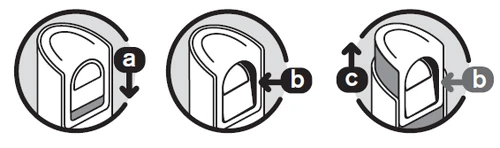
Opening the dispenser
- Using your thumb, slide the button ( a ) downwards until it can be gently pressed inwards ( b ). Do not press too hard.
- While holding the button, slide it upwards ( c ) to extend the pump. Then release the button.
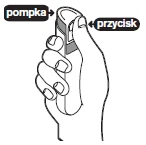
Filling the dispenser
Before first use of the oral spray, the dispenser pump must be primed. Point the nozzle away from yourself, other adults, children, or nearby animals. Press the top of the dispenser four times with your index finger until a fine mist appears. If the spray has not been used for 2 days, repeat the priming procedure.
How to use the dispenser
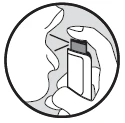
- Point the nozzle towards the open mouth, holding it as close to the mouth as possible.
- Press firmly on the top of the dispenser and spray one dose into the mouth, trying to avoid the lips. Do not inhale while spraying, to prevent the spray from entering the throat. For optimal treatment results, do not swallow for several seconds after spraying.
Blocking the pump
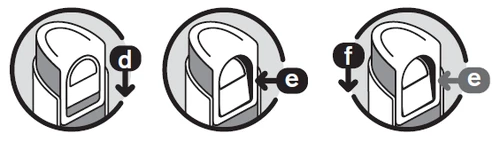
Closing the dispenser
- Slide the button downwards ( d ) until it can be pressed inwards ( e ).
- While pressing the button, slide the pump downwards ( f ). Release the button. The dispenser is now closed. To apply the next dose, repeat the steps above.
Always close the dispenser after each use to prevent accidental use by children or unintended release of the medicine.
Exercise caution and avoid directing the oral spray towards the eyes. If the spray gets into the eye, rinse thoroughly with water.
Use of more than the recommended dose of Nicorette Spray
If you smoke tobacco while using Nicorette Spray, nicotine overdose may occur.
If a child takes Nicorette Spray or if a patient uses more than the recommended dose, immediately contact a doctor or go to the nearest hospital. Doses of nicotine tolerated during treatment in adult smokers may cause severe poisoning in children and may lead to death.
Symptoms of overdose include nausea, vomiting, excessive salivation, abdominal pain, diarrhoea, excessive sweating, headache, dizziness, hearing disturbances, and marked weakness. Following large doses, low blood pressure, weak and irregular pulse, breathing difficulties, exhaustion, circulatory collapse, and generalized seizures may occur.
If you have any further questions about the use of this medicine, consult your doctor or pharmacist.
4. Possible adverse effects
Like any medicine, this medicine can cause adverse effects, although they do not occur in everyone.
Nicorette Spray may cause the same adverse effects as other forms of nicotine.
Generally, these effects depend on the dose administered.
Effects associated with quitting smoking (nicotine withdrawal)
Some of the adverse effects occurring when quitting smoking may be withdrawal symptoms caused by reducing the administered dose of nicotine.
Possible effects include:
- irritability, aggression, impatience or frustration,
- feeling anxious, restlessness or difficulty concentrating,
- waking up at night or sleep disturbances,
- increased appetite or weight gain,
- malaise,
- craving for a cigarette (nicotine craving),
- decreased heart rate,
- bleeding gums or oral ulceration,
- dizziness or feeling faint,
- cough, sore throat, nasal congestion or runny nose,
- constipation.
You should stop using Nicorette Spray and contact your doctor immediately if any of the following rare and serious adverse effects (symptoms of angioedema) occur:
- swollen face, tongue or throat,
- difficulty swallowing,
- hives and difficulty breathing.
Very common (may affect more than 1 in 10 people):
- hiccups (particularly common),
- headache, nausea,
- throat irritation.
Common (may affect up to 1 in 10 people):
- local reactions such as burning sensation, oral inflammation, changes in taste perception,
- dry mouth or increased salivation,
- indigestion,
- abdominal pain or discomfort,
- vomiting, flatulence or diarrhoea,
- feeling tired,
- hypersensitivity (allergy),
- tingling,
- cough.
Uncommon (may affect up to 1 in 100 people):
- nasal symptoms such as congestion, sneezing,
- wheezing (bronchospasm) or feeling of increased effort in breathing than normal (dyspnoea), throat tightness,
- skin redness or increased sweating,
- oral reactions such as oral tingling, glossitis, oral ulceration, oral mucosal damage or voice changes, oral and throat pain, belching, bleeding gums,
- palpitations (unusual sensation of rapid heartbeat), increased heart rate, hypertension,
- skin rash and (or) itching (pruritus, urticaria),
- unusual dreams,
- discomfort and chest pain,
- weakness, malaise,
- runny nose.
Rare (may affect up to 1 in 1,000 people):
- difficulty swallowing, reduced sensation in the mouth,
- vomiting reflex.
Not known (frequency cannot be estimated from available data):
- blurred vision, increased tear production (lacrimation),
- dry throat, gastric discomfort, lip pain,
- skin redness,
- allergic reactions, including facial and oral swelling (angioedema or anaphylaxis),
- cardiac arrhythmias,
- seizures.
Reporting of adverse effects
If any adverse effects occur, including any possible adverse effects not listed in this leaflet, inform your doctor or pharmacist. Adverse effects can also be reported directly to the Department of Monitoring Adverse Drug Reactions of the Office for Registration of Medicinal Products, Medical Devices and Biocidal Products, Al. Jerozolimskie 181C, 02-222 Warsaw, tel.: +48 22 49 21 301, fax: +48 22 49 21 309, website: https://smz.ezdrowie.gov.pl.
Reporting adverse effects helps to provide more information on the safety of the medicine.
5. How to store Nicorette Spray
Keep the medicine out of the sight and reach of children.
Do not use this medicine after the expiry date stated on the packaging. The expiry date refers to the last day of the stated month.
Do not store above 30°C.
Medicines must not be disposed of via the sewage system or household waste. Ask your pharmacist how to dispose of medicines no longer required. This will help protect the environment, particularly aquatic environments in the case of nicotine.
6. Contents of the pack and other information
What Nicorette Spray contains
- The active substance is nicotine. One dose delivers 1 mg of nicotine.
- The other ingredients are: propylene glycol (E 1520), anhydrous ethanol, tromethamine, poloxamer 407, glycerol (E 422), sodium bicarbonate, levomenthol, mint flavour (Mint Balsamic QL24245), cooling flavour (Cooler 2 SN046680), sucralose, acesulfame potassium, butylated hydroxytoluene (E 321), diluted hydrochloric acid (to adjust pH to 9), and purified water.
What Nicorette Spray looks like and contents of the pack
Nicorette Spray consists of a PET bottle containing the solution, fitted with a mechanical metered-dose pump spray device. The spray device is equipped with a child-resistant safety feature.
Each bottle contains 13.2 ml of solution, equivalent to 150 doses.
Nicorette Spray is available in packs containing 1 or 2 spray devices.
For further information, please contact the responsible party or the parallel importer.
Responsible party in Greece, country of export:
Johnson & Johnson Hellas Consumer AE
Aigialeias & Epidaurou 4
15125, Marousi, Greece
Manufacturer:
McNeil AB
P.O. Box 941, Norrbroplatsen 2
SE-251 09 Helsingborg
Sweden
Johnson & Johnson GmbH
Johnson & Johnson Platz 2
41470 Neuss
Germany
Johnson & Johnson Consumer N.V.
Antwerpseweg 15-17
2340 Beerse
Belgium
Parallel importer:
InPharm Sp. z o.o.
ul. Strumykowa 28/11
03-138 Warsaw
Repackaged in:
InPharm Sp. z o.o. Services sp. k.
ul. Chełmżyńska 249
04-458 Warsaw
Marketing authorisation number in Greece, country of export: 334895/15-5-2013
112281/14/28-09-2016
Parallel import authorisation number: 227/25
This medicinal product is authorised for sale in the Member States of the European Economic Area under the following names:
| Sweden | Nicorette Peppermint |
| Belgium, Netherlands | Nicorette Mint Mouth spray |
| Luxembourg | Nicorette Mint Spray Buccal |
| Denmark, Iceland, Ireland | Nicorette QuickMist |
| Austria, Germany | Nicorette Mint Spray |
| Czech Republic, Poland, Slovakia | Nicorette Spray |
| Bulgaria, Finland, Romania | Nicorette Freshmint |
| Cyprus, Greece, Hungary | Nicorette Quickspray |
| Estonia, Latvia, Lithuania | Nicorette Coolmint |
| Norway, Slovenia, Croatia | Nicorette |
| France | Nicorettespray |
| Italy | Nicorettequick |
| Spain, Portugal | Nicorette Bucomist |