Netenax
PolandTable of Contents
Package leaflet: Information for the user
Netenax, 3 mg/ml, eye drops, solution in single-dose container
netylmicin
Please read carefully the entire leaflet before using this medicine, as it contains
important information for the patient.
- Keep this leaflet, so that you can read it again if necessary.
- If you have any questions, please consult your doctor or pharmacist.
- This medicine has been prescribed for a specific individual. Do not pass it on to others. It may harm other people, even if their symptoms are the same.
- If you experience any adverse effects, including any not listed in this leaflet, tell your doctor or pharmacist. See section 4.
Table of contents of the leaflet
- What Netenax is and what it is used for
- Important information before using Netenax
- How to use Netenax
- Possible side effects
- How to store Netenax
- Contents of the pack and other information
1. What Netenax is and what it is used for
Netenax contains an active substance called netylmicin, which is an antibiotic that kills bacteria.
This medicine is indicated in adults for the local treatment of external eye and surrounding area infections caused by bacteria sensitive to netylmicin.
If there is no improvement or if the patient feels worse, consult a doctor.
2. Important information before using Netenax
When not to use Netenax:
- if the patient is allergic to netylmicin, to any other aminoglycoside antibiotic (such as gentamicin, tobramycin, kanamycin, etc.), or to any of the other ingredients of this medicine (listed in section 6).
Warnings and precautions
Before starting treatment with Netenax, discuss it with your doctor or pharmacist.
With prolonged use of antibiotics, the patient may become more susceptible to eye infections.
Aminoglycoside antibiotics may cause serious hearing and kidney problems. If the patient is using other antibiotics, including oral antibiotics, concurrently with Netenax, medical advice should be sought.
Netenax is not intended for injections and therefore must not be injected into the eye or introduced into the anterior segment (anterior chamber) of the eye.
In all of the above cases, or if an allergic reaction occurs during treatment with this medicine, treatment should be discontinued and medical advice sought.
Children and adolescents
The safety and efficacy of Netenax in children and adolescents have not been established.
Netenax with other medicines
Tell your doctor or pharmacist about all medicines you are currently using, have recently used, or plan to use.
Netenax may be used concurrently with other ophthalmic medicines, but the instructions in section 3 must be followed.
Tell your doctor or pharmacist if you are taking:
- another antibiotic, particularly polymyxin B, colistin, viomycin, streptomycin, vancomycin, or cephaloridine. Concurrent use of Netenax with other aminoglycoside antibiotics may increase the risk of kidney or hearing problems or may affect the efficacy of other antibiotics;
- cisplatin (a medicine used in cancer treatment);
- diuretics (medicines that prevent fluid retention) such as ethacrynic acid and furosemide.
Pregnancy and breastfeeding
If the patient is pregnant or breastfeeding, suspects she may be pregnant, or is planning to become pregnant, she should consult her doctor before using this medicine.
Pregnancy
This medicine should be used only if, in the opinion of the doctor, the benefit outweighs the potential risk.
Breastfeeding
Use of Netenax is not recommended during breastfeeding, as the medicine passes into human milk in small amounts.
Driving and using machines
Blurred vision may occur transiently after using Netenax. Do not drive or operate machinery until vision clears.
3. How to use Netenax
This medicine should always be used exactly as directed by a doctor or pharmacist. If in doubt,
consult a doctor or pharmacist.
The recommended dose is one or two drops administered into the affected eye three times daily, or as
directed by a physician.
Contact lenses
Wearing contact lenses during topical treatment of eye infection is not recommended.
If wearing contact lenses is necessary, use of the Netenax medicine in single-dose containers is permitted, as it does not contain preservatives.
Instructions for use
- Before instilling the medicine, wash/clean hands thoroughly.
- Open the aluminium sachet containing the single-dose containers.
- Check that the single-dose container is intact.
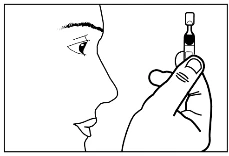
- Detach the single-dose container from the strip and return any unopened containers back to
the sachet. - Open the single-dose container by twisting the top part, without pulling.
- Do not touch the tip of the container after opening.
- Gently squeeze the single-dose container to instill one drop into the affected eye. Do not
allow the tip of the single-dose container to touch the eye, eyelid, or any other surface to
avoid contamination.
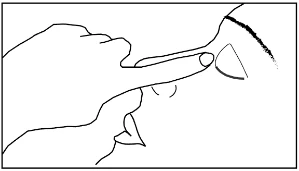
Without opening the affected eye, press gently with a finger on the inner corner of the eye and hold for one
minute. This is important, as it reduces the amount of medicine absorbed into the body.
Use of a higher than recommended dose of Netenax
Cases of overdose with Netenax have not been reported.
| In the case of accidental administration of a larger amount of the drug, the occurrence of problems is unlikely. The next dose of the drug should be taken as usual. | |
| The next dose of the drug should be taken as usual. | |
Missed application of Netenax
Do not use a double dose to make up for a missed dose.
Discontinuation of Netenax
If you have any further questions about the use of this medicine, consult your doctor, pharmacist, or nurse.
Use of Netenax with other ophthalmic medicines
If more than one ophthalmic medicinal product is being used, wait at least 5 minutes between applications.
Eye ointments should be administered last.
4. Possible adverse reactions
Like any medicine, this medicine can cause adverse reactions, although not everybody experiences them.
Most people using these eye drops do not experience any adverse reactions.
The following adverse reactions have been observed during the use of Netenax:
Frequency unknown (frequency cannot be estimated from the available data):
- eye irritation
- eye redness
- eyelid rash
- eyelid swelling
- eye itching
- allergic reaction
- urticaria
Reporting of adverse reactions
If any adverse effects occur, including any adverse effects not listed in this leaflet, inform your doctor or pharmacist. Adverse reactions can be reported directly to the Department of Monitoring Adverse Reactions of Medicinal Products, Medical Devices and Biocidal Products, Ul. Al. Jerozolimskie 181C, 02-222 Warsaw, Tel.: +48 22 49 21 301, Fax: +48 22 49 21 309, website: https://smz.ezdrowie.gov.pl
Adverse reactions can also be reported to the marketing authorization holder.
Reporting adverse reactions enables further information on the safety of the medicine to be collected.
5. How to store Netenax
Keep this medicine out of the sight and reach of children.
Do not use this medicine after the expiry date stated on the bottom of each container, on the label, and on the carton after: EXP. The expiry date refers to the last day of the stated month for an unopened product stored under proper conditions.
Do not store above 25°C.
Store single-dose containers in their original aluminium sachet to protect from light.
Drops in single-dose containers are intended for single use only. After opening a single-dose container, the medicine should be used immediately and the container discarded.
Medicines must not be disposed of via wastewater or household waste. Ask your pharmacist how to dispose of medicines no longer in use. This will help protect the environment.
6. Contents of the pack and other information
What Netenax contains
- The active substance is netilmicin. Each ml of solution contains 3 mg of netilmicin (as netilmicin sulfate).
- The other ingredients are sodium chloride, sodium hydroxide (for pH adjustment), purified water.
What Netenax looks like and contents of the pack
Netenax is a clear, colourless or slightly yellow solution for eye drops in single-dose containers made of LDPE, containing 0.3 mg/ml, solution, placed in an aluminium sachet within a cardboard box.
Each cardboard box contains 15 or 20 single-dose containers.
Not all pack sizes may be marketed.
Marketing Authorisation Holder and Manufacturer
SIFI S.p.A.
Via Ercole Patti 36
95025 Aci S. Antonio (CT)
Italy
[email protected]
This medicinal product is authorised for marketing in the European Economic Area countries under the following trade names:
Bulgaria, Germany, Latvia, Lithuania: Nettacin
Cyprus, Greece, Poland, Portugal, Slovakia, Spain: Netenax
Czech Republic, France: Anetena