Neo-pancreatinum forte
Poland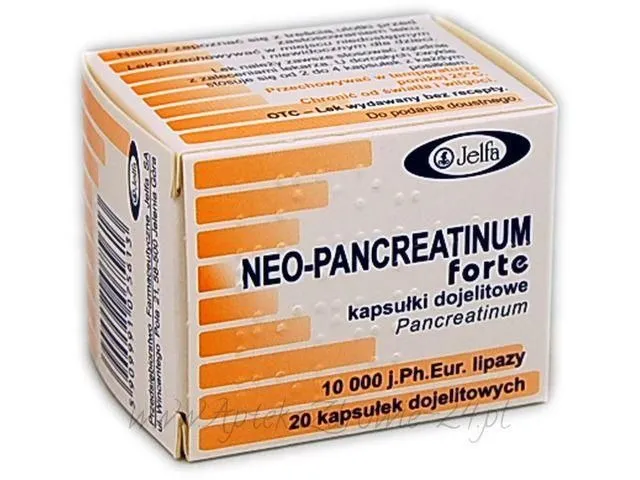
Table of Contents
- Patient Information Leaflet
- 1. What Neo-Pancreatinum Forte is and what it is used for
- 2. Important information before using Neo-Pancreatinum Forte
- 3. How to use Neo-Pancreatinum Forte
- 4. Possible adverse reactions
- 5. How to store Neo-Pancreatinum Forte
- 6. Contents of the package and other information
Patient Information Leaflet
NEO-PANCREATINUM FORTE, 10,000 Ph.Eur. units of lipase, enteric capsules
Pancreatinum
Please read all of this leaflet carefully before you start taking this medicine, because it contains
important information for you.
This medicine should always be used exactly as described in this patient leaflet or as directed by your
doctor or pharmacist.
- Keep this leaflet as you may need to read it again.
- If you need advice or further information, please consult your pharmacist.
- If you experience any side effects, including any possible side effects not listed in this leaflet, inform your doctor or pharmacist. See section 4.
- If your symptoms do not improve or worsen, contact your doctor.
Table of Contents:
- What Neo-Pancreatinum Forte is and what it is used for
- Important information before taking Neo-Pancreatinum Forte
- How to take Neo-Pancreatinum Forte
- Possible side effects
- How to store Neo-Pancreatinum Forte
- Contents of the pack and other information
1. What Neo-Pancreatinum Forte is and what it is used for
Neo-Pancreatinum Forte belongs to a group of medicines called "pancreatic enzyme replacement therapy".
Neo-Pancreatinum Forte contains three medicines: protease, amylase, and lipase. These are proteins (called enzymes) that help break down and digest food. Without them, the body would not receive the nutrients it needs. Each Neo-Pancreatinum Forte capsule contains enteric-coated pellets that are resistant to gastric acid, ensuring that pancreatin is released only after leaving the stomach.
Neo-Pancreatinum Forte is used in conditions associated with pancreatic enzyme deficiency due to various causes, such as:
- chronic pancreatitis (long-term inflammation of the pancreas – a gland located behind the abdomen that secretes digestive enzymes),
- cystic fibrosis (a hereditary disease characterized by the production of abnormally thick mucus, leading to serious organ dysfunction, e.g., in the lungs or pancreas),
- obstruction of pancreatic or biliary ducts due to tumour disease,
- surgical removal of the pancreas or stomach.
2. Important information before using Neo-Pancreatinum Forte
When not to use Neo-Pancreatinum Forte:
- If the patient is allergic to pancreatin or to pork protein, or to any of the other ingredients of this medicine (listed in section 6)
- In acute pancreatitis or during exacerbation of chronic pancreatitis.
Warnings and precautions
Before starting treatment with Neo-Pancreatinum Forte, discuss it with your doctor or pharmacist.
Children
A number of cases of intestinal obstruction have been reported in children with cystic fibrosis treated with high doses of certain pancreatin-containing medicines. Children aged 2–8 years are particularly at risk; therefore, particular caution and careful monitoring are recommended in patients receiving high doses of enzymes. If abdominal symptoms occur or if existing symptoms worsen, consult a doctor immediately.
Neo-Pancreatinum Forte and other medicines
Inform your doctor or pharmacist about all medicines the patient is currently taking or has recently taken, as well as any medicines planned for future use.
- The effectiveness of Neo-Pancreatinum Forte may be reduced if the patient is taking any medicines that neutralize gastric acid (e.g. antacids or H-receptor antagonists such as cimetidine, ranitidine, famotidine).
- The medicine may reduce the absorption of folic acid from the gastrointestinal tract; therefore, patients may require supplementation with this substance.
Taking Neo-Pancreatinum Forte with food and drink
Neo-Pancreatinum Forte should be taken with meals and plenty of fluids (see section 3 "How to take Neo-Pancreatinum Forte").
Pregnancy and breastfeeding
If the patient is pregnant or breastfeeding, suspects she may be pregnant, or is planning to have a child, she should consult her doctor before using this medicine.
Driving and using machines
The use of this medicine does not affect the ability to drive or operate machinery.
3. How to use Neo-Pancreatinum Forte
This medicine should always be taken exactly as described in this patient information leaflet, or as directed by a doctor or pharmacist. If in doubt, consult a doctor or pharmacist.
Neo-Pancreatinum Forte should be taken during meals, with a drink.
- Capsules should be swallowed whole; do not chew, crush, or hold in the mouth, as this may cause irritation of the mucous membrane and may also reduce the effectiveness of the medicine.
- If difficulty swallowing whole capsules occurs (especially in small children), the pellets inside the capsule may be sprinkled onto a small amount of "acidic" food (e.g. apple or tomato puree), mixed, and immediately swallowed without chewing, followed by a glass of water or juice.
Recommended dosage:
Dosage should be individually adjusted according to the degree of pancreatic insufficiency.
Adults
From 2 to 4 capsules with each meal.
The dose may only be increased after consultation with a doctor.
Use in children
Dosage for children should always be determined by a doctor.
Taking more Neo-Pancreatinum Forte than recommended
Seek immediate medical advice from a doctor or go to the nearest hospital emergency department.
Bring this leaflet or the medicine with you so the doctor knows what has been taken.
If you forget to take Neo-Pancreatinum Forte
Do not take a double dose to make up for a forgotten dose.
Take the next dose at the usual mealtime.
Stopping Neo-Pancreatinum Forte
If you have any further doubts about using this medicine, consult your doctor or pharmacist.
4. Possible adverse reactions
Like all medicines, this product may cause adverse reactions, although not everybody experiences them.
Immune system disorders:
The use of Neo-Pancreatinum Forte may be associated with allergic symptoms.
These symptoms may include rash, sneezing, and lacrimation.
Gastrointestinal disorders:
When high doses of the medicine (considerably exceeding the recommended ones) are used, the following may occur:
diarrhea, nausea, vomiting. Pancreatin may cause irritation of the oral mucosa and the anal area, especially in children.
Renal and urinary disorders:
When high doses of the medicine (considerably exceeding the recommended ones) are used, increased serum and urinary uric acid concentrations and urolithiasis may occur.
Metabolism and nutrition disorders:
The medicine inhibits the absorption of folic acid and iron salts.
Reporting of adverse reactions
If any adverse reactions occur, including any not listed in this leaflet, inform a doctor or pharmacist. Adverse reactions can be reported directly to the Department of Monitoring Adverse Drug Reactions, Office for Registration of Medicinal Products, Medical Devices and Biocidal Products: Al. Jerozolimskie 181C, 02-222 Warsaw, tel.: 22 49-21-301, fax: 22 49-21-309, e-mail: [email protected].
Adverse reactions can also be reported to the marketing authorization holder.
Reporting adverse reactions helps to provide more information on the safety of the medicine.
5. How to store Neo-Pancreatinum Forte
Store below 25°C. Protect from light and moisture.
Keep the medicine out of sight and reach of children.
Do not use this medicine after the expiry date stated on the packaging. The expiry date refers to the last day of the stated month.
Medicines must not be disposed of via sewage systems or household waste. Ask your pharmacist how to dispose of medicines no longer in use. This will help protect the environment.
6. Contents of the package and other information
What Neo-Pancreatinum Forte contains
- The active substance is pancreatin. One capsule contains pancreatin in the form of enteric-coated pellets. The pancreatin in each capsule has the following enzymatic activity: lipase 10,000 Ph.Eur. units, amylase 8,000 Ph.Eur. units, proteases 500 Ph.Eur. units (Ph.Eur. unit is the enzymatic activity unit according to the European Pharmacopoeia).
- Other components are:
– Pellets: methacrylic acid-ethyl acrylate copolymer (1:1), triethyl citrate, talc, simethicone;
– Capsule shell, outer part: gelatin, purified water, titanium dioxide (E 171), iron oxide red (E 172), iron oxide black (E 172);
– Capsule shell, inner part: gelatin, purified water, titanium dioxide (E 171), iron oxide red (E 172), aluminium lake of quinoline yellow (E 104).
What Neo-Pancreatinum Forte looks like and contents of the pack
Neo-Pancreatinum Forte is a yellowish-brown, elongated gelatin capsule containing pancreatin in the form of pellets.
Pack size: 20 or 50 capsules in a container with a desiccant.
Not all pack sizes may be marketed.
Marketing Authorisation Holder and Manufacturer
Marketing Authorisation Holder
PharmaSwiss Česká republika s.r.o.
Jankovcova 1569/2c
170 00 Prague 7
Czech Republic
Manufacturer
Jelfa S.A. Pharmaceutical Company
ul. Wincentego Pola 21
58-500 Jelenia Góra
Poland
For further information about this medicinal product, please contact the local representative of the Marketing Authorisation Holder.
Valeant sp. z o.o. sp. j.
ul. Przemysłowa 2
35-959 Rzeszów
tel. (+48) 17 865 51 00
fax: (+48) 17 862 46 18