Naproxen hasco
Poland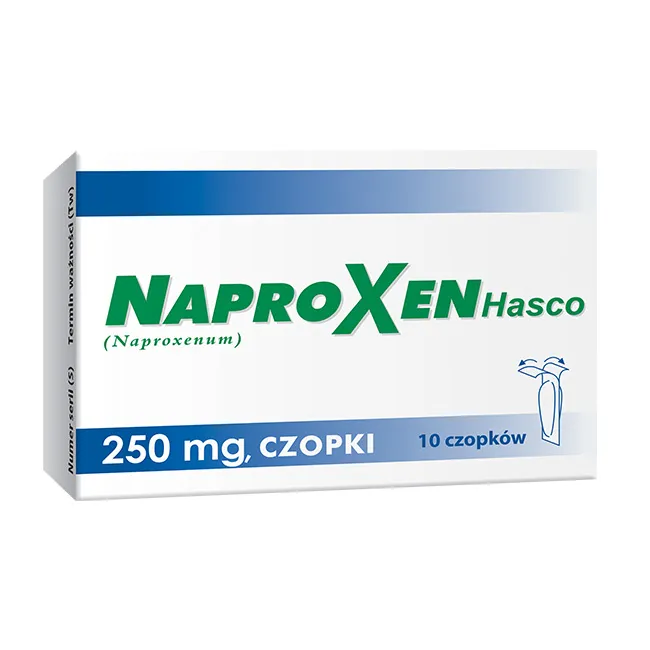
Table of Contents
Package leaflet: Information for the patient
NAPROXEN HASCO
500 mg, suppositories
Naproxenum
Please read carefully the entire leaflet before using the medicine, as it contains
important information for the patient.
- Keep this leaflet, so that you can read it again if necessary.
- If you have any doubts, please consult your doctor, pharmacist, or nurse.
- This medicine has been prescribed for a specific individual. Do not pass it on to others. The medicine may harm other people, even if their symptoms are the same.
- If you experience any adverse reactions, including any adverse reactions not listed in this leaflet, inform your doctor, pharmacist, or nurse. See section 4.
Table of contents
- What is Naproxen Hasco and what is it used for
- Important information before using Naproxen Hasco
- How to use Naproxen Hasco
- Possible side effects
- How to store Naproxen Hasco
- Contents of the pack and other information
1. What is Naproxen Hasco and what is it used for
Naproxen Hasco contains the active substance naproxen, which belongs to the group of non-steroidal anti-inflammatory drugs (NSAIDs) with anti-inflammatory and analgesic effects.
Indications for Naproxen Hasco:
Rheumatic diseases
-
Rheumatoid arthritis
-
Juvenile rheumatoid arthritis
-
Ankylosing spondylitis
Acute gout attack
Acute musculoskeletal pain -
Sprains
-
Post-traumatic injuries
-
Low back pain
-
Herniated disc
-
Tendinitis
-
Bursitis
-
Fibromyalgia
Pain of other origins (e.g. menstrual pain, headache).
2. Important information before using Naproxen Hasco
When not to use Naproxen Hasco
- if the patient is allergic to the active substance or to any of the other ingredients of this medicine (listed in section 6),
- if the patient is allergic to other non-steroidal anti-inflammatory drugs (NSAIDs),
1/6
- in patients who have previously experienced allergic reactions such as rhinitis, urticaria or bronchial asthma during treatment with acetylsalicylic acid or other NSAIDs,
- in patients with severe hepatic insufficiency, severe renal insufficiency or severe heart failure,
- in patients with active or past peptic ulcer disease of the stomach and/or duodenum, perforation or gastrointestinal bleeding, whether or not associated with previous NSAID use,
- during the third trimester of pregnancy,
- in patients with a bleeding tendency.
Warnings and precautions
Before starting treatment with Naproxen Hasco, discuss this with your doctor, pharmacist or
nurse.
- Treatment should be initiated using the lowest effective dose for the shortest duration necessary to relieve symptoms, in order to minimize the risk of adverse effects. Patients on long-term NSAID therapy should undergo regular medical monitoring to detect possible side effects.
- Use of medicines such as naproxen may be associated with a small increased risk of heart attack ("myocardial infarction") or stroke. This risk increases with prolonged use of high doses. Do not use higher doses or longer treatment durations than recommended. If you have heart problems, a history of stroke, or risk factors for these conditions (e.g. high blood pressure, diabetes, high cholesterol, smoking), discuss treatment with your doctor or pharmacist.
- There is a risk of gastrointestinal bleeding, ulceration or perforation, which may be life-threatening and may occur without warning symptoms or in patients who have previously experienced such symptoms.
- If gastrointestinal bleeding or ulceration occurs, naproxen should be discontinued. Patients with a history of gastrointestinal disorders, especially elderly patients, should inform their doctor of any unusual gastrointestinal symptoms (particularly bleeding), especially during the initial treatment period.
- Concomitant administration of naproxen and other NSAIDs is not recommended due to increased risk of serious adverse effects.
- Naproxen belongs to a group of medicines (NSAIDs) which may adversely affect fertility in women. This effect is reversible and resolves upon discontinuation of treatment.
- Naproxen inhibits platelet aggregation and prolongs bleeding time, particularly in patients with pre-existing coagulation disorders or those taking anticoagulant medications.
- Caution is advised when using naproxen in patients with bronchial asthma or allergic disorders, as the drug may provoke bronchospasm.
- Severe skin reactions, some of which have been fatal, including exfoliative dermatitis, Stevens-Johnson syndrome, toxic epidermal necrolysis, and drug reaction with eosinophilia and systemic symptoms (DRESS syndrome), have been reported with NSAID use. The highest risk of these severe reactions occurs early in therapy, usually within the first month of treatment. Treatment should be discontinued at the first appearance of skin rash, mucosal lesions, other signs of hypersensitivity, or DRESS syndrome.
- Due to its anti-inflammatory and antipyretic effects, naproxen may mask symptoms of other diseases, thereby complicating diagnosis.
Patients with heart failure
Naproxen should be used cautiously, using the lowest effective dose, in patients with heart failure (as it may exacerbate peripheral edema).
Patients with impaired renal and/or liver function
Naproxen should be used cautiously, using the lowest effective dose, in patients with impaired liver or kidney function.
2/6
In alcoholic liver disease and other forms of cirrhosis, plasma naproxen concentrations are reduced, with a simultaneous increase in unbound naproxen.
In patients with impaired renal function, serum creatinine concentration and/or creatinine clearance should be monitored periodically. The medicine is not recommended for patients with creatinine clearance below 20 ml/min.
Elderly patients
Naproxen should be used cautiously, using the lowest effective dose, in elderly patients due to increased risk of gastrointestinal complications.
Naproxen Hasco and other medicines
Inform your doctor or pharmacist about all medicines currently used, recently used, or planned for use.
Before starting this medicine, consult your doctor or pharmacist if the patient is taking any of the following medicines:
- Acetylsalicylic acid used for prevention of blood clots.
- Concurrent administration of antacids or cholestyramine with naproxen may delay its absorption.
- Non-steroidal anti-inflammatory drugs may enhance the effect of anticoagulants such as warfarin.
- Naproxen may inhibit the diuretic effect of furosemide.
- Naproxen inhibits lithium excretion, increasing serum lithium concentrations.
- Probenecid increases plasma naproxen concentrations.
- Naproxen inhibits methotrexate excretion, increasing its toxicity.
- Concurrent use of naproxen with cardiac glycosides may reduce their renal excretion, leading to increased serum concentrations.
- Naproxen may reduce the antihypertensive effect of propranolol and other beta-blockers, and may increase the risk of impaired renal function associated with acetylcholinesterase inhibitors.
- Caution is advised when administering naproxen concomitantly with cyclosporine due to increased risk of nephrotoxicity.
- Naproxen used concurrently with hydantoins, oral anticoagulants and sulfonamides enhances their effects.
- Caution is advised when using corticosteroids concomitantly with naproxen due to increased risk of gastrointestinal bleeding.
- Non-steroidal anti-inflammatory drugs reduce the efficacy of mifepristone. Naproxen administration may be initiated 8 to 12 days after the last dose of mifepristone.
- Concurrent use of naproxen with fluoroquinolones increases the risk of seizures.
It is recommended to discontinue naproxen 48 hours before assessment of adrenal cortex function,
due to the possibility of interfering with test results.
Naproxen Hasco with food and drink
Naproxen Hasco may be taken independently of meals.
Pregnancy, breastfeeding and effect on fertility
If the patient is pregnant, breastfeeding, suspects she may be pregnant, or is planning to become pregnant, she should consult her doctor or pharmacist before using this medicine.
Pregnancy
Do not take Naproxen Hasco during the last three months of pregnancy, as it may harm the unborn child or cause complications during delivery. It may cause kidney and heart problems in the unborn child. It may increase the tendency to bleeding in both the mother and the child and may delay or
3/6
prolong the duration of labor. During the first six months of pregnancy, the medicine should not be used unless absolutely necessary and prescribed by a doctor. If treatment is necessary during this period or when trying to conceive, the lowest possible dose should be used for the shortest possible duration. From week 20 of pregnancy, Naproxen Hasco may cause impaired kidney function in the unborn child if used for more than a few days—this may lead to reduced amniotic fluid volume (oligohydramnios) or narrowing of a blood vessel (ductus arteriosus) in the fetal heart. If treatment is required for longer than a few days, the doctor may recommend additional monitoring.
Breastfeeding
Naproxen passes into human milk; therefore, it should not be used during breastfeeding.
Fertility
Use of naproxen may adversely affect fertility in women and is not recommended in women attempting to conceive.
Driving and operating machinery
In some patients, the medicine may cause drowsiness, dizziness, insomnia or depression.
Consult your doctor regarding the suitability of using naproxen while driving or operating machinery.
3. How to use Naproxen Hasco
This medicine should always be used according to the recommendations of a doctor or pharmacist. If in doubt,
consult a doctor or pharmacist.
Rectal administration.
Use in children
Children over 5 years of age
- Juvenile rheumatoid arthritis: the recommended dose is 10 mg/kg body weight twice daily (every 12 hours). This medicine is not recommended for any other indication in children under 16 years of age.
Adults
- Rheumatoid arthritis and ankylosing spondylitis: 250 mg to 500 mg twice daily (morning and evening)
- Acute gouty arthritis: initial dose of 750 mg, followed by 250 mg every 8 hours
- Short-term pain relief: initial dose of 500 mg, then 250 mg every 6 to 8 hours
- Acute musculoskeletal pain: initial dose of 500 mg, then 250 mg every 6 to 8 hours.
The maximum daily dose is 1250 mg.
Elderly patients
The lowest effective dose should be used, as the risk of adverse effects is higher than in younger individuals.
Taking more than the recommended dose of Naproxen Hasco
If more than the recommended dose has been taken, consult a doctor or pharmacist.
Dosing not in accordance with the patient leaflet may lead to symptoms of overdose such as:
gastrointestinal disorders, headache and dizziness, changes in blood parameters.
Missed dose of Naproxen Hasco
Do not take a double dose to make up for a missed dose.
4/6
4. Possible adverse reactions
Like all medicines, this medicine can cause adverse reactions, although not everyone will experience them.
If any of the following adverse reactions occur, stop using
Naproxen Hasco and contact your doctor immediately:
Frequency unknown (frequency cannot be estimated from the available data):
- extensive rash, high fever, elevated liver enzymes, blood disorders (eosinophilia), swollen lymph nodes and involvement of other organs (drug reaction with eosinophilia and systemic symptoms, also known as DRESS syndrome). See also section 2;
- characteristic skin allergic reaction called fixed drug eruption, which usually recurs in the same location(s) upon re-exposure to the drug and may present as round or oval red patches and skin swelling, blisters (urticaria), itching.
Common (in no more than 1 in 10 patients taking the medicine):
- indigestion, heartburn, nausea, abdominal pain, dizziness, headache, feeling of emptiness in the head.
Uncommon (in no more than 1 in 100 patients taking the medicine):
- diarrhoea, constipation, vomiting, rash, urticaria, itching, fatigue, insomnia, somnolence.
Rare (in no more than 1 in 1,000 patients taking the medicine):
- gastrointestinal bleeding, tarry stools, vomiting blood, angioedema, impaired kidney function.
Very rare (in no more than 1 in 10,000 patients taking the medicine):
- oral mucosal ulcers, oesophagitis, acute pancreatitis, colitis, gastric and intestinal ulcers;
- hepatitis (including fatal cases), jaundice;
- alopecia, erythema multiforme, exfoliative dermatitis: Stevens-Johnson syndrome, lichen planus, epidermal necrolysis, photosensitivity (including cases resembling porphyria cutanea tarda), bullous detachment of the epidermis;
- glomerulonephritis, interstitial nephritis, nephrotic syndrome, haematuria, proteinuria, increased blood potassium levels (hyperkalaemia), elevated serum creatinine, renal papillary necrosis, renal failure;
- convulsions, disturbances in concentration ability, meningitis;
- dyspnoea, oedema, palpitations, congestive heart failure, hypertension;
- decreased platelet count (thrombocytopenia), decreased white blood cell count (granulocytopenia, agranulocytosis, eosinophilia, leukopenia), vasculitis, anaemia (aplastic and haemolytic anaemia);
- eosinophilic pneumonia, asthma, pulmonary oedema;
- tinnitus, hearing disturbances;
- visual disturbances, corneal opacity, intraocular optic neuritis, extraocular optic neuritis, optic disc oedema;
- anaphylactoid reactions (severe hypersensitivity reactions presenting e.g. as fever, oedema, malaise, muscle pain, muscle weakness);
- abnormal liver function test results.
Reporting of adverse reactions
If any adverse reactions occur, including any possible adverse reactions
not listed in this leaflet, inform your doctor, pharmacist or nurse.
Adverse reactions can be reported directly to the Department of Monitoring Adverse Drug Reactions
at the Office for Registration of Medicinal Products, Medical Devices and Biocidal Products:
Aleje Jerozolimskie 181C, 02-222 Warsaw
Tel.: +48 22 49 21 301, Fax: +48 22 49 21 309
Website: https://smz.ezdrowie.gov.pl
5/6
Adverse reactions can also be reported to the marketing authorization holder.
Reporting adverse reactions helps to provide more information on the safety of this medicine.
5. How to store Naproxen Hasco
Store below 25°C, in the original packaging.
Keep the medicine out of the sight and reach of children.
Do not use this medicine after the expiry date stated on the packaging. The expiry date refers to the last day of the stated month.
Medicines must not be disposed of via wastewater or household waste. Ask your pharmacist how to dispose of medicines no longer required. This will help protect the environment.
6. Contents of the packaging and other information
What Naproxen Hasco contains
- The active substance is naproxen. Each suppository contains 500 mg of naproxen.
- The other component (excipient) is: hard fat (Witepsol).
What Naproxen Hasco looks like and contents of the packaging
White, milky-white, matte, torpedo-shaped suppositories with a smooth surface. The packaging contains 10 suppositories.
Marketing Authorisation Holder and Manufacturer
"PRZEDSIĘBIORSTWO PRODUKCJI FARMACEUTYCZNEJ HASCO-LEK" S.A.
51-131 Wrocław, ul. Żmigrodzka 242 E
Medical information
tel.: 22 742 00 22
e-mail: [email protected]
6/6