Naproxen
Poland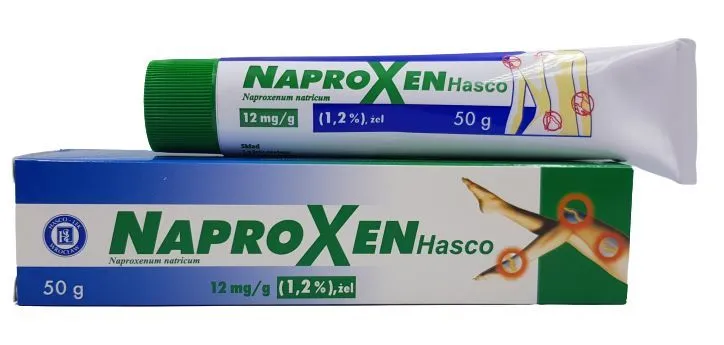
Table of Contents
Patient Information Leaflet
NAPROXEN HASCO
12 mg/g (1.2%) gel
Naproxenum natricum
Please read this leaflet carefully before using the medicine, as it contains
important information for the patient.
This medicine should always be used exactly as described in this patient leaflet or as directed by a doctor, pharmacist, or nurse.
- Keep this leaflet so that you can read it again if necessary.
- If you need advice or further information, please consult your pharmacist.
- If you experience any adverse reactions, including any possible side effects not listed in this leaflet, inform your doctor, pharmacist, or nurse. See section 4.
- If your symptoms do not improve or if you feel worse, consult your doctor.
Contents of the leaflet
- What is Naproxen HASCO and what is it used for
- Important information before using Naproxen HASCO
- How to use Naproxen HASCO
- Possible side effects
- How to store Naproxen HASCO
- Contents of the pack and other information
1. What is Naproxen HASCO and what is it used for
This medicine is for topical application to the skin. The active substance in Naproxen HASCO is naproxen, which has analgesic and anti-inflammatory effects. Levomenthol produces a cooling sensation on the skin, acts as a local anesthetic, causes local vasodilation, and facilitates the penetration of naproxen into diseased tissues. Chloral hydrate, due to its mild irritant properties, induces beneficial reflex vasodilation.
This medicine is used topically for pain relief and anti-inflammatory action in muscle and joint pain:
- in osteoarthritis,
- in soft tissue injuries,
- in joint and tendon injuries.
2. Important information before using Naproxen HASCO
When not to use Naproxen HASCO
- if the patient is allergic to the active substance or to any of the other ingredients of this medicine (listed in section 6),
- if there is hypersensitivity to other non-steroidal anti-inflammatory drugs (e.g. acetylsalicylic acid),
- if the patient is in the third trimester of pregnancy,
- in children under 3 years of age.
Warnings and precautions
Before starting treatment with Naproxen HASCO, discuss it with your doctor, pharmacist, or
nurse.
1/4
Caution should be exercised in patients with gastrointestinal ulcers and hemorrhagic diathesis due to the possibility of naproxen absorption into systemic circulation.
After applying the gel to the skin, hands should be thoroughly washed.
Avoid contact of the medicine with eyes and mucous membranes. If the gel gets into the eyes or onto mucous membranes, remove it immediately by rinsing abundantly with water.
Do not apply on damaged skin, open wounds, or inflamed skin conditions.
During treatment and for 2 weeks after discontinuation of treatment, avoid direct sunlight (including solarium).
Use of Naproxen HASCO should be cautious:
- in case of previous allergic reactions (rash, itching, redness) during treatment with non-steroidal anti-inflammatory drugs;
- when applied over large skin areas for prolonged periods, as there is a risk of systemic adverse reactions. If any of the above symptoms occur, discontinue use of the medicine. Consult your doctor, even if the above warnings refer to past events.
Use of Naproxen HASCO in patients with renal and/or hepatic impairment
Exercise particular caution when using Naproxen HASCO in patients with impaired liver and/or kidney function due to the possibility of naproxen absorption into systemic circulation.
Children
Do not use in children under 3 years of age.
Naproxen HASCO and other medicines
Tell your doctor or pharmacist about all medicines you are currently taking, have recently taken, or plan to take.
No interactions have been observed so far between naproxen applied topically to the skin and other medicines. However, with prolonged use over large skin areas, such interactions cannot be completely ruled out.
When naproxen is administered orally, the following interactions have been observed:
- Ethanol enhances the effect of naproxen.
- Naproxen enhances the effect of acetylsalicylic acid, phenytoin and hydantoins, oral anticoagulants of the coumarin group, and enhances the toxic effect of methotrexate.
- Naproxen inhibits the effect of furosemide and other diuretics.
- Sodium bicarbonate and probenecid increase the serum concentration of naproxen.
Pregnancy and breastfeeding
If the patient is pregnant or breastfeeding, suspects she may be pregnant, or is planning to become pregnant, she should consult her doctor or pharmacist before using this medicine.
Oral formulations (e.g. tablets) of naproxen may cause adverse effects in the unborn child. It is not known whether the same risk applies when using Naproxen HASCO on the skin.
Do not use Naproxen HASCO during the last 3 months of pregnancy.
Naproxen HASCO should not be used during the first 6 months of pregnancy unless absolutely necessary and recommended by a doctor. If treatment is necessary during this period, the lowest effective dose for the shortest possible duration should be used.
Do not use this medicine during breastfeeding. Naproxen passes into breast milk.
Driving and operating machinery
Naproxen HASCO has no influence on the ability to drive or operate machinery.
2/4
Naproxen HASCO contains propylene glycol
This medicine may cause skin irritation.
Naproxen HASCO contains methyl parahydroxybenzoate
This medicine may cause allergic reactions (including delayed-type reactions).
3. How to use Naproxen HASCO
This medicine should always be used exactly as described in the patient information leaflet, or as directed by a doctor, pharmacist, or nurse. If in doubt, consult a doctor, pharmacist, or nurse.
This is a topical medicine for use on the skin.
Apply the gel 4 to 5 times daily to the painful area and gently massage in. For a skin surface of approximately 7 cm by 7 cm, use a strip of gel 1 cm in length.
After applying the gel, hands should be thoroughly washed unless they are the area being treated.
If redness or skin irritation occurs, stop using the medicine until symptoms resolve. If symptoms persist, consult a doctor.
Use of a higher than recommended dose of Naproxen HASCO
When naproxen is used topically, symptoms of overdose are not known. However, improper use or accidental ingestion may lead to systemic adverse effects. In such cases, the doctor will initiate treatment appropriate for poisoning with nonsteroidal anti-inflammatory drugs.
In case of accidental ingestion (e.g., by a child), contact a doctor immediately.
4. Possible adverse effects
Like all medicines, this medicine can cause adverse effects, although not everybody will experience them.
Local skin reactions may occur after application: hypersensitivity, redness,
irritation, usually resolving after discontinuation of the medicine.
With prolonged use over large areas of skin, systemic adverse effects due to naproxen may occur (e.g. nausea, diarrhoea, drowsiness, headaches, hypersensitivity reactions).
Photosensitivity reactions are possible. Rarely, erythema, itching, or burning sensation may occur.
If dyspnoea or skin changes occur, use of the medicine should be stopped immediately, and medical advice should be sought from a doctor or the nearest hospital.
Reporting of adverse effects
If any adverse effects occur, including any possible adverse effects not listed in this leaflet, inform a doctor, pharmacist, or nurse. Adverse effects can be reported directly to the Department of Monitoring of Adverse Drug Reactions at the Office for Registration of Medicinal Products, Medical Devices and Biocidal Products:
Aleje Jerozolimskie 181C, 02 - 222 Warsaw
Tel.: 22 49 21 301, Fax: 22 49 21 309
Website: https://smz.ezdrowie.gov.pl
Adverse effects can also be reported to the marketing authorization holder.
Reporting adverse effects helps to provide more information on the safety of the medicine.
3/4
5. How to store Naproxen HASCO
Keep in tightly closed, original packaging, at a temperature below 25°C.
Keep the medicine out of sight and reach of children.
Do not use this medicine after the expiry date stated on the carton.
The expiry date refers to the last day of the stated month.
Medicines must not be disposed of via wastewater or household waste. Ask your pharmacist how to dispose of medicines no longer required. Such measures help protect the environment.
6. Contents of the packaging and other information
What Naproxen HASCO contains
- The active substance is sodium naproxen. 1 g of gel contains 12 mg of sodium naproxen.
- The other ingredients (excipients) are: carbomer 5984, sodium hydroxide 30%, levomenthol, chloral hydrate, propylene glycol, methyl parahydroxybenzoate, purified water.
What Naproxen HASCO looks like and contents of the pack
A homogeneous, white or yellowish gel with a minty odour.
One pack of the medicine contains 50 g of gel.
Marketing Authorisation Holder and Manufacturer
"PRZEDSIĘBIORSTWO PRODUKCJI FARMACEUTYCZNEJ HASCO-LEK" S.A.
51-131 Wrocław, ul. Żmigrodzka 242 E
Medicine information
tel.: 22 742 00 22
e-mail: [email protected]
4/4