Nalgesin
Poland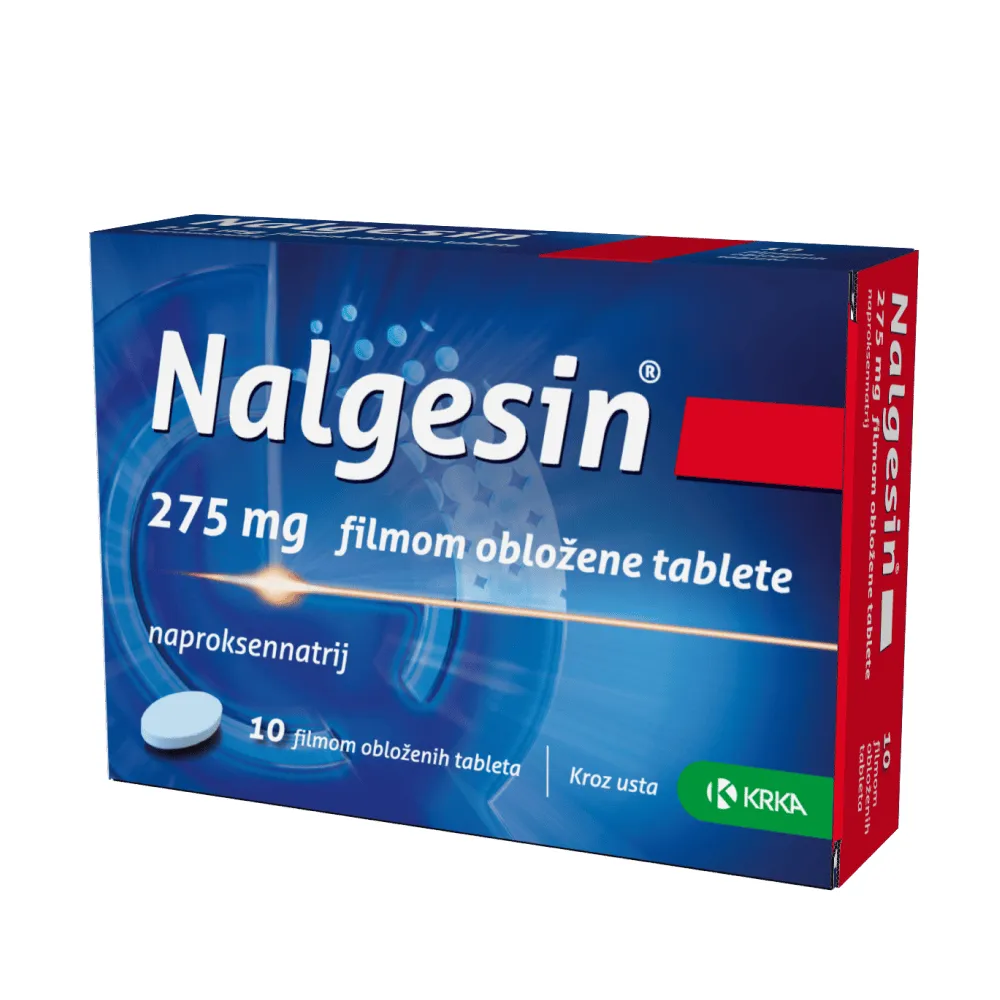
Table of Contents
Package leaflet: Information for the patient
Nalgesin, 275 mg, coated tablets
naproxenum natricum
Please read this leaflet carefully before taking this medicine, because it contains
important information for the patient.
- Keep this leaflet, as you may need to read it again.
- If you have any questions, please consult your doctor or pharmacist.
- This medicine has been prescribed for a specific individual. Do not pass it on to others. This medicine may harm someone else, even if their symptoms are the same as yours.
- If you experience any adverse reactions, including any not listed in this leaflet, inform your doctor or pharmacist. See section 4.
Leaflet contents
- What Nalgesin is and what it is used for
- Important information before taking Nalgesin
- How to take Nalgesin
- Possible side effects
- How to store Nalgesin
- Contents of the pack and other information
1. What Nalgesin is and what it is used for
Nalgesin is a medicine that relieves pain, reduces inflammation and fever.
The drug works by inhibiting prostaglandin synthesis.
Nalgesin is used symptomatically in the treatment of:
- rheumatoid arthritis, osteoarthritis, ankylosing spondylitis, juvenile idiopathic arthritis
- acute inflammatory conditions of the musculoskeletal system (e.g. dislocations and sprains, direct injuries, lumbosacral pain, bursitis, tenosynovitis)
- acute gout attack
- menstrual pain (dysmenorrhoea)
- acute postoperative pain and swelling (e.g. after surgery, following tooth extraction).
2. Important information before using Nalgesin
When not to take Nalgesin
- if the patient is allergic to sodium naproxen or any of the other ingredients of this medicine (listed in section 6);
- if the patient has experienced breathing difficulties (bronchial asthma), urticaria, or inflammation of the nasal mucosa (rhinitis) while taking acetylsalicylic acid or other non-steroidal anti-inflammatory drugs (NSAIDs, non-steroidal anti-rheumatic drugs);
- if the patient has or has had a stomach or intestinal ulcer, or other gastrointestinal disorders;
- if the patient has experienced gastrointestinal bleeding or perforation during previous treatment with NSAIDs;
- if the patient has severe impairment of liver or kidney function;
- if the patient has severe heart failure;
- during the last three months of pregnancy.
Warnings and precautions
Before starting treatment with Nalgesin, discuss this with your doctor or pharmacist.
- if the patient has had or currently has gastrointestinal bleeding, ulcers, or perforation, careful monitoring by a physician is required; particular caution should be exercised in patients with ulcerative colitis or Crohn's disease, as symptoms may recur or worsen. Serious adverse effects in the gastrointestinal tract may occur without prior symptoms; intestinal bleeding and perforation (a hole in the intestinal wall) are possible.
- if the patient has impaired liver or kidney function;
- if the patient has heart failure;
- if the patient has high blood pressure.
Nalgesin may make it more difficult to become pregnant. If the patient is planning to become pregnant or has problems conceiving, she should inform her doctor.
Medicines such as Nalgesin may slightly increase the risk of heart attack (myocardial infarction) or stroke. This risk is higher when high doses are used or treatment is prolonged. Do not exceed the recommended dose or duration of treatment.
As with all medicines used in elderly patients, sodium naproxen should be administered at the lowest effective dose.
Serious skin reactions, including Stevens-Johnson syndrome, toxic epidermal necrolysis, and drug reaction with eosinophilia and systemic symptoms (DRESS syndrome), have been reported with the use of Nalgesin Forte. Treatment with Nalgesin Forte should be discontinued immediately and medical advice sought if any of the symptoms associated with these serious skin reactions, described in section 4, occur.
Nalgesin and other medicines
Tell your doctor or pharmacist about all medicines you are currently taking, have recently taken, or plan to take.
Due to interactions with certain other medicines, the effect of Nalgesin or those medicines may be increased or decreased. This may occur with:
- other painkillers (acetylsalicylic acid and other non-steroidal anti-inflammatory drugs),
- medicines used to prevent blood clots (warfarin),
- acetylsalicylic acid used to prevent blood clots,
- medicines used in diabetes treatment (sulfonylureas),
- medicines used in epilepsy treatment (hydantoin derivatives),
- medicines used to treat high blood pressure,
- medicines that increase urine production (furosemide),
- medicines used in the treatment of psychiatric disorders (lithium),
- medicines that increase uric acid excretion and prevent gout attacks (probenecid),
- medicines that suppress the immune system (cyclosporine),
- medicines used in cancer therapy (methotrexate),
- medicines used in the treatment of AIDS (zidovudine),
- medicines used for pain and inflammation of joints (corticosteroids).
Nalgesin with food and drink
Tablets should be swallowed with an adequate amount of liquid, preferably during a meal.
Pregnancy and breastfeeding
If the patient is pregnant or breastfeeding, suspects she may be pregnant, or is planning to have a child, she should consult her doctor or pharmacist before using this medicine.
The use of Nalgesin is not recommended during the last three months of pregnancy, as it may harm the unborn child or cause complications during delivery. It may cause kidney and heart problems in the unborn child, affect the tendency to bleed in both mother and child, and delay or prolong labour. Nalgesin should not be taken during the first 6 months of pregnancy unless absolutely necessary and prescribed by a doctor. If treatment is required during this period or when trying to conceive, the lowest possible dose should be used for the shortest possible time. From the 20th week of pregnancy, Nalgesin may cause kidney dysfunction in the unborn child if taken for longer than a few days, potentially leading to reduced amniotic fluid volume (oligohydramnios). If treatment is required for more than a few days, the doctor may recommend additional monitoring.
Breastfeeding is not recommended while taking Nalgesin.
Driving and operating machinery
Nalgesin has no effect or a negligible effect on the ability to drive or operate machinery. Dizziness, drowsiness, fatigue, and visual disturbances are possible adverse effects of NSAIDs. If such symptoms occur, patients should not drive or operate machinery.
Nalgesin contains sodium
This medicine contains 25 mg of sodium (the main component of table salt) per tablet. This corresponds to 1.25% of the maximum recommended daily dietary intake of sodium for adults.
3. How to use Nalgesin
This medicine should always be taken as directed by a doctor or pharmacist. If in doubt,
consult a doctor or pharmacist.
Tablets should be swallowed with water, preferably during a meal.
Adults and adolescents over 16 years of age
Rheumatoid arthritis, osteoarthritis, ankylosing spondylitis
The recommended daily dose of sodium naproxen ranges from 550–1100 mg, administered
in two divided doses. The maintenance dose of sodium naproxen may be increased or decreased
depending on the patient's response to treatment. A single dose exceeding 1100 mg should not be used.
Acute musculoskeletal disorders
The recommended initial dose of sodium naproxen is 550 mg, followed by 550 mg every 12
hours or 275 mg every 6–8 hours.
Acute gout attack
The recommended initial dose of sodium naproxen is 825 mg, followed by 275 mg every 8
hours.
Menstrual pain
The recommended initial dose of sodium naproxen is 550 mg, followed, if necessary, by 550 mg every 12
hours or 275 mg every 6–8 hours.
Acute postoperative pain
The recommended initial dose of sodium naproxen is 550 mg, followed by 550 mg every 12
hours or 275 mg every 6–8 hours.
Juvenile idiopathic arthritis
In adolescents aged 16 years and weighing 50 kg or more, the recommended daily dose of sodium naproxen
ranges from 550–825 mg, administered in two divided doses.
Children and adolescents under 16 years of age
Nalgesin is not intended for use in children and adolescents under 16 years of age.
Elderly patients
The lowest effective dose of Nalgesin should be used.
Patients with renal impairment
Nalgesin should be used with caution in patients with renal impairment. A reduced dose should be
administered in such patients. Nalgesin must not be taken by patients with severe renal impairment
(see: "When not to take Nalgesin").
Patients with hepatic dysfunction
Nalgesin should be used with caution in patients with impaired liver function. A reduced dose should be
administered in such patients. Nalgesin must not be taken by patients with severe hepatic impairment
(see: "When not to take Nalgesin").
If a patient feels that the effect of Nalgesin is too strong or too weak, they should consult a doctor or pharmacist.
Overdose of Nalgesin
Overdose may cause abdominal pain, nausea, vomiting, dizziness, tinnitus, irritability, and in more severe cases, also bloody vomiting, tarry stools, disturbances in consciousness, breathing problems, seizures, and renal failure.
In case of overdose, the doctor will take appropriate measures.
Missed dose of Nalgesin
Do not take a double dose to make up for a missed tablet.
The medicine should be taken at the same time each day. If a dose is missed at the scheduled time, it should be taken as soon as the patient remembers.
Stopping Nalgesin treatment
When sodium naproxen is used short-term to relieve pain, treatment can be safely discontinued when no longer needed. In cases of long-term use, consult a doctor before stopping treatment.
If you have any further questions about the use of this medicine, consult your doctor or pharmacist.
4. Possible adverse reactions
Like all medicines, this medicine can cause adverse reactions, although not everyone will experience them.
Nalgesin must be discontinued immediately and a doctor should be consulted if any of the following symptoms occur in the patient, as they may be signs of serious adverse reactions:
- severe gastrointestinal disturbances, heartburn or abdominal pain
- vomiting blood or material resembling coffee grounds
- black stools or blood in the urine
- skin reactions such as itchy rash
- difficulty breathing and/or swelling of the face or throat
- fatigue with loss of appetite
- sore throat with oral ulcers, fatigue and fever
- nosebleeds, skin petechiae
- unusual tiredness and reduced urine output
- swelling of the face, feet or legs
- chest pain
- disturbances of consciousness
- widespread rash, high body temperature, increased liver enzyme activity, blood disorders (eosinophilia), swollen lymph nodes and involvement of other organs (drug reaction with eosinophilia and systemic symptoms, also known as DRESS syndrome). See also section 2.
- a characteristic skin allergic reaction called fixed drug eruption, which usually recurs in the same location(s) upon re-administration of the drug and may present as round or oval red patches and swelling of the skin, blisters (urticaria), and itching.
Adverse reactions are most commonly associated with the use of high doses.
Common (may occur in up to 1 in 10 patients):
- constipation, abdominal pain, nausea, dyspepsia, diarrhoea, inflammation of the oral mucosa,
- headache, dizziness, balance disorders, drowsiness,
- itching, skin rash, bleeding within the skin or mucous membranes (petechiae), small red spots on the skin caused by minor bleeding within or under the skin (purpura),
- tinnitus, hearing disturbances,
- visual disturbances,
- oedema, rapid heartbeat or palpitations,
- thirst, sweating,
- breathing difficulties (dyspnoea).
Uncommon (may occur in up to 1 in 100 patients):
- bleeding and/or perforation in the stomach, vomiting blood originating from the stomach or oesophagus, blood in the stool, vomiting,
- changes in liver enzyme activity, jaundice,
- depression, sleep disorders, inability to concentrate, insomnia, malaise,
- muscle pain and weakness,
- hair loss (alopecia), photoallergic dermatitis,
- hearing disturbances,
- congestive heart failure (medicines such as Nalgesin may slightly increase the risk of heart attack (myocardial infarction) or stroke),
- hypersensitivity reactions,
- fever and chills,
- menstrual disorders,
- kidney function disorders (glomerulonephritis, haematuria, interstitial nephritis, nephrotic syndrome, renal failure, renal papillary necrosis),
- blood morphology changes (eosinophilia, granulocytopenia, leukopenia, thrombocytopenia),
- eosinophilic pneumonia.
Adverse reactions for which a causal relationship to sodium naproxen use is unknown (frequency cannot be determined from available data):
- blood morphology changes (aplastic anaemia, haemolytic anaemia),
- inflammation of the membranes surrounding the central nervous system (aseptic meningitis), mental disorders (cognitive),
- skin hypersensitivity reactions (epidermal necrolysis, erythema multiforme, photosensitivity reactions resembling late cutaneous porphyria and blistering skin detachment, Stevens-Johnson syndrome, urticaria),
- inflammation of the oral mucosa (ulcerative stomatitis),
- vasculitis,
- hypersensitivity reactions (angioedema), high blood sugar levels (hyperglycaemia), low blood sugar levels (hypoglycaemia).
Reporting of adverse reactions
If any adverse reactions occur, including any adverse reactions not listed in this leaflet, inform your doctor or pharmacist. Adverse reactions can be reported directly to the Department of Monitoring of Adverse Drug Reactions of the Office for Registration of Medicinal Products, Medical Devices and Biocidal Products, Al. Jerozolimskie 181C, 02-222 Warsaw, tel.: + 48 22 49 21 301, fax: + 48 22 49 21 309.
Website: https://smz.ezdrowie.gov.pl
Adverse reactions can also be reported to the marketing authorisation holder.
Reporting adverse reactions helps provide more information on the safety of the medicine.
5. How to store Nalgesin
Keep this medicine out of sight and reach of children.
Do not use this medicine after the expiry date stated on the packaging following the abbreviation
EXP. The expiry date refers to the last day of the specified month.
Store in the original packaging, protected from light.
Medicines must not be disposed of via wastewater or household waste. Ask your
pharmacist how to dispose of medicines no longer required. These measures will help protect
the environment.
6. Contents of the packaging and other information
What Nalgesin contains
- The active substance is naproxen sodium. Each tablet contains 275 mg of naproxen sodium, equivalent to 250 mg of naproxen.
- Other ingredients are: in the tablet core: povidone K 30, microcrystalline cellulose, talc, magnesium stearate; and in the tablet coating Opadry YS-1R-4215, E 132** : hypromellose, titanium dioxide (E 171), polyethylene glycol 8000, and indigo carmine (E 132).
What Nalgesin looks like and contents of the pack
Film-coated tablets, oval, slightly biconvex, light blue in colour.
Packaging: 10, 20, 30, 40 or 60 tablets in PVC/Aluminium blisters, in a cardboard box.
Not all pack sizes may be marketed.
Marketing Authorisation Holder
KRKA, d.d., Novo mesto, Šmarješka cesta 6, 8501 Novo mesto, Slovenia
Manufacturer
KRKA, d.d., Novo mesto, Šmarješka cesta 6, 8501 Novo mesto, Slovenia
This medicinal product is authorised in the Member States of the European Economic Area under the following names:
| Country name | Medicinal product name |
| Portugal | Naproxeno Krka 275 mg |
| Hungary, Lithuania | Nalgesin |
| Romania | Naldorex 275 mg |
| Austria | Naproxen Krka 275 mg |