Mydocalm forte
Poland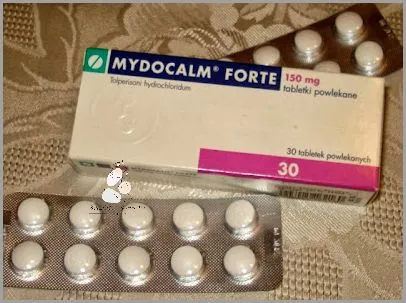
Table of Contents
Package leaflet: Information for the user
Warning! Keep this leaflet. Information on the immediate packaging in a foreign language.
Mydocalm Forte (Mydocalm 150 mg)
150 mg, coated tablets
Tolperisoni hydrochloridum
Mydocalm Forte and Mydocalm 150 mg are different trade names of the same medicinal product.
Please read the entire leaflet carefully before using the medicine, as it contains important information for the patient.
- Keep this leaflet, as you may need to read it again.
- If you have any questions, please consult your doctor or pharmacist.
- This medicine has been prescribed for a specific individual. Do not pass it on to others. This medicine may harm others, even if their symptoms are the same.
- If you experience any adverse reactions, including any not listed in this leaflet, inform your doctor, pharmacist, or nurse. See section 4.
Table of contents of the leaflet:
- What Mydocalm Forte is and what it is used for
- What you need to know before taking Mydocalm Forte
- How to take Mydocalm Forte
- Possible side effects
- How to store Mydocalm Forte
- Contents of the pack and other information
1. What Mydocalm Forte is and what it is used for
Mydocalm Forte contains tolperisone as the active substance. Tolperisone is a centrally acting medicinal product. It is indicated in the treatment of pathologically increased skeletal muscle tone following stroke in adult patients.
2. Information before using Mydocalm Forte
When not to use Mydocalm Forte
- If the patient is allergic to tolperisone or drugs containing eperisone, or to any of the other ingredients of this medicine (listed in section 6).
- If the patient has myasthenia (an autoimmune disorder characterized by excessive muscle fatigue).
- During breastfeeding.
Warnings and precautions
Before starting treatment with Mydocalm Forte, discuss this with your doctor or pharmacist.
Hypersensitivity reactions
In the post-marketing period for medicinal products containing tolperisone (the active substance in Mydocalm Forte), the most frequently reported adverse reactions were hypersensitivity reactions. These ranged from mild skin reactions to severe systemic reactions (e.g. anaphylactic shock).
It appears that the risk of hypersensitivity reactions is increased in women, elderly patients, or patients taking other medications concomitantly (mainly non-steroidal anti-inflammatory drugs - NSAIDs). Furthermore, an increased risk of hypersensitivity to this drug may occur in patients with a history of drug allergy or allergic conditions (such as atopy, hay fever, asthma, atopic dermatitis with high serum IgE levels, urticaria), or in patients with concurrent viral infection.
Early signs of hypersensitivity include: hot flushes, rash, intense itching of the skin (with raised bumps), wheezing, difficulty breathing with or without facial, lip, tongue and (or) throat swelling, difficulty swallowing, rapid heartbeat, low blood pressure, rapid drop in blood pressure.
If the patient experiences any of these symptoms, they should immediately stop taking this medicine and contact their doctor or the nearest hospital emergency department.
If the patient has ever had an allergic reaction to tolperisone, this medicine must not be used.
If the patient has a known allergy to lidocaine, they may be at increased risk of allergy to tolperisone. In such a case, consult your doctor before starting treatment.
Children and adolescents
The safety and efficacy of tolperisone in children have not been established.
Mydocalm Forte with other medicines
Inform your doctor or pharmacist about all medicines the patient is currently taking or has recently taken, as well as any medicines they plan to take.
Tolperisone may enhance the effects of certain drugs, such as thioridazine (an antipsychotic), tolterodine (used to treat urinary incontinence), venlafaxine (an antidepressant), atomoxetine (used to treat attention deficit hyperactivity disorder (ADHD)), desipramine (an antidepressant), dextromethorphan (a cough suppressant), metoprolol (a beta-adrenergic blocking agent used to treat high blood pressure, angina pectoris (chest pain)), nebivolol (a beta-blocker used to treat hypertension and heart failure), and perphenazine (an antipsychotic).
Although tolperisone acts on the central nervous system, its potential to cause drowsiness (reduced concentration) is low. However, when used concomitantly with other centrally acting muscle relaxants, the doctor may consider reducing the dose of tolperisone.
Mydocalm Forte enhances the effect of niflumic acid. Therefore, when used concomitantly, the doctor may consider reducing the dose of niflumic acid or other non-steroidal anti-inflammatory drugs if they are being used.
Mydocalm Forte with food and drink
Take the medicine after a meal, with a glass of water. Insufficient food intake may reduce the effect of tolperisone.
Pregnancy and breastfeeding
If the patient is pregnant or breastfeeding, suspects she may be pregnant, or is planning to have a child, she should consult her doctor or pharmacist before using this medicine.
Mydocalm Forte should not be used during pregnancy (especially during the first trimester), unless the doctor decides, based on a benefit-risk assessment, that the potential benefit justifies the potential risk to the fetus.
Mydocalm Forte is contraindicated during breastfeeding.
Driving and operating machinery
Mydocalm Forte has no influence on the ability to drive or operate machinery.
However, patients who experience dizziness, drowsiness, concentration disturbances, have epilepsy, visual disturbances, or muscle weakness while taking Mydocalm Forte should consult their doctor.
Mydocalm Forte contains monohydrate lactose (milk sugar)
If the patient has previously been diagnosed with intolerance to certain sugars, they should consult their doctor before taking this medicinal product.
3. How to use Mydocalm Forte
This medicine should always be used as directed by the physician. In case of doubt, consult your
doctor or pharmacist.
The recommended dose is:
- 1 tablet of Mydocalm Forte, 150 mg, three times daily, according to individual patient needs and tolerance.
The medicine should be taken after meals, with a glass of water.
Kidney function disorders
During treatment with Mydocalm Forte, regular monitoring tests should be performed, including frequent assessment of kidney function and general condition, as adverse reactions have been observed more frequently in this group of patients. If the patient has severe kidney disease, they should consult a doctor before taking this medicine, since Mydocalm Forte is not recommended for patients with severe renal impairment.
Liver function disorders
During treatment with Mydocalm Forte, regular monitoring tests should be performed, including frequent assessment of liver function and general condition, as adverse reactions have been observed more frequently in this group of patients. If the patient has severe liver disease, they should consult a doctor before taking this medicine, since Mydocalm Forte is not recommended for patients with severe hepatic impairment.
Use of a higher than recommended dose of Mydocalm Forte
Symptoms of overdose may include drowsiness, gastrointestinal symptoms (such as malaise, vomiting, abdominal pain in the upper part of the abdomen), rapid heartbeat, high blood pressure, slowed movements, and dizziness. In severe cases, seizures, respiratory depression or arrest, and coma have been reported.
In case of overdose, seek immediate medical advice from a doctor, pharmacist, or emergency department. Bring the patient information leaflet with you.
Missed dose of Mydocalm Forte
Take the next dose at the usual time.
Do not take a double dose to make up for a missed tablet.
Stopping treatment with Mydocalm Forte
Do not discontinue treatment even if you feel the effect is too strong or too weak. In such a case, consult your doctor or pharmacist.
If you have any further doubts regarding the use of this medicine, consult your doctor or pharmacist.
4. Possible adverse reactions
Like all medicines, this medicine can cause adverse reactions, although not everyone will experience them.
They usually resolve after discontinuation of the medicine.
Uncommon adverse reactions (may occur in up to 1 in 100 people): loss of appetite, insomnia, sleep disturbances, headache, dizziness, drowsiness, low blood pressure, discomfort in the abdominal cavity, diarrhoea, dry mouth sensation, dyspepsia (indigestion), nausea, muscle weakness, muscle pain, limb pain, fatigue, discomfort, weakness.
Rare adverse reactions (may occur in up to 1 in 1000 people): allergic (hypersensitivity) reactions*, severe allergic reactions (anaphylactic reactions), reduced activity, depression, attention disorders, tremor, epilepsy, loss of sensation, unusual skin reactions (tingling, numbness, and pricking sensations), lethargy, blurred vision, sensation of spinning, tinnitus, angina-like chest pain (angina pectoris), rapid heartbeat, sensation of fast and irregular heartbeat, flushing, breathing difficulties, nosebleeds, accelerated respiration, abdominal pain, constipation, bloating, vomiting, mild liver damage, allergic skin reactions, itching, urticaria, rash, discomfort in limbs, sensation of being drunk, feeling of warmth, excessive sweating, inability to control urination and urinary incontinence, presence of excess protein in urine (detected in laboratory tests), feeling of warmth, thirst, restlessness, low blood pressure, changes in laboratory test results (increased bilirubin levels, changes in liver enzyme activity, decreased platelet count, increased white blood cell count).
Very rare adverse reactions (may occur in up to 1 in 10,000 people): anaemia, unusual enlargement of lymph nodes, severe allergic reactions (anaphylactic shock), excessive thirst sensation, confusion, slowed heart rate, slight decrease in bone density, chest discomfort, changes in laboratory test results (increased blood creatinine concentration).
* The following symptoms have also been reported after the medicine was placed on the market (frequency unknown): sudden swelling of hands, feet, ankles, face, lips, tongue or throat. Difficulty swallowing or breathing may also occur.
Reporting of adverse reactions
If any adverse reactions occur, including any adverse reactions not listed in this leaflet, inform your doctor, pharmacist or nurse. Adverse reactions can also be reported directly to the Department of Monitoring of Adverse Drug Reactions, Office for Registration of Medicinal Products, Medical Devices and Biocidal Products
Al. Jerozolimskie 181C
PL-02 222 Warsaw
Tel.: + 48 22 49 21 301
Fax: + 48 22 49 21 309
Website: https://smz.ezdrowie.gov.pl
Reporting adverse reactions helps to provide more information on the safety of the medicine.
5. How to store Mydocalm Forte
Store below 30°C, in the original packaging.
Keep the medicine out of the sight and reach of children.
Do not use this medicine after the expiry date stated on the cardboard box.
The expiry date refers to the last day of the stated month.
Medicines must not be disposed of via wastewater or household waste. Ask your pharmacist how to dispose of medicines no longer in use. This will help protect the environment.
6. Contents of the packaging and other information
What Mydocalm Forte contains
- The active substance is tolperisone hydrochloride. Each coated tablet contains 150 mg of tolperisone hydrochloride.
- Other components of the medicine are:
Tablet core: citric acid, anhydrous colloidal silicon dioxide, stearic acid, talc, microcrystalline cellulose, corn starch, lactose monohydrate.
Coating: anhydrous colloidal silicon dioxide, titanium dioxide (E 171), lactose monohydrate, macrogol 6000, hypromellose.
What Mydocalm Forte looks like and contents of the pack
White or almost white, round, biconvex, slightly shiny coated tablets with the imprint "150" on one side. When the coated tablet is broken, a white surface is visible.
The pack contains 30 coated tablets.
For further information, please contact the responsible party or the parallel importer.
Marketing Authorisation Holder in Romania, the country of export:
Gedeon Richter România S.A., Str. Cuza-Vodă nr. 99-105, 540306 Târgu Mureş, Romania
Manufacturer:
Gedeon Richter Plc., Gyömrői út 19-21, H-1103 Budapest, Hungary
Parallel importer:
Delfarma Sp. z o.o.
ul. Św. Teresy od Dzieciątka Jezus 111
91-222 Łódź
Repackaged in:
Delfarma Sp. z o.o.
ul. Św. Teresy od Dzieciątka Jezus 111
91-222 Łódź
Marketing Authorisation number in Romania, the country of export: 7643/2015/01
7643/2015/02
Parallel import licence number: 64/07