Mirtagen
Poland
Table of Contents
PACKAGE LEAFLET: INFORMATION FOR THE USER
Warning! Keep this leaflet, information on the immediate packaging in a foreign language!
Mirtagen (Mirtazapine SmeltTab Mylan 30 mg)
30 mg, orodispersible tablets
Mirtazapinum
Mirtagen and Mirtazapine SmeltTab Mylan 30 mg are different brand names of the same medicine.
Please read this leaflet carefully before taking the medicine, because it contains
important information for the patient.
- Keep this leaflet, so that you can read it again if necessary.
- If you have any questions, please consult your doctor or pharmacist.
- This medicine has been prescribed for a specific individual. Do not pass it on to others. It may harm someone else, even if their symptoms are similar.
- If the patient experiences any adverse reactions, including any not listed in this leaflet, inform the doctor or pharmacist. See section 4.
Table of contents:
- What Mirtagen is and what it is used for
- Important information before taking Mirtagen
- How to take Mirtagen
- Possible side effects
- How to store Mirtagen
- Contents of the pack and other information
1. What Mirtagen is and what it is used for
Mirtagen belongs to a group of medicines called antidepressants.
Mirtagen is used to treat depression in adults.
2. Important information before using Mirtagen
When not to use Mirtagen:
- if the patient is allergic to mirtazapine or any of the other ingredients of this medicine (listed in section 6),
- if the patient is currently taking or has recently taken (within the last 2 weeks) medicines from the group of monoamine oxidase inhibitors (MAOIs).
Warnings and precautions
When not to use Mirtagen or consult a doctor before starting treatment:
If the patient has ever experienced severe skin rash or skin peeling, skin blisters and/or erosions of the oral mucosa after taking Mirtagen or other medicines. Severe skin reactions such as Stevens-Johnson syndrome, toxic epidermal necrolysis, and drug reaction with eosinophilia and systemic symptoms (DRESS) have been reported during treatment with Mirtagen. If any of the symptoms described in section 4 relating to severe skin reactions occur, treatment with Mirtagen must be discontinued immediately and the patient should seek medical advice without delay. Mirtagen must not be restarted if the patient has previously experienced severe skin reactions.
Children and adolescents
Mirtagen must not be used in children and adolescents under 18 years of age, as its efficacy has not been established. It should also be emphasized that patients under 18 years of age taking medicines of this class are at increased risk of adverse effects such as suicidal behaviour, suicidal thoughts and hostility (particularly aggression, oppositional behaviour and anger). Nevertheless, a doctor may prescribe Mirtagen to patients under 18 years of age if he or she considers it to be in their best interest. If a doctor has prescribed Mirtagen to a patient under 18 years of age and the patient wishes to discuss this, they should contact the doctor again. If the above-mentioned symptoms develop or worsen in patients under 18 years of age taking Mirtagen, this should be reported to the doctor. In addition, the long-term impact of Mirtagen on safety with regard to growth, maturation, cognitive development and behavioural development in this age group has not yet been established. Significant weight gain has been observed more frequently in patients treated with mirtazapine in this age group compared to adults.
Suicidal thoughts and worsening of depression and anxiety disorders
Patients with depression may sometimes have thoughts of self-harm or suicide. These thoughts may increase when antidepressant medicines are first started, as these medicines act slowly and usually take about 2 weeks, or sometimes longer, to take effect.
This may occur:
- if the patient has previously experienced thoughts of self-harm or suicide,
- if the patient is a young adult. Clinical trial data have shown an increased risk of suicidal behaviour in adults under 25 years of age with psychiatric disorders treated with antidepressant medicines. If thoughts of self-harm or suicidal thoughts occur, the patient should contact their doctor immediately or go to hospital without delay.
Talking to someone close, such as a family member or friend, may be helpful. The patient may inform these people about their depression and ask them to read this leaflet so that they can alert the patient if they notice worsening of their condition or unusual changes in behaviour.
Before starting treatment with Mirtagen, the following conditions should be discussed with the doctor or pharmacist if they are present or have ever occurred:
- seizures (epilepsy)
- liver disease, including jaundice
- kidney disease
- heart disease or family history of heart disease, including certain types of heart disorders that may cause changes in heart rhythm, recent heart attack, heart failure, or use of certain medicines that may cause heart rhythm disturbances
- low blood pressure
- schizophrenia
- bipolar affective disorders (alternating periods of elevated mood and excitement with depression)
- diabetes (a change in insulin or other antidiabetic medicine dosage may be necessary)
- eye disorders, such as increased intraocular pressure (glaucoma)
- difficulty in passing urine, which may be due to an enlarged prostate.
Elderly patients
Elderly patients are often more sensitive, particularly to the adverse effects of antidepressant medicines.
During treatment
Inform the doctor:
- if symptoms of infection occur, such as high fever, sore throat or mouth ulcers. In rare cases, these symptoms may indicate bone marrow suppression affecting blood cell production. Although rare, these symptoms most commonly occur 4–6 weeks after starting treatment.
Mirtagen with other medicines
Do not take Mirtagen together with:
- monoamine oxidase inhibitors (MAOIs) or within 2 weeks of stopping them. Mirtagen must not be started within 2 weeks of stopping MAOIs. Examples of MAOIs include moclobemide, tranylcypromine (antidepressants) and selegiline (used in the treatment of Parkinson's disease).
Tell the doctor or pharmacist about all medicines currently used, recently used, or planned for use, including over-the-counter medicines, and particularly:
- other antidepressants such as SSRIs (e.g. citalopram), venlafaxine, L-tryptophan or triptans (used to treat migraine), tramadol (a painkiller), linezolid (an antibiotic), lithium salts (used to treat certain psychiatric disorders), and preparations containing St. John's wort Hypericum perforatum (herbal remedies used to treat depression). In very rare cases, serotonin syndrome may occur in patients taking Mirtagen alone or in combination with these medicines. Some of its symptoms include fever, sweating, increased heart rate, diarrhoea, involuntary muscle contractions, shivering, increased reflexes, restlessness, mood changes, and loss of consciousness. If several of these symptoms occur together, contact the doctor immediately.
- medicines used to treat anxiety and insomnia, such as benzodiazepines, e.g. diazepam, chlordiazepoxide.
- medicines used to treat schizophrenia, such as olanzapine.
- medicines used to treat allergies, such as cetirizine.
- medicines used to treat severe pain, such as morphine. Mirtagen in combination with these medicines may increase the drowsiness caused by them.
Medicines that increase mirtazapine levels in the blood:
- medicines used to treat infections; antibacterial agents (such as erythromycin), antifungal agents (such as ketoconazole), medicines used to treat HIV and AIDS (such as HIV protease inhibitors, e.g. ritonavir, nelfinavir); antidepressants (such as nefazodone) and medicines used to treat stomach ulcers (such as cimetidine). In combination with Mirtagen, these medicines may increase the blood concentration of mirtazapine. Inform the doctor if taking these medicines. A reduction in the dose of Mirtagen may be necessary, and after stopping treatment with these medicines, the dose of Mirtagen may need to be increased.
Medicines that decrease mirtazapine levels in the blood:
- carbamazepine and phenytoin, medicines used to treat epilepsy; rifampicin, a medicine used to treat tuberculosis. In combination with Mirtagen, these medicines may reduce the blood concentration of Mirtagen. Inform the doctor if taking these medicines. An increase in the dose of Mirtagen may be necessary, and after stopping treatment with these medicines, the dose of Mirtagen may need to be reduced.
- warfarin, a medicine used to prevent blood clots. Mirtagen may enhance the effect of warfarin. Inform the doctor if taking these medicines. When Mirtagen is used concomitantly, blood monitoring is recommended.
Mirtagen and alcohol
Drowsiness may occur if alcohol is consumed while taking this medicine.
It is best to avoid drinking alcohol while taking Mirtagen.
Pregnancy and breastfeeding
Limited experience with the use of Mirtagen in pregnant women does not indicate an increased risk. However, caution should be exercised during pregnancy.
If pregnancy occurs or is planned while taking Mirtagen, consult the doctor whether treatment should be continued. If Mirtagen is taken during pregnancy or shortly before delivery, the newborn should be monitored for possible adverse effects.
Ensure that the midwife and/or doctor are aware that the patient is taking Mirtagen.
Use of similar medicines (SSRIs) during pregnancy may increase the risk of a serious condition in newborns called persistent pulmonary hypertension of the newborn (PPHN), causing rapid breathing and cyanosis (bluish skin). Symptoms usually begin within 24 hours after birth. If the described symptoms occur in the newborn, contact the midwife or doctor immediately.
Ask the doctor whether breastfeeding is possible while taking Mirtagen.
If the patient is pregnant or breastfeeding, suspects she may be pregnant, or plans to have a baby, she should consult a doctor or pharmacist before using this medicine.
Driving and operating machinery
Mirtagen may reduce alertness and the ability to concentrate. Before driving or operating machinery, ensure that alertness and concentration are not impaired.
Mirtagen contains aspartame (E 951)
This medicine contains 6 mg of aspartame (E 951) in each orally disintegrating tablet.
Aspartame (E 951) is a source of phenylalanine. It may be harmful to patients with phenylketonuria.
This is a rare genetic disorder in which phenylalanine accumulates in the body due to impaired excretion.
3. How to take Mirtagen
This medicine should always be taken as directed by your doctor or pharmacist. If you have any doubts,
you should consult your doctor or pharmacist.
Mirtagen is available in the following strengths: 15 mg, 30 mg, 45 mg.
Dosage
The recommended starting dose is 15 or 30 mg once daily. After several days of treatment, your doctor may
recommend increasing the dose to the most appropriate level for the patient (from 15 to 45 mg daily).
This usual dose is generally recommended for patients of various ages. However, in elderly patients
or those with kidney or liver disease, your doctor may recommend a different dose.
When to take Mirtagen
Mirtagen should be taken every day at the same time.
Mirtagen is best taken as a single dose, before going to bed. However, your doctor may recommend
taking the medicine in two divided doses – one in the morning and one in the evening before going to bed.
The higher dose should be taken before going to bed.
Instructions for taking orally disintegrating tablets:
The tablets should be taken by mouth.
1. Do not crush the orally disintegrating tablet
To avoid crushing the orally disintegrating tablet, do not press on the blister pocket containing the tablet (Figure A).
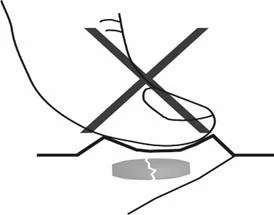
Figure A.
2. Tear off the blister pocket containing the tablet
Each blister contains 6 pockets with tablets, separated by perforated lines. Bend the blister pack and tear off one pocket along the perforated line (Figure 1).
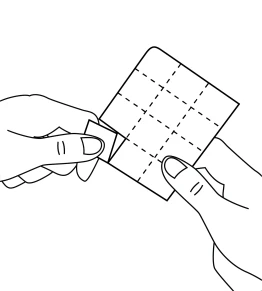
Figure 1.
3. Peel back the foil
Carefully peel back the foil cover starting from the corner (Figure 2).
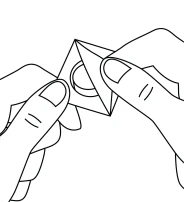
Figure 2.
4. Remove the orally disintegrating tablet
Remove the orally disintegrating tablet with a dry hand and place it on the tongue.
(Figure 3).
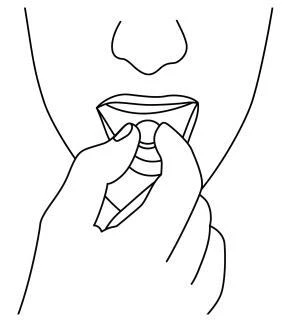
Figure 3.
The tablet will rapidly disintegrate and can be swallowed without water.
When to expect improvement in well-being
Mirtagen usually starts to work after 1 to 2 weeks, and your well-being will begin to improve after 2 to 4 weeks.
It is important to discuss the effects of Mirtagen with your doctor during the first weeks of treatment.
After 2 to 4 weeks of taking Mirtagen, you should discuss your treatment progress with your doctor.
If there is no adequate clinical response, your doctor may increase the dose. After another 2–4 weeks, you should again review your treatment progress with your doctor. Treatment should continue until symptoms have completely resolved, which usually takes 4 to 6 months.
Use in children and adolescents under 18 years of age
Mirtagen must not be used in children and adolescents under 18 years of age (see section 2, “Children and adolescents”).
Taking more Mirtagen than recommended
If you or anyone else takes more Mirtagen than prescribed, you should contact your doctor immediately.
The most common signs of Mirtagen overdose (without other medicines or alcohol) are drowsiness,
disorientation, changes in heart rhythm (increased heart rate, irregular heartbeat) and/or
fainting. These may be symptoms of life-threatening ventricular arrhythmias known as “torsade de pointes”.
If you forget to take Mirtagen
If you forget to take your dose and the medicine is taken once daily:
Do not take the missed dose of Mirtagen; simply skip it.
Take the next dose the following day at the usual time.
Do not take a double dose to make up for the missed tablet.
If you forget to take your dose and the medicine is taken twice daily:
If you forget the morning dose, take it together with the evening dose.
If you forget the evening dose, do not take it together with the morning dose; skip it and continue treatment by taking the usual morning and evening doses.
If you forget both doses, do not try to make them up; skip them. Continue treatment the next day with the usual morning and evening doses.
Stopping Mirtagen
You should stop taking Mirtagen only after consulting your doctor.
Do not stop taking the medicine too early, as this may cause the illness to return. If improvement occurs, discuss this with your doctor. Your doctor will advise when treatment can be stopped.
Suddenly stopping Mirtagen may cause nausea, dizziness, restlessness or anxiety, and headache. These symptoms can be avoided by gradually discontinuing the medicine.
Your doctor will advise you how to gradually reduce the dose of the medicine.
If you have any further questions about the use of this medicine, consult your doctor or pharmacist.
4. Possible adverse effects
Like any medicine, this medicine can cause adverse effects, although they do not occur in everyone.
If any of the symptoms listed below occur, stop taking the
Mirtagen and immediately contact a doctor or go to the emergency department of the nearest hospital:
Rare (may affect 1 in 1,000 patients):
- inflammation of the pancreas causing moderate to severe stomach pain radiating to the back.
Frequency not known (frequency cannot be estimated from the available data):
- seizures (convulsions)
- yellowing of the skin or eyes, which may indicate liver problems (jaundice)
- a combination of symptoms such as fever of unknown cause, sweating, increased heart rate, diarrhoea, involuntary muscle contractions, chills, exaggerated reflexes,
anxiety, mood changes, loss of consciousness. In very rare cases, these may be signs of serotonin syndrome - thoughts of self-harm or suicide, or suicide attempts
- red rash on the trunk in the form of target-like spots or round patches, often with blisters in the central area; skin peeling; ulceration of the mucous membranes of the mouth, throat, nose, eyes, and genital organs. Such severe skin rashes may be preceded by fever and flu-like symptoms (Stevens-Johnson syndrome, toxic epidermal necrolysis)
- widespread rash, high fever, and swollen lymph nodes (DRESS syndrome, i.e. drug hypersensitivity syndrome)
- signs of infection such as sudden high fever, sore throat, mouth ulcers (agranulocytosis). Mirtazapine may cause disturbances in blood cell production (bone marrow suppression). Some people become less resistant to infections because mirtazapine may cause a temporary deficiency of white blood cells (granulocytopenia). In rare cases, mirtazapine may also cause deficiency of red and white blood cells, as well as platelets (aplastic anaemia), low platelet count (thrombocytopenia), or increased number of white blood cells (eosinophilia)
- breakdown of muscle tissue causing muscle pain, tenderness, stiffness, and (or) weakness, and dark urine (rhabdomyolysis)
- difficulty passing urine or emptying the bladder
- lower than normal level of sodium in the blood, which may cause a feeling of weakness and may be mistaken for muscle pain. This may result from inappropriate secretion of antidiuretic hormone, leading to water retention in the body and dilution of the blood, thereby reducing sodium levels.
Other adverse effects:
Very common (may affect more than 1 in 10 patients):
- increased appetite or weight gain
- drowsiness
- headache
- dry mouth.
Common (may affect 1 in 10 patients):
- lethargy
- dizziness
- convulsions or tremor
- nausea
- diarrhoea
- vomiting
- constipation
- rash or skin eruptions
- joint pain, muscle pain
- back pain
- dizziness or fainting when changing body position suddenly, e.g. when standing up (orthostatic hypotension)
- swelling (usually of ankles or feet) due to fluid accumulation (oedema)
- fatigue
- vivid dreams
- confusion
- feeling of anxiety
- sleep problems.
Uncommon (may affect 1 in 100 patients):
- feeling of excitement or agitation (mania)
- unusual skin sensations, such as burning, stinging, or tingling (paraesthesia)
- restless legs syndrome
- fainting
- abnormal sensations in the mouth (oral dysaesthesia)
- low blood pressure
- nightmares
- restlessness
- seeing, feeling, or hearing things that are not real (hallucinations)
- urgent need for movement.
Rare (may affect 1 in 1,000 patients):
- muscle twitching or cramps (clonic muscle convulsions)
- aggressive behaviour
- increased activity of liver enzymes observed in blood tests.
Frequency not known (frequency cannot be estimated from the available data):
- abnormal sensations in the mouth, such as burning, stinging, or tingling (oral paraesthesia)
- swelling of the mouth
- low sodium level in the blood (hyponatraemia) observed in blood tests
- increased salivation
- sleepwalking
- difficulty speaking
- increased level of prolactin hormone in the blood (hyperprolactinaemia, including symptoms such as breast enlargement and (or) milky discharge from the nipple).
Additional adverse effects in children and adolescents
The following adverse effects were commonly observed in clinical trials involving children under 18 years of age: urticaria and increased blood triglyceride levels.
Reporting of adverse effects
If any adverse effects occur, including any not listed in this leaflet, inform your doctor or pharmacist. Adverse effects can be reported directly to the Department of Monitoring Adverse Drug Reactions of the Office for Registration of Medicinal Products, Medical Devices and Biocidal Products, Al. Jerozolimskie 181C, 02-222 Warsaw, Tel.: +48 22 49 21 301, Fax: +48 22 49 21 309, website: https://smz.ezdrowie.gov.pl
Reporting adverse effects helps to provide more information on the safety of the medicine.
5. How to store Mirtagen
Keep this medicine out of sight and reach of children.
Do not use this medicine after the expiry date stated on the packaging. The expiry date refers to the last day of the specified month.
No special storage instructions apply to this medicinal product.
Medicines must not be disposed of via wastewater or household waste. Ask your pharmacist how to dispose of medicines no longer required. Doing so helps protect the environment.
6. Contents of the pack and other information
What Mirtagen contains
- The active substance is mirtazapine. Each orodispersible tablet contains 30 mg of mirtazapine.
- The other ingredients are: crospovidone, mannitol (E 421), microcrystalline cellulose, aspartame (E 951) (see section 2 "Mirtagen contains aspartame (E 951)"), strawberry-guarana flavour, peppermint flavour, colloidal anhydrous silica, and magnesium stearate.
What Mirtagen looks like and contents of the pack
Mirtagen is an orodispersible tablet.
The orodispersible tablets are round, white, marked on one side with the letter "A" and "37" on the other side.
Mirtagen is available in packs containing 30 or 96 orodispersible tablets.
For more detailed information, please contact the marketing authorisation holder or the parallel importer.
Marketing Authorisation Holder in the Netherlands, country of export:
Mylan Pharmaceuticals Ltd
Damastown Industrial Park
Mulhuddart
Dublin 15
Dublin
Ireland
Manufacturer:
Gerard Laboratories
35/36 Baldoyle Industrial Estate
Grange Road
Dublin 13
Ireland
Mylan Hungary Kft.
Mylan utca 1
H-2900 Komarom
Hungary
Parallel Importer:
Medezin Sp. z o.o.
ul. Zbąszyńska 3
91-342 Łódź
Repackaged in:
Medezin Sp. z o.o.
ul. Zbąszyńska 3
91-342 Łódź
Dutch marketing authorisation number: RVG 34053
Parallel import authorisation number: 120/24