Microlax
Poland
Table of Contents
Patient Information Leaflet
Microlax, 4.465 g/5 ml + 0.45 g/5 ml + 0.0645 g/5 ml, rectal solution
liquid (crystallizing) sorbitol + sodium citrate + 70% sodium lauryl sulfoacetate
Please read this leaflet carefully before using the medicine, as it contains important information for the patient.
This medicine should always be used exactly as described in this patient leaflet or as directed by a doctor or pharmacist.
- Keep this leaflet for future reference.
- If you need advice or further information, please consult your pharmacist.
- If you experience any adverse reactions, including any possible side effects not listed in this leaflet, inform your doctor or pharmacist. See section 4.
- If there is no improvement after several days, or if you feel worse, consult your doctor.
Contents of the leaflet
- What Microlax is and what it is used for
- What you need to know before using Microlax
- How to use Microlax
- Possible side effects
- How to store Microlax
- Contents of the pack and other information
1. What Microlax is and what it is used for
Pharmacotherapeutic group: rectal enema, ATC code: A06AG11
Microlax belongs to a group of medicines called laxatives. It softens the stool and induces bowel evacuation (defecation).
Microlax is used for the treatment of occasional constipation.
This medicine may only be used in adults.
2. Important information before using Microlax
When not to use Microlax:
- if the patient is allergic to the active substances (sorbitol, sodium citrate, sodium lauryl sulfoacetate) or to any of the other ingredients of this medicine listed in section 6;
- if the patient has abdominal pain of unknown cause;
- if the patient is taking calcium or sodium polystyrene sulfonate resin (orally or rectally) – a medicine used in the treatment of hyperkalemia.
Warnings and precautions
Before starting to use Microlax, consult with a doctor or pharmacist.
Inform the doctor if the patient has:
- hemorrhoids;
- anal fissure (a lesion in the anal canal which causes mild to severe pain during defecation, lasting for several hours);
- Crohn's disease or ulcerative colitis (inflammatory diseases of the rectum and colon, characterized by symptoms such as abdominal pain,
diarrhea with mucus or blood, and frequent fatigue).
Microlax and other medicines
Tell the doctor or pharmacist about all medicines currently used, recently used, or planned to be used by the patient.
Do not use Microlax together with calcium or sodium polystyrene sulfonate (administered orally or rectally).
Do not use other rectal medicines simultaneously with Microlax, as they may be expelled from the gastrointestinal tract and not absorbed.
Pregnancy, breastfeeding and fertility
If the patient is pregnant or breastfeeding, suspects she may be pregnant, or is planning to have a baby, she should consult a doctor or pharmacist before using this medicine.
Driving and operating machinery
This medicine has no effect or has negligible effect on the ability to drive vehicles and operate machinery.
Microlax contains sorbic acid, which may cause local skin reactions (e.g. contact dermatitis).
3. How to use Microlax
This medicine should always be used exactly as described in the patient leaflet or as directed by a doctor or pharmacist. If in doubt, consult your doctor or pharmacist.
Dosage
The recommended dose is one tube per day.
Method of administration
The medicine is administered rectally. It is not necessary to lie down to administer the medicine or while waiting for its effect.
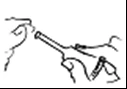
- Break off the tip, then gently squeeze the tube until a drop appears.
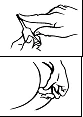
- Spread this drop over the applicator tip.
- Insert the entire applicator tip into the rectum.

- Squeeze out the entire contents of the tube.

- Remove the applicator while continuing to squeeze the tube.
The medicine usually works within 5 to 20 minutes.
If remaining in a lying position for a prolonged period, effects may be observed after a longer time (more than 1 hour).
Duration of treatment
Without consulting a doctor, this medicine should not be used for longer than a few days.
4. Possible adverse reactions
Like all medicines, this medicine can cause adverse reactions, although not everybody will experience them.
The following adverse reactions have been reported with unknown frequency:
- Sudden, severe allergic reaction presenting with breathing difficulties, swelling, rapid heartbeat, sweating, dizziness, loss of consciousness (anaphylactic reaction, including anaphylactic shock)
- Abdominal pain
- Perianal discomfort
- Loose stools
- Hypersensitivity reactions (e.g. urticaria)
Reporting of adverse reactions
If any adverse reactions occur, including any not listed in this leaflet, inform a doctor or pharmacist. Adverse reactions can be reported directly to the Department for Monitoring Adverse Drug Reactions of the Office for Registration of Medicinal Products, Medical Devices and Biocidal Products: Al. Jerozolimskie 181C, 02-222 Warsaw, phone: +48 22 49-21-301, fax: +48 22 49-21-309, e-mail: [email protected] Adverse reactions can also be reported to the marketing authorization holder. Reporting adverse reactions helps provide more information on the safety of this medicine.
5. How to store Microlax
No special precautions are required for storage.
Keep the medicine out of the sight and reach of children.
Do not use this medicine after the expiry date stated on the packaging.
The expiry date refers to the last day of the stated month.
Medicines must not be disposed of via wastewater or household waste. Ask your pharmacist how to dispose of medicines no longer required. These measures will help protect the environment.
6. Package contents and other information
What Microlax contains
-
The active substances are: Sorbitol, liquid (crystallizing) ……………4.4650 g
Sodium citrate …………………………….. 0.4500 g
Sodium lauryl sulfoacetate 70% ………............. 0.0645 g
in 5 ml of enema solution. -
Other ingredients are sorbic acid (see section 2), glycerol and purified water.
What Microlax looks like and contents of the pack
The medicine is an enema solution.
It is a colourless, viscous solution containing small air bubbles, contained in single-dose containers.
The pack contains 4, 6, 12 or 50 single-dose containers.
Not all pack sizes may be marketed.
Marketing Authorisation Holder
McNeil AB
Box 941
251 09 Helsingborg
Sweden
Manufacturer
Delpharm Orléans
5 Avenue de Concyr
45071 Orléans Cedex 2
France
Janssen Cilag – Val de Reuil
Domaine de Maigremont
27100 Val de Reuil
France
This medicinal product is authorised for sale in the European Economic Area countries under the following names:
France: Sorbitol / Citrate de sodium / Laurilsulfoacétate de sodium Kenvue France
Bulgaria: Microlax
Croatia: Microlax
Cyprus: Microlax
Greece: Microlax
Poland: Microlax
Romania: Microlax
Slovakia: Microlax
Slovenia: Microlax
Hungary: Microlax végbéloldat
Italy: Stitilax
<----------------------------------------------------------------------------------------------------------------------->
INFORMATION ABOUT CONSTIPATION
What you should know
Constipation is defined as having fewer than three bowel movements per week.
This definition is not absolute. Normal intestinal transit time, and thus the frequency of bowel movements, may vary significantly between individuals. Therefore, it is important to consider discomfort or problems related to slowed intestinal transit.
In constipation, a feeling of abdominal discomfort may occur. Defecation may be difficult or even painful, often accompanied by a sensation of incomplete evacuation. Stools are hard and small. Cramps or bloating may also occur.
Occasional constipation is usually caused by changes in daily habits (e.g. travelling abroad, dietary changes, stress, etc.) or by suppressing the urge to defecate.
Dietary habits and lifestyle (lack of physical activity) may also disrupt bowel function, potentially leading to prolonged episodes of constipation (chronic constipation).
Other factors that may cause constipation include certain medications (e.g. some painkillers, antidepressants, antitussives, antacids containing aluminium compounds, etc.); in women: certain phases of the menstrual cycle, pregnancy or menopause.
What you can do yourself
Occasional episodes of constipation, although unpleasant, are not serious.
Simple lifestyle and hygiene recommendations usually help improve intestinal transit and facilitate defecation:
-
Eat green vegetables rich in dietary fibre and fresh fruits that promote intestinal transit.
You may also gradually introduce, in moderate amounts, bread or biscuits containing bran or whole grains into your diet. -
Avoid excessively fatty and sweet foods.
-
Drink sufficient fluids regularly throughout the day (at least 1.5 litres daily): do not limit intake of water, fruit juices or soups.
-
Try to go to the toilet at a regular time (usually 30 to 60 minutes after meals), without forcing bowel movements. The body will adapt to a regular routine. Allow yourself enough time.
-
Do not forget exercise and physical activity such as walking, which are excellent ways to combat constipation.