Metindol retard
Poland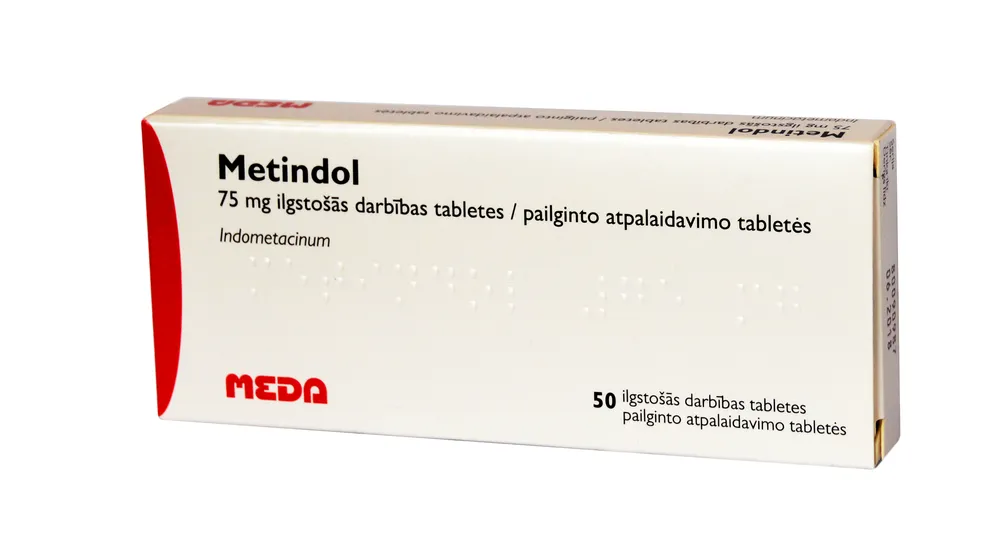
Table of Contents
Package leaflet: Information for the user
Warning! Keep the leaflet. Information on the immediate packaging is in a foreign language.
Metindol Retard (Metindol)
75 mg, prolonged-release tablets
Indometacinum
Metindol Retard and Metindol are different trade names for the same medicine.
Please read the leaflet carefully before using the medicine, as it contains
important information for the patient.
- Keep this leaflet, as you may need to read it again.
- If you have any doubts, consult your doctor, pharmacist or nurse.
- This medicine has been prescribed for a specific individual. Do not pass it on to others. The medicine may harm other people, even if their symptoms are the same.
- If the patient experiences any adverse reactions, including any not listed in this leaflet, inform your doctor, pharmacist or nurse. See section 4.
Table of contents of the leaflet
- What Metindol Retard is and what it is used for
- Important information before taking Metindol Retard
- How to take Metindol Retard
- Possible side effects
- How to store Metindol Retard
- Contents of the pack and other information
1. What Metindol Retard is and what it is used for
Metindol Retard is a medicine belonging to the group of non-steroidal anti-inflammatory drugs (NSAIDs).
It has strong anti-inflammatory, analgesic and antipyretic effects.
Metindol Retard is used:
- in the treatment of acute rheumatoid arthritis;
- in the treatment of ankylosing spondylitis, osteoarthritis, hip joint arthritis;
- in the treatment of acute inflammatory conditions of the skeletal muscles;
- in relieving low back pain;
- in inflammatory conditions of periarticular tissues (bursitis, tendinitis, synovitis, tenosynovitis, capsulitis);
- in inflammatory conditions, pain and swelling associated with orthopedic procedures;
- in primary dysmenorrhea (painful menstruation).
2. Important information before using Metindol Retard
When not to use Metindol Retard
- if the patient is allergic to indometacin or any of the other ingredients of this medicine (listed in section 6) or to other non-steroidal anti-inflammatory drugs;
- if in the past, after using non-steroidal anti-inflammatory drugs or acetylsalicylic acid, asthma attacks, urticaria or inflammation of the nasal mucosa occurred;
- if the patient has severe heart, kidney or liver failure;
- if the patient has active gastric or duodenal ulceration and/or has had or currently has gastrointestinal tract damage;
- if the patient has angioedema or nasal polyps;
- when the patient is in the third trimester of pregnancy.
Warnings and precautions
Before starting treatment with Metindol Retard, discuss it with your doctor or pharmacist.
Exercise caution:
- if liver, kidney or heart function disorders, hypertension, heart failure or conditions predisposing to fluid retention in the body (e.g. Conn's syndrome) are present, or in diabetes, extracellular fluid loss (e.g. extensive burns, bleeding) or sepsis, and when the patient is additionally taking drugs toxic to the kidneys, e.g. phenacetin (periodic monitoring of kidney function may be necessary);
- when the risk of bleeding is increased for any reason, e.g. following surgery, blood disorders, etc. (Metindol Retard significantly increases this risk);
- if bronchial asthma is currently present or has occurred in the past (the risk of bronchospasm is then increased);
- when the patient is elderly (the risk of adverse effects is then increased);
- if gastrointestinal tract function disorders occur or worsen (in such case, consult a doctor immediately);
- when, in addition to Metindol Retard, the patient is also taking other medicines that may adversely affect the gastrointestinal tract or increase the risk of bleeding, such as corticosteroids (e.g. cortisol), anticoagulants (e.g. warfarin) or antiplatelet agents (e.g. acetylsalicylic acid);
- if bleeding disorders, psychiatric disorders, epilepsy or Parkinson's disease are present (the drug may exacerbate them);
- if gastrointestinal bleeding occurs (treatment must be stopped immediately and the doctor contacted);
- if systemic lupus erythematosus or mixed connective tissue disease is present (the risk of aseptic meningitis may be increased);
- if an infectious disease occurs (indometacin may mask symptoms of such a disease, therefore it is important to follow the doctor's advice particularly carefully during such illness);
- when vaccination is performed during treatment using a vaccine containing live microorganisms.
Indometacin may:
- impair fertility (if the patient plans to become pregnant or has difficulty conceiving, she should inform her doctor);
- alter the results of certain laboratory tests (increase liver enzyme activity and alter the result of the so-called dexamethasone suppression test).
Patients taking Metindol Retard are at risk of developing ocular changes (corneal deposits, retinal changes); therefore, periodic ophthalmological examinations are necessary during treatment (especially in patients with rheumatoid arthritis), and discontinuation of the drug may be necessary if such changes occur.
Taking medicines such as Metindol Retard may be associated with a small increased risk of heart attack (myocardial infarction) or stroke. This risk increases with long-term use of high doses of the drug. Do not use higher doses or longer treatment duration than recommended.
If you have heart problems, have had a stroke, or suspect you are at risk of such disorders (e.g. high blood pressure, diabetes, elevated cholesterol levels, smoking), discuss the treatment approach with your doctor or pharmacist.
To reduce the risk of adverse effects, Metindol Retard should be used at the lowest effective dose for the shortest period necessary to relieve symptoms.
Avoid simultaneous use of two or more non-steroidal anti-inflammatory drugs.
Metindol Retard and other medicines
Inform your doctor or pharmacist about all medicines you are currently taking or have recently taken, as well as any medicines you plan to take.
Indometacin may alter the effects of certain medicines and, conversely, certain medicines may alter the effects of indometacin. Such medicines include:
- non-steroidal anti-inflammatory drugs, acetylsalicylic acid and other acetylsalicylic acid derivatives (these are used, among others, for colds and are often available without a prescription);
- antibacterial agents – 4-quinolone group drugs, including norfloxacin, ciprofloxacin;
- antiviral agents – zalcitabine, zidovudine, ritonavir;
- cytotoxic agents – cyclophosphamide, methotrexate;
- antidepressants – selective serotonin reuptake inhibitors (e.g. fluoxetine, paroxetine);
- antidiabetic agents – including glimepiride, metformin;
- anticoagulants – including warfarin, acenocoumarol;
- antihypertensive agents – including metoprolol, prazosin, enalapril, losartan, hydralazine, nifedipine;
- diuretics – including furosemide, clopamide;
- cardiac glycosides – including digoxin;
- corticosteroids – including hydrocortisone;
- benzodiazepines – including diazepam;
- vasodilators – e.g. pentoxifylline;
- phenytoin;
- haloperidol;
- clopidogrel;
- probenecid;
- cyclosporine;
- lithium salts;
- triamterene;
- diflunisal;
- tacrolimus;
- tiludronic acid;
- desmopressin;
- mifepristone;
- muromonab-CD3;
- baclofen.
Patients using Metindol Retard should remember to consult a doctor before taking any over-the-counter medicine (especially cold remedies).
Metindol Retard with food and drink
Metindol Retard should always be taken with food or milk.
Do not take it with fluids of high pH (strongly alkaline) or neutralizing agents (unless necessary to alleviate adverse effects).
Pregnancy and breastfeeding
If the patient is pregnant or breastfeeding, suspects she may be pregnant, or is planning to have a child, she should consult her doctor or pharmacist before using this medicine.
Do not take Metindol Retard if you are in the last 3 months of pregnancy, as it may harm the unborn child or cause complications during delivery. It may cause kidney and heart problems in the unborn child. It may increase the tendency to bleeding in both the mother and her child and may delay or prolong labour. Do not use this medicine during the first 6 months of pregnancy unless absolutely necessary and prescribed by a doctor. If treatment is necessary during this period or when trying to conceive, use the lowest possible dose for the shortest possible time. From week 20 of pregnancy, Metindol Retard may cause kidney function disorders in the unborn child if taken for longer than a few days. This may lead to reduced amniotic fluid volume surrounding the baby (oligohydramnios) or narrowing of the blood vessel (ductus arteriosus) in the baby's heart. If treatment longer than a few days is necessary, your doctor may recommend additional monitoring.
Metindol Retard should not be used during breastfeeding, as it passes into breast milk and may be harmful to infants.
Driving and operating machinery
Do not drive motor vehicles, operate moving mechanical equipment, or perform tasks requiring full psycho-physical fitness, as Metindol Retard may cause dizziness, drowsiness, fatigue and vision disturbances.
3. How to use Metindol Retard
This medicine should always be used as directed by the physician. If in doubt, consult your doctor or pharmacist.
Recommended dose
Adults: Diseases of the musculoskeletal system: 1 prolonged-release tablet once or twice daily, depending on treatment efficacy and tolerance.
Dysmenorrhoea (painful menstruation): 1 prolonged-release tablet once daily, starting at the onset of painful cramps or bleeding, continued for the duration of symptoms.
Children: Metindol Retard is not recommended for use in children due to lack of safety data.
Elderly patients: In this age group, adverse effects occur more frequently during indometacin therapy; therefore, particular caution is required, and the lowest effective dose should be used for the shortest possible duration. Any adverse effects (see section 4) should be reported to the physician.
Note: To minimize the risk of gastrointestinal irritation, Metindol Retard should always be taken with food or milk. Treatment should begin with low doses, which may be increased if necessary.
Using the lowest effective dose for the shortest duration needed to relieve symptoms reduces the risk of adverse effects.
Use of a higher than recommended dose of Metindol Retard
In case of overdose, symptoms such as nausea, vomiting, abdominal pain, gastrointestinal bleeding may occur; less frequently diarrhea, headache, dizziness, disorientation, restlessness, coma, drowsiness, tinnitus, fainting, and in rare cases, seizures.
Management in cases of overdose consists of securing vital functions and symptomatic treatment. If less than one hour has passed since ingestion, activated charcoal should be considered. In adults, gastric lavage may be considered as an alternative measure.
If necessary, the physician should initiate measures to ensure adequate diuresis (adequate urine output) and monitor renal and liver function. The patient should be observed for at least 4 hours after ingestion of a potentially toxic dose of indometacin. In case of frequent and/or prolonged seizures, diazepam should be administered.
In case of ingestion of more than the recommended dose of Metindol Retard, seek immediate medical advice.
Missed dose of Metindol Retard
If a dose is missed at the scheduled time, the patient should take it as soon as possible. However, if the next dose is due soon, the missed dose should be skipped. Do not take a double dose to make up for a missed dose.
Stopping treatment with Metindol Retard
Discontinuation of Metindol Retard may lead to worsening of symptoms of the condition for which it was prescribed.
If you have any further questions about the use of this medicine, consult your doctor or pharmacist.
4. Possible adverse reactions
Like all medicines, this medicine can cause adverse reactions, although not everyone will experience them.
Gastrointestinal disorders: nausea, loss of appetite, vomiting, gastric mucosal inflammation, epigastric pain, abdominal pain, constipation, diarrhoea, severe flatulence, oral mucosal inflammation, ulcers which may occur anywhere in the gastrointestinal tract (which may even lead to gastrointestinal stricture or obstruction), bleeding from the oesophagus (even without evident ulceration or diverticulum), or perforation of an existing oesophageal abnormality (such as cancer or diverticulum), worsening abdominal pain or exacerbation of disease in patients with ulcerative colitis or Crohn's disease (or occurrence of such pathology), and local intestinal inflammation, gastric and/or duodenal ulcers, and gastrointestinal bleeding and gastrointestinal perforation (sometimes fatal), especially in elderly patients; if gastrointestinal bleeding occurs, Metindol Retard should be discontinued.
Hepatic and biliary disorders: cholestasis, jaundice, and hepatitis (sometimes fatal).
Nervous system disorders: headache, dizziness, sensation of emptiness in the head (headache may be prevented by starting treatment with a low dose of indometacin and increasing it gradually); these symptoms usually resolve during continued treatment or after reduction of indometacin dosage; however, if headache persists despite dose reduction, the medicine should be discontinued; aseptic meningitis (especially in patients with autoimmune diseases such as systemic lupus erythematosus or mixed connective tissue disease), with symptoms such as neck stiffness, headache, nausea, vomiting, fever, or disorientation; dizziness, speech disturbances, fainting, coma, brain oedema, nervousness, confusion, drowsiness, convulsions, paresthesia (tingling, numbness), peripheral neuropathy (nerve damage), involuntary movements, increased frequency of epileptic seizures, parkinsonism (these symptoms are usually transient and resolve during treatment, but sometimes necessitate discontinuation of treatment).
Psychiatric disorders: disorientation, insomnia, depersonalization, hallucinations, depression, anxiety, agitation, other psychiatric disorders (these symptoms are usually transient and resolve during treatment, but sometimes necessitate discontinuation of treatment).
General disorders and administration site conditions: feeling of fatigue, malaise, chest pain, excessive sweating, oedema.
Cardiac disorders: rapid heartbeat, cardiac arrhythmia, palpitations, heart failure.
Vascular disorders: hypertension, hypotension, hot flushes, vasculitis.
Renal and urinary disorders: haematuria, proteinuria, interstitial nephritis, nephrotic syndrome and renal failure, worsening of renal function in patients with impaired renal and/or hepatic function.
Skin and subcutaneous tissue disorders: pruritus, urticaria, angioedema, photosensitivity, nodular erythema, rash, exfoliative dermatitis, Stevens-Johnson syndrome (erythematous-bullous-erosive lesions mainly affecting mucous membranes), erythema multiforme, toxic epidermal necrolysis (a type of severe skin damage), hair loss, exacerbation of psoriasis.
Ear and labyrinth disorders: tinnitus, hearing disturbances, deafness.
Eye disorders: blurred vision, optic neuritis, diplopia, orbital and periorbital pain. In some patients with rheumatoid arthritis who have been taking indometacin long-term, corneal deposits and changes in the retina and macula have been observed (however, similar symptoms have also been reported in patients not taking this medicine).
Immune system disorders: non-specific allergic reactions and anaphylaxis, increased respiratory reactivity, including asthma, worsening of asthma, bronchospasm and dyspnoea, skin reactions including various types of rash, pruritus, urticaria, petechiae, angioedema, bullous dermatoses with epidermal detachment (including erythema multiforme and epidermal necrolysis).
Investigations: increased blood urea concentration, glycosuria, increased liver enzyme concentrations.
Metabolism and nutrition disorders: increased blood glucose concentration, increased blood potassium concentration.
Respiratory, thoracic and mediastinal disorders: pulmonary eosinophilia, epistaxis, bronchospasm in patients with asthma or other allergic diseases in their medical history.
Blood and lymphatic system disorders: decreased platelet count, white blood cell count, neutrophil count, aplastic anaemia and haemolytic anaemia, agranulocytosis, bone marrow suppression, disseminated intravascular coagulation and associated haemorrhagic manifestations, bruises, petechiae. In some patients, anaemia due to gastrointestinal bleeding (overt or occult) may occur.
Reproductive system and breast disorders: genital tract bleeding, breast changes (breast enlargement, breast tenderness, gynaecomastia – breast enlargement in males).
Musculoskeletal and connective tissue disorders: muscle weakness, acceleration of degenerative cartilage processes.
Gastrointestinal symptoms can often be prevented by taking the medicine with food or milk.
Treatment with NSAIDs (non-steroidal anti-inflammatory drugs) has been associated with the occurrence of hypertension and heart failure.
Use of medicines such as Metindol Retard may be associated with a small increased risk of myocardial infarction (heart attack) or stroke.
Reporting of adverse reactions
If any adverse reactions occur, including any adverse reactions not listed in this leaflet, inform your doctor, pharmacist, or nurse. Adverse reactions can be reported directly to the Department of Monitoring Adverse Drug Reactions of the Office for Registration of Medicinal Products, Medical Devices and Biocidal Products, Al. Jerozolimskie 181C, 02-222 Warsaw
tel.: + 48 (22) 49 21 301, fax: + 48 (22) 49 21 309
website: https://smz.ezdrowie.gov.pl
Reporting adverse reactions enables further information on the safety of the medicine to be collected.
5. How to store Metindol Retard
Do not store above 25°C. Store in the original packaging.
Keep the medicine out of the sight and reach of children.
Do not use this medicine after the expiry date stated on the packaging. The expiry date refers to the last day of the stated month.
Medicines must not be disposed of via wastewater or household waste. Ask your pharmacist how to dispose of medicines no longer in use. This will help protect the environment.
6. Contents of the pack and other information
What Metindol Retard contains
- The active substance is indometacin. One tablet contains 75 mg of indometacin.
- The other ingredients are: microcrystalline cellulose, ammonio methacrylate copolymer (Eudragit RSPO), talc, magnesium stearate, potato starch.
What Metindol Retard looks like and contents of the pack
Round, biconvex tablets with bevelled edges, white to off-white in colour.
Metindol Retard is available in packs containing 25 or 50 prolonged-release tablets (1 or 2 blisters containing 25 prolonged-release tablets, in a cardboard box).
For more detailed information, please contact the responsible party or the parallel importer.
Marketing Authorisation Holder in Lithuania, the country of export:
Viatris Healthcare Limited, Damastown Industrial Park, Mulhuddart, Dublin 15, Dublin, Ireland
Manufacturer:
ICN Polfa Rzeszów S.A., Przemysłowa 2, 35-959 Rzeszów, Poland
Parallel importer:
Delfarma Sp. z o.o., Św. Teresy od Dzieciątka Jezus 111, 91-222 Łódź, Poland
Repackaged in:
Delfarma Sp. z o.o., Św. Teresy od Dzieciątka Jezus 111, 91-222 Łódź, Poland
Marketing Authorisation Number in Lithuania, the country of export: LT/1/94/0782/001
LT/1/94/0782/002
Parallel Import Licence Number: 849/15